
Our friend in NYC, Citizen Dennis Kane had a long chat with DJ / producer Richard Sen a couple of years back. In a brilliant interview Dennis painted a portrait which covered Richard’s background as graffiti writer “Coma”, hip hop, trips to New York, and a cross-section of his production work. Richard now has a new compilation out, via Ransom Note, entitled Dream The Dream. It’s a collection of early `90s UK releases, that perhaps could all loosely be called “house”. I say loosely because its a pretty varied selection which perfectly reflects how acid house and rave brought together different tribes. There’s sleek, slick, syncopated, sophisticated Detroit-influenced techno. Swirling alien rainforest ambience. Sci-Fi lullabies. Intricate acid. Breaks, bleeps, righteously re-purposed italo disco, and serious soundsystem bass. Pummeling layered drum patterns play against ringing and gated synth riffs, and vocals range from African chants to ethereal angels, with the odd Rasta MC squeezed in between. All of it focused on hypnotic stripped back rhythms, and managing to be rush-inducing without ever resorting to anything resembling a piano breakdown. It’s a combination, to be honest, especially in the early 1990s, which could only be the product of the UK’s cultural melting pot. The album’s imminent launch gave us a good excuse to catch up.
First of all I wanted to say that I think your recent remix of GLOK is fucking brilliant!
Thank you. Andy Bell’s such a talented guy. There are so many tracks on that piece, I had to really strip it back. I then gave it a bit of a “Kraut-y” vibe. Optimo played it at a festival recently, which was really nice.
I’ve got a few new things lined-up actually. Sean P and Aiden Leacy at Backatcha have given me a load of post-punk to rework, which is a bit different to their previous releases.
I’ve bought a lot of their stuff – street soul, boogie, some lovers. I bought something the other day, it’s like an old rap track.
Squivatch?
Yeah! That’s it! I love that! Great label.
I was going to try to lead into your new comp by talking a little but about your last one, This Ain’t Chicago. One of the questions I had was about the short accompanying documentary. Were there ever any plans to expand the short into a full length film?
It was mainly Quinton from Strut who did that. He did everything. I just did a few of the interviews. I didn’t even know what was going to be in it until I saw the final cut. I didn’t know Colin Faver, for example, was in it. So I’m not sure if Quinton’s got any more footage. It was a promotional thing for the comp, but it ended up being a cool little mini documentary.
It was really cool, because a lot of the people in it never normally get to tell their story. I don’t think I’d seen anybody from Bang The Party interviewed before.
That was Leslie Lawrence. That was the reason I did the comp. To shine a light on a different side of that era. I thought, “there’s some good stuff here”, but no-one really noticed it back then, and these things were part of it too.
I went to Bang The Party’s night, Confusion, a few times, and Kid Batchelor is a great DJ. He was quite eclectic. I remember he started off with The Blow Monkeys, La Passionara, and he played a Prince track, the Mark Moore and William Orbit remix of The Future.
That brings me to another question. You were a graffiti writer, and a big hip hop head. How did you get into house? What clubs, parties were you going to?
I was into hip hop until about `88. When acid house came along a few of my mates started going to the parties, but I was still quite militant – “Ah no, I hate this music. It’s boring. It all sounds the same. It’s a bit too happy.” I was into Public Enemy (laughs). So I was a bit late. I started going to The Astoria – Nicky Holloway’s club – in the late summer, toward the autumn of `88. I went to a few warehouse parties before that, like one in Lee Film Studios, and Delirium, where the Watson Brothers, Noel and Maurice, were DJing in a cage, but I hadn’t taken ecstasy, so I wasn’t fully immersed in it. It was only when I took my first pill in The Astoria that it started to make sense. I was hooked on the music and going out. Plus I’d been robbed at a Public Enemy gig. At the time there was this thing called steaming, where big groups of guys would rob people. So I got robbed, but I was also involved with lots of people doing the robbing, and it got really dark. So you had that, and then you had the acid house thing where everyone was smiling and hugging each other. It was a no brainer.
I come from south London, and growing up in the `70s there was a lot of racial tension, and lot of racial violence. For me, standing upstairs in The Astoria, when it was The Trip, and looking down on everyone dancing with their arms in the air, that was the first time in my life that I’d properly seen people coming together. I didn’t take an E that first time, but I did have an epiphany. That’s when I was hooked.
It broke down all those barriers, colours and class.

I assumed you’d been to The Trip, because you DJed at The Crazy Club, which was at the same venue right?
It was The Trip, then Made On Earth, and then Sin, which was when I started going every week. That was the first time that I really enjoyed clubbing and going out. To be honest, when I was into hip hop, I wasn’t into clubbing. I was really just a graffiti writer.
Did you go to Shoom and all the other well-known, celebrated places?
I went to Shoom, but when it was at The Park in Kensington.
That still counts (laughs).
I’ve got the flyer (laughs). It was a bit more posh, and a bit more upmarket. Breeze was on the door.
Did you go to The Clink?
I never went, but graffiti mates of mine did, and it sounded too intense.
The videos look absolutely bananas.
I did go to a few other places, like Dungeons, and few times and it is was really dark, and quite scary. We had gear on us, but we were too scared to take it. We didn’t want to make ourselves vulnerable.
My sister used to go there sometimes and she tells this story about someone finding a decapitated head in the car park. It was pretty fucking rough.
I was more into Nicky Holloway, Rampling, Weatherall, and then Kid Batchelor, Eddie Richards, and Mr C. People like that.
Are they all friends of yours now?
Well, I know Eddie. I’ve played for him a few times. He’s a good guy.
Eddie’s still DJing isn’t he? Didn’t he get into the tech-house thing?
He does everything independently and he does gigs all over the place.
He stayed underground.
Yeah, that’s it. He does small things and he’s constantly playing. He loves it, and he’s quite old now.
Well, he started out at The Camden Palace in the early `80s.
I was reading Luke Bainbridge’s acid house book and in it Eddie’s saying that, when he had a “normal” job, on his lunch break he’d do and DJ in a strip club, and then go back to work. He’s a legend.
I’ve only met Kid Batchelor once, and I’ve never met Mr C. I knew Weatherall, and Harvey.
So the new comp, it is effectively This Ain’t Chicago part 2?
Yeah, it’s taken 10 years to do part 2, but I think that the Strut one didn’t sell as well as they were hoping, so they weren’t up for another one. They, K7!, put a lot of money behind it. I shopped the idea around and Dark Entries were quite interested, but they wanted me to do all of the licensing and I didn’t really have the time. I’ve known Will at Ransom Note for about 20 years, and it was sort of the right place, right time.
Does the music on Dream The Dream reflect how the your own music tastes were changing?
Yes. Exactly. I bought all of those records at the time. Dance music was still quite new, so house and techno hadn’t yet been broken down into loads of little sub-genres. So you’d play everything together – tribal house, trance, ambient techno, breakbeats, deep stuff. There wasn’t really a distinction between it. I’d be playing records from the UK, US, Detroit and Chicago, New York, and then the Belgian and Dutch stuff. I was just into everything.
Dream The Dream is definitely a follow-up. I was initially thinking of “This Ain’t Detroit” – you know UK techno, but licensing stuff was proving a bit difficult.
There are few tracks on the comp that I recognize, so some are well know, but most of them aren’t.
Well, that’s cool because I did deliberately try to pick stuff that people might not know… smaller labels. There were tracks by bigger artists – Orbital, A Guy Called Gerald, 808 State – that I did want to get, but none of them even replied.
Does the change in the music also reflect a change in the clubs that you were going to?
Yes. For me, after the initial acid house thing it did get a bit harder. I was going to Andrew Weatherall’s Sabresonic, Steve Bicknell’s Lost, Universe at Club UK in Wandsworth, Mr. C’s thing, which I think was called Vapour Space. As a DJ I was playing more techno.
Were you DJing at those clubs as well?
Well, I DJed at Sabresonic. One of the early ones. There’s no flyer though. I remember that it was when Smokebelch came out, because Weatherall was going, “Your name’s on the record, but it’s not on the flyer.” (laughs)
What sort of stuff did you play that night?
I played at the start of the night, 10 til 12, so there was hardly anyone there. I remember ending my set with Carl Craig’s Climax. It would have been deep American house, not too heavy, but then I remember Weatherall’s first record after me was the theme from The Persuaders. Then later on in the night he dropped the Leftfield track with John Lydon, Open Up. It was the first time I’d heard it and I was like, “What the hell is this?”
So did you go to Sabresonic?
Oh yeah! I’d been there when the doors opened. I liked, and still like, all the weird slower gear. I liked the faster stuff too, but I’d be so out of it by then, that it’s the slower stuff that holds the most memories. You did the artwork for Smokebelch. How did that come about?
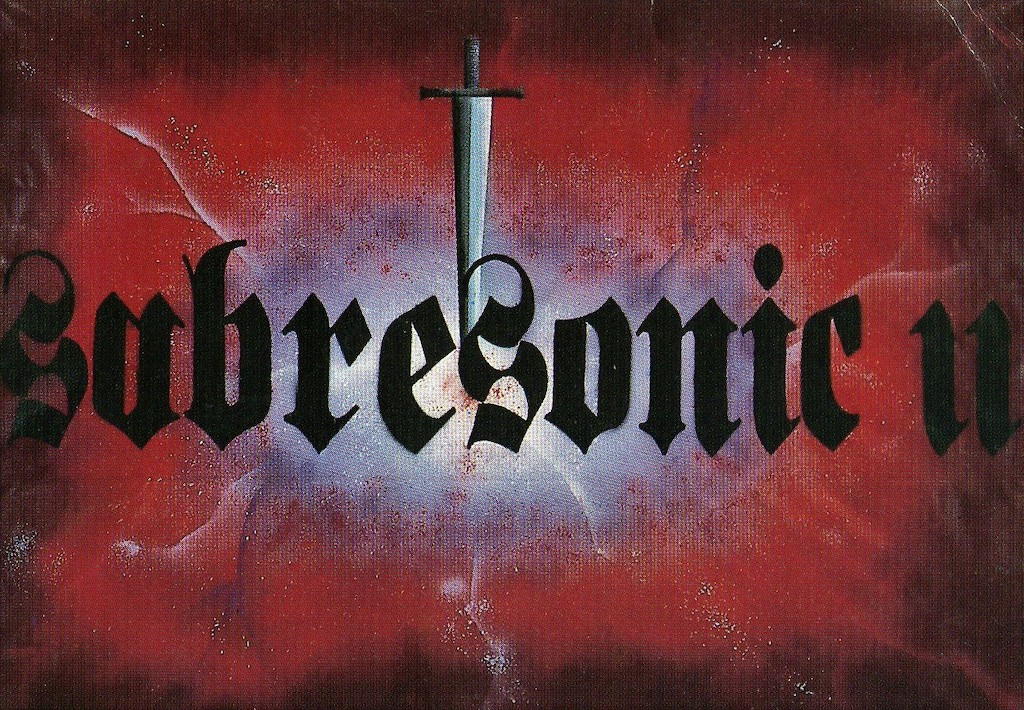
Well, I did a banner for Sabresonic first. I don’t know if anyone remembers it. It would be hanging as you walked in, where Anna Haigh was at the till taking your money. It’s a sword going into a gravestone, with a red background.

I was just a fan of Weatherall’s and at a party called Shakavara, where he was playing, me and my mate approached him and asked if he needed any artwork. I didn’t know him.
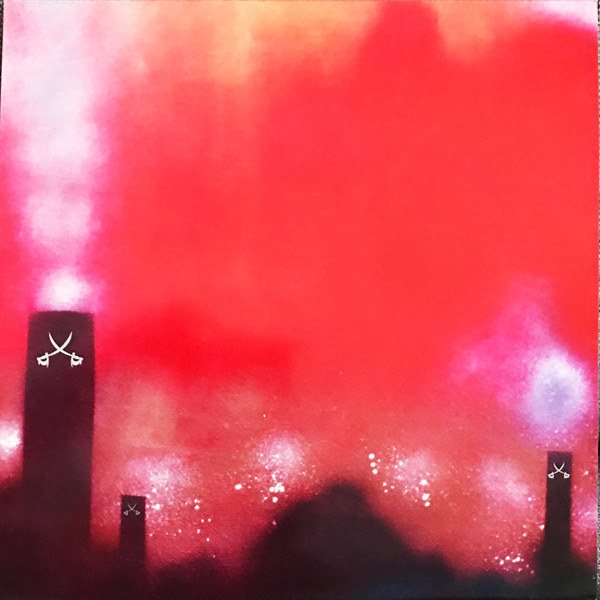
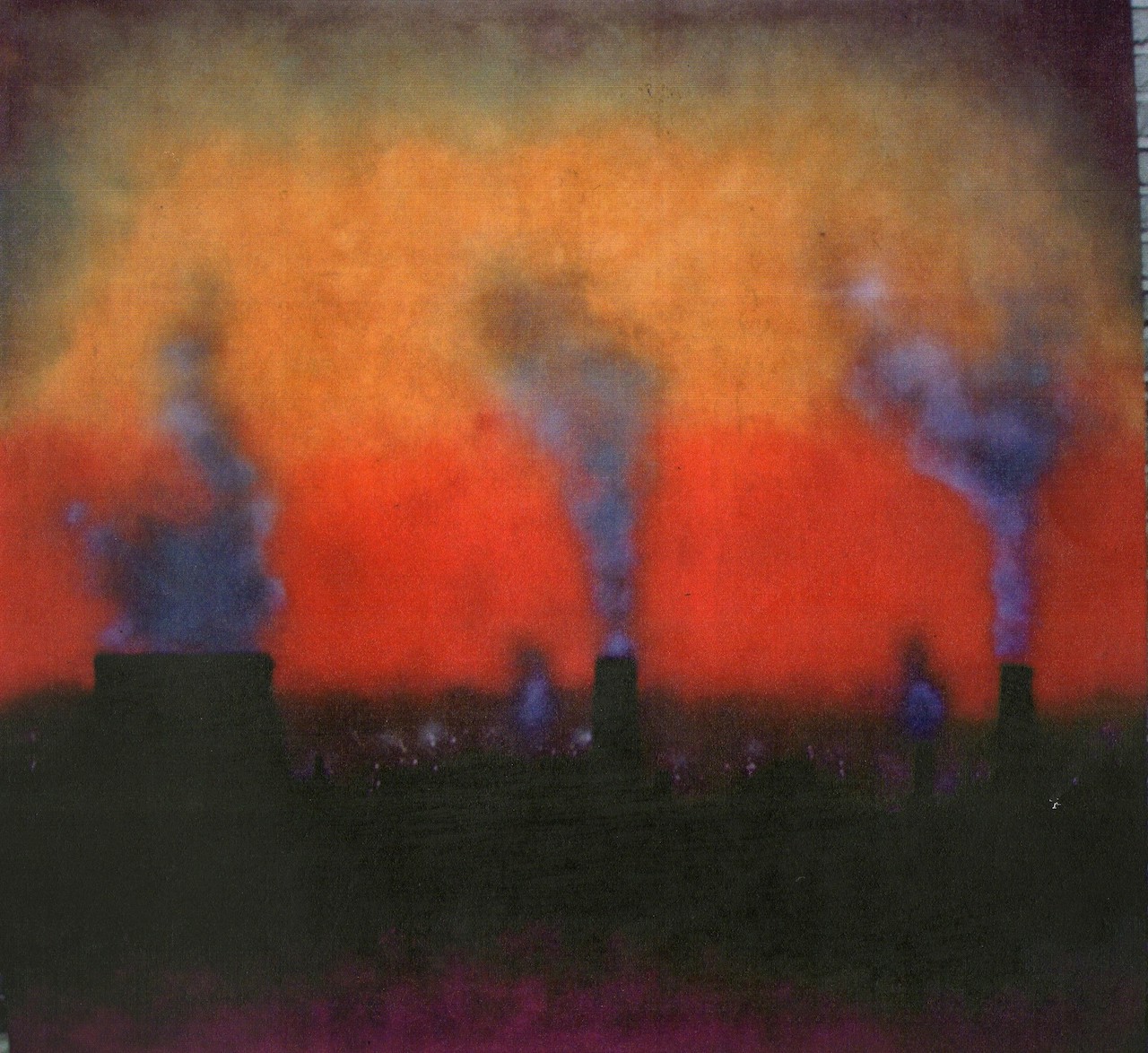
“We’re big fans, and I do graffiti”, and he was like. “Ah, wicked. I’m crying out for people.” He said something anarchistic would be great. So we arranged to go the the Sabres office, which at that point was above Quaff Records, on Berwick Street. We took in some work and he said “Focus on this. Not that”, and then I went away and did a huge canvas, of which they used a small portion for the Smokebelch sleeve.
Oh, wow! I never realized that it was part of a bigger picture.
It’s like 3 big chimneys, but they focused on just one little bit – 3 small chimneys in the middle, which I think are supposed to represent them – Andrew, Gary, and Jagz. They put the little swords on it. The office manager, Andrew Curley had the original canvas, but it got rolled up and it’s gone missing. No one knows where it is.
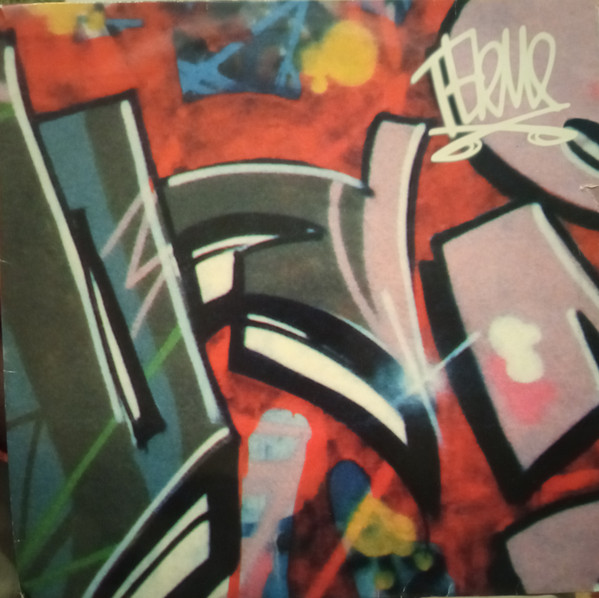
For the Theme sleeve, Weatherall just used one of my old graffiti pieces.
During that time I was also doing backdrops for Sabresonic, Sabresonic II, and Bloodsugar.
You stopped painting publicly after your graffiti arrest, but were you still painting canvases?
Only now and again, for commissions. Curley got me and my brother a commission with American Airlines, and part of the deal was free flights to The States.
Are you still painting now?
No, but I might some artwork for my upcoming releases. I haven’t done anything for years. When acid house came along I kind of left that whole world behind.
Well, that Beyond The Streets exhibition at The Saatchi Gallery has raised the profile of everything again, and Coma is famous known name. It might be a good time to do a few things.
I actually wrote a chapter for a book that was published by Beyond The Streets, about the history of British graff.
You touched on that when you spoke to Dennis Kane – like the guys from Madness being there at the beginning, which was fascinating, really interesting.
I used to go to Happy Jax regularly, Sabresonic II at EC2 most of the time, but Bloodsugar only occasionally because the queues were so long, and we’d rarely get in. We just gave up in the end.
I think I liked the music better at Bloodsugar. Like you said, at Sabresonic the early bit was good, and then it just got too fucking mental.
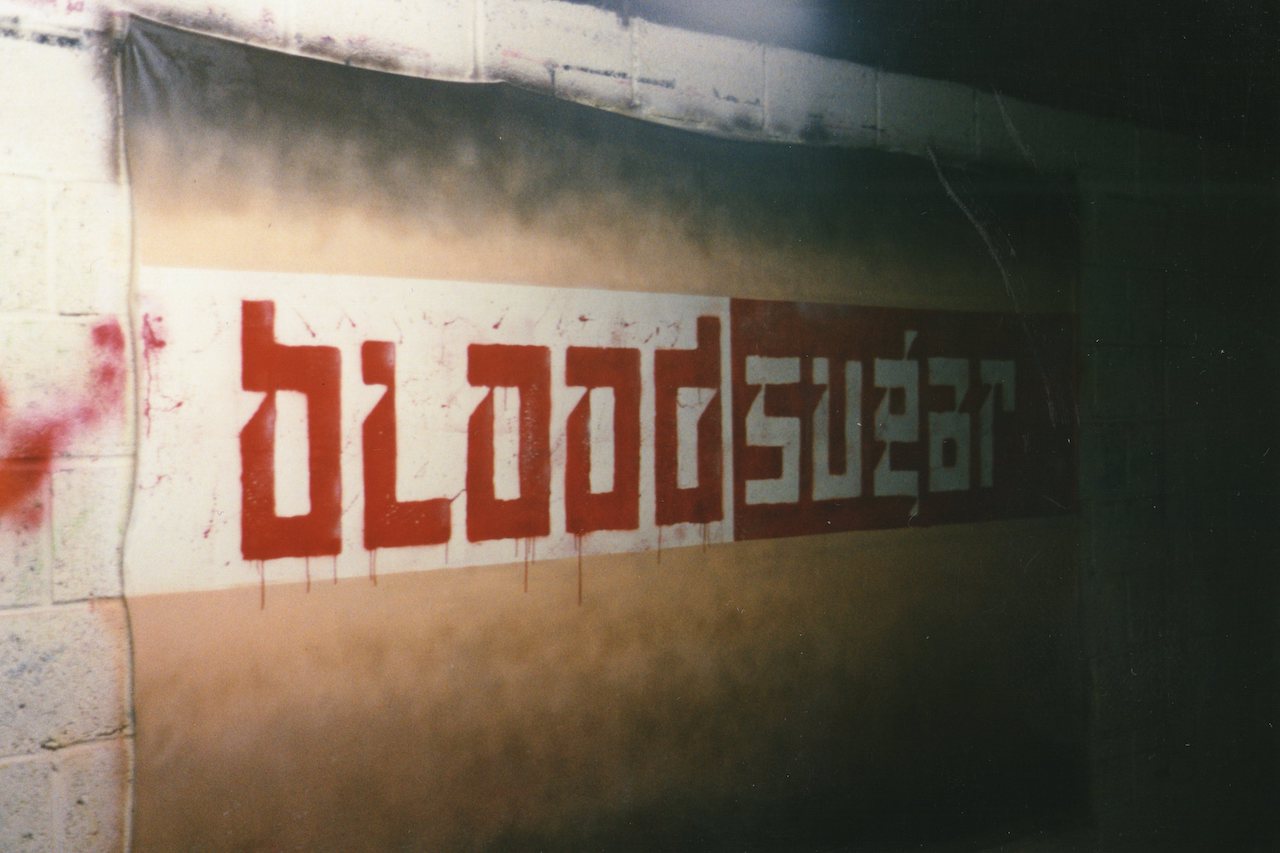
The music was a bit groovier at Bloodsugar. Tunes that stand out for me are Planet Patrol, Play At Your Own Risk, early doors, and then Mood II Swing’s Do It Your Way. It was that time when house and techno seemed to re-converge – Basic Channel and New York dubs.
It was deeper, and a bit more house-y. Plus there was the “nu-disco” stuff, like Harvey’s remixes and The Idjut Boys’ records. I played upstairs – more alternative stuff – alongside Rick Hopkins, who also played downstairs. Sabres was more Detroit and European techno and trance.
I played at Crazy Club until about 1991, that was the first residency that I had, after only DJing for a year or so, but after that I wasn’t DJing anywhere regularly. I’d get random gigs, like Sabresonic, and Sign Of The Times… I went to New York in 1990 and discovered the whole disco, Paradise Garage, Larry Levan, Loft, David Mancuso thing, and from that I did some disco mixtapes, which Fiona (Cartledge) at Sign Of The Times would sell in her shop in Kensington Market. Then she asked me to DJ at her parties, not in the main room, but in the back, playing disco. There were other little parties here and there, but I was more of a fan really. I didn’t start DJing regularly again until the late `90s.
How did you hook up with Harvey?
From back in the graffiti days. He’d throw parties where he was cutting up breaks. The other Tonka members, Choci and Rev, were graffiti writers so we’d be listening to Harvey DJing in `87. There were these parties called Bash Street Kids which were illegal warehouse things. I didn’t really know him but when house came along he was the one who always had interesting tunes, old stuff that no one else had. Disco and Italo. We DJed on the same bill a few times in the early `90s. There was a night called “Gaia” – some kind of spiritual thing.
How did you become involved with Heavenly Records and The Heavenly Social?
It was when “big beat” was popular, `96, maybe `97. Me and my studio partner Paul Eve, as Bronx Dogs, had made a couple of tracks – A Tribute To Jazzy Jay and then one called Madame Mars. I had that cut on a dubplate and was playing it at the Jazz Bistro in Farringdon – it’s not there any more – and Jon Carter was there by chance. He came running up to the decks to ask “What’s this?”, and he told me to phone up Heavenly and get them to listen to it. When I phoned their office, it was just a coincidence, but Jon was there, and he convinced them to have me over. It was totally “right place, right time.” They agreed to put Madame Mars Out and from there Jeff Barrett and Martin Kelly started managing us. They got us loads of great remix work – St. Etienne, Jungle Brothers, we did a Primal Scream remix, which the band rejected and that I’ve got a dubplate of. Off the back of that we were getting good gigs all over the place. We started playing at The Social when it moved to Turnmills. I was a resident there with Richard Fearless and Jon Carter. It was an amazing, wild time!
The times I went it was absolutely packed. I can remember coming to on the dance-floor and finding myself face to face with Dexy’s Kevin Rowland.
It was such an exciting time for me. I remember having just got a tune cut, giving the record to Weatherall and him playing it there and then.
Heavenly then did a smaller night called Metal Box, just off Oxford Street, on Wardour Street, and I was the resident. It didn’t last long but we had some great guests, Weatherall, Alex Knight from FatCat, The Micronauts from France, Tom Middleton…
Didn’t you have a residency at The Social on Little Portland Street?
Yeah. We did Bronx Dogs there. We played the opening night, with Weatherall, and we did a monthly night there.
I wanted to ask you where the Giallo influences for your Padded Cell stuff came from. Were you into horror films, or collecting soundtracks?
Really it was down to Jonathan (Saul) Kane and James Dyer at DC Recordings. They were really into that stuff. James ran DC and he was sending me promos, and so when we made the track Signal Failure we sent it to him. He really liked it so we went over to DC to meet Jonathan.
I’d always been a big fan of Jonathan and Depth Charge, and he knew a lot of people that I knew from the Ladbroke Grove hip hop scene. I remember going up to Jonathan – like Weatherall – in the early `90s and asking him if he’d like any artwork, and him saying that he already had someone, but thank you, cool for asking.
He already had somebody who covers his sleeves in weird porn (both laugh). It definitely went that way. There’s that 10” with the girl sucking glow in the dark semen off her fingers.
Jonathan and James steered the direction of the Padded Cell sound. They really really knew what they wanted. They were really on it with everything we did. They gave really good feedback – critical, but in a good way – like “This bit’s good, leave that bit out”. We used have meetings about snare drum sounds (laughs).
I talked to Andy “Emperor Machine” Meecham just before Christmas and he was telling me about Jonathan’s knowledge of vintage synths,
He really knows his stuff, equipment, compressors, synths. He really knows what he’s doing.
That Padded Cell album is very unique. It is a lot like an electro horror score, maybe partly due to the track titles but it does conjure images of grungy `70s horror films – The Living Dead At Manchester Morgue and this cult UK thing called Deathline.
Good, that’s what we were going for. We did listen to things like Goblin’s Suspiria and Profundo Rosso, but I also like the tacky Hammer stuff. There are also disco and post-punk influences in there. Jonathan was the one who knew all about Italian horror scores.
You weren’t collecting that stuff?
Not really. I’ve only got the classics.
Pre-internet the only place I knew where you could buy those records was Intoxica, on Portobello Road. Wasn’t that shop linked to DC and their other label, Vinyl Solution?
Yes. DC was above the shop. Back in 2005 we were calling Padded Cell “dark disco”, and now that seems to have become a proper term, a genre. At the time no one was really doing what we were doing.
There was some similar stuff – again on DC – like Andy and Dean (Meredith)’s Big 200 – but that was a bit more straight forward punk funk. DC were putting out some great, singular stuff. It’s probably worth revisiting it.
They had their own identity, visually and musically, worked out, and they didn’t play the game. They should have been as big as Ninja Tune or Warp. I remember Jonathan telling me that they were going to put the first Aphex Twin record out. They had a meeting but it didn’t happen.
What’s happening with your own label, Darkness Is Your Candle?
I did one single and then COVID happened, so it went on hold, and now it seems very difficult to sell dance music 12s. I think I’m going to do an album.
Are you doing any launch parties for the Dream The Dream comp?
I’ve got a launch party at The Waiting Room in Stoke Newington on June 16th. I’ll be DJing with Scott Fraser. It’ll be `90s house, techno, and breaks, but not just from the UK.
Getting back to the comp, what shops were you buying this stuff, these records from?
Silverfish, on Charing Cross Road, right near The Astoria, I think it was Alex and Murph, but mainly FatCat in Covent Garden. I knew Lee Grainge and John Reynolds, and then Alex. They always recommended new stuff, and I’d go pretty much every week. It was a bit of an institution. John, in particular, put me onto so much stuff. He was so enthusiastic that I think, when he joined the shop, he doubled their sales. Even now he’s constantly sending me things to check out via Whatsapp. His knowledge is unparalleled. I had him as a guest on my Balamii radio show recently, and the plan is to have him come in every couple of months.
Are any of the artists on the comp old friends of yours? Like, say, Darren Price of Centuras?
No. I didn’t know any of them. I bought the Centuras record because I heard Weatherall play it on the radio. I still have the tapes.
Kirk Degiorgio I’ve never met but we have a lot of friends in common. Sean P is the link, because Sean used to work with Kirk at Reckless Records before he moved to The Music & Video Exchange, where I still work, in Greenwich, one day a week.
Epoch 90 is Mustapha Ali with Tony Thorpe, and I know Tony. They put out a 12 recently as NAD, Another Day In May.
Mind Over Rhythm is Dave Hill – not the Nuphonic Dave Hill – who did a lot of stuff for Mark Broom and his label Pure Plastic.
There are a couple of tracks from a label called G-Force, and I’d included some of their earlier releases on This Ain’t Chicago – so I guess that they act as a kind of link. It was an East London label run by Julie Anne Pauli and her partner Sheridan. They basically had a production credit on everything they released. It was pretty underground but a lot of the stuff on that label is really good and Julie’s been really helpful, and grateful to be on the album. There will be sleeve notes by myself and all of the contributing artists. So that will give some history and context.
I thought you might have known the Bandulu guys, because they have a background in hip hop and graffiti.
No. When I spoke to Lucien on the phone, though, because he was a graffiti writer, he knew my tag “Coma”, and that helped to get him to trust me and get them on board. I obviously bought their records. Lucien was telling me that they were into both hip hop, The Zulu Nation, and soundsystems like Jah Shaka, so that’s why they called themselves the “Bandulu Nation”. He seems really cool, and I think they’re talking about playing live again.
Isn’t the story that they sampled My Mine for Amaranth, and then Carl Craig sampled Amaranth for his track, Rushed?
Yes. Lucien gave Carl Craig the record to sample.
That’s really funny because you’d assume it would be the other way around.
The music changed so quickly, in such a short space of time.
I know! It’s so mad!
Do you have any idea why that sound is popular again?
I think it’s just a new generation of people, younger people, looking for something new, and discovering it. They have no memories attached to it, so they’re coming to it fresh, from a different angle.
Young Marco did a couple of trance-y comps, Planet Love, on his label, Safe Trip. It was music from the same era as your Dream The Dream, but I don’t think it was focussed on UK productions.
I don’t think that the UK sound has ever been properly documented, and its influences are quite broad. The UVX guys are kind of proto-trance, and then you’ve got the G-Force track, which is a bit tribal, Epoch 90, which is breaks and bleeps. That Orr-Some track, which was a big track back then – Grooverider and Matthew Bushwacka used to play it – the bass-line borrows from reggae soundsystems. It was later sampled in a lot of hardcore records. I played it last year at the Gala Festival and it still sounds great.
Talking to you now I think that maybe one of the things that the comp does is capture that point just before everything splintered off into sub-genres. It’s all house, It’s all different, but it was all being played together.
Exactly. Acid house by that time was 4 or 5 years old. I’d listen to Colin Dale’s radio show – Outer Limits – and it was “techno” but it was really broad – so you’d even have industrial stuff in there like Laibach and Greater Than One.
Acid house initially brought people together but then they separated into cliques again. With the clubs and parties that I was going to you had those who followed Weatherall into the void, those who worshipped only US house, and those like Glenn Gunner, who headed up a disco revival.
I think that there was more music being made. Before that you couldn’t have a night of only, say, Detroit techno.
I think people’s attitudes changed as well. Initially everyone was dressing down, but then some started dressing up again, while others hung on to a kind of utopian / hippy vibe.
It became more of an industry. Look at it now. It’s a monster.
Richard Sen Presents Dream The Dream will be released this week on Ransom Note. The launch party takes place at The Waiting Room in Stoke Newington on June 16th. Richard hosts regular shows on both Balamii and Do!!You!!! Radio.


Discover more from Ban Ban Ton Ton
Subscribe to get the latest posts sent to your email.
 Ban Ban Ton Ton