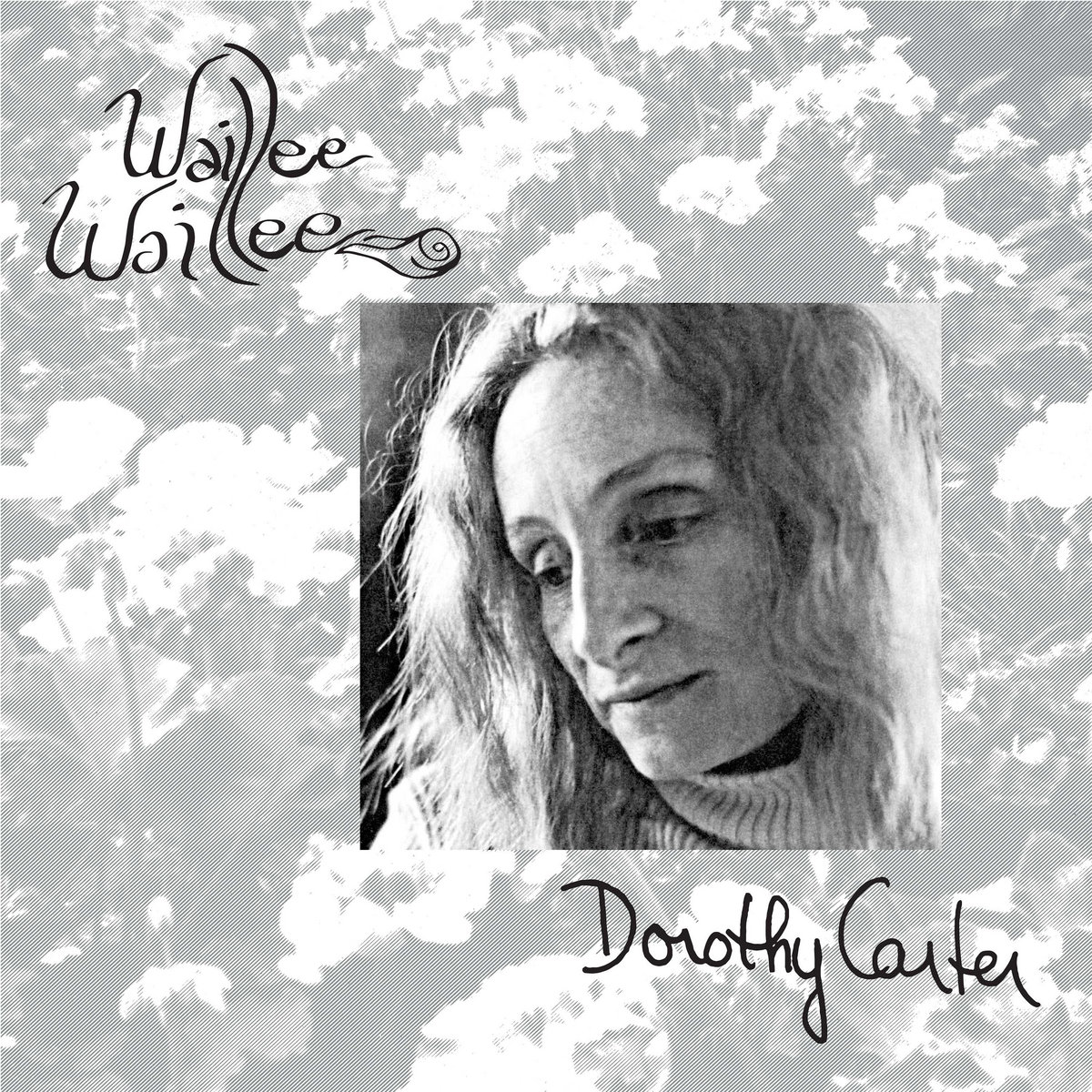
Late last year, New York label, Palto Flats, reissued Dorothy Carter’s 1978 LP, Waillee Waillee. Carter was a classically trained multi-instrumentalist, who moved from piano to harp and later focused her playing on a wide range of traditional zithers, such as the dulcimer and psaltery. Her experimental compositions fused folk and psychedelia, and in the mid-90s she co-founded the Mediæval Bæbes. While the title track is an unusual reading of an American folk standard, I was drawn in by a dramatic dulcimer melody called, Robin M’amie. Reminiscent of a polite olde royal court dance, I thought that it could, perhaps, sit nicely next to the Penguin Cafe at sunset. Tree Of Life is an ethereal Essene hymn, backed by harp and Bob Ruteman on a “steel cello”, which buzzes, creaks, and drones. The highlight, though, is the haunting, hypnotic, Along The River. A James Joyce poem set to more harps, and psaltery, that would make a perfect, slightly eerie, but seductive, folk-horror score (1).
Listening to Waillee Waillee put me in mind of some of the other more “out there” folk records on my shelves, like those of Vashti Bunyan. In the mid 1960s, Vashti made a shot at pop stardom, orchestrated by The Rolling Stones’ manager Andrew Loog Oldham, with a cover of a Jagger / Richards composition, called Some Things Just Stick in Your Mind. When the 45 failed to dent the charts, Vashti instead took a horse and cart from South London up to the Hebrides, to join a commune founded by singer-songwriter, Donovan. When she returned, Vashti recorded the songs that she’d written on the trip, with help with friends from Fairport Convention and The Incredible String Band. British folk champion, Joe Boyd produced the album, Just Another Diamond Day, which, when it was released in 1970, was lost, forgotten. Only to be rediscovered, and reissued, three decades later. The title track is a joyful ode to a simple off-the-grid, back-to-the-land lifestyle, and glorious tune to spin off a morning. Glow Worms is a song of the seasons, sung to a lover, in an intimate whisper, with a soft lullaby swing (2).
Just like Vashti’s debut, Linda Perhacs’ Parallelograms was also released in 1970, but was sat on and ignored, and again, celebrated, coveted by heads and collectors, and then reissued, as we entered a new millennium. Living in Topanga Canyon and working as a dental nurse, Linda spent her free time travelling the Big Sur coastline, all the while writing songs. A friendship with the successful film score composer, Leonard Rosenman, led to him producing Linda’s LP. The album is flawless, but, perhaps, too fragile, at the time, for radio airplay, which no doubt contributed to its disappearance. All acoustic guitar, and gentle percussion, Perhacs’ melodies, and unique wordplay, float like feathers, leaves fluttering, blown in a breeze. Hey, Who Really Cares?, co-written with jazz legend turned Hollywood arranger, Oliver Nelson, was picked up as a TV theme, but the titular tune is the record’s centrepiece (3). Described by Linda as “visual music”, “a moving”, “3-dimensional” “sound sculpture”, the song, itself an eccentric exercise in the poetry of geometry, is multi-tracked and ethereal. While Linda says that she never used psychedelics, it abruptly breaks down to an even more ethereal, echoed, trippy mid-section, of treated, stereo-panned vocals and tape-effects (4).
Then there are those releases, like Alice Damon’s Windsong, that mixed folk with new age. Originally recorded in 1981, and distributed, in teeny, tiny numbers, on cassette nearly a decade later, the album contains beautiful blends of haunting vocal harmonies, fretless bass, and field recordings of insects, waterfalls, plus the animals found, in and around Alice’s remote North Vermont homestead. Light In The Attic put a track on their 2013 compilation, I Am The Center, and their offshoot, Morning Trip, subsequently restored and reissued the whole album in 2021. Tracks like Treetop Winds are a wonderful wash of wordless sighs and piano.
Inspired by Dorothy, I also dug out a few dulcimer / zither-driven delights…
The first time I heard a dulcimer must have been when watching Nick Roeg and Donald Cammell’s Performance. While Ry Cooder used the instrument in places on his original score, there’s also an uncredited solo that accompanies the infamous threesome between Mick Jagger, Anita Pallenberg, and Michèle Breton.
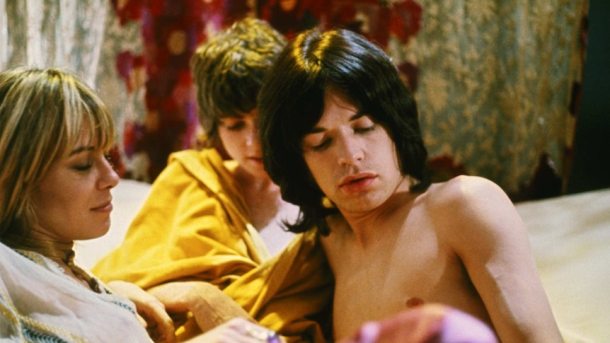
Whenever I hear those pretty, prancing, metallic microtones, it’s this scene that I always flash back to, and it was probably this aural Pavlovian pornography that made me pick up Pandit Shiv Kumar Sharma’s 1999 Real World CD, Sampradaya. At the time, I was entering into a period of enforced sobriety, and investing in traditional trance-inducing music in an attempt to replace the drugs. Sharma was India’s most celebrated classical santoor exponent. Teen Tal, especially, over 23 minutes, through a quickening of tender caresses, climbs to climax after climax, just like great sex.
This in turn led me to Larry Edward Gordon, aka Laraaji. Discovered by Brian Eno playing a modified autoharp in New York’s Washington Square Park, and a guru in laughter therapy, I know its a cliche for new age-y, meditative music, but Laraaji’s pieces are truly healing. Full of incredible warmth and honesty. When I got to interview him a few years ago, I wasn’t disappointed. In the middle of the COVID pandemic, I was largely alone, and plagued by uncertainty. When he told me, plainly, that life is change, and to simply embrace it, I found a real strength in that. It’s something I’m very grateful for. His music ranges from the electronic treatments, which his probably most famous for, to playful acoustic, campfire nursery rhymes. Either way, he is always philosophising, sharing a message, and improvising with his strings, creating shapes from their buzz and resonance. Sending out pure positive vibrations. Something like the heavily processed Unicorns In Paradise sounds like early Tangerine Dream, or Ash Ra Tempel (5). Its occult oscillations transporting the listener in and out of the void. Laraaji and Dorothy were, of course, friends.
Northern Irish musician, Michael O’Shea, described himself as a ”Traveling acousto-electric troubadour”. His No Journeys End is a hypnotic, hammered epic, created on another homemade zither, his “Mó Chará” (Gaelic for “My Friend”). It was recorded at London’s Blackwing Studios, a location favoured by 4AD, in 1982, and produced by Bruce Gilbert and Graham Lewis, of Wire. Originally released on the duo’s Dome Records, and reissued in 2019 by Dublin’s Allchival, its a rippling, rhythmic river of spinning, spiralling, kaleidoscopic patterns, and perhaps, of all the pieces mentioned, comes closest to that sensual Performance scene.
Dorothy Carter’s Waillee Waillee is out now, on Palto Flats.
You can hear some of these selections on my radio show, The Remedy, this coming Saturday.
NOTES
1. The Mediæval Bæbes once covered The Wicker Man’s Summerisle.
2. Following her rediscovery, Vashti cut a couple of lovingly crafted, now highly prized, albums for FatCat.
3. Nelson coined the term “Abstract Truth”.
4. I have the Mexican Summer pressing, which, to my ears, sounds perfect.
5. You can find an edit of Unicorns In Paradise on the Light In The Attic compilation, I Am The Center, a collection released when diggers the world over were discovering music by privately-pressed new age-y artists, such as J.D. Emmanuel.
Discover more from Ban Ban Ton Ton
Subscribe to get the latest posts sent to your email.
 Ban Ban Ton Ton