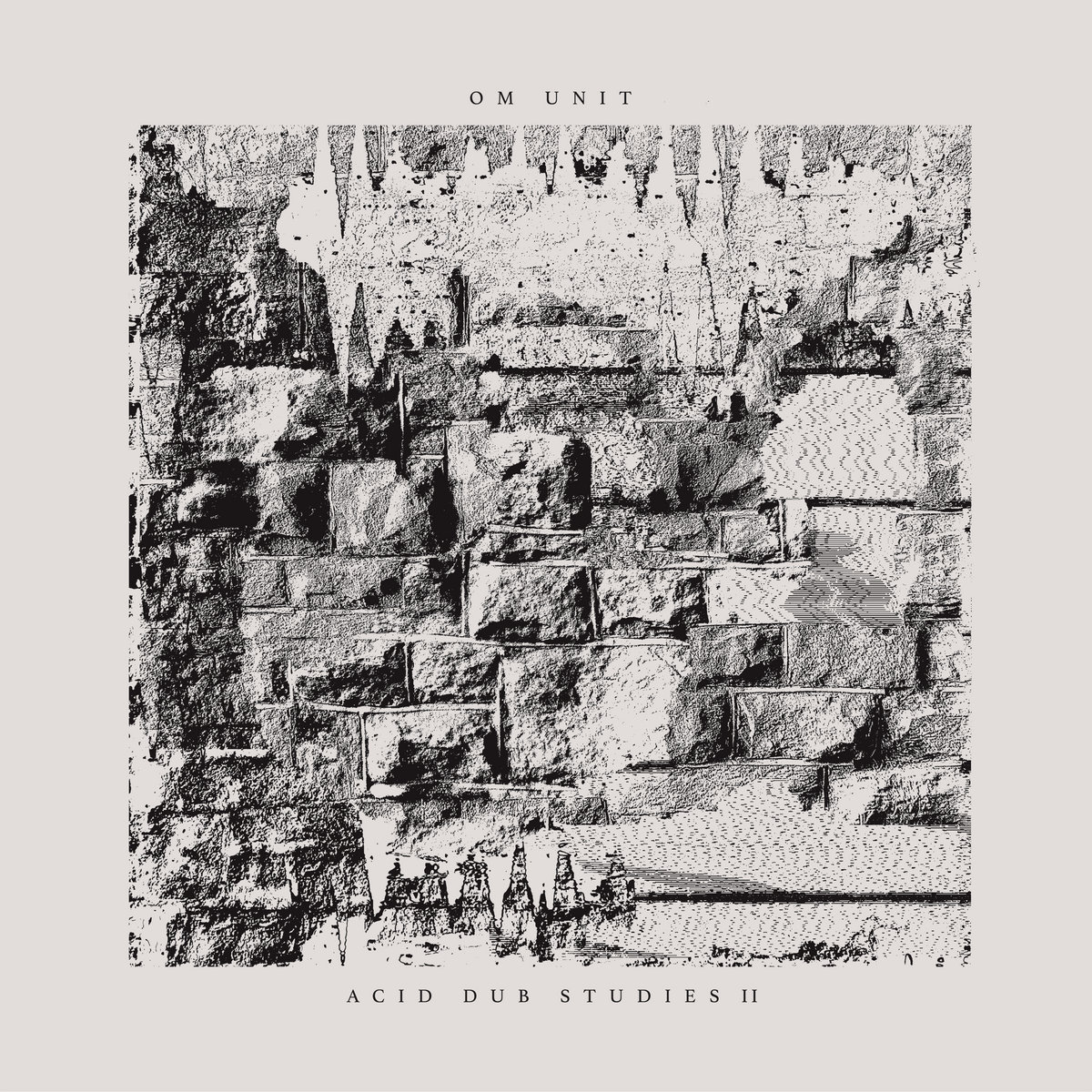
Jim Coles has been making music as Om Unit since 2010. His first 45, Lavender, was chunky, kind of electro meets deep house, but since then he’s experimented with a variety of genres, often bending and blurring them. The common denominator in his output has always been bass. Very active in the healthy scene of his adopted hometown, Bristol, Jim crossed over to a much larger audience with the launch of his amazing Acid Dub Studies series in 2020. Analogue synth reinterpretations of digital dancehall rhythms, currently running to two volumes, and partnered with guest Versions, these albums are stoned slo-mo scores for imagined future, alien, worlds. Stripped back, spaced-out, and scientific, in what amounts to a very dread dub techno, pins drop into infinity, in the void between thier sounds. Mixing mercurial metallic percussion with sometimes Morricone-esque melodies, the TB-303 is, of course, their focus. Trapping the emissions from Roland’s little silver box and sending them spinning in delay.
The success of the Acid Dub Studies project has made Jim an in-demand, globe-trotting, DJ and live performer, but he took time out of his hectic schedule late last year to talk to me about his influences for Electronic Sound. That chat can be found in the magazine’s latest issue. The interview, however, overspilled, and you can read some of the conversation that didn’t make the printed cut here now.
I know that you’re currently based in Bristol. Is Bristol your hometown?
I wasn’t born in Bristol, but I always felt an affinity with the place after first coming here in 2011 or so. I think it was just the unpretentious atmosphere which felt really refreshing after being in London for many years. I moved to Bristol in 2015 after some 15 years in London watching basically everybody I know leave, and all the clubs I loved close down thanks to the gentrification cycle. There’s always been something of a feeling of possibility about Bristol, and a sense of freedom to be creative outside of norms here somehow. It’s a bit of an island of sanity politically for me as well, as Britain has seemingly gone further and further into this perpetually moaning right-wing pseudo-conservative malaise. In general, I find in Bristol there’s a lot of like-minded people around creating interesting music which I enjoy being amongst. It gives me faith.
Bristol has always had an amazing music scene. When you go out to listen to music, or dance, where do you go?
We are very, very fortunate to have Strange Brew, which for me feels like the epicentre of a broad spectrum of music, from performance art to techno and house DJs, to bass music, EBM, disco, ambient, punk shows… all sorts really. I’ve been out there more than anywhere else in Bristol of late. There’s other legendary spots too like The Exchange, or Cosies! As well as the Love Inn, and of course the legendary Trinity Centre, but I honestly don’t go out so much these days, as I’m getting older and fussier.
How would you describe the music that you make now?
I’m lost as to what to label any of it now, although it’s not at all anything new. I guess I don’t like to think too much about specific genres that I derive stuff from, or I end up getting sucked into just doing that, so in the process I end up with sort of hybrid things that I can’t really label but feel more like me, so I’d say just the usual influences, maybe more clubby at the moment, between doing the acid dub stuff which is an ongoing exploration of its own.
Were you DJing before making music as Om Unit?
I started DJing in my bedroom in 1995, but my first sets in public where when I was at university in 1998. I then got into scratching/juggling pretty seriously and ended up doing some DJ battle stuff for a few years, before shifting more into production in the mid 2000s. I still did the odd set in bars in London, here n there, playing hiphop, garage, broken beat, funk and stuff like that. The whole time I was collecting records and equipment, but it wasn’t till I was 30 in 2010 that I’d decided to really give music a go and decided to push this new ‘Om Unit’ project as both a ‘proper’ DJ/Producer so to speak.
Nowadays I still DJ quite regularly, despite the new live show I’ve been doing. I’ve just been booked for Dekmantel Selektors in Croatia for 2024, for example, and other bits for next year so there’s still momentum at the moment with that side of things, which I’m pleased about as I’ve been pivoting away from some of the sounds I`ve been known for up till recently.
Has your studio set up changed significantly? Do you have a favourite piece of kit, or something that is central to your sound?
Over time it’s evolved naturally, and in recent years I’ve gone deeper into analogue synthesis and outboard effects – via the dub explorations – so now it’s mostly outboard synthesis alongside some software stuff, but I tend to try and process things using outboard FX chains and keep things more playful that way. I recently got hold of an amazing Grampian 636 spring reverb clone that sounds better than any reverb I’ve used before, and that’s sent me down a rabbit hole of late, as well as the Eventide h90..
I’ve got way too many 303 clones, now including a modded one by Finlay Shakespeare, that’s very fun to play. I’ve also been learning more about synthesis in general, in order to design my own sounds from scratch, and get more clever with that. At the moment I guess what’s central to my sound is a combo of everything as well as some fun with editing and certain mixing tricks.
I picked up the Lavender 7, back in 2010, which is sort of bass heavy, pitched down, deep house. You’ve recorded in a lot of styles since then – house, dub, techno, drum & bass – you had an E.P. on Metalheadz – all of them bottom-end obsessed, and often combining elements from all of them. I was wondering which of these genres came first for you? And what is it that appeals about bass?
Jungle was my first love as a kid in the `90s. I actually began messing around with making music in 1994, with tracker software, and so the phase where I worked on some music for Metalheadz was like my homage to that sound, and what It meant to me as a kid. Records like Unofficial Ghost, by Doc Scott, or The Raven, by Ed Rush where life-changing for me as a teenager, so being able to contribute to that lineage – whilst arguably having a minor mid life crisis – was a real honour.
The flipside of that, of course, is that everybody thought I was part of the movement, but really I was there just to offer a body of work as a moment in time, as part of my ongoing exploration of sound and music. Obviously basslines have played a part since day one, since it’s so central to the UK electronic music sound, thanks to the influx of Carribean culture into the UK – which we must all be so very grateful for. I’ve always been interested in fusing the feeling you get from a jungle or early dubstep record into anything I do really. It’s a natural starting point. To me personally it’s all the same anyway, it all comes from techno and other American black music in general, funk, disco and jazz and blues and reggae, so I’ve always thought why limit your choices when it comes to how you piece things together.
Records like Lavender came about from being fascinated with the slower end of deep house, via people like Moodyman and Theo Parrish, as well as people like Mark, or even more experimental artists like Newworldaquarium – where there was that classic house feel to it but somehow more spaced-out and looser and more psychedelic even. At the time I was enjoying that melting pot, in around 2010 or earlier, where technology had become so much more democratised and you had an explosion of DIY electronic music that totally subverted major labels – along with the advent of internet music streaming and sharing… so I think I was just taking it all in, from the whole LA beat scene stuff to the dubstep thing in London as well, and I guess over time I just figured out how to carve my own voice using all those experiences, largely from being at DJ and live events where the sound system had a big impression on me. That somatic experience of low frequency audio is a big part of what makes me tick creatively.
Can you tell me more about your collaborations, with Matryn, El-B, TM 404, Deadbeat, Seekersinternational? How did these collaborations come about? Do you plan to do more with any of these artists?
I’m a big fan of all of these artists. I have their records, and it’s been an honour to connect with them and explore what the meeting points between us look like. The collaborations all just came out of conversations online, mostly just reaching out and talking and trying things and seeing what works. I’d work with any of those people again in a heartbeat yes!
While you’ve been releasing music for over a decade, your recent Acid Dub Studies project seems to have gained you a greater, wider audience. Can you tell me more about the idea behind the project, and where it came from?
Basically, I was very frustrated about where I’d ended up being pigeon-holed both as a DJ and producer. People kind cottoned on to me via the Philip D Kick stuff, or maybe my jungle stuff as Mahakala, or even the torchlight/160 stuff I’d done on my label Cosmic Bridge.
I don’t mind that association because it’s part of who I am creatively, but I felt I needed to say more and go further, and respond to that frustration, instead of getting caught up in the egotistical game of projecting my frustrations onto the people around me. I took a bit of time to experiment with studio techniques, and one day I was round my mate Jules’s house (Missterspoon) who had her Aira 303 plugged into an FX unit on her coffee table, and something clicked. I’d been obsessing over dub techniques for a while, and I suddenly felt it all come together and began writing the initial sketches for Acid Dub Studies, which is still an ongoing thing in parallel to writing more dancefloor stuff and the DJ side of things.
Sonically, I was really gripped by the mixture of tonality from the 303, and how expressive it is , plus that sustained ‘mantra’ effect that happens with analogue delay techniques. There’s a language to all that somehow in that combination of sounds.
Were there any artists, or records, that inspired the project? Do you have any acid / dub favourites / classics that you could share? When I listen to Acid Dub Studies I, I think of things like Recondite’s Tie In, some of Tin Man’s stuff on Acid Test, heavier things like Edison Electric’s Acid Hall on Chrome.
I was for sure influenced by Andreas Tilliander’s acidub album, as TM 404, but he was coming at it from a pure techno sphere – in that kind of plastikman lineage of ambient technoid soundscaping – whereas I was more interested in building sound system rhythms similar to digital `80s reggae productions from the old Jammys and Firehouse studios, as well as UK steppas stuff. Even the Berlin minimal, Basic Channel side too, to some extent.
Since starting the Acid Dub Studies I’ve been digging very hard into finding others who have done something similar and found some interesting historical ‘acid dub’ that I might make a mix of at some point.
Did the Mo Wax comp, Now Thing, and producers like Lenky, Steely & Clevie, impact on what you do?
I’d be more into the digital `80s side of things than people like Lenky, although I do like his weirder productions, and some of the oddball `90s dancehall versions you can find where there’s this experimental approach to using samples in a Jamaican context. This is what’s informed people like Equiknoxx / Gavsborg / Time Cow, and others, in the modern era. Those weird minimalist versions, where the reverbs are out of time in interesting ways, or there’s just off-the-wall uses of samples, in these kinds of garish and outlandish ways, that are very fun to hear, and play out.
I have to ask, do you have any “traditional” dub favourites?
Blackbeard, Earthquake, King Tubby, of course, Scientist, Duke Reid, Lee ‘Scratch’ Perry, Mixman, Adrian Sherwood, and plenty of other bits and pieces, that I have on vinyl at home.
For the Acid Dub Studies “Versions” you called on people like Deadbeat, Seekers, Dubkasm, CV313, Tapes, and Surgeon, but how did you find the perhaps lesser know folks, such as Yushh, Hodge, Amy Kisnorbo, Nadia Struiwigh?
Yushh is a local legend in Bristol, and well respected, so that was easy. Amy is my partner, and is doing pretty good under her own steam, building with Sam Bingas’s Pineapple label. Hodge is actually, amongst the UK youth, arguably the highest profile artist you`ve mentioned. With the exception, perhaps, of Surgeon. He is, again, Bristol based, and he was the first person to book the Acid Dub Studies live show. The connection with Nadia came about via a remix swap, where I was approached initially to rework something of hers for Nous’Klear Audio, which actually just came out this past month.
How did you hook up with ZamZam? I love the Mystic 808 track. Do you have anything else lined up with them?
I’m a long-time fan of theirs, basically, and we’re friends too, since first meeting in Bristol, via Stryda from Dubkasm. We spoke, almost 10 years ago now, about doing some music, but I never felt I had anything that might work until the last year or so.
You recently played at the Convenanza Festival. How was it? Was that your first time to Carcassonne?
It was a true honour to play at Convenanza. Bernie and the team are great people, and the spirit of Weatherall is most certainly alive and well as the Brits take over the old town. It`s such a great crowd of seasoned and dedicated people, who love music and are still curious about checking out new stuff. I went out there alone and was made to feel very welcome. I got some great feedback on the live show too which meant a lot!
Can you share any of your plans for the coming year?
For 2024 it’s uncertain, given the state of the world, how to say how it might go, and it does seem somewhat crass almost to be trying to be like ‘come to the club‘ or ‘buy my music‘ to people right now. I guess music is so vital, and if we can keep the option of assembling on a dancefloor open for people, despite all of the problems facing us, then I say it’s still worth having that option.
I’ve been really enjoying DJing in new spaces over the past year, to different crowds who are open-minded to what I can weave together, and I hope to be able to continue doing that. Diversity in terms of genre and musical style has been the modus operandi lately, where I can really play what I want to play – respectfully to the crowd of course – and, for example, it’s fun that i’m playing alongside Iration Steppas and Miley Serious in the same week. That really excites me as a record and music collector to be able to have that challenge, and scope. Long may it continue!
In terms of releases, I have an 8 track solo E.P. done and there’s plenty of collaborations with various quality people in the works too, which I’m very excited about sharing more news on in the near future.
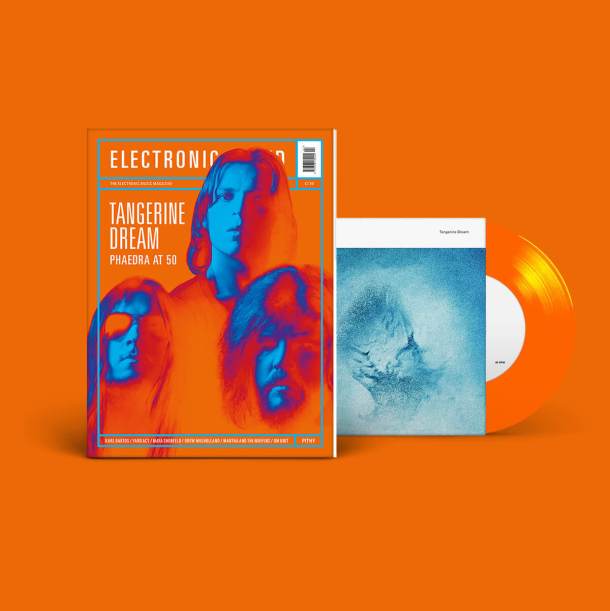
You can find Jim talking in depth about his influences in Issue 110 of Electronic Sound.
Jim’s most recent releases include Mystik 808, on Portland’s ZamZam Sounds, and a remix of Mr. Ho for Klasse Wrecks. His Bandcamp back catalogue can be checked out here.
Discover more from Ban Ban Ton Ton
Subscribe to get the latest posts sent to your email.
 Ban Ban Ton Ton