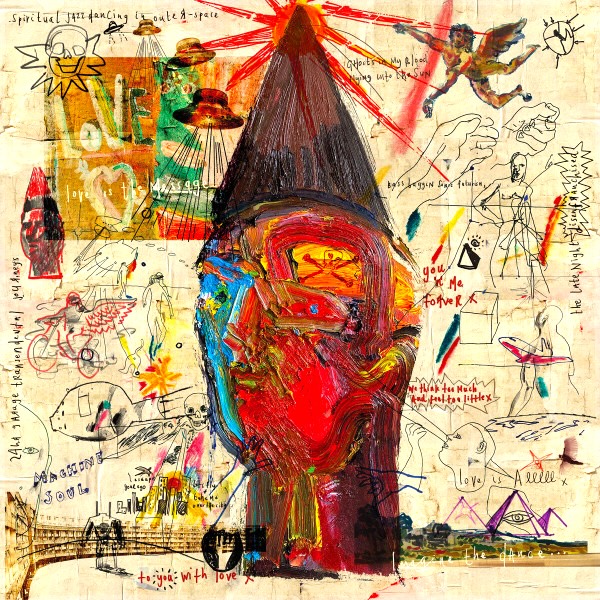
Incredible interview care of Kristan Caryl.
I’ll keep this introduction short because Luke Una has far more interesting things to say than me. His stories draw from almost 40 years on the dancefloor – as a DJ, a dancer, a producer, and a promoter of seminal clubs like Manchester’s Electric Chair and Croatia’s Electric Elephant.
Luke is an embodiment of putting the music first, and no sounds are off limits, just so long as what he plays makes him feel something. In recent years, that means the northerner has become, in underground music circles, what mainstream telly would describe as “a national treasure”. His words of impromptu wisdom and streams of thought-provoking consciousness broadcast via his radio shows and Instagram streams have given a voice to the disenfranchised, while his catchphrase “move it on” is a great mantra for this culture.
On Friday June 20th, the man behind the É Soul Cultura label, parties, mixes, and compilation series plays Wildwood Festival. Ahead of that, I talked to Luke about how he organises music, life as a sober artist, the cult of personality and many more topics on which he has endlessly fascinating insights.
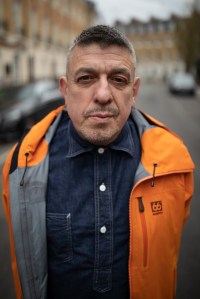
You’ve become a bit of an accidental hero in the last couple of years – an authentic voice of the underground. How does that sit with you?
What a question. Accidental hero. Yeah, it’s a funny one; I don’t want to sound arrogant, but obviously, it does feel nice. It would be disingenuous of me to say otherwise, and false modesty feels slightly fake. So, I take it as a compliment.
Without sounding too Joe Wicks or early Gandhi about it, I feel very different than I did. I’ve always loved attention. I was like this as a kid, sat around in my mum’s house on St John’s Estate where I grew up. I used to be at her little coffee mornings, surrounded by loads of women. I loved the attention and I always have… But in the last 10 years, I’ve changed. A lot of that has been due to grief, loss, things not quite working out, and obstacles and challenges. I think it changed me. I’ve probably escaped my ego a bit, so I’m also more aware that the accidental hero badge makes me slightly uncomfortable.
You have to be careful that your happiness isn’t rooted in other people’s affirmation. The constant need for affirmation, the constant need for “likes”… I film myself on social media and share it, and I would be a liar to say I don’t enjoy that validation… but I am very aware of what that is and its limitations. Happiness based on validation isn’t necessarily true happiness. It kind of reminds me of that poem “If” by Rudyard Kipling: “Let triumph and disaster be treated like the impostors they both are.” The constant need for validation is part of that, I guess.
You’ve really embraced social media to connect with people and it’s had positive benefits. You seem like a natural host on the radio too.
Most of it has been very natural. I haven’t contrived it. Okay, maybe a few moments of virtue signalling and presenting myself in a certain way – it’d be daft to say I hadn’t done that… but, you know, there have been a lot of positives from it as well. I’ve really enjoyed the process. I feel I’ve put myself out there, and there’s a lot of honesty with that too. While there’s the obvious narcissism of filming oneself a lot – which I can’t deny – I actually call myself a proto-narcissist. By that, I mean, if you look at the actual definition of narcissism, it was really just this need to look at your reflection – a purely vanity thing. Whereas now, we really identify narcissism with more of a Machiavellian, sociopathic, occasionally psychopathic tendency. I like to think I’m in the former, the proto-early adopter narcissist team – a bit showy, but I don’t think it goes much further than that.
However, there is a lot of pressure, and there are some downsides when you share your soul publicly. There are real dangers that can come back to bite you. I’ve had moments where I’ve regretted how honest I’ve been, particularly in terms of my mental health. So, yeah, there’s been a lot of pressure, and at times I’ve regretted it… but ultimately, it’s who I am.
What was the catalyst for turning towards a healthier lifestyle?
My healthier lifestyle was honestly very straightforward. Three years ago, I received a phone call from my doctor. It turned out I had a heart issue. Literally, the moment I received the phone call, it was over. I was done. I was done with alcohol and everything else. Once I stopped, I never, ever wanted to go back. The fear and the anxiety… Don’t get me wrong, I loved booze, but not the days of self-doubt and constant rumination.
So, once I had done a solid year of trying to solve the heart issue, I didn’t want to go back. It wasn’t some over-earnest, holier-than-thou “look at me being clean and wonderful” type of wellness culture, which, as much as I love elements of it, there are parts of it I really am uncomfortable with… But that’s another story. It was just something I never wanted to go back to.
My creativity went through the roof. I listened to music in a different way. I think I DJed better. My life was better. My relationships were better. I was more honest with myself. There were moments when you had to sit with being very naked with it. There were no props. Nothing to make you feel alright. You had to sit with the pain, the grief, the occasional moments of self-hate, or certainly the moments of being down on yourself. It’s something we all talk about in this industry, but there was a sort of imposter syndrome.
Good friends of mine, some of them, God bless them, aren’t here with us anymore had similar feelings, and it’s an awful thing to feel. It’s one of the darkest, most challenging parts of ADHD, but it’s much better ultimately without booze. You are better equipped and stronger to deal with it. Even if, in the short term, it is so much more difficult without it.
My DJing is so much better. Getting sober just somehow focused my mind onto another level, and I feel like I DJ much better, both with my technical skill and mixing. When I look back, it feels slightly more anaemic than where I’m at. When I play loud now, I play a lot fewer big tracks. I don’t mean that in a “look at me being so rare and clever” way, but it’s just where I’ve arrived. It was strange to be sober and just put my whole focus and attention into playing records, both vinyl and on USB, improving my craft, and becoming a better DJ taking more risks. I guess I kind of think I went a bit deeper into it, being less people-pleasing and I guess my DJ style changed. I did care about the transitions, the mixing in a way that became much, much more important, more preparation, more practice, more self-criticism, more thinking about how I can improve.
When you were diagnosed with ADHD, was it a surprise? Was it a relief to have an explanation for any questions you had about yourself?
Diagnosis can be a brilliant thing because it makes you realise there is a reason that you are like this. I think most people involved in music are people who are neurologically diverse. I mean some people are very cynical about it. I kind of get it because it seems to be everywhere, but I think people are drawn to music because it has a unique ability to make the noise stop, allowing your mind to focus. To transcend and escape.
You are doing that rare thing of getting more relevant, more respected, the older you get. Dance music tends to go the other way and generally prizes newness over everything.
Well, that’s a lovely synopsis, and one I’m very happy to take and without blushing. That’s a great feeling. And yeah, I’ve had a very strange almost back-to-front career, particularly the last five years after COVID which have been the strongest and most fulfilling. My honeymoon appears to be only just starting. I think I’ve just kept my head down and grafted and I’ve been in the trenches for four decades.
You know, life is a funny one. Serendipity, luck, is the cosmos sort of directing you? I mean, I don’t know. I am mildly more woo-woo than I used to be. The woo-woo clan and I am aware that two or three things have happened since COVID where everything’s aligned and my path in music has definitely become fuller, bigger, and stronger since.
The question about newness over everything. I think that’s always been the case with new music, new records, that zeitgeist, the shock of the new, whether it’s art, music, or writing, a new record, a new movement, whether it’s disco, house, UK garage, or whatever. That’s a wonderful thing. That is the energy. That’s the heart you need there… but at the same time, I think it’s in the sort of, I can’t remember the word, but it’s where I think people who have been in the trenches doing things for a lot longer are still relevant.
I think there’s definitely a case of some people having a pathological obsession with new stuff but that means they miss out on some amazing people. There’s no two ways about it. There are some DJs, like The Idjut Boys, Marcia Carr and James Holroyd, who are seriously, seriously underrated. I remember seeing Marcia Carr play for us doing a kind of this mad jazz dancer. It was insane. One of the best sets, as good as anything Theo Parrish would do, one of the best DJs there is in the country and probably doesn’t get the attention that she should beyond the walls of DJ culture, where she’s very much admired as a DJ’s DJ. It’s only the law concerning serendipity that allows the small number of people who have been in the game a long time to sort of rise later in the years. I’ve been very lucky that’s happened to me.
Anyone who has seen your Insta videos knows you have a fuck ton of records. How are they arranged? What’s your system?
Now, this is the mad one. There are people with a lot more records than me. Although I’m at about 18 /19,000 now, it’s no small collection. I would say that there is no system, other than I do things by vibes. House music tends to stick with house, soul in soul and jazz. But, you know, the Balearic section kind of encompasses everything from weird machine soul to standout pop singles on an otherwise awful album. So it’s certainly not chronological. It’s certainly not alphabetical. It is a very ADHD, crazy, bonkers system. God knows what someone would do if I passed away and had to go through my collection.
It’s worth saying I’m not a record collector. DJing is what I do and I, of course, collect records, but I’m not a completist or absolutist. I hate the idea of that. It doesn’t warm to my soul at all to have every record ever that Roy Ayers did. Not because I don’t love every Roy Ayers record in fact that’s a bad example because I love about 95% of them… but you know, there are people who keep records sealed and to me, that is blasphemy. That goes through me. The idea of not playing a record. That’s what they’re there for or it all gets a little bit boys’ club for me and a little bit boring. It’s just like fishermen discussing fucking ground bait.
How do you search out new music?
Music itself and digging for it is very, very straightforward. I go to flea markets, record shops, dealers. I listen to music at 5 a.m. when I get up, and when I go to bed— it is constant. Tracks that I get sent from friends. I listen to other DJs. I Shazam everything. It is an absolute OCD of mine when I look at digging for music— even down to just finding an album and finding out who the producer was from this rare Catalan Spanish spiritual jazz album, finding out that, oh, he did another thing in Morocco in ’73, and I’d go and listen to that. So it’s everything. It’s vinyl. It’s right at the heart of it— buying people’s collections, going into record shops, digging all over the world. But it’s also Bandcamp, Shazam, Discogs— and just loads of people put me on to music. I’m very honest about that. If someone told me about a record, 99.9% of the time, I will honour that story and tell you where it came from.
You have been behind several seminal club nights, venues, and festivals. What are the ingredients that really make a good party?
I think a Dave Beer point, which I think he probably borrowed from someone else, probably goes back to Miles Davis or someone, but don’t throw an event you don’t want to be at yourself. I think it’s an obvious truism, but it’s true. You’ve got to love it. You’ve got to want to be there. You have to have the excitement. You have to have that; you have to have a mojo to want to be in that club. I think you just deliver it without trying to be a people pleaser, just deliver it from the heart. Do it as you see fit… because then it’s real, it’s authentic, it’s natural, it’s not contrived. It’s not wannabe. It’s not a pastiche of something from the past. It’s something where you are genuinely using your influences musically, and culturally, to put on an event.
Then I think that’s where the magic happens. Your primary goal should never be about money. That doesn’t mean you shouldn’t make money out of it. If people do, that’s wonderful and I’m never down on that, but it shouldn’t be your primary objective. I think the best parties are mixed. I’ve always thought this. The best parties are full of all sorts of different people, racially, gay people, a queer crowd, women, everything. Young lads who just love music and who love being in a mixed crowd, but I think that’s where the magic happens.
If you look and you read about The Loft, it was really, really mixed. Admittedly, it was rooted in a strong gay people of colour kind of mix, but there were all sorts of people there.. and it was a working-class collection of all sorts of people. I think I remember Grace Sands saying the only real rule for her party is we just don’t want any dicks or any wankers.
It’s not about trying to be holier than thou or better than other people or more underground or play more rare records. You just end up with a load of blokes in a pub function room playing records to themselves. People just need to feel very free in who they are. Some of the best clubs I’ve been to, there was also a bit of a rough element in there, you know. It was just a real mad wonky mixture of humanity sharing a kind of thing where we all somehow transcend and escape together.
I remember the wonderful Eric Barker, brother of Andy 808 State original house head and promoter in Manchester, one of the first coming to Homo Electric in I think it was a Pringle jumper or something like that. You know, it was so funny in this boiling hot club with trans kids in there, queer kids, the maddest, wildest shit going down… and there was Eric just walking with his jumper and jeans being very Mancunian and somehow it all just sat together and that’s what I love.
Talking about your own legacy could sound cunty, but as the years go by, do you ever think about it? Do you wonder about what body of work you’re leaving behind?
Oof, that’s throwing me. Do I ever think about it? I don’t really. It’s really funny. I’m an over-thinker, so I’m always questioning myself in my moments of extreme procrastination alone at 5 AM after a gig. Am I doing this for validation? Is it the extension of the ego? And as I said, to say there’s no ego would be, I don’t know, quite disingenuous and not true… but at the same time, it really is only a very small part of what I do. I don’t think about the legacy. It’s really quite hard. I don’t feel like I’m pissing on a tree and leaving my scent for future dogs to smell and remember me. I’ve always been hyper-motivated to do stuff that is creative and stuff I love. I cannot stop myself. My mind is constantly whirring and jumping into whole new areas of thought and creativity. So no, I don’t really think about leaving a legacy. I just love the sharing of knowledge. I love sharing music.
You play Wild Wood Festival soon. How does playing festivals differ from playing clubs?
Well, if I’m being honest, there are a few festivals that are exceptions, and Wild Wood is one of them – Houghton, We Out Here. There are some festivals, like the Big Chill, which I used to adore… but generally, I do prefer a dark, dirty basement with amazing sound. However, there are certain places, like Wildwood, that are just exceptions with beautiful sounds. Somehow, just a magical gathering of people as the sun comes down, it takes it to another level.
The acoustics at Wild Wood are stunning, and you can play less “festival-like” at a place like Wildwood. It’s a bit more deep, like a club, and you don’t have to play big, big records. You know, I think sometimes some of the bigger festivals, you really have to be dynamic and do a festival set, because people’s attention span is less… but Wild Wood’s a belter.

How important is it for the culture to stay DIY and independent or is that too idealistic these days?
Well, here’s the thing: it’s fundamental. I think music must come from the heart. It must come from the roots. It must come from the need not to people-please. It must come from the need not to sell out. Your primary goal must not be about making money; it has to come from that. At the same time, I think people get stuck on this point and, in my humble opinion, get it wrong and see the big clubs as the danger. All these things can coexist.
Some of the greatest clubs in the world happened at the time of the greatest growth in big, more commercial clubs… and they still managed to thrive. It’s not a competition. In fact, sometimes the dominance of big clubs gives wind in the sails of the underground because people want to make it more authentic. The reality is that the DIY scene can exist in its own beautiful ecosystem, in whatever condition. Some of the greatest clubs happened on the back of austerity and depression financially. You know, New York City was in debt. The city was on fire. Everyone was on their back foot. Life was hard. There was poverty… and yet, the Loft, Paradise Garage, hip hop, soul, disco, house music all happened. The great post-punk funk fusions of the likes of ESG, all happened in one of the most difficult times. It happened in a reaction to a dominant mainstream, and people got together.
Some of the greatest clubs, where adversity created the need for people to do their own DIY thing, where they’re not bothered about the big, more shiny clubs at the other side of the city. Let them do their thing. Do your thing, focus on what you love, and it will happen. The big brands and businesses just do their thing, whatever you want to call it. Both those things have historically existed side by side.
The moment it gets difficult, the difficulty will be the thing that gives the DIY scene its heart and soul. It is in reacting to austerity and challenges and difficult times when the magic happens. Look at any historical period. As I said, acid house, Berlin, New York in the ‘70s and ‘80s— a backdrop of incredibly challenging times. The greatest clubs, the greatest movements in music and creativity happened in those times. That’s the way I see it.
The É Soul Cultura albums have been a huge success. Are there more on the way?
Yes, there are more on the way. Number 3 is arriving in October, and the music comes from all different angles. I just literally pull together the records I love and create a set based on tempo, vibe, rarity, love, tracks I love, tracks I have a certain mood for, a different tempo, and it all just seems to come together.
Luke Una is hosting an E Soul Cultura stage on the Sunday 22nd June, with Hunee and Marcia Carr, at this year’s Wildwood Festival. Taking place between June 20th and 22nd, you can find more details on the whole weekend, and purchase tickets, here.
A huge Thank You! to The Insider, Kristan and, of course, Luke for the interview.
Discover more from Ban Ban Ton Ton
Subscribe to get the latest posts sent to your email.
 Ban Ban Ton Ton
Great music and read!
LikeLike
Great music and read!
LikeLike