Pukka prose by Patrick Syms.
Like my belated discovery of The Herbaliser’s Serge, I found Cédric “Pilooski” Marszewski’s Villa Isola long after its release. I can’t remember how I came across the record, but like an archaeological find, it felt all the more exciting for the time that had elapsed.
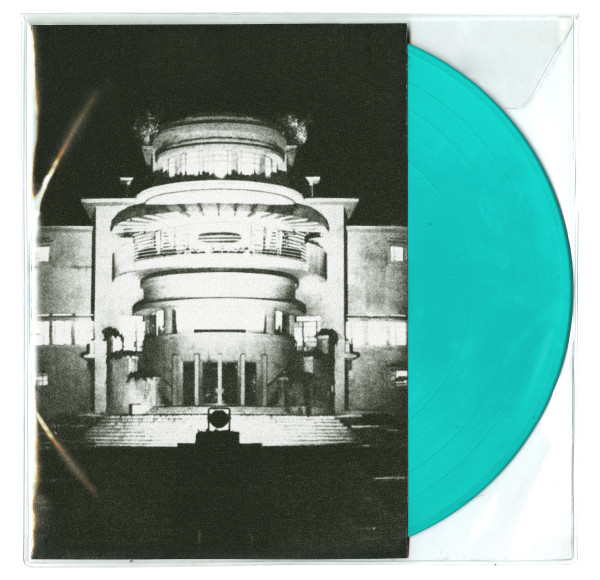
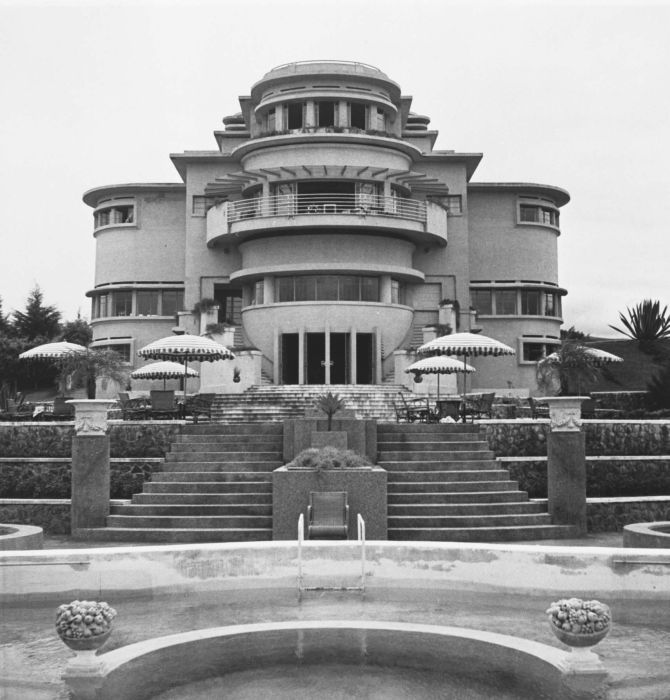
Named after the modernist palace built in Indonesia for a Dutch media tycoon in 1933, the EP features four tracks. Each with a separate collaborator delivering a spoken word piece in a different language: English, Spanish, French and Japanese. I love all of them, even though I don’t speak Spanish or Japanese and my French isn’t great. However, it was the opening “Completely Sun” that really captivated me.
The English text is fascinating in its weirdness, as seductive as it is unnerving. It helps that the narrator is Jarvis Cocker. His voice is so familiar and the acoustics so intimate, he could be whispering in your ear. The prose describes a kind of out of body psychedelic experience in which Jarvis becomes one with the sun. Meanwhile the music builds from an arpeggiated synthesised xylophone, with other instruments joining one by one, playing similarly repetitive motifs. Then midway through, Jarvis mentions eternity and a deep, stomach-shaking bass frequency bursts into the mix, not unlike the response of the alien spaceship in Spielberg’s Close Encounters. The whole thing becomes more and more otherworldly, as if we’re listening to music echoing round the concrete rooms of the titular Villa Isola. It’s unsettling. It’s mesmeric. I knew I wanted to write about it. That’s when my troubles began.
The track spoke to me, but I wasn’t sure how. I can describe the music, the words. I wanted to talk about how it made me feel but nothing I tried seemed right. Metaphor and simile, rather than getting closer to my intent, simply pushed it further away. I was at a loss.
I spent months wrestling with various attempts, each time growing more frustrated. Can words ever truly convey feelings? How well can a text translate emotions that are wordless? Is it pointless to try? I’m not the first to ask these questions, nor are they particularly profound. And, obviously, the real problem was the gap between my ambition and my skills as a writer… But I chose not to dwell on that. Either way, this navel-gazing was preventing me from writing. I needed a solution without any idea what it might be. There was only one thing to do: procrastinate.
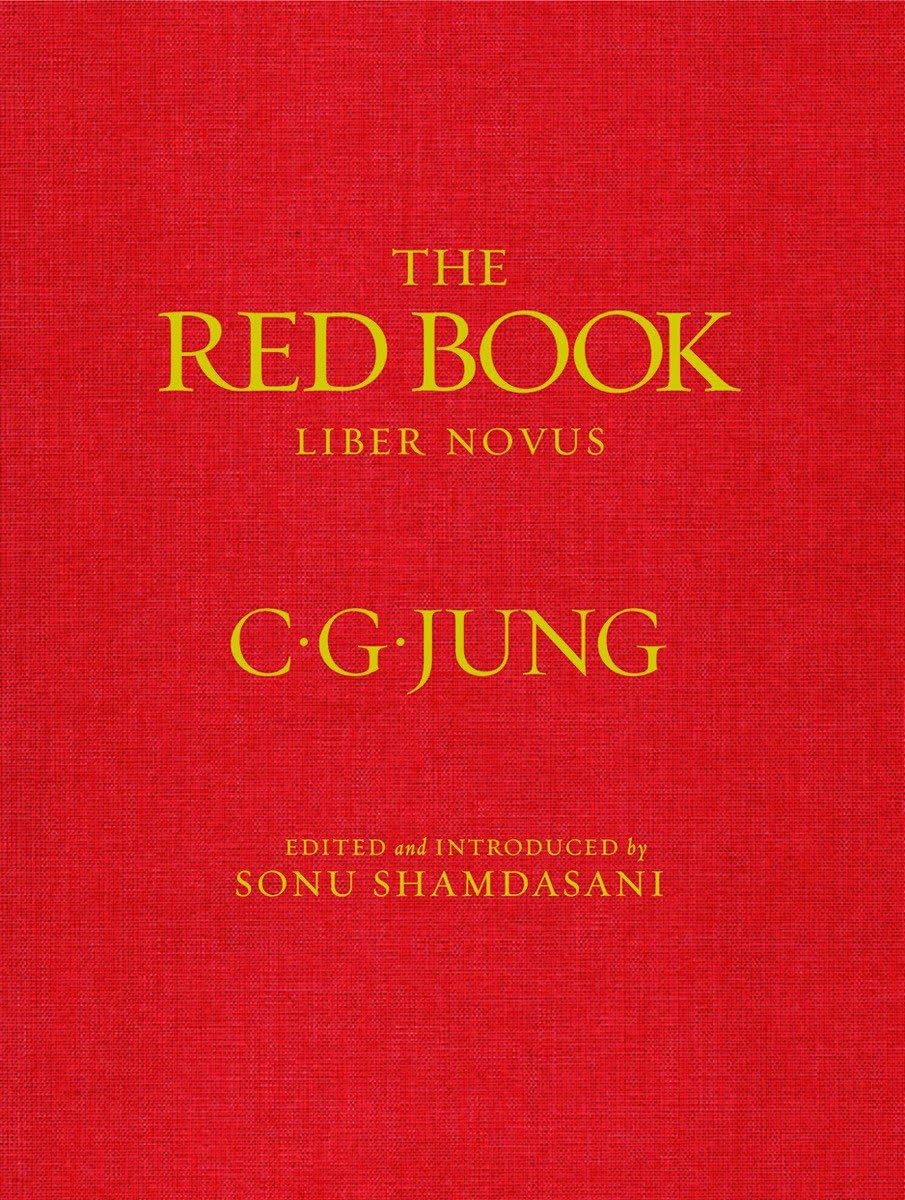
I’m at the cinema with my partner. We’re watching A Dangerous Method, David Cronenberg’s 2011 account of Carl Jung’s relationships with his patient and protégée Sabina Spielrein and with Sigmund Freud. At the same time, I tell myself that I’m not procrastinating. This is research. The text that Cocker narrates in “Completely Sun” is an extract from Jung’s Red Book. You see? Research.
I should also point out that this cinema is in France where the norm is to dub mainstream foreign language films into French. When the stars of anglophone cinema open their mouths here, it’s the voices of anonymous French actors we hear. My French is OK, not amazing, but good enough to muddle through everyday life. At the cinema, it can go both ways. Either I get quite a lot or not much at all. For a film like this one, even when I understand most of the dialogue, the whole dubbing thing robs the experience of a layer of authenticity. It’s hard to turn off the voice in your head that keeps telling you, That’s not how Keira Knightley would sound if she spoke French. I leave the cinema without finding my answer.
A similar challenge had presented itself when I contacted Pilooski for comment. I assumed that someone established in the worlds of music-making and fashion would probably speak English better than I speak French. So I emailed in English. When he responded in English, I wobbled. The people-pleaser in me replied in French that I would draw up some questions and forward them to him soon. I then realised that this might set the expectation that we would continue in French. I knew I would write this piece in English so if we continued in French I – or someone – would need to translate, which in turn might introduce subtleties of meaning that were not intended. My anxiety spiralled. I was in a tailspin.
I was saved from this nosedive, or so I thought, when Cédric replied to the questions I’d sent him. At last, here would be some hard facts on which to hang an article… But while there were plenty of facts in his generous response, they simply accelerated my descent. It seemed a large part of what inspired him was a desire to transcend language, to create a space where language no longer matters. I was doomed. I’ll spare you the agony of my attempts to assemble his answers into a coherent narrative. Instead, here are my questions and Cédric’s answers verbatim (with light editing for clarity)…
What was it about Villa Isola that inspired you to embark on this project?
The whole idea for Villa Isola comes from my love for spoken word from an early age, and more specifically, listening to the radio in bed when I was 8 or 10. The narrative form, the story telling, just like childhood bedtime stories. Then later, I was very impressed and influenced by the first Eden Ahbez LP, the mysterious and esoteric narration, the dreamlike feel… it’s still one of my all-time favourite records, in a league of its own.
The original idea for the Villa Isola EP was to have different tracks in different languages – French, Japanese, Spanish and English – like different perspectives from different parts of the world. Then the combination with the actual building’s aesthetic – created by architect Wolff Schoenmaker in Java – emphasises the idea of a faraway imaginary blurred world, a faraway country where different languages are one.
I understand that your ambition was to create imagined soundtracks for the projection room in Villa Isola. What kind of films did you have in mind? Or were you thinking of other kinds of entertainment?
Yes, I have a long history with movie watching as I cannot sleep without images, so I have watched quite a few. With time, I ended up just listening to the dialogue, imagining the movie scenes. I always have in mind the vision of the F. Scott Fitzgerald novels adapted on screen, movies like The Great Gatsby – the Jay Clayton version – or The Last Tycoon directed by Elia Kazan. The melancholy in these movies is central. Movies like Chinese director Bi Gan‘s Kaili Blues also emphasises the idea of deep melancholy linked to the idea of strong geographical and temporal moves, in which the characters are taken into an initiatory journey into time and space until all these elements become one.
Could you expand on the connection to Ahbez’s Eden’s Island? What was your impulse here?
Yes, the idea of a poetic narration, the long-lost memories, the distant and mysterious location of the Villa Isola in Java, Indonesia is the idea of the far away island, where languages do not matter anymore, the voice is the medium.
Each of the tracks’ texts are very different. What was the brief to your four collaborators?
It was very free. I just asked them to talk about something that moved them, something as personal as possible. The main thing for me was this idea of a collage of different voices and messages on the same record to create a kind of unity of language.
I read that the Jung extract in Completely Sun was Jarvis Cocker’s choice. Did you write the music to accompany the text? Or was the text chosen inspired by the music?
Yes, it was definitely Jarvis’ choice. I think he was very into The Red Book at the time. It was actually a very spontaneous process. I did all the music first, some minimal, repetitive and primitive music, with the idea of a sweet trance.
— — — — — — —
Given this contribution, the choice of Jung’s text, I also contacted Jarvis Cocker for comment. I suspect he was too busy launching the first Pulp LP in twenty-four years to reply. It probably didn’t help that my message misspelt his name. The most inane of basic errors; one that I’ve spent my adult working life obsessively avoiding… And yet, here, somehow, I managed to miss it. The one place, perhaps, in this whole episode where feelings do not transcend language. Admiration and reverence mean nothing if they’re accompanied by a punch in the face. Sorry, Javis. Good luck with the LP and the tour. And, of course, merci, Cédric, pour ces sublimes morceaux.
Patrick Syms’ debut novel is complete – I have seen the proofs. Ban Ban Ton Ton will endeavour to keep you updated on the book’s imminent release.
Discover more from Ban Ban Ton Ton
Subscribe to get the latest posts sent to your email.
 Ban Ban Ton Ton