
John Matthews is a veteran of the Boy’s Own camp. Close friends with Terry Farley and the sadly departed Andrew Weatherall. John and I have been in contact for ages but finally “physically connected” at this year’s Convenanza festival. John knows everyone, and very kindly did his best to introduce me one and all. He also – even more kindly – pulled me out of the trench that surrounds the castle dance floor, which – when a tad worse for wear – I’d fallen into.
John posts regularly on Instagram – usually about art exhibitions taking place in London – reminding me of what I am missing – he also writes for Faith Fanzine – where he managed to convince the magazine that proto-punk godfathers The MC5 were HOUSE. In addition, John has written brilliant essays on Weatherall’s club, Sabresonic, and Flying’s barmy “Balearic” trips to Riimini. He’s just had an article published by Spinners, on Mick Jones’ Rock N Roll Public Library, and here he contributes what I hope will be the first of many pieces for Ban Ban Ton Ton.
Magical musical musings care of the marvellous John Matthews.
The thing I distinctly remember about first listening to Surfing On Sine Waves, when it was initially released by Warp records back in 1993, is that I’d literally never heard anything like it before. To my young (ish) ears it sounded like the perfect amalgam of punk and industrial electronica (the musical styles via which I’d discovered acid house a few years earlier) but with beautiful, mournful, delicate melodies woven intricately into the fabric of the music. It sounded totally unique and felt like the most exciting music I’d ever heard. Each play of the nine track, fifty minute album revealed new and interesting sounds I’d not experienced with previous listens which meant I was continuously pressing play, again and again, each time the CD ended. The album was a raw, frantic, heart wrenching rush that fully satisfied my lust for new and previously unheard sounds whilst also stirring the feelings of spaced out, loved up amphetamine desire I experienced in the clubs and raves I attended each and every weekend (and often on week nights too).
From the eerie synths, ear worm hooks and breathtaking dubbed out handclap breakdown of the opening track, Polygon Window, this felt to me more like intelligent electronic punk music rather than intelligent dance music. The gorgeous aching synth intro to Audax Powder is offset by fast shuddering beats before being savagely interrupted by an off kilter rave melody, until the aching synth melts back in with added booming bass. Next up Quoth opens with relentless banging industrial beats and continues with what sounds like a hammer relentlessly pummelling sheet metal. In contrast a delicate piano refrain introduces If It Really Is Me, offset by a stuttering rhythm that slowly develops into a hybrid form of Italo body rocking mind music with a dubbed out female voice thrown in for good measure. It’s breathtaking stuff, and that’s just the first four tracks.
I was aware that Polygon Window was the alias of Richard D James who also recorded under the pseudonym The Aphex Twin. I’d read he originated from Cornwall and the sepia rock and sea landscape that adorned the album sleeve appeared to reflect that. I was, however, more attracted to the picture on the inside of the gatefold sleeve of a young raver, presumably Richard James himself, jumping hurriedly down a flight of stairs inside a tiled walled tunnel. Both the picture and the music reflected exactly where I was at that point in time. Constantly rushing everywhere. Life in London was moving forward at a faster and faster pace with the electronic beats constantly buzzing around my head. I was Surfing On Sine Waves.
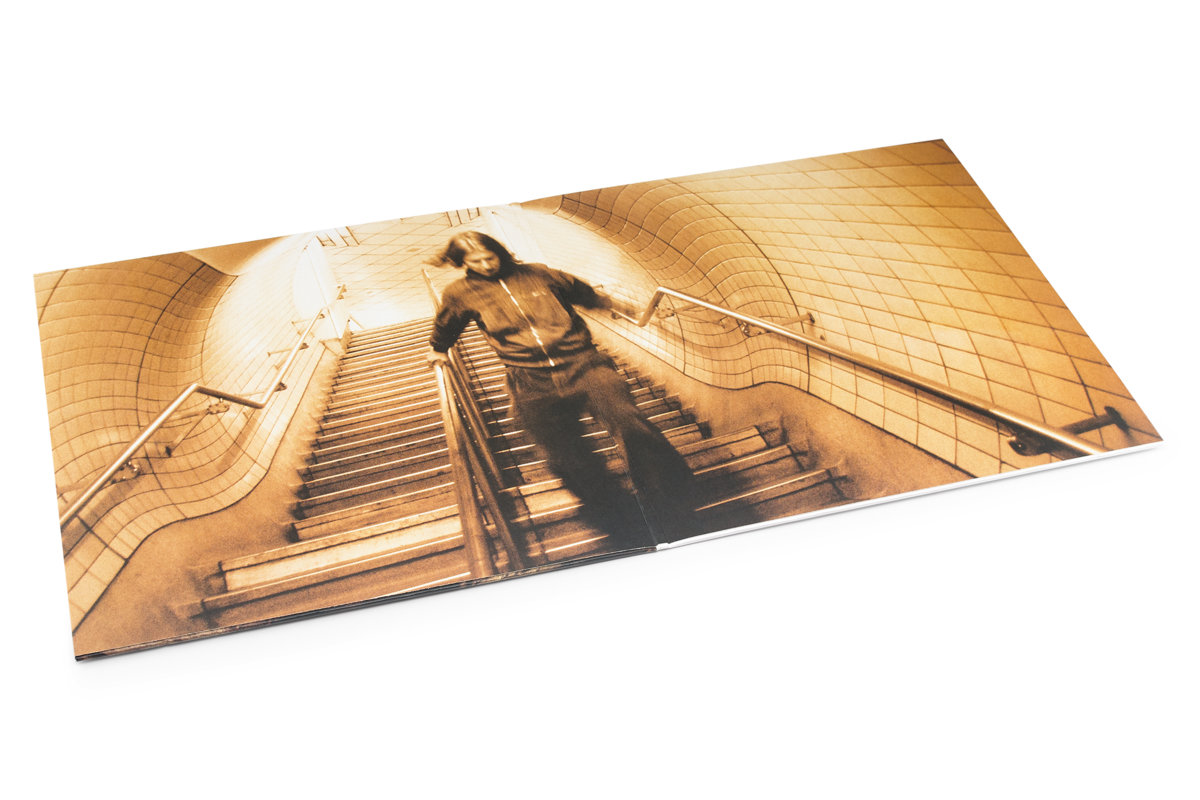 Thirty two years later and I’m listening to a newly released expanded version of the album pressed on beautiful pristine clear vinyl. The music somehow sounds familiar but at the same time very different. Frustratingly I can’t think why. I’m now transfixed on the sleeve art, the aforementioned rock and sea landscape on the front cover, but more importantly the image of the solitary surfer captured on the back. Riding the waves alone in a stormy sea in winter, just off the coast of Cornwall, with the backdrop of the dark moody coastal mountains.The image on the inside of the gatefold sleeve now seems almost insignificant.
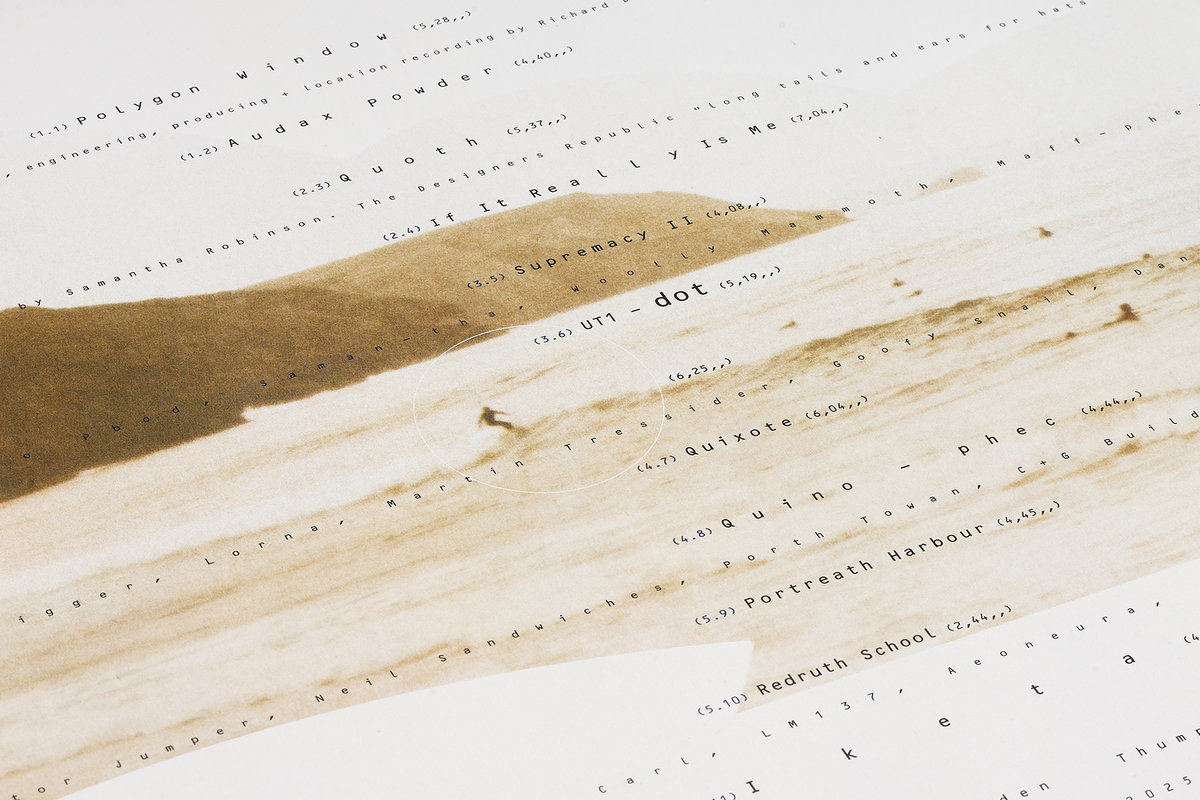
The pounding industrial beats of Supremacy 2 sound like the whoosh of the ocean’s current, the echoing rhythms of UTI evoke the feeling of being immersed under water (albeit with a robotic voice weirdly reminding the listener that this is still techno music) and the squelchy acid of Untitled is the sound of the relentless waves with the eerie synths now representing the cold winter winds swirling just above the sea’s surface. The quiet low beats and distant melodies of Quino-phec are a glimpse of how it once felt to emerge from the salty water on to a beach and feel the chill and cold sand beneath your feet. The titles of the extra tracks alone, Portreath Harbour and Redruth School, are a reminder of the Cornwall shoreline and surrounding habitat.
Suddenly the genius of Surfing on Sines Waves hits me. The sound of what was once a raw electronic punk album has now, in my head, been completely re-contextualised as the soundtrack to a non existent British winter surf movie. The brutalist dystopian electronic sounds the antithesis of The Beach Boys warm California sunshine surfing 60’s harmonies. Where once the rush of listening to the album reminded me of the energy of the dance floor and the rave, I now feel the physical strains, stresses and mental emotions of emerging from the ocean with an imaginary surfboard. Then wrapping a towel around my shoulders to protect myself from the biting winter wind.
Questions spring into my mind. Is the album the work of a young raver expressing energy and letting off steam to create an alternative dance floor for both himself and his friends? Or is it the soundtrack to the feelings and emotions experienced by a teenage solitary surfer in winter? In fact, does it really matter? All I know is music such as this, that can constantly reinvent itself in the listener’s mind and provoke such intense emotions, is a rare and wonderful thing. I guess that’s the reason Surfing On Sine Waves remains one of the greatest albums I’ve ever heard and ultimately why it will always hold a very special significance in my life.
The amazing expanded edition of Polygon Window’s Surfing On Sine Waves can be ordered directly from Warp Records.

Footnotes:
The newly released expanded version of the album also includes three tracks from the only other release by Polygon Window, the Quoth EP from 1993. Also released on Warp records.
Sometime in the late 1990’s I found myself at a Warp records party in Old Street in London standing next to Richard D James. I couldn’t stop myself from letting him know that I’d noticed him out and about in Elephant & Castle, the area in which I grew up and still live, in central London. At that point in time the district had a reputation for being rough and fairly dangerous but Richard was full of praise and said he loved living there. In fact he told me he had visited his parents in Cornwall the previous weekend and a shooting had taken place at the end of their road. This incident, he said, had actually left him feeling much safer living back in South London.
Discover more from Ban Ban Ton Ton
Subscribe to get the latest posts sent to your email.
 Ban Ban Ton Ton