Interview conducted by our favourite four-to-the-floor expert, The Insider.
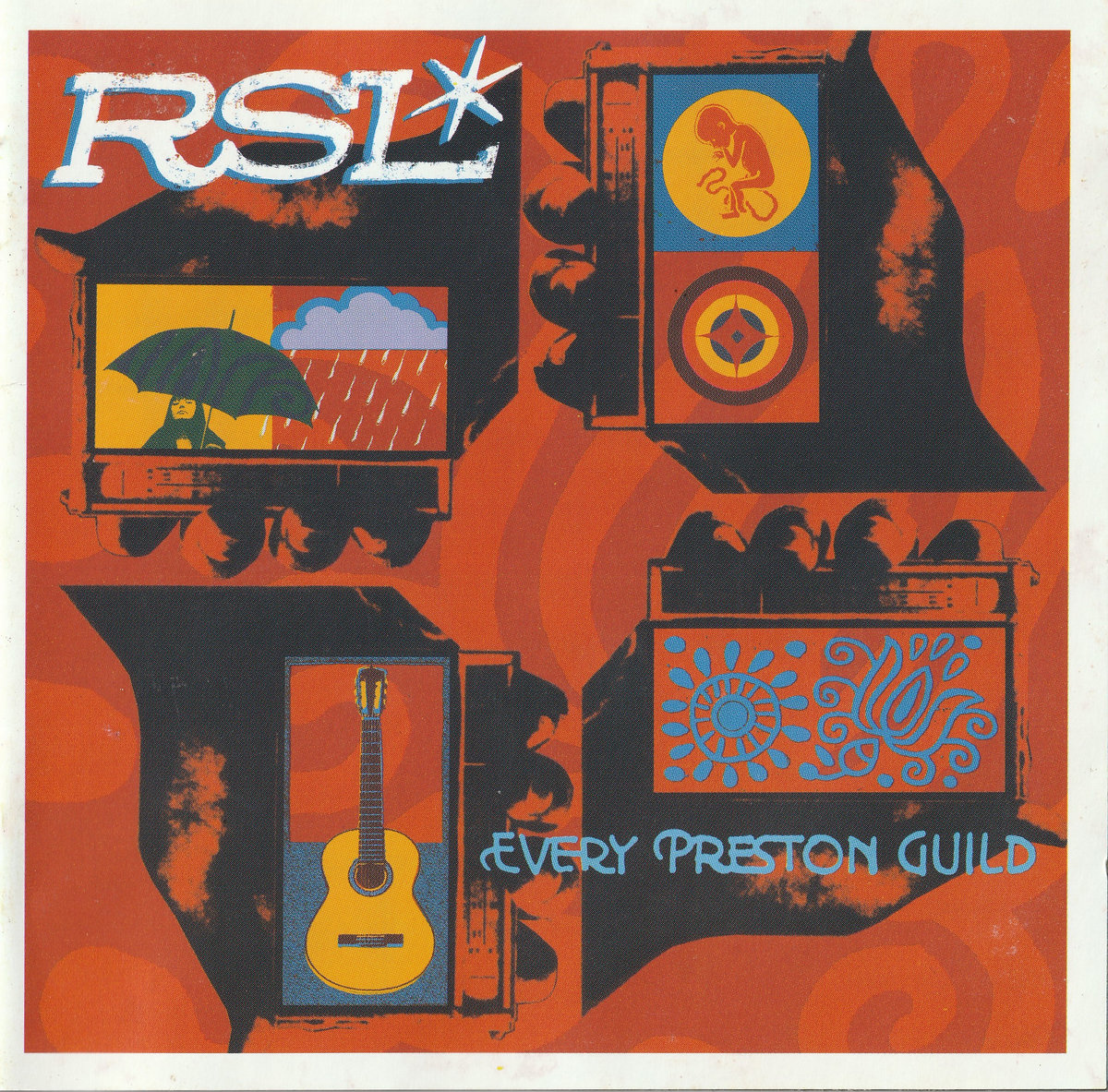
Three friends, Martin Almond, Joe Botham, and Chas Morrison, formed RSL in the late 1990s. Immersed in a Manchester club scene, focused on hip hop and drum & bass, their smash hit single, Wesley Music, was championed by Mr. Scruff and Gilles Peterson, and remixed by NYC’s king-of-the-edit, Danny Krivit. The follow-up, The Mast, was another massive dancefloor missive. There was a self-released album, Every Preston Guild, but then, in 2005, the band disappeared.
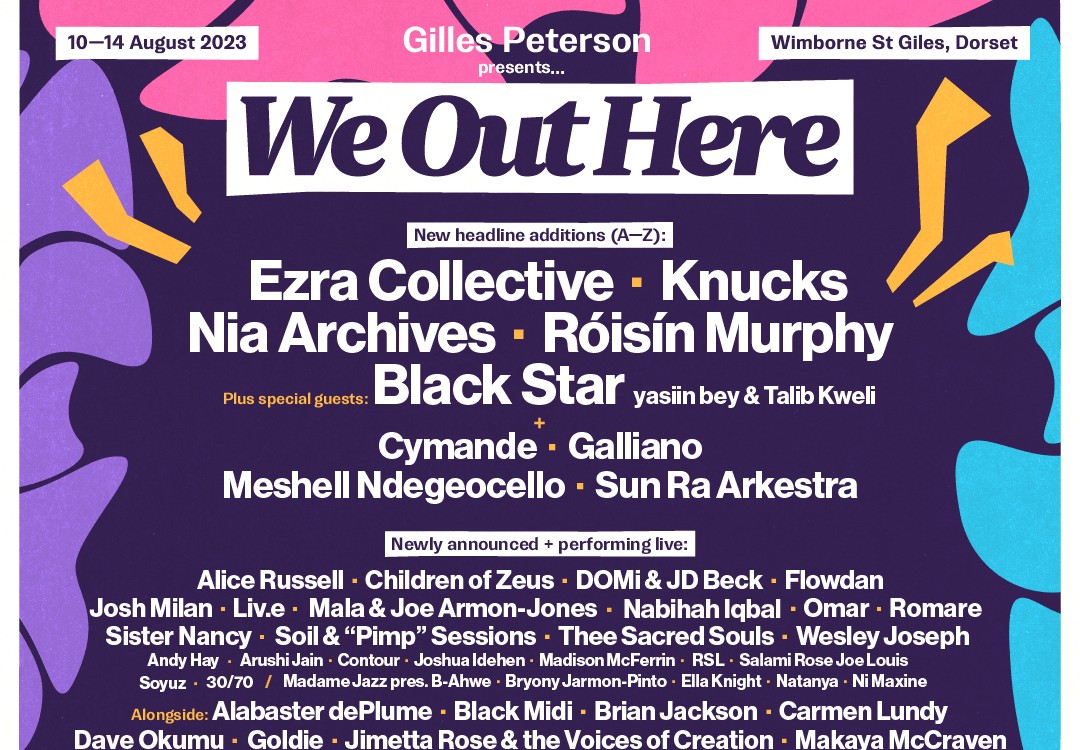
Twenty years later, however, RSL, are back, with album being made available digitally for the first time. The Lancashire lads are also embarking on a promotional tour, taking in Manchester’s Soup Kitchen, London’s Jazz Café, and Worldwide FM’s We Out Here Festival. While the now 9-piece outfit are hard at it in rehearsals, I asked Joe about their initial success, and what it’s like, 2 decades later, to be musically reborn.
It’s a pleasure to talk to you guys today. How’s the weather in Manchester?
It’s an absolute pleasure! A mixture of rain and sunshine in and around town today.
Where are you all to be found these days?
We’ve moved from Manchester itself to some of the surrounding areas. Chas and Martin lived in the city centre back in the day, and I was in Salford. As we’ve grown up, and had families, we’ve drifted into different areas, so Martin is in Urmston, Chas in Ramsbottom and I’m out in the sticks near Accrington.
What does RSL stand for?
It’s a name we came up with when we were 16 years old. What it stands for is a closely guarded secret from way back, but let’s just say it may have been conceived during the hazy days of our misspent youths! I can’t comment further.
Who’s in the band?
The founding members are me, on double bass and guitar, and Martin, on keys & programming. We were quickly joined, after a year or so, by Chas, who plays drums. The three of us have been collaborated with various DJs, musicians, and vocalists, along the way, since we’ve had many incarnations of RSL. The album, Every Preston Guild, represents the culmination of all those years of songwriting, performing, and producing, and the musicians on that album are largely those who toured with us back in the late 1990s / early 2000s. Almost all of those people are back with us 20 years later, and it’s been a most beautiful reunion. The spirit and the energy that we create together is, for us at least, quite magical.
Currently we have Howard Jacobs on percussion and clarinet, my brother, Henry, on organ, Rhodes, piano and trombone, and Dave Tompkins on double bass. In the old days we had Steve Chadwick on trumpet and Julie Gordon on vocals, but those guys are out of the country at the moment, so this time around we have Paul Brickles on trumpet, and the formidable, original Hacienda vocalists, Yvonne Shelton and Melanie Williams.
Are you all Mancs by birth?
None of us are true Mancs. We’re Lancs! Me and Chas were born and bred in Ramsbottom, and Martin is from Darwen! Lancashire born and bred.
What were you all doing musically before you met?
Me and Chas were at school together from age 11. We were the best mates from the off. I was only just getting to grips with the guitar, while Chas was already in a gigging rock covers band. I was in awe of the band, and came down to sessions and recorded them on a little 4-track tape machine. Meanwhile Martin was deeply into the rave scene in Blackburn, and during the `90s was making dance music on what are now vintage samplers and sequencers.
How did you all meet?
I met Martin at Salford Uni, while studying for a pre-degree music diploma, at the age of 16. Martin was a shell-suit wearing, boy-racing raver and I could only be described as a jazz-hippie! Opposites attract and RSL was formed, initially making house /drum & bass / ambient tracks, incorporating live instruments. Through our love of Nu Yorican music, Latin, Afro-cuban and Afro-beat it developed into our own sound. Obviously, we were heavily influenced by these styles, but we also wanted to sound British. We weren’t trying to be an afro-cuban band. We were trying to capture the essence of that music, but also keep our Northern roots. We were at Salford from 1996-1999 and it was an amazing time! We didn’t realise it then but what we learnt about composition and arranging turned out to be invaluable as we arranged for the huge brass, woodwind and string sections found in RSL’s music. We wouldn’t have created that sound without that knowledge. We were gigging during that time, and in fact we were releasing records worldwide though a lucky sample clearance that led to a label in South Africa releasing a tune! For our final degree performance exam RSL played at the iconic Band on the Wall to a packed house, and for our composition portfolio we scored a series of psychedelic drum & bass pieces, fully notated with an orchestral score of samplers and synths.
Chas’ journey was a little different. He was a member of The Space Monkeys, one of Factory Records last bands. They were approached by Tony Wilson while Chas was still at college. They released an album which went out in America through Interscope, and they toured UK, US, and Europe, with bands like Smash Mouth and Third Eye Blind. They recorded material with hip hop legend Prince Paul, as well as Tommy D, which sadly never saw the light of day as Factory Records went bust.
Acid and ecstasy at the Hacienda?
Yeah, we used to go to the Hacienda, but our scene was a little after that, more around the Music Box, Electric Chair, Mr Scruff, an amazing hip hop night called ‘Headfunk’, Sankey Soap… The late `90s and early 2000s were a hazy time for us. We partied hard, and certainly enjoyed the freedom of youth – spending all our time making music and becoming part of the scene in Manchester at that time.
When was the moment you decided to form a band?
I loved what Martin did with samplers and sequencers. I didn’t understand it, but I knew that if we combined it with live instruments we could create something really interesting. It was 1995 when we started to work together, and a life long friendship, and musical bond was formed, which turned out to be unbreakable. Like brothers, we did everything together.
Did you start out as a live band initially?
When we first started we wanted to be The Chemical Brothers, only with live bass and percussion. Live, we had a big sampler / sequencer set up, with me playing bass and guitar, but it was a bit cheesy to be honest. We were only 16 and just getting into the scene. When Chas joined, after Space Monkeys split, we became more of a live hip hop / drum & bass outfit. This was 1997-ish, so was around the time people like Roni Size were doing their thing. I started to play double bass, we had Chas on kit, and Martin on loops and keys.
We had a series of great MCs and DJs that we collaborated with. Our main DJs were two of our oldest friends, Adam Ormerod, aka Goose, and Alex Taylor, aka FOD, are not names who went on to become well known, but they are amazing DJs and great friends. We collaborated with DRS & Strategy, from Broke’N’English, Eric T, Andrea Triana was our live vocalist right up to 2006 when we first called it a day.
At what point did you head into a studio?
We built our own studio in an old woodshed, out in the sticks, at the back of my mum and dad’s house. We lived in a pretty rural community, so it was quite idyllic really. It backed onto some woodland, and even the birdsong, featured on the album in places, was recorded out the window one afternoon. We love vintage equipment, so we used a lot of valve gear, like compressors and valve mics, old outboard delay units. We ran Cubase on a pretty decent PC and had a lovely 24 channel Mackie desk.
What was going on in the city at that time?
I think after the heyday of the Hacienda had faded there were loads of new scenes going on. For us the drum & bass scene, and hip hop clubs were where it was at. An incredible Manchester hip hop scene developed – out of the Fat City record shop / Grand Central record label, with names like Rae & Christian, Andy Votel, Mr Scruff, The Una Bombers, FingaThing, and the iconic Sub Tub club night at UMIST. Sub Tub was really OUR scene. Tim Giles, co-founder of Sub Tub, was a close friend and also our manager at the time. He set up the Players label, and released our records. Later he teamed up with Gary McClarnon – Mr Scruff’s manager – and this led onto our album originally coming out on Players / Ninja Tune.
Tell us about The Preston Guild.
’Every Preston Guild’ is a Lancastrian saying that means ‘only once in a while’ or ‘once in a blue moon’. The Preston Guild is a local festival that’s only held every 20 years. It dates back to 1179, and was started after King Henry ll granted the town of Preston a Royal Charter. The music, although heavily influenced by Latin, reflects the Englishness of such a tradition. Listen to the fanfares in Every Preston Guild Part 1, the very Northern sounding horns in Inside Looking Out, the Mancunian house influences, and the very trippy, The Plunge. All are heavily influenced by our surroundings in the North-West of England
How long did the album take to make?
Some of the tracks were part of our repertoire from way before we got round to composing an album, some were re-worked, but most were written in the studio. Wesley Music was finished first, and was released about three years before we finished the album. On the whole the music flowed beautifully. We were supported by a wealth of fantastic musicians, who came down to the studio to record the parts, and whose brilliance made the album what it is. It took FOREVER to finish, and I think to be honest, in the end too much time passed between the success of Wesley Music and the release of the album for us to keep the momentum going.
When you were making Wesley Music, could you feel that it was going to be big?
It’s not that we felt it was going to be big – we had no clue – it was more that we needed to do it justice. Sometimes the creative process just happens and songs fall into your lap, other times you have to work hard until it happens. Wesley Music came very quickly, but then took a lot of hard work to make it the best that it could be. There are literally hundreds of tracks with scores of musicians contributing to it. The vocal itself has hundreds of overdubs of us lot singing the parts, and every time anyone visited the studio, musician or mates, they were asked to sing a couple of lines. This all added to the thick tapestry of the vocal, but it just needed finishing off with a stack of tracks by a wonderful gospel singer called Audrey Hermitt. Dedicated to her faith, she couldn’t really commit to the band, her music was for church, so we were really lucky and are really grateful for those magical sessions. We were certainly not prepared what came next! The response was overwhelming. Scruff broke the record, played it to Gilles Peterson, and the whole thing from there went ballistic!
One thing that is mind blowing is that we knew somehow, some day it would all be worth it. We didn’t rush it because we wanted it to be perfect, which of course nothing ever is, but we’ve always believed in focusing on the process and not the aim. Never looking toward the finish line. Always finding the joy in everything that we were doing while in that moment. The aim or the result will take care of itself… and, here we are 20 years later.
And The Mast, did you have gut feeling this was going to take off as well?
The Mast followed Wesley Music, over a year later. We were nervous about how it would be received, especially with how much time had passed. To our amazement The Mast was a great success, and the 12” sold really well. Funnily enough when we listen to the mast now, as with the rest of the album, it sounds different in this decade than the one it was written it. It’s aged really well, almost like a vintage wine.
You originally released the album on your own label. Was it tough to get another label to take it back then?
I don’t think we even tried. It all happened so organically, following the path of least resistance. We had distribution deals with Ninja, Time Warp, and Vital but using the ‘Players’ label gave us more control, and kept us masters of our own destiny. Tim was also releasing UK hip hop from Broke’n’English’, and reissued some rare funk and soul 45s, but ultimately, I think the label ended up being mainly a vehicle for releasing RSL records.
What were some of the challenges you faced 20 years ago trying to release your music?
It was a tough time actually, it predated Spotify and Apple Music, or at the very least these platforms were in their infancy. It was a good time for vinyl, but file-sharing sites like Napster meant that everyone had your album, but nobody paid for it! It wasn’t easy to make a living, but I don’t think it helped that we were not very prolific. It’s not that we were slow or didn’t spend every hour creating music, it’s just we believed that if we created something with love and care it would all work out.
Gilles Peterson picked up on Wesley Music early doors. That must have been a big buzz.
We still can’t believe the whole Gilles Peterson thing. It was incredible, and it all came down to Mr Scruff playing it to Gilles, for which we are eternally grateful. Scruff was and still is a true friend and great supporter of RSL. Without his support at the time, and even now, none of this would’ve been possible. We heard that Gilles was playing it on his Radio 1 show, and it blew our minds when we listened to the show. He played it twice!! Then we heard he’d played it at the Miami Music Festival in 2003 and it WENT OFF! Whenever we heard it playing in a club, or heard a festival crowd singing that vocal, we just melted. It was a dream come true. Then it was voted ‘Track of the Year’ on Gilles’ show! Unbelievable!
It was picked up by a few comps right?
Yeah, a quite a few. Gilles Peterson licensed it for his Worldwide compilation, Village Records also picked it up for Japan, Dave Lee did an edit of The Mast for his Defected comp. Tim had been out in New York and got a good hook up with Verve and Giant Step. Verve Records then asked us to pick a track from the catalogue to remix for their ‘Verve Remixed’ series. Giant Step licensed both The Mast and Wesley Music, and commissioned some great remixes, including the Danny Krivit re-edit which has also stood the test of time – still amazing and coming soon on digital!
I guess the million dollar question is – where have you all been the last 20 years? Have you been making music?
The three of us have all been off having families, and have drifted into the real world of jobs, mortgages, and responsibilities – all the things we spent the first 25 years of our lives trying to avoid! I spent the first 10 years studying Flamenco, and starting my own business, running workshops for disaffected youth. After that I began my own group of small Spanish and Basque restaurants, after my love of Flamenco music tipped over into a passion for Spanish food and ingredients. The two go hand in hand. I married Fiona amid the RSL years, and we have 4 children. As they’ve ave grown we’ve carved out the time to bring music making back into our lives.
Martin went into the hospitality industry for a while, managing a few places in Manchester City Centre. It was at The Olive Press that he met Baljit, an amazingly talented chef. They married and have a son, and Martin then took over the family engineering compan. They both run a Indian Curry business in Urmston.
Chas hasn’t stopped playing in one way or another, and has been doing some reunion shows with the Space Monkeys in recent years, but this time fitting it around work and kids. He’s stayed in music and the culture sector – things like working at a training college for sound engineers, and a music charity called Brighter Sound.
What made you want to re-release the album, aside from the digital re-packaging?
After a series of seemingly unrelated opportunities were presented to us completely out of the blue, we almost felt compelled to explore what seemed like the ridiculous idea that anyone might be interested in this album we made all those years ago. We hadn’t even realised that it had been 20 years! Music was part of our past, and over the years we’d all had so many conversations about how we can’t shake the feeling that it was a missing part of our lives, and it made us sad. Never for a second did we dare to dream that making music would become a massive part of our lives again. We had to ‘scratch that itch’. Initially it was only about getting the album up onto streaming platforms and released digitally, so that it has life once again – so our kids could one day be able to hear it, and so that it existed as something more than a memory and a pile of old, unsold vinyl stacked sadly in our garages and attics. Once again, the planets aligned and all our old friends, musicians and supporters have gathered around us to make this all happen again – fittingly 20 years later as magic happens ‘every Preston guild’.
A long time has passed since you first made these tracks. What do you wish you knew back then?
In all honesty I’ve felt sad for so long that I walked away from making music, but I can see now that it’s all part of the journey. Everything we’ve been through, the highs and the lows, are all part of the same picture. What I find incredible is that it’s exactly what the track Inside Looking Out is all about. That’s the story of the journey in the song! I wouldn’t change a single thing, or I wouldn’t know what I know now, so we’d be back at the beginning.
You’re doing a Bandcamp remix competition on The Mast is that right?
Its not a competition really, but it was Tim’s brilliant idea, to do something different with the release, get people talking about it, and give other people the chance to do anything they want with the stems. When you listen to those parts they are beautiful.
I see that you`re playing at the We Out Here festival.
We’ve worked so hard on the live show. We can’t wait to play live, Almost all the original musicians are back together, with the exception of Steve and Julie who are out of the country. It’s been such a joy to be rehearsing altogether once again. Most of the other guys are still professional musicians, so are still at the top of their game. Us three are all a bit rusty, and some of us haven’t played our instruments for many years so it’s been a back to basics situation.
Tell us a little about your live set up?
So we have, Chas on kit, Dave Tompkins on double bass, Howard Jacobs on percussion, Martin and Henry Botham, on Rhodes and Hammond, Henry doubling up on trombone, Joe on Flamenco and electric guitar. New members Paul Brickles on trumpet, Yvonne Shelton and Melanie Williams on vocals. We have a powerful 9-piece band. The addition of trombone, and having two vocalists, really beefs it up as there is so much joy in the room when we play. It’s incredible really that not that long ago this would’ve been such a far-fetched fantasy.
There were some pretty cool remixes. Are you going to re-release these too?
Yes! The Danny Krivit remix is out again on vinyl via Juno, but we’ll also be releasing the digital soon. Danny is a massive supporter of RSL, and we thank him for his involvement. The other remixes will be available soon too. The King Britt one is getting a lot of love. All being well we’ll also have some brand new and very special remixes coming soon…keep em peeled!
RSL’s Every Preston Guild is out now. You can order your preferred format over at Bandcamp. You can catch RSL live at the We Out Here Festival this weekend.
Discover more from Ban Ban Ton Ton
Subscribe to get the latest posts sent to your email.

