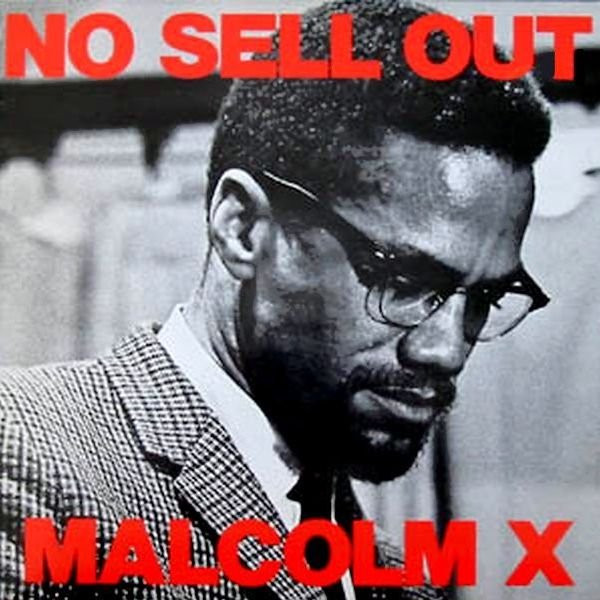
“No sell out.”
If Keith LeBlanc never made another record after this one, then he would have still left an incredible mark on musical history. The beats here were copied or borrowed / bitten continually. As was his pioneering use of spoken word samples, particularly to get a political message across. However, of course, this wasn’t the end, it wasn’t even the start. More a restart. A reboot.
LeBlanc had been a member of the Sugar Hill house band, and under the direction of label head, Sylvia Robinson, alongside bassist Doug Wimbish, and the guitar of Skip McDonald, and assorted keyboard players, in early 1980s he’d backed hip hop’s first crossover artists: The Sugar Hill Gang, Grandmaster Flash & The Furious 5. Providing the power behind smashes such as Rapper’s Delight, The Message, and White Lines. Other acts on the roster that required the band’s helping hand were West Street Mob, The Sequence, and The Treacherous 3. This was the moment that hip hop / rap made moves on the mainstream, copped tops of pop charts, and serious dollars.
It’s perhaps a coincidence but Keith’s solo debut, Malcolm X, was released in 1983, around the same time that 99 Records levelled a law suit at Sugar Hill, over White Lines “re-appropriation” of Liquid Liquid’s Cavern. Something that eventually caused the collapse of both bands and labels. The single was signed to Tom Silverman’s Tommy Boy, and it was there that Keith worked on dance-floor hits by Africa Bambaataa, James Brown, and the lesser known Roman Sandals. It was also at Tommy Boy that he met On-U Sound’s Adrian Sherwood.
Sherwood too was looking for a change, following the murder of his mentor, Prince Far I. He was in New York producing the group Akabu. Together with Wimbish and McDonald they forged a super heavy, stripped back, precision-tooled funk, a bruising blur of man and machine, that they prototyped under the alias Fats Comet. Slapped bass, angular metallic axe, and drums like a replicant prizefighter’s punches. Like Funkadelic meets The Meters, with all but the essential groove removed. A reduction of the funk to a rigid robotic framework. Fucking lean, mean. No excess. Ripped and shredded. Fats Comet quickly became Tackhead.
The Tackhead sides proved to be hugely important. Influencing a vast array of people, through the `80s and early `90s. The industrial and EBM crowd were the first to catch on. With Sherwood, Keith sat in on the sessions for Ministry’s landmark LP, Twitch. From there it took off exponentially: Wax Trax, KMFDM, Skinny Puppy, Front 242… Even those that they didn’t work with directly aped or sampled them. LeBlanc later collaborated with Nine Inch Nails. Keith’s programming had everything on the kit hit hyper hard. A steamhammer kick. Snares like shotgun blasts. However, all the sounds were sharp, snapping, whip smart. Clipped, crisp, and clean, with plenty of space in between. The combination was surprisingly hypnotic, slamming your senses into submission.
Tackhead’s crashing collisions and subversive use of spoken word and speeches must surely had an impact on the sonic terrorism of Hank Shocklee and Public Enemy. Those collages of news broadcasts, corporate bankers, pushers, and pimps – William Burroughs set to punishing, pulverising body blows – that painted pictures of a world “Walking right on the edge.” The reels of Reverends Martin Luther King and Jesse Jackson condemning apartheid, and convinced that, without positive action, “Our time is desperately short.” There’s no denying that this was powerful, passionate, politically-charged dance-floor dynamite.
Keith’s characteristic, trademark, go-go-not-go-go, cowbell-not-cowbell, clatter was also key in the evolution of the Balearic beat. It might be hard to believe now, given Ibiza’s contemporary high-end hedonistic hoo-ha, but at The Beat’s birth place, Amnesia, DJ Leo Mas made staples of tunes such as What’s My Mission Now?, Ticking Time Bomb, and Gary Clail’s Hard Left. Their re-purposed rhetoric reflecting Leo’s own socialistic leanings. Jose Padilla even span Keith’s peaceful, percussive, Ending as the sun set at the island’s fabled Cafe del Mar.
Mark Stewart’s Stranger Than Love was not only a Leo / Amnesia spin, but also instrumental in the development of the “Bristol sound”, giving local producers Smith & Mighty their big break. It was this Keith co-crafted tune that also prompted Paul Oakenfold to launch his “Movement 98”, his attempt to slow rave down. Tackhead sometimes moonlighted as The Maffia, supporting Stewart, both live and on record. Their These Things Happen was another big “Balearic” floor-filler, while their As The Veneer Of Democracy Starts To Fade faithfully recreates a Jah Shaka soundsystem field recording. Feedback, distortion, drop-outs, and all.
Andrew Weatherall was famously an On-U Sound fanatic, and he and his Boys Own collective recruited Tackhead to remix their post second summer of love anthem, Raise. Keith’s input to Arthur Baker’s Prince-plundering Criminal Element Orchestra even came close to house. LeBlanc remixed The Cure, contributed to Seal’s Trevor Horn-produced pop magnum opus. He returned to rock with Living Color, The Stones, and Skip’s bionic blues project, Little Axe.
When dropped by their major label in the early `90s, Tackhead didn’t go to ground but assumed the disguise, Strange Parcels, instead. Tackhead’s last studio album was released in 2014, but Keith’s in the credits for Denise Sherwood’s 2020 debut, This Road, and Spoon’s 2020 On-U collaboration, Lucifer On The Moon. The legacy, though, of Keith LeBlanc, the King Of The Beat, is all there, way back when, in the DMX-driven, awareness-raising, dynamics of the ground-breaking Malcolm X.
In my early, breakdancing, teens I bought everything on Tommy Boy, on sight. Buying these bulletins from hip hop’s birthplace with money saved from a job stacking shelves in Safeway. That’s how long this music’s been an influence on me, personally. Rest In Peace Keith.
Discover more from Ban Ban Ton Ton
Subscribe to get the latest posts sent to your email.
 Ban Ban Ton Ton
RIP Keith
LikeLike