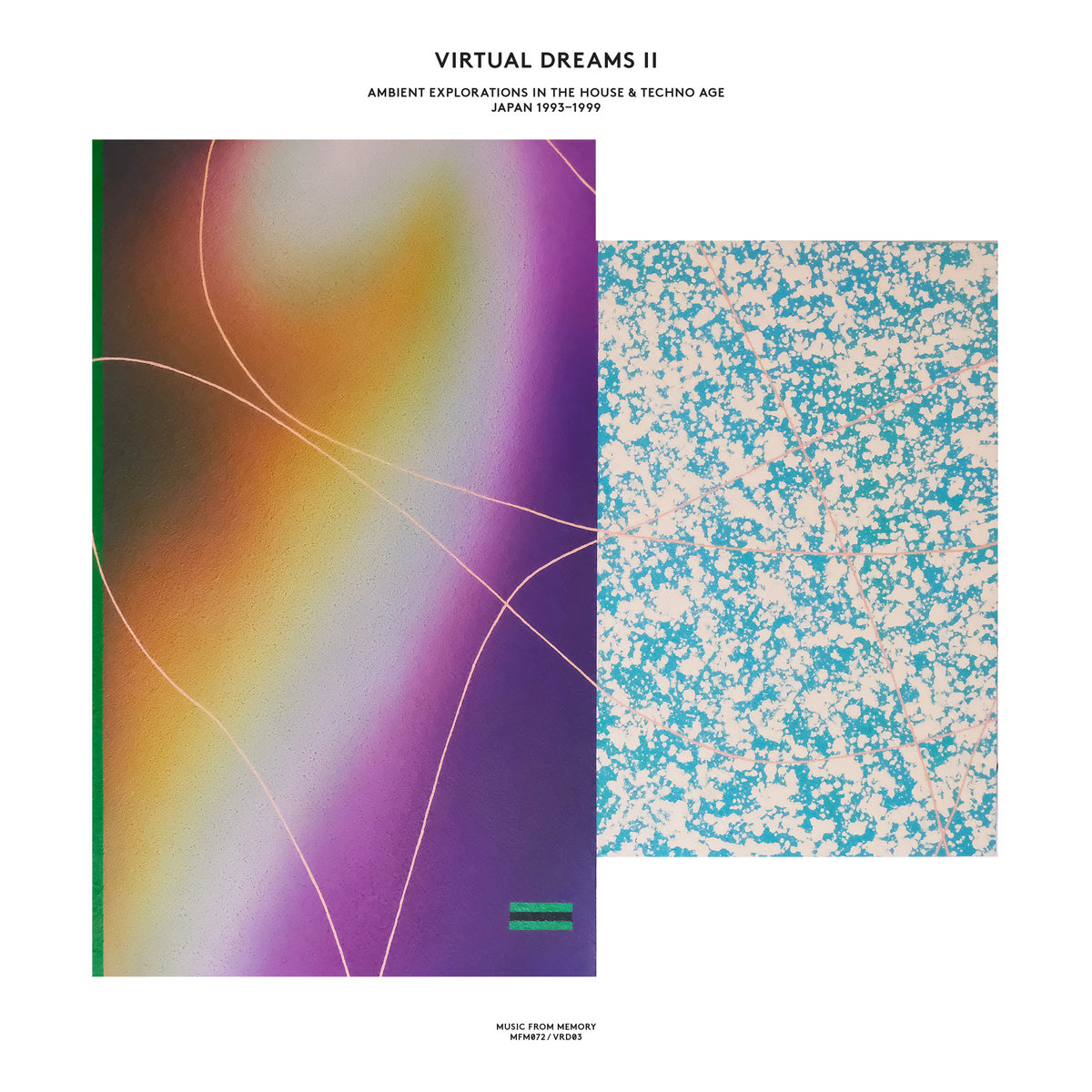
For their second volume of Virtual Dreams, Music From Memory focus on Japan. Cherry-Picking the output of homegrown labels such as Transonic, Syzygy, Subime, Frogman, FORM@ and A.P.L. who nurtured local talent. The new collection is as lovingly, painstakingly compiled, and essential, as its predecessor. Pulling together 12 pieces that were, largely, only available on CD, and next to unknown outside of Japan. Perhaps more than Volume 1, the selections play as a seamless sequence. They are all linked tonally and texturally, and all strive for a sort of spiritual air. Like techno temple meditations. Less dependent on catchy hooks and instead creating calming oases of computerised counterpoint, soothing synthetic sighs and delicately dancing details. Perfect gear for brains busy with big room banging and party drugs.
Dub Squad’s Blown Fruit is full of fluctuating frequencies, like signals sent back from distant satellites, or the life support systems of travellers in stasis. These are offset by ethnic vocals. The combination conjuring the same mix of ancient and modern that movies such as Blade Runner and Ghost In The Shell always picture Tokyo to be. Piano providing pinpoints of humanity in between splashes of raining robotic nanotech. So, yeah, the songs are Sci-Fi, certainly, and sometimes very cinematic.
The bulk of the numbers could be described as blissful, beatless trance, and the majority are ambient moments lifted from long-players made up of more pumping tracks. Akio Yamamoto successfully tames a TB-303 on the phenomenal Phoenix At Desert. Palomatic use Steve Reich-ian chimes and kalimba-like patterns to produce their appropriately titled Flutter. Ryo Arai takes a trip into inner space on 1969 and deploys Tranquility Base and Apollo 11 samples in a very Orb-like manner. Paying homage to the first moon landing. Yukihiro Fukutomi, a producer more usually associated with funky floor-to-the-floor house, gets dizzy, spinning, and Indonesian gamelan-like on his tune 5 Blind Boys. Missing Project’s Poisson D’Avril is a drama of Detroit-influenced strings and sequences (1). Drawing Future Life’s 1969 pits its pretty music box melody against shooting star sound effects and sustained siren-like synths (2).
One of the few tunes to introduce a beat is Ambient 7’s Escape, where it backs vapourised African chants (3). Web’s The Cycle Of Seasons also has IDM snares in with its bleeps, while Modern Living’s beautiful Snow Bird boasts a resting heartbeat like boom (4). The latter floating on loved-up, romantic swells and swoons (5).
The digital bonus of Buddhastick Transparent’s Eras (666) is hardly techno at all. A haunting drift of bells, keys and reverb, its minimalism is almost classical. Like a meeting of Erik Satie’s “furniture music” and Hiroshi Yoshimura’s “Kankyo Ongaku”.
Compiled by Jamie Tiller and Eiji Taniguchi, and with sleeve notes by Itaru W. Mita, Virtual Dreams II really is an amazing compilation that definitely benefits from a deep start-to-finish listen. You can order a copy directly from Music From Memory.
Notes
(1) Kinda like a calmer take on Digital Justice’s Theme From It’s All Gone Pear-shaped.
(2) Orpheu “The Wizard” De Jong used Drawing Future Life’s 1969 as his opening track on The Sound Of Love International #005.
(3) Ambient 7 might be familiar since Tim Humphrey’s re:discovery did a retrospective reissue back in 2022.
(4) In 1996 Takuya Sugimoto aka Web was the artist behind the debut release on respected UK indie, FatCat Records.
(5) The strings on this track remind me of Art Of Noise’s cover of Robinson Crusoe.
Discover more from Ban Ban Ton Ton
Subscribe to get the latest posts sent to your email.


Been looking forward to this one!
LikeLike
its well worth the wait : )
LikeLike