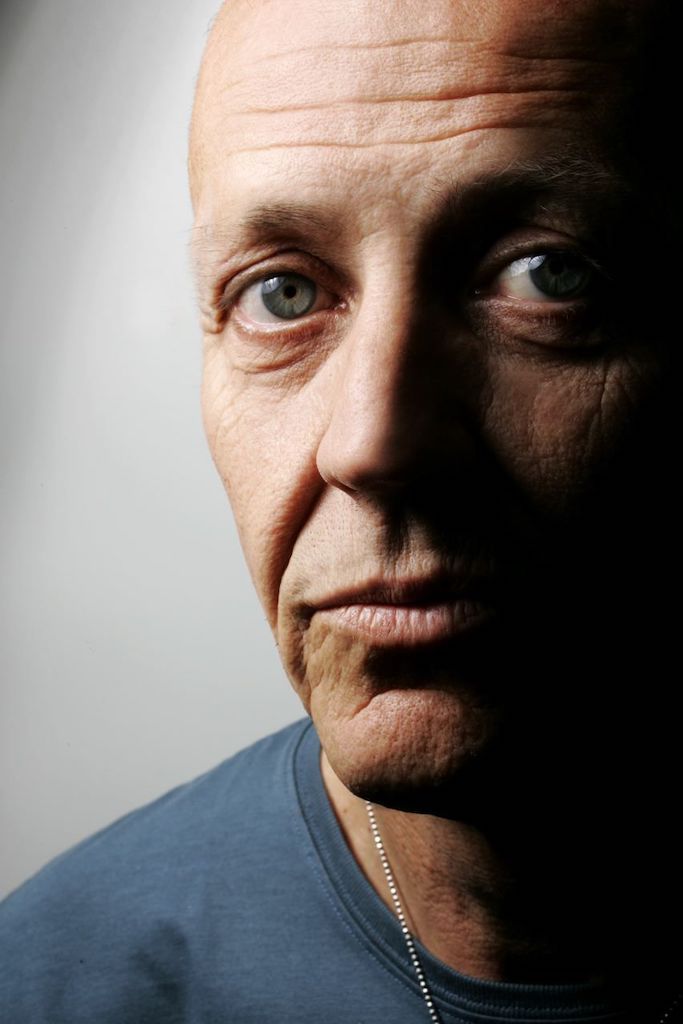
I don’t know what to say. I don’t think that I can say anything that I haven’t said before. When I was deep into researching this thing, The Balearic Beat, and when I interviewed the man*, his importance was so clear to me. Alfredo at Amnesia in the 80s was sort of serendipity, a product of chance, luck. A case of “Right place, right time, right people, right music, right drugs.” It didn’t happen in isolation, its magic was down to Ibiza, the island, her colourful inhabitants, her history, but that combination, with Alfredo at the helm, generated a freedom and an energy that would never really be repeated. As so many people have been so quick to tell me, if you weren’t there, you don’t know.
Like lightning, Alfredo for a few years, between 1985 and 1989, channeled those forces, which were then bottled, branded and brought back to London. There they ignited a revolution, set fire to a city, and raised rave. A Second Summer Of Love. Turning house music from an underground secret into a global industry. I’ve argued that none of this would have happened without Alfredo’s spark. However, like many of dance music’s pioneers Alfredo failed to receive the recognition and financial reward he deserved. Leo Mas, his close compadre and Amnesia co-pilot during those pioneering `80s daze, sent me a message last night – a little after midnight Japanese time – sharing the sad news that Alfredo had passed. My thoughts are with Alfredo’s family and his many friends, far and wide. His impact was life changing for a whole generation, and his legacy, huge.
Alfredo Fiorito, thank you.

*I interviewed Alfredo in the spring of 2014. He and his son, Jaime, were doing a Japan tour. I dropped my kids at school and took a bullet train to Tokyo, and met them for a late breakfast.
Alfredo and Jaime had arrived the night before, and gone straight from the airport to the internet radio station Dommune for a live interview and DJ set. That morning Alfredo was a tad jetlagged, and a little disgruntled / grumpy. He wasn’t impressed with where he was staying, in an area of Shibuya packed with seedy Love Hotels, and at Dommune the questions had largely been about Paul Oakenfold and Danny Rampling.
This was our first meeting and I was silently surprised at how old he was. His legend was so large that I’d never thought about him aging…

(Photograph and cover image care of The Fina Agency.)
Where are you from?
I am from Argentina.
When did you arrive in Ibiza?
1976.
What were your reasons for going to Ibiza?
I leave my country for political reasons. I had some friends in Ibiza who wrote me letters, and I arrived in Europe in the autumn with Jaime’s mother, in Barcelona, and from Barcelona we went to Paris and to Switzerland, and it started to get cold, and then we saw the boat to Ibiza and decided to take it.
You were coming from a military junta, “Proceso”?
La revolution, Proceso, fascists.
The leftwing people were just disappearing weren’t they?
Killed. 30, 000.
So were there a lot of people like yourself leaving the country?
A lot. I was in a boat full of people leaving, politicians, psychotherapist, all the things have to do with culture or knowledge of yourself, architects, writers, actors, directors, all the industry of the culture disappeared.
Do you go back to Argentina at all now?
I been back once, seven years ago, when Jorge Rafael Videla was put in jail, everybody, I went to see the places, seeing big adverts on the roadsides saying “Never Again”, “these people is going to be in jail for what they did”.
(In 2002, under Nestor Kirchner, the Juntas were finally put on trial for human rights crimes, in an attempt to purge the military).
Were you aware of the bohemian history of the island?
Not at the beginning but after a couple of months.
What were your first impressions?
Freedom. A thing I discovered when I went to Ibiza was that people knew each other by their name, not their family name, a community.
Who were the people you socialised with initially in Ibiza?
They were all designers, painters, creative people, you had to have a creative activity because there was no “industry”, not like now, they are property business, concierge, things like that, then it was it “Oh you are being a painter, a designer a musician”. The only industry that was in Ibiza was clothes.
What had you been doing in Argentina?
Promoting concerts and working as a journalist at a newspaper. My family owned a part of the newspaper, so it was a kind of a family business. Before I left I had been a music critic, writing music reviews.
When you first arrived in Ibiza what were you doing?
We looked for a house! A friend offered us a house, then we started to make candles for the flea market, and then after we rented a shop and started to make clothes, and we were being quite successful one year. Making dungarees. Jaime’ s mother.
Was the atmosphere still very hippie like at that point?
Yes the most important thing at this time was clothes, fashion. The discoteque was Pacha and Glorys, and there was live music. It was not fundamental to go to the clubs. There was the beach, the markets, the shops.

What made you want to DJ, how did you fall into DJing?
After a while, after Jaime was born, we separate, his mother and I. I keep going with the shop, but myself alone I went bankrupt after two years. I thought I would be a clothes designer. Then I played rugby, after the second year playing rugby, at the end of the season, winter of 82, somebody offered me work in a bar, called Bebop, I was supposed to be a bar tender, but also playing the music. They had two turntables and a mixer.
So you were mixing drinks between mixing records?
Yeah they had a nice collection of jazz and jazz funk.
I read in Last Night A DJ Saved My Life that you were playing a mixture of Pink Floyd and fusion. Is that right?
Yes this is the music that the bar owned. I had no records. I tried the mixer. I discovered that you could move from one record to the next with the volume controls. It was like a miracle to me and I enjoyed like a kid. And after one winter I decided that this would be my profession.
By ’82 had the club scene become a bigger thing?
I had been going to Amnesia, a place for alternative live music. It did not become a discotheque until 81, 82 I think.
Places like Pacha and Glorys they had DJs, but did they also have live music?
No no. Only Amnesia. It was the alternative place.
Is that why you’ d set your sights on DJing there?
Around 83, we made a fashion show there, at Amnesia, with my ex, and her boyfriend, and Jaime at 3 years old, in the show. And I played the music. But they never accept me. Because they were French and they had their own thing. I went to work in Formentera for the summer of ’83 and when I came back in ’84 they change ownership in Amnesia and they got me as a resident.

Who was the French owner of Amnesia?
I can’ t remember (it was Prontxio Izaguirre – Rob)
Can you remember who was DJing at Amnesia at that point?
I can’ t remember the name.
Was it Freddy the Egyptian?
Freddy yeah Freddy. Freddy was playing Joe Jackson, The Specials, Madness that kind of thing, with the Rolling Stones, Pink Floyd. Kind of white, white music, but when I came in I decide to mix all over.
What kind of stuff were you playing when you first started in ’84?
As nobody went to the club I start to play when they start to come. It was the people that had finished working in the other clubs and the people that had been around all night long. There was like an after hours. And to get all these people together I had to like make a mix of everything. There were Italians, French, 3 or 4 English (laughs), Spanish, South Americans, Germans, and I made a mixture with my background music, that was Brazilian, South American, flamenco, rock and roll, Pink Floyd, reggae, soul, and some kind, a little bit of disco, not much disco, Chic.
It’s a famous story that initially when you DJed at Amnesia it was quite empty and that when you switched the hours it became successful, people coming after work.
Yes we switched the hours because I’d been waiting to get paid. My girlfriend there told me to play music while we waited.
So what were the hours when you started at Amnesia?
12 to 6, but nobody was there, so we would close at 5. Then we start to play music, like “Moments In Love” for people to relax. We changed the hours from 6 until midday in mid July / August and within a week it was busy. I start to play Paco De Lucia, Spanish music.
For that whole time were you playing on your own?
Yeah. We got Joan Ribas there with me, but in middle of the summer they decided that they didn’t have the money to pay Joan. Another guy start to play with me called Paco, a friend of mine, but they throw him out. It was a drama for me, because he blame me for being dismissed, and I remember it was terrible, I had to tell Paco “This is not my fault but…”, This is when I got in touch with the business side of the discotheque. My dream of the beautiful life start to crumble because I realised that everything has its back side, the money, and you have you to say to your best friend that you are not going to work here anymore. He’s still around though. He was playing with me April / May ’84, then came Joan Ribas until July.
How would it work, would Joan play midnight to 5 then you play to midday?
No he would play less, 2 – 3 hours.
Would the club still open at midnight?
Yeah we would open, but in ’85 we decided why should we open at 1 when nobody is coming in? So we open at 3. In 85 it was already famous that we would keep playing, so the club was full by 5, 4:30, and carrying on until midday, 2 o’clock in the afternoon on Saturdays. There was no music on the beach, there was no bars open, it was the only place to go.
I am really grateful to the people, everyone that worked with me, I got the chance to build my style you see. I got to start with 2 dancers on the dancefloor. I got the chance because all the people want to listen to something different. I got the chance to tell a story because I’ve got a very long time to play, start very slow, go up, come down, go up again. I’d listen to the music, listen to what the lyrics says, playing one record after the other one trying to combine not only the music but the lyrics also.
To tell a story? Convey a mood?
Yeah.
You succeeded. In a way what you did at Amnesia created an industry.
I never been thinking to create an industry or a new style of music. When they say to me about “Balearic” I say it was a kind of marketing thing. I had been playing my music and trying to get that dancefloor working, and I never thought I am be creating nothing.
Well you changed the shape of modern music as much as Frankie knuckles did.
I blurred the division between black and white music and I blurred the division between concert music and disco music, I put it all together, I remember “Moments In Love” was not music for a discotheque, even “E2-E4”, but the people accept it. I was playing Tears For Fears, Pink Floyd, Bob Marely, Paco de Lucia, Mina, Lucio Battissi. I remember listening to the music in Pacha, and one guy that was great, but I don’ t remember the name.
The person people always talk about as being influential at Pacha was Massimo.
But Massimo was playing like “Sweet Dreams”, stuff that was popular everywhere. The one who influenced me, because he was playing eclectic, like the Belle Stars and Kid Creole, Indochine, was a strong rock and roll, was Jean Claude Maury.

(Photograph care of Patrick Michaut)
Where did you hear J.C. Maury play?
He used to come for a couple of months to do the season at KU, and I went to see him and he came to see me and he said “Yeah, yeah, you are doing the right thing”. He was a resident at Glorys when I start at Amnesia.
So was Glorys open regular hours, and people would go there and then go to Amnesia?
Glorys was more popular than Pacha, run by French people, more underground music.
Yeah, but, Glorys closed down when Amnesia became very popular, and Nelo started to play in ’88 or ’89, then Space opened. They kept sending the police to close Amnesia, so that people would go to Space. In between Glorys reopened. Nelo was playing much more new wave from Belgium, new beat.
So was there a lot of rivalry between the bars and clubs?
Yeah of course. Ku, before I started at Amnesia, Ku framed Amnesia to close it down. Pacha was trying to close down every bar around.
This is where my confusion comes from. I’d heard of Glorys but I always assumed it was an after hours place, but now it seems it was open as a regular club first, then shut down and reopened.
Yeah, it shut down ’84 / ’85.
J.C. Maury would summer in Ibiza and then return to Brussels to play in Milano, the most famous club. He played funky style. Latin style. He was a good mixer. He was a professional. I never been a professional, in the sense that I never count the beats, I would cut 1,2,3,4, boom, or by ear. Other people explained things. With Leo Mas we start to count the records, the bpms. I would read in DJ magazine, one guy called James Hamilton, he would put the bpms in the reviews, getting the news from there and counting, and discovering that songs were divided into 4s and 8s, this was told to me by an Italian DJ that die last year, Marco Trani, very famous Italian DJ, but not famous internationally, one of the best. I used to work in Italy, after Amnesia, from ’85, ’86, and I work with him in the clubs. He said to me you play very hot music but you need to try to put it together. He explain while we are playing, 1,2,3,4 and then the bass will come. I came back to my house and practiced, and I bought a Numark machine to count the beats. I have to get it in the club, more than anything because I’d been playing every kind of music, rock and roll, salsa, Latin, French.
That’s obviously what made it interesting, because you would play a complete mixture, you would play music from all genres but you would still convey and mood and a general uplift in the energy.
Yeah, because when I start to count it became more difficult to do what I was doing. For some things. ’85 I discover house music in Barcelona, and to be able to count allowed me to mix house music with some of the records I’d been playing that had similar beats, and that was interesting.
It changes your style though, what you were doing before was based purely on instinct, “the right record to play now is this one”, and you weren’t aware of the bpms at all, once you start to become aware of the bpms, you take it more seriously, you are regimented by the bpms, like “I wanna play that one next, but this one really fits best”.
I keep doing it. I been using the bpms only when I want to keep the bpms up.
The way I felt about it was that back in the late ’80s you needed a period when it was freeform, then a period where it was locked, fairly rigid, like house for an hour, 2 hours, then back to freeform again. People needed that locked bit.
I think the best music in Amnesia the most interesting was 84, 85, 86.
Before House?
No house was there, a few things.

(Alfredo & Leo in the Amnesia booth. Photo care of Leo Mas)
You mentioned Leo Mas?
I met Leo in ’85. I went on holidays when Sade made her first LP, the one with “Smooth Operator”, “Diamond Life”, ’ 84 or ’ 85, I don’ t remember, any way I went to make a break in September to Formentera and I met Leo, and Leo was there with a big ghetto blaster on his shoulder and he was playing music and he gave me a tape of Sade, and I took it back to Amnesia and it was a big hit, #1, and after that I went to Italy to visit him and I convince him to come to help me, and he came on holidays in the summer ’85 for 2 years, and in the summer of ’85 or ’86, we bought (Technics) 1200s, before we had playing with some funny things, one you had the weights hanging, it was not possible to adjust the speed, it was another reason we couldn’t mix, we got more control, we could cut the record in the right moment, that was the formula that was very interesting because I could change speed in a way that was alright, natural, 1,2,3,4, 1,2,3,4 and when I got to 32 I went bang with the other one, and even if the bpm was different the beat came in at the right time, kept people dancing.
I think varying the bpms is good anyway, keeps people interested
You cannot do that now.
People’s expectations of what should be played have changed.
Then, they would never know what style would come next.
People now expect everything to be beat matched and to a certain extent its much more uniform.
Talking Heads was great music that I played. “Burning Down The House”, was good because it had something to do with what we had been doing in the club, “Slippery People” also, and “Psycho Killer” also.
Was there a message in the music?
There was a message in the music. Prince came in and was massive. “When Doves Cry”, “Sign Of The Times”, “Erotic City”, “Pop Life”, from that LP I think everything, and one triple LP that he made live, I took some tune from that.
When Leo was helping you what time would he play?
He used to play the first 2 hours, 3 til 5, something like that, but he helped me a lot, choosing the records, finding the places to buy the records. Jaime was living in Germany, and I used to go to Germany twice a year in the winter, passing by Italy, the big warehouses for music, and in Switzerland there was an Italian who would import music, very alternative music, this was the thing that created the thing that the English would never have, because I had been buying records that were released by German companies, Italian companies, French companies, that were not available in the UK, it was closed to the English, they didn’t have a clue about it.
I think that’s one of the things that made Amnesia special because you went to such great lengths to pick alternative tracks from elsewhere.
Another important thing I made for the English was to open their minds to another music.
Yeah I think so because the guys that are always getting quoted were soul boys, into rare groove, disco, hip hop. Pop music wasn’t cool. I think one of the things that was important for them when they came to hear you play was that you played music that they secretly liked but weren’ t allowed to say they liked. So for example they could dance to U2 where back home they couldn’t dance to U2, they weren’ t even supposed to like them.
Exactly, U2 and many more. The Waterboys, “The Whole Of The Moon”. The Woodentops.
That’s an amazing record, why can’t people make music like that now?
There are people who make music like that now, but again the music is separated, you have the music for the discotheque, that is electronic music and that is it – apart from when some one that might make a remix, make a pop / rock record more electronic to play in a discotheque.
What would you listen to at home?
Not much. Some Classical, Flamenco. What they call “Chill Out” now, there was no such music. Anyway in the heights of my career I was listening, pre-listening to the records that I would play at night. A lot. Going to the record shop, taking the records home, listening to them in the car, playing them in the club, coming home and listening to the recordings of the things I’d been doing in the club.
Who has those tapes?
I lost most of them. But many people have them
With Jose Padilla, the tapes he made and sold at Café del Mar really helped to advertise what he was doing.
I used to make tapes for Jose. He would bring me chrome tapes, the most expensive ones, he would pay me 5000, and he would make millions.
And the guy from the record shop, he would make me the copies, for the right to sell them from the shop. He sell more tapes than records, till he caught by the police, because he has 20 fast velocity copiers stacked up working.
So people must have those tapes. I think I’ ve only heard 2 recordings of you at Amnesia.
I used to do 12 tapes a year.
We’ve put a couple up on Test Pressing, but there’s one that Phil Mison has where your playing stuff like Hong Kong Syndikat’s “Too Much”, Cairo, Vendetta Palace. Everybody ripped those things off, they’ve become classics.
When I first went to play in London I discovered that everyone was playing my records. Danny Rampling tried to buy the records from Ibiza, he didn’t tell me. No one asked me. If they did I used to show them the records.
Where was your favourite place to eat on the island?
I used to eat a lot in the casino, there was a very good kitchen. They closed at 2 or 3, so we would eat there before going to play.
Beaches?
Salinas, Cala Ne Vera, Aguas Blancas, like the Paco de Lucia rumba, “Entre Dos Aguas”.
Where is your favourite place on the island?
Salinas was my place, it was secluded. Now it’s all commercialised and the music is everywhere.
Do you know anything about Akare, Lolas?
I play there sometimes. Lolas, I was resident before playing Amnesia, with Cesar de Melero. When I came back from Formentera. One winter.
Mono Desuno, Clives?
It was a very trendy place for the Germans. It became The Rock Bar. A trendy place in the harbour.
Mar Blu, Porto No?
Mar Blu was a hotel. Porto No had a discotheque in the beginning of the ’70s, built in a high tower. It was closed down by the police because of noise.
Montesol?
This was the number one breakfast place in front of the big square. Very important morning meeting point.
La Teirra?
This was a very important place for drinks before going to the clubs in the late ’70s. One turntable, Nina Hagen, Bob Marley. J.J. Cale was very important in Ibiza. His records were sounding everywhere.
Do you have any pieces of music that for you personally define Ibiza?
Richie Havens, “Going Back To My Roots”.
Discover more from Ban Ban Ton Ton
Subscribe to get the latest posts sent to your email.
 Ban Ban Ton Ton