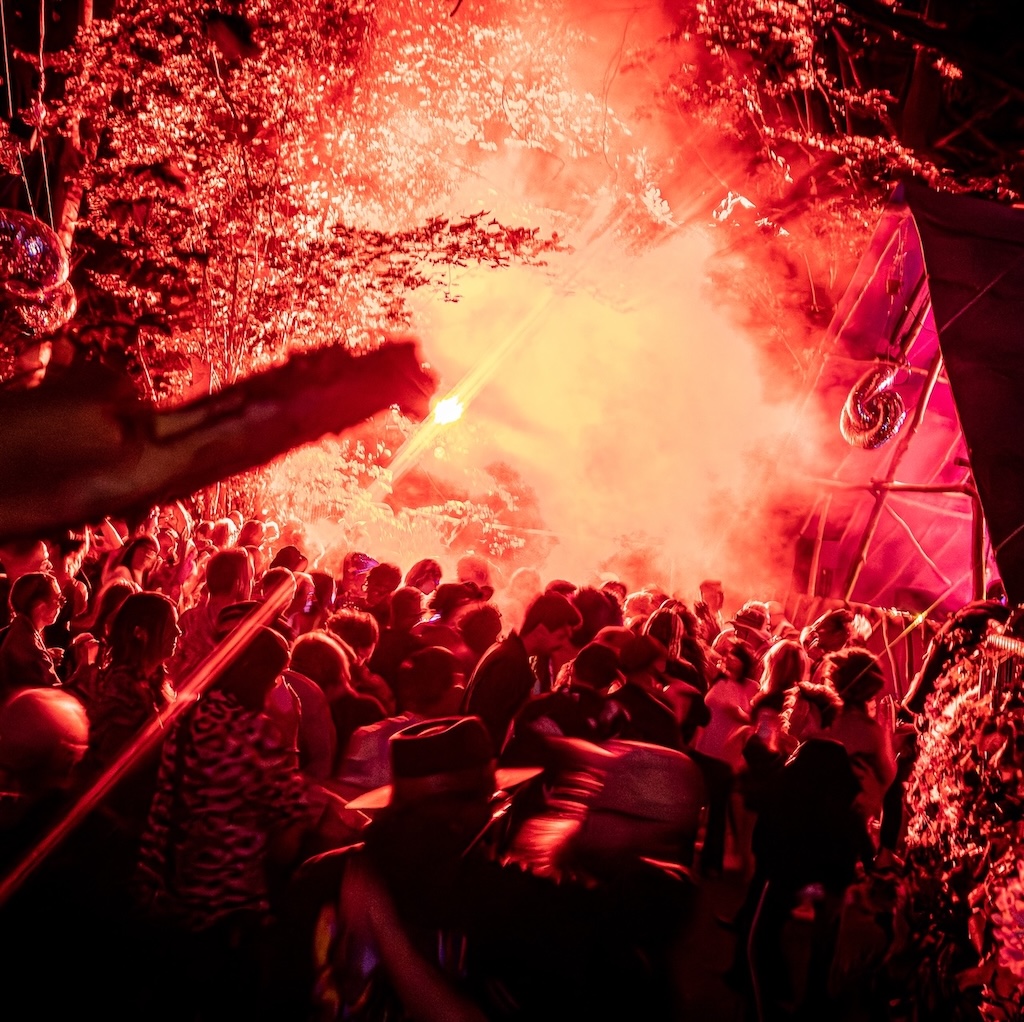
Cover image taken at the Wild Wood Festival by Nick Caro.
Interview conducted by Kristan Caryl.
Over the decades, Sean Johnston has always remained somewhat in the shadows. Sort of hiding in plain sight. From acid house and Balearic to prog and techno, he has seen it all and distilled it into a sound that effortlessly dissolves genre boundaries.
Johnston’s 2025 has so far been shaped by the release of A Love From Outer Space, a compilation that reflects the music he and his late friend and creative partner Andrew Weatherall played under that much-loved banner for 15 years. With Weatherall’s passing in 2020, Johnston has found himself not only navigating ALFOS sets solo, but also handling increased press duties, resulting in a much more prominent public presence.
Ahead of his set at June’s Wild Wood Festival, Johnston reflects on life after Andrew, the evolving legacy of ALFOS, the art of slow-burning DJ sets, and how age, collaboration and curiosity continue to shape his work—both behind the decks and in the studio.

What’s the year been like for you so far, what’s been a most memorable moment?
This year so far has been pretty eventful and largely taken up by the release of the ALFOS Compilation on Material Music, and the subsequent supporting tour. It’s been a combination of club shows and in-stores. As you know, I’m more of a “let the music speak for itself” type of person, so well out of my comfort zone in terms of radio shows, video interviews and in-store appearances.
It has been amazing to meet the people that are supporting the record, though, and great to hear everyone’s ALFOS memories and experiences. The 10-hour marathon set at Phonox on release week was really something – a chance to revisit some of the classics of the last 15 years, and celebrate with the London crew. I’ve just got back from playing at Womb in Tokyo and Seoul in South Korea – as the culmination of a tour which exceeded all expectations. The production at Womb is next level and it was a real privilege to play there.
How different is it playing the ALFOS sets on your own? Do you find yourself thinking about how Andrew would have responded to your selections, or what he might have set you up with in a certain situation?
It has taken me a little while to adjust to playing ALFOS without Andrew. Aside from the lack of Andrew’s aesthetic and steadying hand, there are practical considerations about how music can be organised effectively for solo 6 to 10 hour sets. I had to completely rethink how I organised my music. There’s always an element of what would Andrew think in relation to how I think about my DJing and production, but at some point, the realisation comes that I have to own it myself. I’ve said this before, but over the course of our 10-year partnership, we were able to carve out an ALFOS aesthetic and Andrew, whilst not leaving a map, left very definite compass bearings.
When we lost Andrew, how long did you reflect on whether or not to carry on the project?
To a degree, that decision was taken out of my hands because we had an ALFOS booked at Phonox the week that he passed away. My initial reaction was that I wouldn’t carry on, but friends and family talked me into it. Doing that set was one of the hardest things I’ve ever done, but the response confirmed that I should continue.
What are the advantages as a DJ and a producer that come with age, what do you know now that would have helped in your early years?
There’s a great deal to be said for the experience, patience, self-reflection and confidence that comes with age. With the benefit of hindsight, I’d probably advise my younger self to be less concerned about what other people were doing and to trust my own instincts.
Studio-wise, how do you like working solo versus collaboratively?
The control freak in me prefers to work solo, but I have been collaborating a great deal in recent years with Duncan Gray of Tici-Taci Records. Duncan is an old friend of mine and Andrew’s, and is a talented multi-instrumentalist and we work together very well. People have suggested that our work together collaboratively is greater than the sum of the parts – we certainly come out with stuff that we wouldn’t individually.
Alongside your career in music you’ve worked in tech recruitment for 25 years. I’ve heard prominent artists often say that keeping music as a side project is the one bit of advice they would give, because it means your creative choices remain more pure and not influenced by trying to make money, chase success, secure gigs etc. Has that been part of your thinking?
Living in London with a young family and mortgage hasn’t really given me any other choice to be honest! I think that the structure is actually good for me, though. It’s forced me to be very focused in my creative work and not noodle. Part of me wonders what more I could have achieved if I had been able to dedicate more time to music but as they say it is what it is!
Have you found over 15 years of ALFOS that there is a different approach to playing slow? If you’re not as reliant on ramping up tempo for energy, where does the dynamism and tension come from?
That’s an interesting question! It’s something I have thought about a lot, and there are quite a few moving parts to it. When I started to think about it I made a few mixes entirely at a given bpm – 90, 100, 108 & 110 and it became apparent that energy isn’t defined by BPM but something less tangible. I touched on this earlier when I was talking about organising music for long sets – in a nutshell, I now use a 2 USB system, one which is playlists monthly & chronological, and the other USB is what I call mood playlists. I identified a variety of moods in a typical ALFOS set i.e., Cosmic, Trippy, New Beat, Italo, Dubby, Ethno, House, Techno, Disco, Balearic, Deep, Pumpers, Closing etc. A lot of it hinges on reading the room and knowing when and what to change the mood up or down to in any given situation. It’s mostly instinctive, but what I did learn from Andrew is that a lot of it is down to being very well prepared.
You’re as busy as ever on the production front. How much does your studio work relate to what you do in the booth? Are you making tunes to play in your sets, or to satisfy a different creative urge?
The dance floor always informs my production and some of my work is aimed squarely at the ALFOS crowd. But as you say, it’s a different kettle of fish. A lot of my recent production work has been remixes, so the original material really dictates the potential direction. The production journey fascinates me as it’s a lifelong learning process. I’m just trying to improve technically and musically all the time. DJing by nature is ephemeral, but the production is the work that you leave behind. I’m just trying to make it as good as I can at any given moment in time. It’s a work in progress…
Is your appetite for new music, whether newly released or something old but new to you, as vociferous as ever? Does the hunt still excite you as much as ever? Is it hard not to get ground down by the cyclical nature of electronic music? I guess you’ve heard so much before over the last 30 years…
My appetite for the discovery and sharing of music remains insatiable. It’s been my life’s work in a way. That said, looking at a weekly inbox of 500 promo emails can get a little wearing, but it’s like panning for gold, the rewards justify the graft!
You play Wild Wood again soon. What makes it somewhere you like to return to, and how much do you consider the different acoustics of a festival system versus a club system when deciding what to play?
Wild Wood is really one of my favourite UK Festivals – it’s organised by people with pure intentions and that really shines through in all aspects – from the production to the crowd they attract. The sound at Wild Wood is particularly good but that doesn’t necessarily dictate selection choices – it’s more down to the diversity of the crowd. People are there to have the time of their lives – you can’t be too self-indulgent. My festival sets are definitely more direct than a typical ALFOS – you have to grab attention and maintain momentum to hold a festival crowd.
Aside from Andrew, who is one artist, DJ or producer who has had a profound effect on your approach to life, making or playing music?
In recent years I’ve gotten to know and DJ regularly with Vladimir Ivkovic – his approach to selection and DJing coincides very much with mine and he has had a profound effect on my outlook. There had been a lot of recent sadness and working with him brought a timely reminder of the importance of joy in proceedings!
Lastly, what are you working on this year, and what has your Outre-Mer label got coming up?
As I said this year has been mostly focused on the ALFOS compilation album, but I did a few cheeky edits for the Totem Project series, and remixes for Primal Scream, Moscoman, Monopolar, Hugo Nicholson, David Holmes, Darren Emmerson, Kabinett and Shaun/Sarah. Outre-Mer is a very ad-hoc label and is largely a vehicle for musical experiments. I’m working on a few things currently which may fit the bill, so expect a revival later in the year!
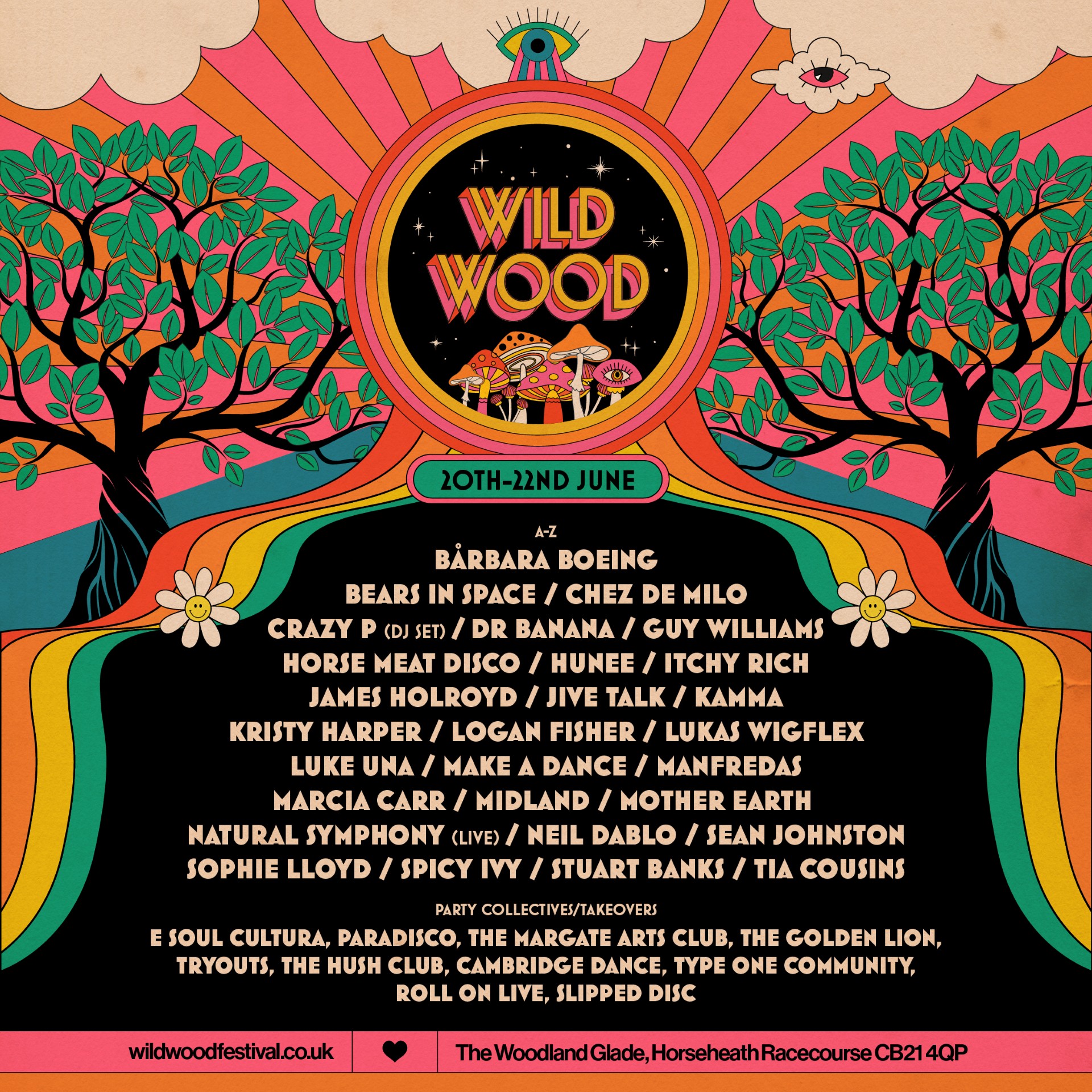
Sean Johnston plays the Paradise Lost stage on Friday 20th June 2025, at this year’s Wild Wood Festival. Happening between June 20th and 22nd, you can find more details on the whole weekend, and purchase tickets, here.
Discover more from Ban Ban Ton Ton
Subscribe to get the latest posts sent to your email.

