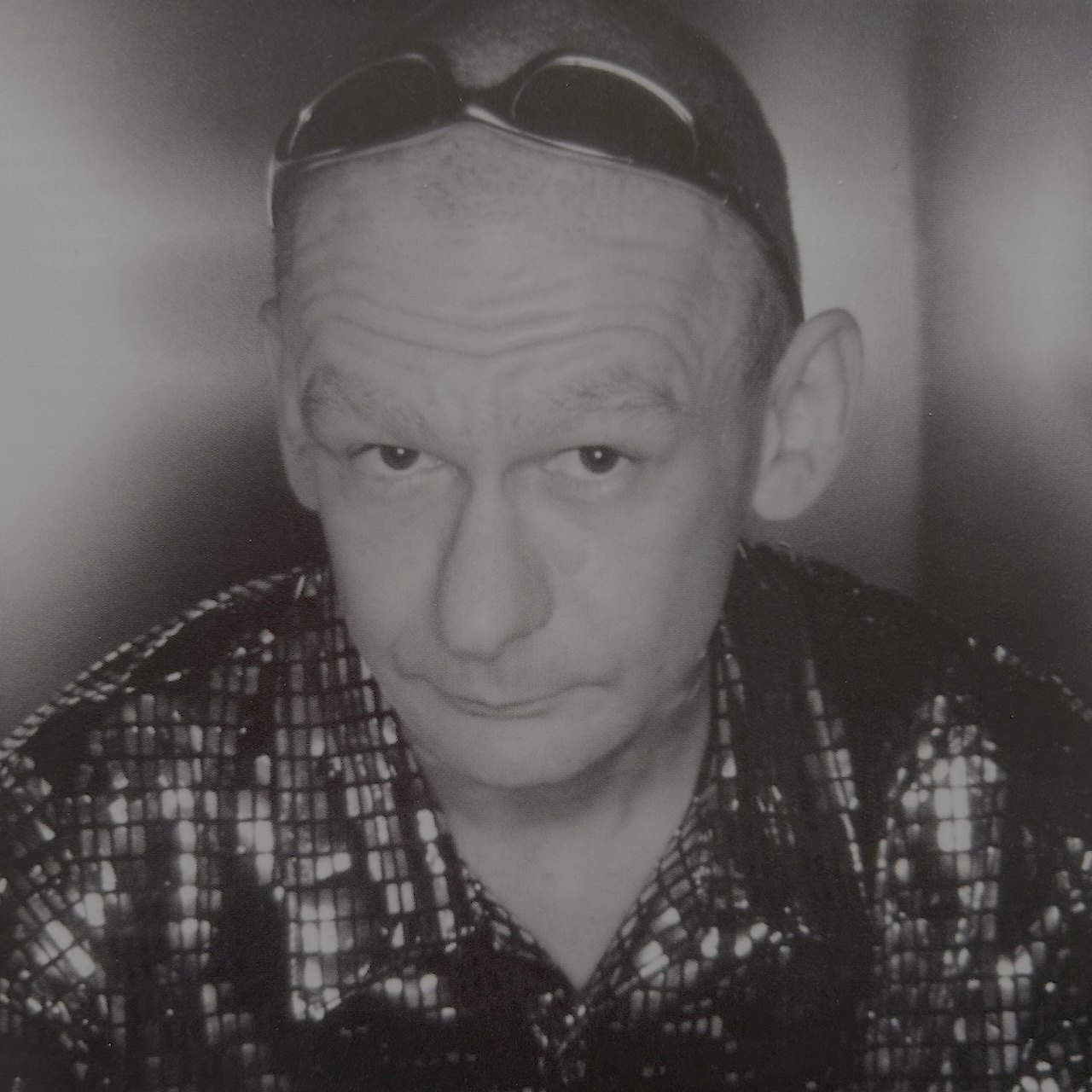
Back in February I spent a couple of hours with Mixmaster Morris, on Zoom. This resulted in 2 separate articles for Electronic Sound. However, Morris is such a great storyteller that there were a ton of asides that I couldn’t squeeze into the features. For example, as Morris sat rotating in the lotus position I asked him how he remembers all this stuff, at which point he hit me with the following Howard Marks anecdote:
“I asked Howard, “How did you remember all those details?”, talking about his book, Mr. Nice. He said, “I didn’t mate. The CIA had been recording all my calls for years, so they wrote the book for me. They still had all the printouts.”
I have a long list of similar stories, a “few” of which I’ll try to edit into some kind of narrative and share now.
Cover Image taken from a 1993 DJ Mag Article.
Text taken from Mixmaster Morris in conversation.
In the mid-80s I was going to a lot of like performance art / happening type shows. It was kind of like, “Rock and roll is dead. This is the industrial music age.” It was about the time that Mad Max came out. There was an incredible Test Department party in Paddington, and that’s where I first saw Joe Rush and the mechanical monsters he made for the Mutoid Waste Company. Test Department live down the road now, in New Cross.
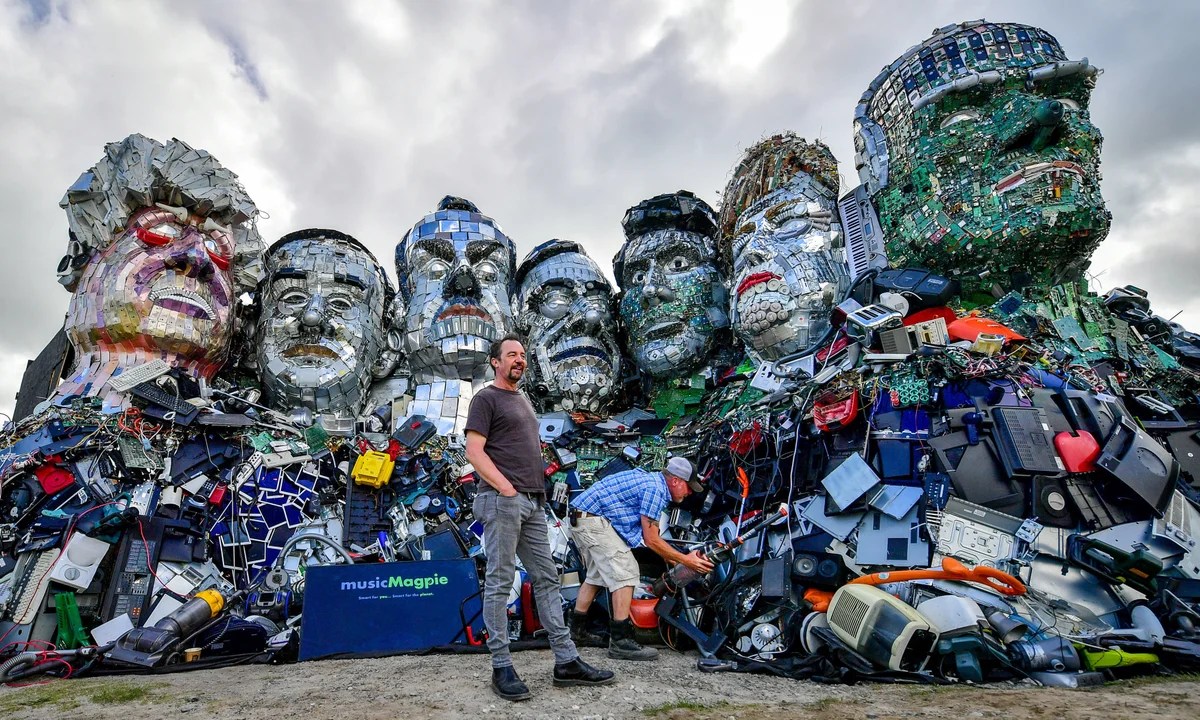
I used to go and see bands like Bow Gamelan Ensemble, who were, I think, funded by the GLC. Paul Burwell was the leader. They famously did a gig where they all played up to their waists in water, in the Thames, but they forgot that The Thames was coming in, and so they eventually got submerged and there were bubbles coming up.
It was through the Test Department connection that I got involved with the pirate TV station, Network 21. Once a week, on a Friday during `86, they would come on the BBC 2 frequency, about 10 minutes after the proper programs had finished. Suddenly the screen would come back on, and there would be like an hour of illegal programs. It felt very subversive and naughty, and no doubt we’d have been in big trouble if we were caught.
Everyone who did shows on Network 21 were kind of isolated from each other, because it was an illegal organisation. People didn’t meet at the broadcasting point at the same time. I just handed my cassettes in and they were broadcast from a transmitter on the roof of The Fridge, in Brixton. Network 21 came to an end when they interviewed Andy Warhol. Warhol sat down with them, and then died 2 days later. So they realised that they had the last ever interview with him. They immediately went off around the world with these VHS tapes, trying to sell them. That was when the station fell apart. I think, Bruno, one of the 2 Europeans that ran it, the other was Thomas, he did some deal massive deal, and that was kind of the end of it. But yeah, very, very crazy times. Very weirdly, last year I was in Japan, in Kamakura, in somebody’s house, and there on a shelf was a fucking videotape saying, Network 21 89.6 FM, and thought, “How the fuck did that end up here?”
I was was doing a lot of music programming in the mid-80s. Coming in on sessions and showing people how to sync things, getting drum machines to sync with keyboards, etc. In those early days, most people just didn’t know how anything worked. I did an awful lot of helping out on other people’s records, and wish I’d done rather more time on my own records. A lot of the stuff I worked on I can’t even remember.
I met Coldcut in about 86 too, when they’d just made “Say, Kids, What Time Is It?”. Matt and Jonathan were both working in Reckless Records, the second hand store. They came round to my flat, so I could show then around Cubase and C Lab, and when I played them some of my tracks, Matt said, “Nice. 112 BPM.” I was fascinated. I thought, “How do they know the tempo of the track without looking at James Hamilton’s dance music column?” I was determined, “Right, I’m going to have to pick up this skill”, so I used to sit there at night, and get a friend to play me records, and I would guess the tempo.
That was a good education, because I’d hardly done any DJing at the time. You soon start to work it out, and now my whole brain is sorted by tempo. I used to sort my records by tempo. I used to take a box, and then everything would be in BPM order.
I still, when I’m doing say a 3 hour set, I will plan to start at 90, spend an hour getting to 105, and then I’m going to hover around 110 for an hour, and then we’re going to go 120, and then we’re going to go this way, and I would draw little diagrams. Then I got really insane and I wrote the BPMs on every record I owned. That fucking Royksopp album, with the Banksy cover, that’s worth $10,000. I wrote the BPMs on it.
One time, in Ibiza I met this guy, and he had the colour-coded stickers on all his records, and I said, “What what do those mean?” He said, “Oh, this is for 3 AM records, and this is for 4 AM records, and this is for 5 AM records.” I thought, “Well, that’s brilliant. That’s a whole different way of cataloguing music that I never thought of.”

One of the first bands I remixed was Stump. They were by no means a big band but they were on Ensign, and Ensign had Sinead O’Connor, people like that, so the label had plenty of money. They gave Stump 30 grand to make a video. You could just say, deliver 20,000 frogs to the studio for a video, and they would do it, because that’s what happened. Then someone put all the frogs under these hot lights, and of course they all frazzled up. You won’t believe how bad 20,000 dead frogs smells and looks. It’s not pretty. I think I got 5 grand for the remix, and they spent 5 grand on the studio. Stump were one of the best bands I ever worked with. They were on the NME’s C86 comp, but they were a lot funkier and actually more like Beefheart. They had a Magic Band quality. A complete one off. I was quite into them. I think I saw them 20 times in one year.
This was about the same time that I was going to see The Cardiacs a lot as well. I have many friends who are still listening to The Cardiacs 24 hours a day, even 20 years after they stopped playing. People’s lives have been completely taken over by that band. They’re the ultimate cult band. I guess the modern equivalent is Henge, who are like the new Hawkwind. Great songs, great videos, great costumes. Altogether brilliant, and I’d say the best festival band at the moment. Every year they pull a bigger crowd at Glastonbury.
I still play Glastonbury. Last year was my 40th anniversary. I first went in `84, when Fela Kuti was headlining, and I then became part of it in 1990. I was working for CND. I made these compilations for CND, which had raised a significant amount of money for them, so they said, “You can be our rep at Glastonbury.” So it was me and John Peel playing on Stage 2 every year, which was a good laugh. I used to spend a lot of time hanging out with Peel at Glastonbury, which you can read about in his book, in fact. Margrave Of The Marshes has several sections about things that we did at Glastonbury together. Especially, I remember going to play in the Greenfield, and Peel carried all my records for me right across the Glastonbury site. When we got to the tent I heard these people whispering, “Who’s this DJ?”, and another one said, “I don’t know but John Peel is his fucking roadie.”
One record that I always play at Glastonbury is Deuter’s Ecstasy. All right, I’m going to tell you a mind blower. Alexander Shulgin rediscovered MDMA and his desire was that the therapy world would use it. So he gave it to doctors, analysts and marriage guidance counsellors, but one of them had the great idea of taking a Kilo to a Dallas nightclub called The Stark Club. At that point they were calling it Empathy, but the dealers said, “We need a new name.” The record they were listening to at the time was Ecstasy by Deuter. A German new age artist, Deuter was a follower of Osho. On the sleeve of the record, it says, “all our ecstasy is supplied by the Bhagwan Shree Rajneesh.”

I’d done events in London with Shulgin, and Terrence McKenna. We hosted them both at the club, Megatripolis. When we had Shulgin on there were lots of chemists in the audience asking, “Alex, how do I make this? And how do I do that? Why is my why is my reagent not precipitating?.. and he was busy sorting them all out. The organiser shouted “No, no, it’s too much detail”… and I said, “Shut up! Let him let him teach these people. We’ll all have better drugs.” It was vital knowledge. We didn’t have the Internet in those days.
This was the early 90s, and Shulgin had just written PiHKAL and TiHKAL. Two massive books. One is Phenethylamines I Have Known And Loved. The other one is Tryptamines I Have Known And Loved. PiHKAL and TiHKAL for short. I met a guy once who had 2 dogs called PiHKAL and TiHKAL. I strongly recommend watching the movie, Dirty Laundry, which is documentary following Shulgin and his wife while they create stuff at their home in Lafayette, California.
The DEA shut him down, even though he’d worked for the DEA for years. They finally got him because people were sending him pills for testing, and he didn’t know what was inside the envelopes, and therefore he couldn’t know whether it was legal or not, you know. So they they shut him down on a technicality. He’s responsible for so much.
McKenna, of course, only came to everyone’s attention through The Shaman. Nobody had heard of Terrence Mckenna until then. Colin Angus, from the band, had read his books, and then instructed us to read the books. He then brought McKenna over to England and put him on Top Of The fucking Pops.
They did the track Re-Evolution together, and all of a sudden the leprechaun himself is on children’s television… all these young kiddies hanging on every word. I think that was actually one of the most memorable things that happened in the 1990s, and I think most people have completely forgotten about it.
McKenna was hardcore. He’s the man that invented the term “Heroic dose.” That’s pure Mckenna. I don’t think anyone had ever called an overdose heroic before. That’s a whole new way of looking at it. Most people would regard it as rather foolish to take too much. He would regard it as heroic.
This is a good opportunity to say that Megatripolis is coming back this year, under new management, and now at The Scala… Which is great, because it’s got the only place in London with a 6 am license. It will be house and techno, and a bit of trance, and a bit of ambience, and some speakers, but it’s not all confirmed yet. There`ll be quite a lot of people from the old lineups, but also some new people. I said, “You’ve got to get some people under 50 on your line up”, so they are booking people like Synkro.

I also did DJ gigs with Psychic TV back in the day, which were very memorable. I have to say what lovely people the entire Throbbing Gristle and Coil crowd were, where you might have expected them to be somewhat other than lovely. They were all sweetness and light. Very interesting character, P-Orridge. There was talk of me and Coil doing something together. I feel a bit shit that we didn’t actually do it now.
I just saw a list of the 10 most expensive CDs ever sold, and Coil feature prominently in that. I have some of them. I need to go and have a look in the warehouse. They sent me some. Things like Horse Rotovator. That’s the sort of stuff we’d have played on Network 21 back in the day. One of the other guys out of Coil, Michael J York is in The Utopia Strong – Steve Davis‘ group. The ex-snooker champion is a top, top bloke, a good mate of mine, and excellent DJ, and leader of a top pop group called The Utopia Strong. If you like krautrock you will most definitely like The Utopia Strong. The record’s are beautifully packaged. The gigs are very good. They thoroughly deserve all the plaudits that they’re getting, and I’m busy in negotiations to put them on around here, actually, at the moment. The other guy in the band, Kavus Torabi, who is now also the lead singer with Gong. He was previously was in The Cardiacs. The two of them are a force of nature quite honestly.
I was never a huge Gong fan, but the new Gong is absolutely amazing. Kavus has brought an entire new generation of people into the band, and Gong will now last another 20 years. I think it’s great. I think there are some bands that are important enough that they need to be kept going in perpetuity. Like, when Ralf Hütter pops his clogs, Kraftwerk should send the robots out on tour – which is what they wanted to do 50 years ago anyway. I guess they could do the same with YMO.
Talking of YMO, the album I did with Haruomi Hosono came out at little while ago and I saw it was #1 in the Disk Union album charts. The first time we put it out, it didn’t have Hosono’s name on the sleeve, and there were only like 500 copies of the CD produced.. so as soon as it was made available on vinyl, it suddenly just went. Whoosh!
I actually called Hosono up. I said, “Is it okay if we put your name on the cover?” And he said, “Yes, absolutely.” And then he wrote back, and said, “Please don’t send me any money. I have lots.”Isn’t that great? That’s a sentence I’ve not heard very often in the music industry.
It reminds me of that 10cc story, when they wrote, “I’m Not In Love.” They were out of a contract at that point, and a guy from Polygram turned up and said, “Can I hear what you’re doing?” When they played him “I’m Not In Love” he said, “That’s the greatest thing I’ve ever heard in my entire life. How much money do you want?” And then he said, “That’s probably the only time you’re ever gonna hear anyone say that.”
I did my first gigs in Japan in `93. I’ve been visiting ever since, at least once a year, so I’ve put a bit of effort in…It does help having a Japanese manager… and him having 40 years of connections as well. Zac was the guy who brought Larry Levan to Japan in the early 1990s, for example. I used to do the ski / snowboarding events in Hakuba, but not for a few years now. I sometimes do trance parties, but they sort of drive me nuts over a whole weekend. Lovely people, but they are unaware that that music exists below a hundred 142 BPM. I also do stuff with the Mancheez people, in Nagano City. They have a big logo like a smiley face, but with like a happy face, with red cheeks.
I have these other friends who are called Mirrorbowler. They do amazing light and laser installations for outdoor events. They’re like rave lighting designers but recently they’ve been holding events where they put all of their lighting stuff in a park and then play ambient music, and people come and sit and watch the lights all night. They’ve been doing this in Tokyo, but the one I did with them last year was in Enoshima, opposite Op-ola, on the beach. It’s beautiful there. I love Op-ola. Apparently it’s Harvey’s favourite club. I always thought there should be a Japanese DJ called Brian Enoshima… and there should be Japanese reggae artist called Kon Beanie man. Hopefully I’ll be in Japan this year, with Youth and maybe The Orb.

I started me going to Germany in the 80s. I had this obsession with Bertolt Brecht, his plays, poems and songs. So I went to East Germany, before the wall came down. I went to Brecht’s house and bought all the books, records, t-shirts, everything that was on sale, including all the sheet music. Shortly afterwards the state, and so the state-run record companies collapsed so that sort of stuff, now, cannot be bought. So I have an enormous collection from the archives of the East German Government. I don’t think anyone else over here has got anything like it. I could do a touring museum exhibition or something like that. No one else will ever be able to find these things again, and the music is quite something. I’ve got a triple volume, a massive complete works, with something like a 120 songs in it. I do get people coming after me, saying “You’re the one who’s got the sheet music” for this and that. Maybe the Goethe Institute would put some money up for it.
I then joined The Love Parade in 92. I think the first one happened in 91, and Rising High Records were the first British label invited to join. We had a float in 93, along with R&S and Richie Hawtin’s Plus 8. There were only about 4 or 5 labels, the rest of the floats were for different Berlin clubs. At that point there were about 30 floats. By the end, of course, there were a lot more. When it started, there were like 10,000 or 20,000 people. Within 5 years, it was a million… and the whole of Berlin was just completely out of control. They were great times I remember waking up and turning on the TV, and all 16 channels were live from The Love Parade. There was nothing else on television. That is pretty amazing. Isn’t it? Complete saturation. Over the whole of broadcasting and the whole of Berlin did actually stop.
Dr. Motte, Matthias Roeingh, started Love Parade, and the secret of it was that he found a loophole in the law. If he called Love Parade a demonstration, then the city had to pay for the cleanup. Plus the police are obliged to police it for free. So he managed to use this loophole in German law to get the government to pay for him to have massive raves in the middle of Berlin. It was very sharp. Motte is still going. Still making music. He had a number one single with a love parade anthem, Der Klang Der Familie. He also did an amazing ambient track, and ran the label Space Teddy.
Pete Namlook once introduced me to Klaus Schultze at Love Parade. I was playing Krautrock in this little bar as everybody went marching past. Pete turned up with Klaus, and Klaus went through all my records, going, “Mein Got!” He was amazed, because I had all of these really hard to find records from the 70s. I used to have an incredible collection but I’ve let some of them go now. I should have had held on for a year or so more, and then I would have gained on the prices, but I did let a couple of 100 go 2 years ago. I’ve still got lots, but I didn’t have room for all of them anymore. I’ve got about a thousand here in the flat, about 2,000 in local storage, and then another 8,000 out of London, about 100 miles away, which is proving a bit awkward.
I`ve lost touch lost touch with Berlin, though, which I never thought I would say. I haven’t been in Berlin for years, so I don’t know what’s going on there now. Twenty years ago I would be going 6 7, 8 times a year, and now I’m going once a year, if that. The last gig I did in Berlin was with Ken Ishi a couple of years ago. It’s not what it was, Berlin. It wasn’t really about tourists back then, but all about Berliners.
I spent a lot of the 90s in Hamburg, Berlin, and Munich. I used to do the club, Ultraschall, in Munich, which was one of the the most amazing parties I’ve ever been to my life. It started off in an army hospital. Then they took over the Munich-Riem airport. They once did this “air” rave from there, where they put a load of ravers on a 747, and then flew them to Las Vegas, and did a party in the desert.
It’s often been suggested that I should write a book, but there are so many stories that I can’t tell for fear of upsetting people, or getting them into trouble.
Discover more from Ban Ban Ton Ton
Subscribe to get the latest posts sent to your email.


Would love to see a book from Morris. He just needs to chat away to you and receive prompts. The legal team can take care of the worries 😀
LikeLike