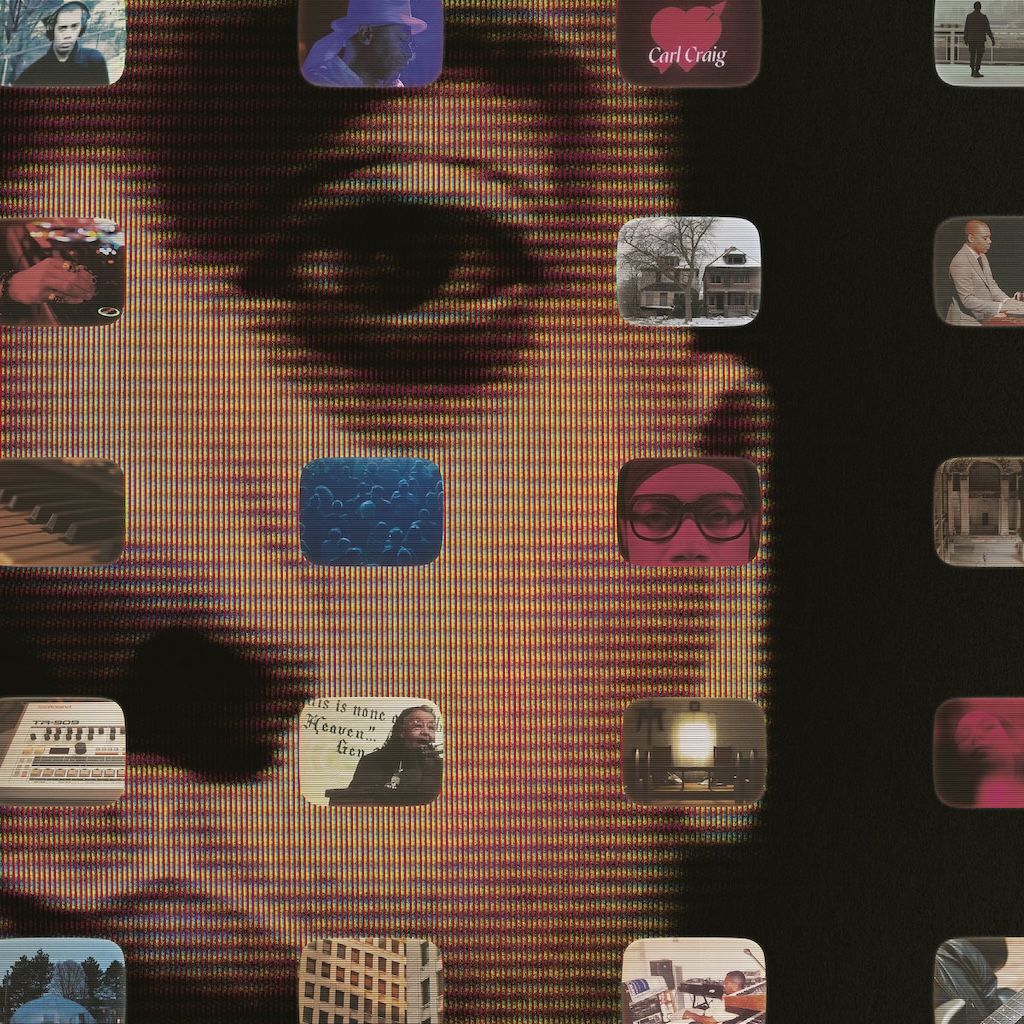
Director Jean-Cosme Delaloye, together with Sovereign Films, has recently released a new documentary titled Desire: The Carl Craig Story. The film details the life and career of the legendary titular producer. Since way back when I was a huge fan of the man, I thought, by way of promo, I’d take you on a personal journey through the music of the artist sometimes known as C2… plus Paperclip People, Innerzone Orchestra, Shop, Psyche, Piece, BFC and 69.

Carl Craig had a hand in the first “techno” record that I bought, Derrick May’s remix of Sueno Latino. Up until that point, while I had plenty of stuff from Chicago, New York, and more than a few Balearic beats, I hadn’t yet ventured to Detroit. I was prejudiced, and in my mind techno was for ravers / cheesy quavers, but this record blew away any preconceptions.
Between them May and Craig tore apart the classic Italian interpretation of Manuel Gottsching’s E2-E4. Somehow retaining the original melody while ping ponging the pieces backwards and forwards. Phasing the synths in and out, with a stuttering effect like a transformer scratch performed live on a crossfader. Teasing with familiarity, bringing it in from a distance. Techno, I was expecting it to be basic, banging, but this was incredibly intricate. From here I – perhaps predictably – became a committed convert. Where once everything was Andrew Weatherall, I began picking up anything I could find with May’s name on it. The Balearic Isles became a memory and, instead, I fixated on the machined funk of Motor City. I had a new obsession, and began plugging the huge holes in my knowledge. Buying copies of everything. Old and new.
If you lived in London, arguably Europe, FatCat Records, in Covent Garden, was the place to go if you wanted techno. There I also bought a 12 on Planet E, by Craig’s pseudonym 69. Ladies & Gentleman wasn’t like anything I’d heard before. A collision of clattering congas and strange, trebly, alien strings and keys. Its bass-line a building, distorted, buzzing. It had a staggering energy. I played loud on the stereo in the house I was sharing. Everyone else having gone home for Christmas. I was chopping out tiny toots of snow on my own, as the track switched to sine waves and breakbeats. A frenzied, freeform squiggling. I had to have more.
Turning the record over, My Machines was an express train of racing, rattling snares. A doctored disco beat, with wild, wonky bleeps. Its ridiculous groove inter-twisted with increasingly complex circuitry. Abstract, trippy details popping up around the kick, as pinched percussion is rolled in. Everything dropping to a big, borrowed break – with bits of the soulful backing vocals left intact. Craig flirting with a snaking synth line. There’s a frantic flurry of drums that sound like a full typing pool at top speed, and the mix feels very “live”, improvised (1). I didn’t know anything about techno, or its “conventions”, but it sounded like Craig was making it up as he went along. If he knew what the rules were, he was ignoring ’em (2). Squeezed on the end of the EP was Frequency Finale. A mental edit of a Visage B-side – something that Chicago DJ Ron Hardy had made an underground hit during his groundbreaking residency at the city’s infamous Music Box.
I had no idea then, in 92, but the bulk of Craig’s early output was basically edits – taking the concept, created by pioneering folks such as Hardy with razors and reel-to-reel tape, and seeing how far he could stretch it. Totally deconstructing his sources. Making the sampled loops smaller and smaller, the repetition relentless. Fast forwarding fragments of familiar favourites into the future and bold new worlds beyond the stars. Back then I didn’t stop to think about how this was being done. I was just obsessively collecting. Wanting to hear it all.
I’d pester the folks behind the counter of FatCat, plug them for info. When I asked them for records that had sold out, they bounced me down south to Big Apple, in Croydon – located on Surrey Street Market. Hidden behind the fruit & veg stalls and opposite the legendary second hand record store, Beano’s. I became a regular, stopping by once a week, but on my first visit, when I naively asked if they had anything on Craig’s label, Retroactive, the staff, and customers, all cracked up laughing. I had no idea that these EPs had disappeared in a blink and instantly become “holy grails”. In the end, via Ebay, I sent some guy in The Netherlands an envelope packed with 200 quid in used notes in exchange for a copy of Belgian imprint Buzz’s Retroactive compilation. It seemed to be the only way to even hear tracks such as Craig’s Suspiria back then.
Suspiria was built around steals from the Italian prog-rock band Goblin’s soundtrack for Dario Argento’s horror film of the same name. The then cult, obscure LP had apparently been a gift from S’Express’ Mark Moore. I, of course, searched out a copy of the Goblin record, but couldn’t make the connection. The lifts were so well hidden. Craig’s densely textured, downtempo production was murky, grainy and muted. The warped wavelengths and disassembled drums surfing in rising and falling waves (3).
A Retroactive release that was easier to find was Paperclip People’s Oscillator. Also licensed to Buzz, chaotic, the track bludgeons you into submission until you are at one with its cacophony, combining what could be the cowbell from Snap’s I’ve Got The Power – pitched to +8% – and an insane, siren / car alarm-like hook. In addition Buzz pressed Yennek’s Serena “X”, which featured a Craig, Inner Zone Mix.
Serena was so different to Craig’s other sides, such as Oscillator, or My Machines. It still featured a fractured break, and extraterrestrial strings, but it was far more sophisticated. A speedy syncopation of high hats, cymbals and delicate chimes that cascaded like falling leaves or petals. If you listened closely, as I tended to do while alone, stoned, you could hear Craig’s tracks riffing on one another. His techniques, ideas, become more polished, more evolved.
At Les was similar. Part of a Buzz collection called Virtualsex – which came with a pair of 3D specs – this opened with an epic intro of floating, fluttering frequencies and celestial, above the clouds, synthesised angelic sighs (4). Another detailed, layered arrangement, it gathered drama and anticipation, waiting an age before dropping in its jazzy drums (5). Shape-shifting, while, subliminally, its bottom end still shook.
However, before that you had NitWit to deal with. A blue vinyl beast, that when the needle dropped in FatCat, had the whole of the store jumping, and then rushing the counter, fighting for a copy. Pulled out of a pile of fresh arrivals, it smashes together snares from several sources. The bass, a single note, possibly a Liquid Liquid steal, eventually evolving into a rabid rumbling. Within Craig’s now characteristic weird, warped Sci-Fi orchestration, in its coda revealing tiny tastes of Sueno Latino (6). It was a fine example of the futuristic sounds that filled the shop and created an air of day-in-day-out excitement.
As Piece Craig produced Free Your Mind, which repurposed a chunk of Florida funk, his treatments turning the instruments metallic. With minor chord synths ringing, singing around a snatch of the `70s wah-wah lick, it was a lot like the downtempo tunes emerging on Dutch label Eevo Lute Muzique. Free Your Soul on the other hand smashed two Shut Up And Dance tracks together, one of which was already a crazy cut-up of Duran Duran’s The Reflex. Using the proto-hardcore to fashion another new musical language. The roughly razored repetition forging a bruising drum battery, only partly soothed by a bent bleep melody. The rhythm rigid, but its components, cogs, and their internal interactions exhibiting a furious fluidity.
Craig took Inner City’s Praise and ripped it to shreds. Loading his mixing desk with loops of stuttered, vocal shards, strings and beats. His creation avant garde, underground, but impossibly optimistic and up-lifting.
His take on Maurizio’s Domina was also a phenomenal, radical rework (7). The title refrain repeated over and over, and over and over. Mind-bending, rushing, but somehow loved-up, blissed-out. A hypnotic, high as a kite swoon. Swinging and countering with darting synth lines and faux flute.
Craig was clearly tapping into some kind of creative magic, totally in the zone. Locked in with his samples, all spinning, tampered with, treated, finely tuned live, on the fly. His music from this time is completely unique. A peak in his powers where he can only really be compared to himself. For example, Craig’s uncompromising decon / recon-struction of Bandulu’s Better Nation, has another barmy vocal snippet – “they’re dancing and stamping” – as its foundation. Spun this way and that. In and around the digidub B-line and the righteous roots of Michael Prophet. Looped to shit (8).
System 7’s Sirenes had no vocals to work with so, instead, Craig sent Steve Hillage’s guitar spiralling, delirious, disorientating, through filters and energetic EQ-ing. The results were mad euphoric.
In 1993, Kirk Degiorgio came to every Craig fanatic’s aid and released a couple of archival, Retroactive cuts on his label Applied Rhythmic Technology. The EP contained tracks dating back to 1990, produced under the aliases Psyche and BFC (9). Neurotic Behavior hit like a symphonic sequel to Model 500’s Night Drive Thru Babylon. Moody, melancholic and wholly cinematic. All detuned, contorted synthetics, a replicant requiem, like the score for a dystopian, urban noir. Summoning scenes of empty, rain soaked, midnight Blade Runner streets (10).
In comparison, the BFC track was a goof. Disco drums up at 45 not 33 RPM beneath bleeps and layers of Craig scatting, softly singing and, indecipherable in echo, repeating, demanding, “I want my chicken noodle soup.”
By 1994 Craig’s genius was no longer a secret, and he crossed over to a much, much larger audience. This leap in exposure and commercial success, in part, was due to a deal with Jim Master’s Open, a newly launched offshoot of Ministry Of Sound.
This collaboration coincided with a moment when house and techno, which had both become divided into a bewildering number of marketing sub-genres, was reunited. House got a bit harder – acid was back in – and techno got a lot groovier. A trend pushed by dark, twisted Sound Factory dubs, DJ Pierre’s “wild pitch” and Cajmere / Relief Records’ stripped back to bare basics approach.
Paperclip People’s Throw was an unrecognisable “edit” of Loleatta Holloway’s Salsoul classic, Hit & Run. Craig plundering Walter Gibbons’ 11 minute mix, but stealing only one kick, a hiss of high hat, and 3 or 4 bass notes, and stretching these out into a fresh, nearly 15. Hugely repetitive, but with its dynamics constantly, subtly changing. Rising and falling. Shaking with bursts of batucada drum claps. Fading in some funky organ, and his now trademark strings, before a breakdown of filtering and phasing and a camp diva vamp. Ending with a final, infinitely echoed “Throw your hands up!”
The 12 I have came flipped with a return to Sueno Latino and Manuel Gottsching’s E2-E4. Remake has snippets of that seminal piece of electronica set to military marching and a bouncing, bumping kick. A shot of instant sunshine, it’s a respectful dance floor re-imagining. While the the rhythm remains rigid throughout the track’s 9 minutes, texturally it’s in a continual state of flux. Craig fiddling, fidgeting with drop outs and spin backs. Smiling, beaming, it has the listener locked. Only in its final moments does it mutate Manuel’s melodies.
The Climax, a reworked BFC / Retroactive track from 1990, found Craig again experimenting for 15 minutes. This time with bits of First Choice’s Love Thang and Lyn Collins’ Think. Stopping and starting them, using the desk like a DJ crossfader. Seeing how far he could dissect their synergy, while still keeping folks dancing. Toying with his audience. Taking those dancers on a journey from disco to kosmische, via Ron Hardy’s reel-to-reel edits, as the track falls away to an extended expanse of beatless atmospherics.
For the Open reissue the tune was “Re-Arranged”, with its syncopation teased around a pitched-up 4 / 4, before adding the breaks. Live sounding again, Craig appears to be having a whole lot of fun. Giving off a real sense of spontaneity, of intuitive genius, and I defy anybody not to move their butt.
If Throw and The Climax were huge, overground hits that secured Craig a long list of big room, floor-filling remix commissions, he still had time to cater to his underground crowd, rewarding them with the Sci-Fi strangeness of 69’s Desire. A symphony of icy, otherworldly orchestration, singing high-pitched, twisted, theremin thin. Softened by bubbling, synth swells and rocked by another rolling, cleverly disguised breakbeat, this introspective epic transported us to distant planets, as all-back-to-mine afterparty spliffs burnt brightly, glowed hypnotically, while we drifted in and out of chemically charged conversations. Sometimes dropping to silence as the emotions the music induced over came us. Motionless while the world rushed by.
In 1996, Carl started a collaboration with Gilles Peterson. Initially contributing a couple of remixes to Peterson’s label, Talkin’ Loud. The first of these was the transformation of Incognito’s Out Of The Storm. Opening with gentle Fender Rhodes flourishes, the track was made to shuffle and then stomp to Craig’s sharp precise snares. Thumbed bass slaps supplementing the battery. The fluffy floating soon swapped for a soaring, future fusion solo.
Out Of The Storm was a tune where, me and my mate The Lizard, we would put it on and retire to his living room’s sweet spot – nicknamed the womb – have a smoke, sit back and wait for what we knew was coming. The music dropping to waves, washes, an extended intermission, where ethereal synths are interrupted only by the odd low end burp. Taking our stoned minds off to somewhere serene, a place of inner peace, before the drummer’s sticks strike a quick rattle and the beat returns, triumphant. The tops of our heads taken off as if by a cartoon / Tom & Jerry explosion.
Then there was United Future Organisation’s The Planet Plan, which Craig re-bulit around a spilt second drum loop. Hammering this foundation into bashment bedrock, and then, one by one, introducing a blip of bass, jazz brushes and rimshots. A needle drop at any point along its 9 minute duration would lead the casual listener to think that nothing differs from start to finish. However, its downtempo, head-nodding, foot-shuffling heft is hypnotic, and if you stay the course, you most definitely feel the drama mount.
I loved it, but thought, “when am I ever going to get to play this?” There was no payoff as such, and the Friday and Saturday night crowds that me and The Lizard had at our residency at Islington’s Medicine Bar certainly didn’t have the patience. This was were Craig and I came to a musical fork in the road… well, almost.
Craig had one last gift for me, a 2-hour radio show, broadcast on the independent station XFM, during December 2001. Hosted by the label, Nuphonic, under the banner London Xpress, Craig sat in the chair and smoothly chatted and segued between an eclectic range of records from dance music’s history. He even squeezed in some Lemon Jelly.
Emulating, paying tribute to the hugely influential Detroit radio DJ Electrifying Mojo, Craig played a ton of European disco – Cats n’ Jammers Kids, Gino Soccio, The Bombers – and electronic oddities from Throbbing Gristle, Dick Hyman and Liaisons Dangereuses. Tunes that were favourites for both Ron Hardy and, at Italy’s Cosmic Club, Daniele Baldelli. It was a real education. Many of the tracks were Craig’s specially prepared edits, most of which got pressed to vinyl. Some legit. Some not.
I don’t think I bought anything by Craig after his ecstatic, unrecognisable rearrangement – all overlapping, evolving orbits – of CAN’s Future Days, although Damon Havelin at PIAS did kindly pass me a promo of E-Dancer’s World Of Deep. This, though, was more due to me dropping / opting out, than any decline in Craig’s studio prowess.
I’m looking forward to catching the documentary. I’m really hoping that it shares some insight into the producer’s insanely inspired, early days, where hardware limitations did nothing to hinder a path of perpetual innovation.
To accompany the documentary Craig has released a career-spanning compilation, collecting a few rarities and greatest hits. You can order a copy directly from Planet E.
NOTES
1. In the documentary Craig says this was inspired by the sounds he heard working with large industrial photocopiers.
2. My obsession with techno only lasted a few years, so I’m no expert, but the only stuff that sounded similar to my ears was early Dan Curtin. Maybe, later, some MK.
3. Craig, then living in Ladbroke Grove, programmed the drums on some of S’Express’ hits. Suspiria would later become more widely available both via Mo Wax’s Headz compilation, in 1996, and Craig’s album, More Songs About Food & Revolutionary Art, in 97.
Mo Wax’s James Lavelle had been championing “downtempo” tracks by Craig, such as if Mojo Was AM, and he comp’d Suspiria and Urban Tribe’s Craig co-produced Covert Action.
In around 1993 I overheard a conversation in the record store Ambient Soho, where someone was saying that Lavelle had just paid 1000s for a second-hand techno collection. They were sort of “dissing” him for not having been there at the start – as “scenes” / cliques will tend to do – but this purchase sparked the reissue of some real Sci-Fi boom bap gems, and also produced some cracking cross-fertilisations between the hip hop and electronica genres. Mo Wax undoubtedly, musically broadened a lot of folks’ minds and commissioned a lot of classics that otherwise might not have existed.
4. This compilation also contained Rhythim Is Rhythim’s sublime, symphonic track Icon, and showcased “techno” at its most sophisticated at that point.
5. Foreshadowing Craig’s hugely influential Bug In The Bassbin, and Programmed, his full-fledged jazz hook-up with Gilles Peterson’s label Talkin’ Loud. The latter eventually leading to a collaboration with Herbie Hancock and Bill Laswell.
6. Craig obviously has a decent sense of humour, and his deconstructed drums often finally drop, making his disco samples and lifts more recognisable. Smiling wryly, as if to say, “See, I bet you never guessed.”
7. The Maurizio original itself was a radical rework of an obscure, kinky piece of kosmische electronica produced by Manuel Gottsching – something which Ron Hardy turned into an underground proto-house hit at Chicago’s Music Box.
8. The Bandulu and Craig were good mates. The Bandulu track Amaranth samples My Mine’s `80s Italo hit, Hypnotic Tango. In a game of musical tag, Craig then sampled the Bandulu tune for 69’s Rushed.
9. According to Discogs, short for “Betty Ford Clinic”. I always thought it stood for “Big Friendly Carl”.
10. When originally released in 1990, Neurotic Behaviour featured a drum track, produced by Derrick May. The story goes that at the time Craig didn’t have his own drum machine.
Discover more from Ban Ban Ton Ton
Subscribe to get the latest posts sent to your email.
 Ban Ban Ton Ton
Golden years, I have to admit, I probably didn’t buy a CC record after about 97 and probably bought a couple that I never played. During Lockdown I started to re listen to lots of old techno again at home with a view to thinning down my record collection, but ended up going down a rabbit hole and buying even more😂😂, Special mention to that Ultramarine “Hooter” remix 🔥🔥🔥🔥
LikeLike
D, that`s funny, I did, am doing pretty much exactly the same thing : )
LikeLike
Love Carl Craig I fell hard for Paperclip People and Landcruising. The Secret tapes Of Dr Eich soundtracked several months of my life too. Saw him play at Sankeys at some point int he mid- 90s- blew me away
LikeLike
Wonderful Life – is a beautiful track. I’ve only seen him DJ once – at The End – I was with Damon, who just kindly sent a comment – and as was the way back in those days was too worse for wear to pass judgement – the only thing I remember – musically – was someone working the shit out of talking heads / once in a lifetime
LikeLike
Apart from what has been mentioned above. Psyche’s ‘Elements’ on Techno 2 1990 was probably a lot of people’s introduction to CC. The Red 69 is a good one as well, Desire a rework of Double Fantasy – Heartbreaker, Microlovr makes you feel glad all over. He reworked Flying Lizards as well. Do like his remix of The Theme as well. When he dj’d in Nottingham c 1994 at Deluxe the promoter JB said he was sh*te. He wasn’t. When he dj’d at The Bomb later in the decade the same promoter was jumping about like it was the second coming. Sometimes in takes a while for things to settle in.
LikeLike
John thanks for taking the time to comment – thank you for the info – I have to admit that I didnt know the techno 2 compilation – I only have a couple of psyche / bfc things. I have the 69 12s – Desire is a classic – and I think gets a shout in the text – if not it should do : ) I do know the hot lizard – but the Charles Webster mix was the one that got the most spins – flying lizards? I would love to hear that : )
LikeLike
Techno 2 had some good tracks, Shut Up and Dance ended up sampling Area 10 track. Octave One.Also KGB’s Stark is a one off , he never released anything else, that highlights the industrial side of Detroit that Blake Baxter etc would bring in when they Dj’d. Similar is Code Assault – Action/Without Sun from the year before. My first introduction to a Jeff Mills remix, hard to believe this was a Judge Jules recommendation.
Back to CC, his track “Steam” uses The Flying Lizards Steam Away almost entirely.
Enjoyed your article, always good to remember what he has done and listen to ones you forgot or missed.
LikeLike
Thanks John – I have the Octave One track on a 12 – will now check out Steam : )
LikeLike
Another great piece, thanks. Fat Cat is another place I dipped into as a young man, but found slightly intimidating, as I didn’t really know what I was looking for!
The Talking Heads edit is this: https://www.discogs.com/release/157172-C2C4-Specimen-1-2. C2C4 was a bootleg edits label he put out a few things on. I always loved his edit of The Good Men ‘Give It Up’.
I don’t know much about Jim Masters, but feel like he is a key part of history – Open was a magnificent label – I like things that ‘bridge’ as it did between house and techno – and certainly introduced me to people like Francois Kevorkian and Harvey, as well as those wonderful Carl Craig cuts.
Love the Retroactive compilation story – it’s mad the things music fans did pre-internet! I remember doing trades in the very early days of the internet with people in America for hard-to-find unreleased DJ mixes.
LikeLike