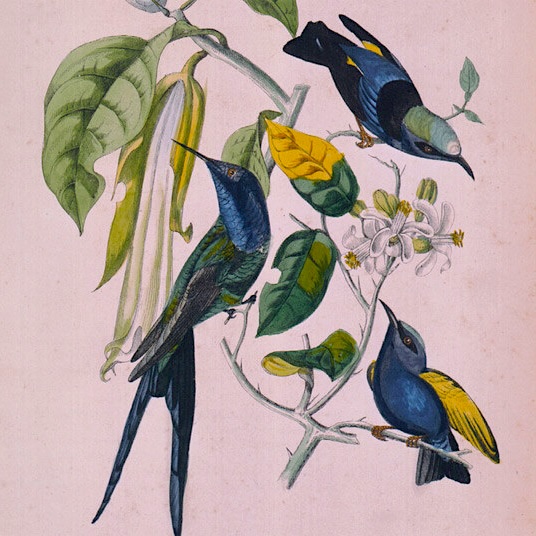
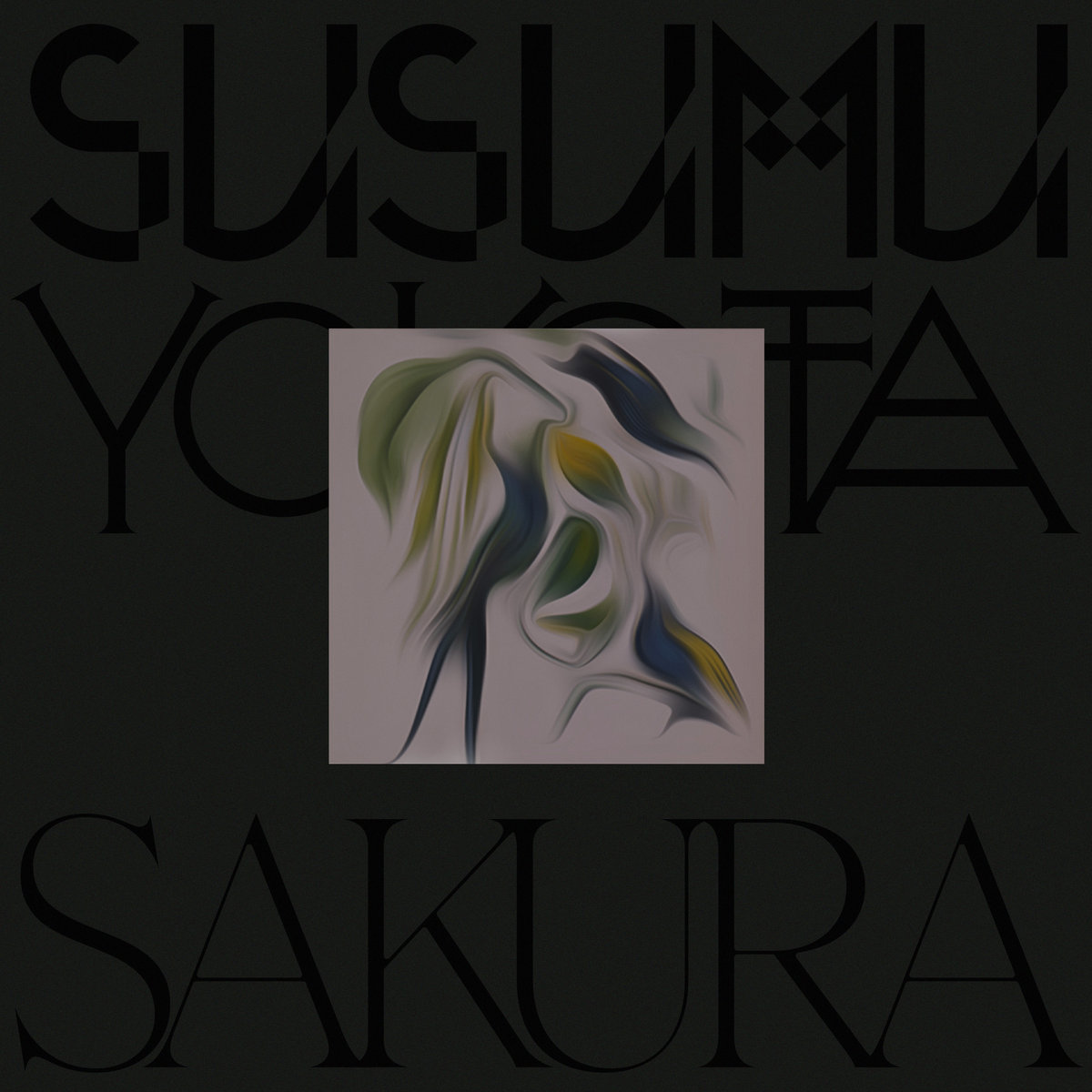
Sakura was the album that introduced me to the undeniable musical genius of Japanese audio auteur Susumu Yokota. All the music press, at the time of its release, talked about the LP in such hallowed terms. Heaped praise upon it. However, back then, in 1999, I didn’t own a copy. I didn’t buy CDs – still don’t – and the vinyl was impossible to find (1). I hadn’t even heard it. I remembered the name, and I remembered its distinctive sleeve. It went on my “wants list”, when I still, obsessively, kept that kind of thing.
Moving to Japan, 19 years ago, I thought, digging in Tokyo, copies would turn up. They didn’t. In fact none of the albums released on Yokota’s own Skintone label ever appeared in the city’s second-hand bins. Over the years I learnt of Yokota’s premature passing, and how his catalogue was tied up in complicated legal wrangling. Resulting in only scant, super limited reissues. Then, a few months ago, came Lo Recordings’ Skintone Edition Volume 1 box set – the first instalment of an extensive, exhaustive excavation of Yokota’s most personal canon. The music that Yokota made for Skintone he made for himself, separate from the club-orientated cuts he created for other imprints. Quieter, more introspective and inventive the label’s output acted as a sonic diary, of sorts.
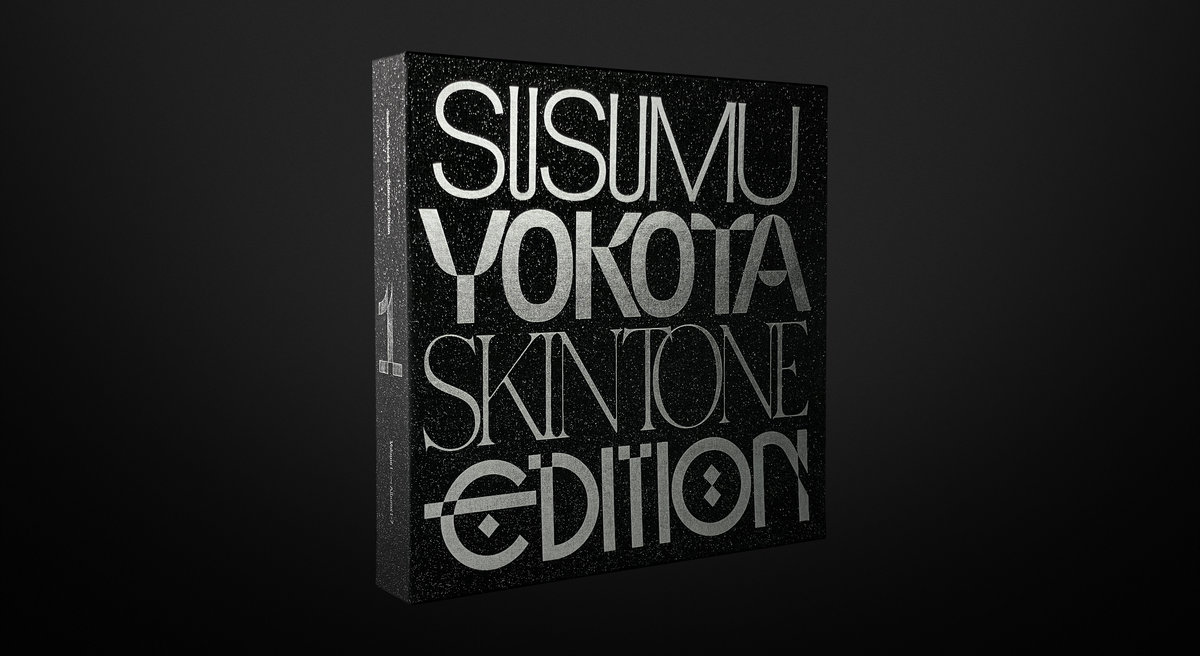
I planned to tackle the box, record by record, to see if I could get a handle on how Yokota’s process evolved. I’d been lucky enough to have been asked to contribute liner notes to the project, for 1998’s Image 1983 – 1998, so I had the choice of moving back to the beginning, starting with the album Magic Thread, but I just couldn’t resist jumping forward to Sakura instead.
Prophetically – while a scientist I still look for signs – the opening track is titled Saku, the name of the larger city, where I now reside. From the outset it introduces the warm Fender Rhodes flourishes that characterise the release. These keys further colouring Yokota’s signature snippets, samples and loops, with floating melodies and funky fills. Deep listening can’t reveal what’s incredibly clever cutting and collaging, and what’s live, improvised.
Vocals are few. Uchu Tanjyo (“Birth Of The Universe”), a small wonder of relaxing repetition, is a möbius twist of tribal hand drums and African voices (2). Azukiiro No Kaori (“Sweet Scent Of The Red Bean”) features what could be a tiny, layered, echoed steal from Jane & Barton, or Opus III. The haunting hypnotic, early Aphex Twin-esque Kodomotachi (“Children”) borrows just a little Joni Mitchell.
The album is generally regarded as “ambient”. The beatless opener’s delicate chimes, reverb and stuttered string-like shapes betraying Yokota’s love of The Cocteau Twins and all things 4AD. The picked patterns of Hagoromo (“Robe Of Feathers”), their complexity and counterpoint, lending themselves readily, some 20 years later, to Ayane Shino’s amazing classical guitar reworkings. Shinsen (“Fresh”), similarly, is a peaceful piece constructed from picked harp and violin pizzicato, while Kirakiraboshi (“Twinkle, Twinkle Little Star”) is brief, gentle breeze of tintinnabulations and woodwind-like keys. That said, several of the compositions do contain beats.
Gekkoh (“Moonlight”), whose cinematic sleigh bells could be a Hans Zimmer or Carl Orff tribute, rides the tick-tock of a rudimentary drum machine rhythm. Hisen (“Waterfall”) weaves synth and string melodies around slow, metallic percussion, like the sound of swords clashing, that recalls the Sabres Of Paradise at their most stoned. Genshi (“Atom”, “Primitive” or “Hallucination”, Yokota kept the exact kanji characters a secret) is uptempo, but tender, trance. Symphonic orchestration and pretty chimes offsetting its house / techno 4 / 4 and didgeridoo-esque pulse bottom end. A short block of rolling bass piano notes build the foundation of Naminote – which seems to be a made up word, just like its author’s music, a collage. This is broken by bursts of stolen, Bug In The Bassbin-like jazz syncopation. Dynamite, dynamic, each spin sees the number evolve, expand into an epic. Adding keys and vibes. Teasing with snatches of solos.
I didn’t hesitate when buying the box set. I loved the music so much that then I picked up the t-shirt. Proud to proclaim / advertise my fan-boy status.
As part of the promotion for both Skintone Edition Volume 1, and the forthcoming Volume 2, Lo Recordings have now organised an incredible global circuit of worldwide, audiophile listening parties, where selections from all of the Skintone albums will be played. In the process raising awareness of Yokota’s brilliant body of work. I’ll be sure to be sporting said shirt at Tokyo’s Baroom on November 18th, in the hope of connecting with other local devotees.
Notes:
(1) All my money went on music. In my addict’s mentality, limiting myself to one format, one drug, was a way of controlling my habit.
(2) We, Ken Hidaka, Max Essa and I, included this hypnotic cut on our Music For Dreams compilation Oto No Wa.
Susumu Yokota World Listening Tour Dates:
November
4-8 Bimbi-Nilo, Buenos Aires, Argentina
4-8 ESP HiFi, Denver, USA
4-8 XO HiFi, Kansas, USA
5 Oblicuo Hi Fi, Barcelona, Spain
6 Alter K, Paris, France
9 The Little Jerry, Toronto, Canada
10 Public Records, NYC, USA
12-14 Mr Melo, NYC, USA
14 Shibuya HiFi. Seattle, USA
15 Ojas, NYC, USA
16 Curtis Audiophile Cafe, Barcelona, Spain
16 For The Record, Panjim, India
18 Baroom, Tokyo, Japan
19 Million Goods, NYC, USA
20 Electric Pawn Shop, Dubai, UAE
21 Sort Kaffe & Vinyl, Copenhagen, Denmark
27 One Park, Cape Town, South Africa
December
2 Kwia, Berlin, Germany
More events are due to be scheduled throughout 2026.
Discover more from Ban Ban Ton Ton
Subscribe to get the latest posts sent to your email.
 Ban Ban Ton Ton
Simply beautiful! I will get this Vinyl! Kevin McCormick
LikeLike
Kevin, you won’t regret it – Sakura is definitely a modern electronica landmark – really looking forward to hearing your new music by the way
LikeLike
Hello Again
Thank you for this recommendation, it will make a nice Christmas Present for me! I contacted Henry at Smiling C re the release and he told me it is one of his favourites.
As for my music, the wonderful Smiling C have recently done a repress of Light Patterns and I know a repress of Sticklebacks will come out a little later, in the new year I think. I am now working on a new album, unsure of its content, it changes by the day. It will however reach back to the feel of Light Patterns/Sticklebacks. I am also pulling together some old unused tracks from the 70/80s which didn’t get put on Light Patterns/Sticklebacks. Happy Days to you, Kevin.
LikeLike
Firstly a great, detailed review. However, and I have to say I bought this on vinyl on its release, still have the copy, I find it an ok but uninspired release. I just don’t get all the fuss about it. I have a few more of his on vinyl, again bought when released, and they are again ok and not a bad price but I just don’t get what is so good aabout him. I’m typing this listening to Pauline Oliveros and that is way more stimulating. But each to their own and it is a good review.
LikeLike
Hi John
Thank you for the kind words about the review.
I think Yokota and Oliveros are musically different things.
I am certainly absolutely no expert but I associate Oliveros more with avant garde improvisation and deep listening. Her art is definitely more challenging, and continued to evolve over almost 5 decades.
Yokota, at least when the West first discovered him, was linked with 90s UK techno and “IDM” – people like Aphex Twin and Black Dog. Back then, I guess a lot of it was simply about discovering something new.
Sakura, I think, was important because this was his first – non banging techno / trance – release to gain widespread acclaim. The Skintone albums – up until then – were a small, self-released thing. They were sketches, a sonic diary, perhaps never intended to reach a large audience. Also Yokota, sadly, never had as much time to develop.
I do have to admit that the scarcity of the Skintone albums has surely added to their appeal, and mythology.
For me personally, based in Japan and with a real interest in electronic music – stemming from that 90s UK “techno” – the reissues are exciting because they`ve finally allowed me to listen to this body of work, produced by someone who really was one of the originators of Japanese techno.
John, thanks again for taking the time to comment.
People seldom do, and it is really appreciated.
All the best,
Rob
LikeLike