
I have to admit I consider this interview a real coup. Due the mythology Elijah has built around his Breadminster County Council label I never thought he would submit to questioning. Kudos to John for sorting it out – Rob
Magical musical musings and insightful interview conducted by the marvellous John Matthews.
Elijah Minnelli makes roots music that’s steeped in mythology and mysticism. Like all great artists Elijah operates in his own self created universe, one that’s a million miles away from the fast moving, disposable, digital streaming world we currently inhabit. His music is based in reggae and dub but references folk, blues and cumbia which give it a very unique sound. Simultaneously uplifting but mournful, modern but traditional, strange but familiar, it’s full of contradictions that shouldn’t work together but somehow, in Elijah’s hands, they do. Often with spectacular results. There really is no other current artist that sounds anything like Elijah Minnelli.
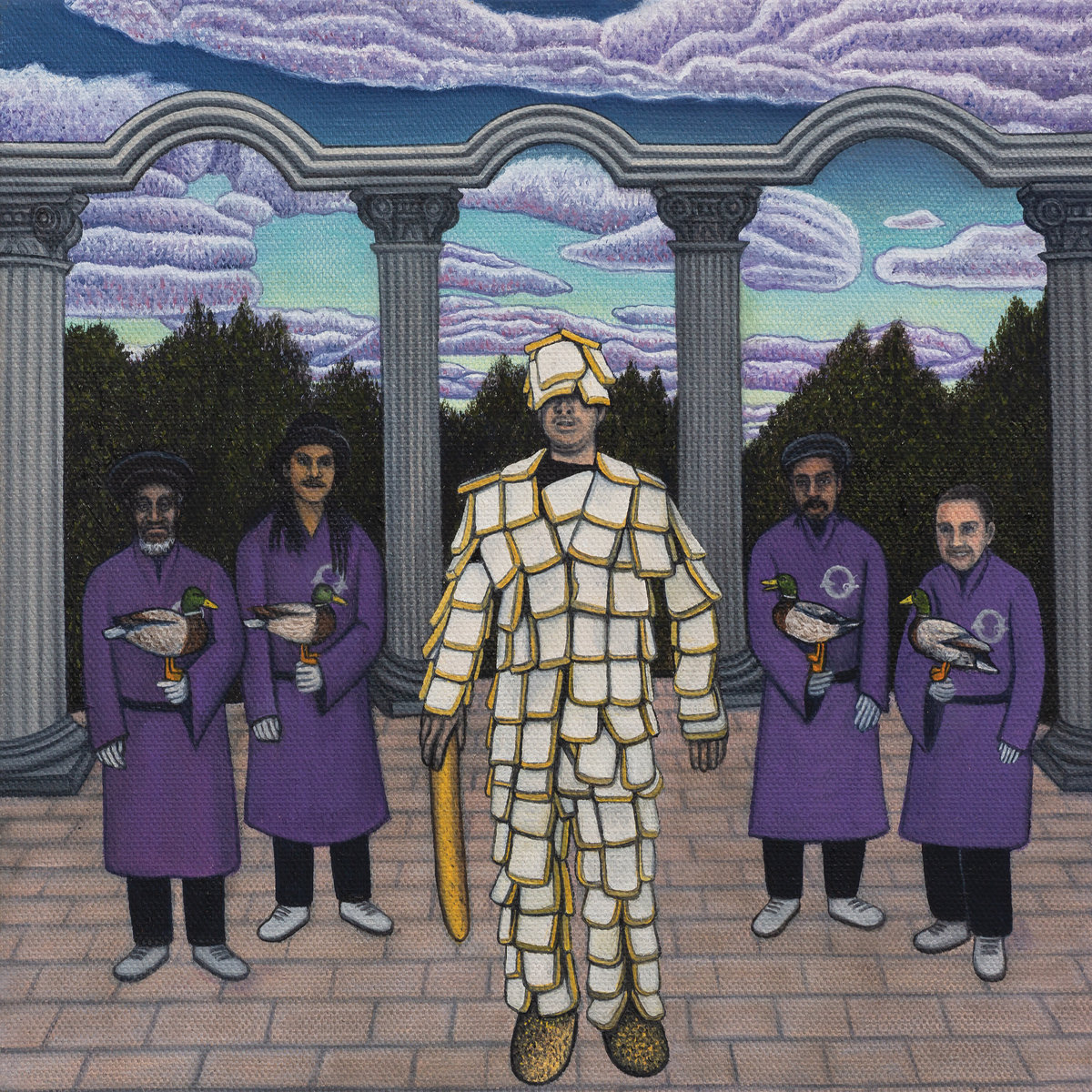
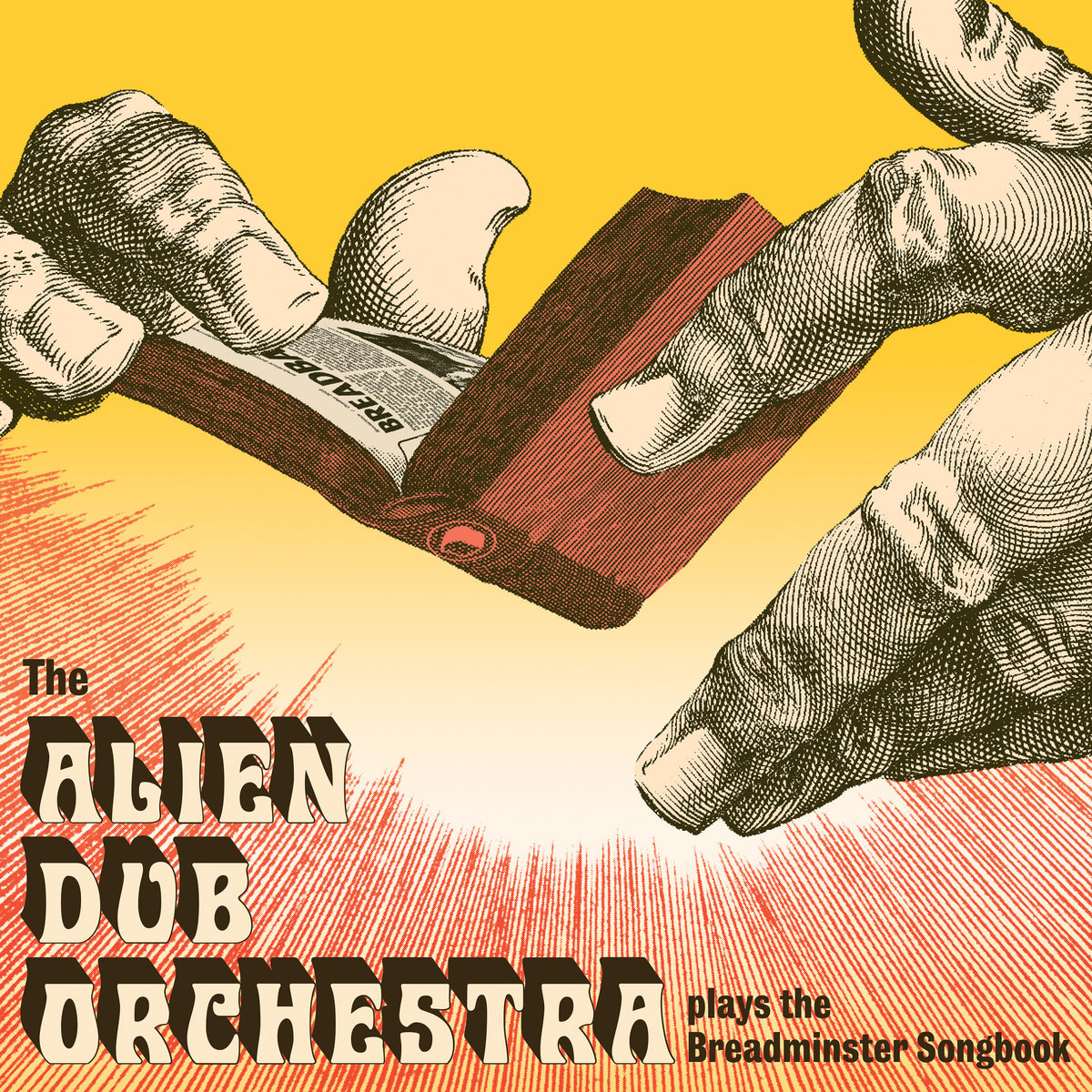
Elijah comes from a mythical place called Breadminster and has released several singles on his own Breadminster County Council imprint. He has also released singles for ZamZam Sounds and Bristol’s excellent Accidental Meetings. His first album for FatCat Records featured guest vocalists including Little Roy and Earl Sixteen and comprised of four tracks on the A side with corresponding dubs on the flip. The follow up, released under the moniker of The Alien Dub Orchestra, stuck to a similar format and was a collaboration with German indie band the Notwist, which reinterpreted the Breadminster songbook in a traditional Bavarian style.
Elijah’s new album Clams As A Main Meal consists of seven tracks, two vocal and five instrumental, that further expand upon his idiosyncratic sound. It opens with the rousing, gospel influenced, Canaan Land which is blessed by the wonderful vocal harmonies of British reggae legend Dennis Bovell. It’s one of the most moving and uplifting songs I’ve heard this year and has been constantly whirling around in my head since the moment I first heard it. Sumptuous Promise begins like a dubbed out sea shanty before a Jew’s harp, ethnic drumming and pounding dub bass enter the mix. Donna Donna (Chwerthin) is a traditional folk song sung in Welsh, in distinctive voice, by Carwyn Ellis, and is vaguely reminiscent of Fagin’s singing in the musical Oliver! Elsewhere on the album the music paints a vivid picture of weathered leather shoes banging on dusty wooden floors set against a light sepia tinged background. Mournful folk music is played on an old accordion, beautiful Arabic and Middle Eastern sounding falsetto vocals float in the air whilst percussion is provided by the banging of wooden blocks and the rattling of thick metal chains. All underpinned by deep dub bass lines. If Tom Waits and King Tubby were to host a joint blues party on a pirate ship I imagine the soundtrack would be something like this.
Following a recent London show at Ormside Projects, Elijah very kindly agreed to sit down with me to discuss the new album and the mysterious, and very wonderful, world of Breadminster.

Hi Elijah, can you tell me a bit about Breadminster?
It’s my hometown man. I’m from Breadminster, it’s where I come from and where I pledge allegiance to. I’ve been away for like 11 or so years but it’s an interesting place. It’s quite small and isolated but that gives it its own kind of unique flavor.
I believe you’ve recently taken up a new role as Breadminster’s Night Czar?
Yeah. I wear a lot of hats down there. I mean, to be honest, there’s not a lot culturally going on so it’s quite easy to usurp some other person and get yourself pretty much at the front of the queue for anything vaguely cultural. I’m a bit of a funding hoover down at Breadminster. I’m just trying to maneuverer council funds in my general direction.
You’re embezzling council funds?
Yeah. A little bit.
I know the Breadminster Board of Abstinence has influenced the title of the new album, Clams As A Main Meal, and the artwork. Can you tell us a bit about that?
Sure. There was a huge overpopulation issue in Breadminster in the late 70s, at the tail end of the hippy era, and so they created a Board of Abstinence which was headed up by a crackpot consultant called Dr. K’houldoux – who is featured on the album cover dressed as the “Looming Moon of Desire”, an idea of his relating to the tide, seafood, menstrual cycles and his privately held celestial predilections. Oyster consumption was incredibly high and some pseudo-science at the time led the governing bodies of Breadminster to believe that it was this that was causing the population spike. Dr. K’houldoux said the people of Breadminster should eat clams as a main meal, as opposed to oysters, to try and curb their carnal urges. Kind of throw a bit of cold water on the throbbing member of Breadminster.
With both albums featuring brilliant and extensive sleeve notes relating to governance in Breadminster – the Partnership of the Perpetual Musket and the Breadminster Board of Abstinence are referenced – ould it be assumed there might be a concept behind the records?
No, I’d just say they’re informative. Rather than focussing too much on what the music means the sleeves focus on objective facts and the history of the town. They are also an opportunity to engage the listenership and the readership I suppose. A record sleeve’s a big square thing so if you can give people a bit of light reading it’s not such a bad thing to do.
So what are your influences musically?
That’s a good question. I would say fundamentally reggae in all of its forms. I started out just wanting to be a subversive teenager listening to bad American pop, punk and ska. Then I got into good British ska with the 2 Tone thing, Jamaican ska and then explored the peripheries of reggae, rock steady and dub. I guess it’s that same pipeline of going through punk into reggae but just done kind of like probably about 40 to 50 years too late. But, you know, it’s still novel to you when you’re first exploring the music. When you haven’t heard something old before it’s brand new to you. I grew up with music in our house. My Dad was really into calypso, Harry Belafonte, big band music, the Andrews Sisters and then you had this kind of crossover of almost like, uh, Yiddish style music. When I first heard Cumbia music with the clarinets and the accordions it seemed like a really perfect merging of tropical sounds and minor keys. I really love minor keys. They’ve always spoken to me. Also different types of folk music. Polyphonic Georgian folk music and Bulgarian stuff. I always like folk music in its rawest form because that’s where I find it most interesting. That’s why I would definitely call it all folk music rather than world music or anything because I think that’s quite a dated way to talk about the world. I quite like the sort of more mournful end of folk music, and also a lot British and Irish folk stuff.
I’m glad I asked that question as I can distinctly hear all those influences in your music as well as a lot of space.
Yeah, space definitely. It probably comes from when I was growing up and hearing lots of dubstep, which was quite mainstream but still interesting, when I was around 13 years old.
I’m definitely interested in electronic music. Most of my friends are electronic music producers and I go out with them to see interesting DJs and stuff. I just don’t follow it in the same way that I do reggae and can’t talk about it in the same way I can talk, for example, about Studio One or King Tubby.
How do you choose which folk songs to explore and record?
You know what, both the last record and this record I pretty much used songs that I remember my family being into. For example I watched a film with my Dad called Elmer Gantry, which stars Burt Lancaster, and that’s where Canaan Land came from. Then there are moments when you hear an old song that sounds so omnipresent and familiar, but then you realise you’re hearing it for the first time. The other traditional track on the new album is Donna Donna which is a Yiddish song. I remember the chorus from my childhood. My family’s background is half Eastern European Jewish and half Irish. I met this guy called Natty Bo, a DJ and artist who plays Cumbia and stuff, and he was saying how his father used to like hold him and sing Donna Donna as a child and I have similar memories of it being lullaby-ish. But actually, when you listen, when you work out the lyrics, it’s quite a horrible song. Not very optimistic at all, however, I like the idea of doing something in a kind of dying language and Yiddish music in particular because it’s a pre-Israeli version of the Jewish identity. Reclaiming Yiddish music that has nothing to do with Zionism, which for me is a genocidal evil on the world.
Unlike your previous albums the new record is self released. Any specific reason why you haven’t gone with a record company again?
I just want to see if I can do it myself. It was wonderful working with Fat Cat on the first album and I really appreciate time and effort they put in but I just want to work within my own limitations whilst having as much autonomy as possible. Then at least if something turns to shit I’m culpable for it. I’m lucky because buying vinyl is big in the world of reggae which means I can go to record shops, meet the people and cut out the middlemen. I’m also screen printing the records sleeves with my friend, the wonderful Tom Phillips, and have other friends such as Oscar Jeff and Nick Vieweg who help me with the sleeve notes and videos. The excellent Canaan Land video features Dennis Bovell dressed as a fisherman out at sea on a trawler boat.
So how did you get to work with Dennis Bovell?
I have produced Dennis’ radio show for Soho Radio for about five years and when I thought about Canaan Land I was like, yeah man, this tune needs the voice of God on it and I think Dennis has that in his arsenal. His vocal range is insane.
I’ve seen you play live a couple of times recently and really enjoyed it. What’s your thought process behind the live show?
I make live dub mixes of the tunes, so I bring an analogue desk. I run the stems and then I just kind of like try and bring the tunes to life by improvising with delay and reverb. I also run a mic which kind of gives it a bit more of a performance feel because I appreciate if you’re not into dub and you’re presented with a bearded man twiddling knobs it can be unclear what is happening. So it’s nice to do a bit of singing with it as well. It’s quite therapeutic. My live show needs a good sound system because it’s a dub set and I always spend a bit of time tuning it. I’m always going to have tunes I haven’t released dubs for that I will make live dubs for in the show. I don’t want the set to be recorded. The music just plays and then goes away, and that’s the fun of it.
Elijah Minnelli’s superb Clams As A Main Meal is available to pre order from Bandcamp. He plays live with Dennis Bovell on 14th December at Cu in Dalston in London as part of Holy, the dub and reggae night run by Richard Fearless and Tom Dubwise. You can purchase tickets via Resident Advisor.

Discover more from Ban Ban Ton Ton
Subscribe to get the latest posts sent to your email.
 Ban Ban Ton Ton
Great stuff and thanks for the tip, nice work all round..
LikeLike
Thanks D, hope you`re well mate
LikeLike