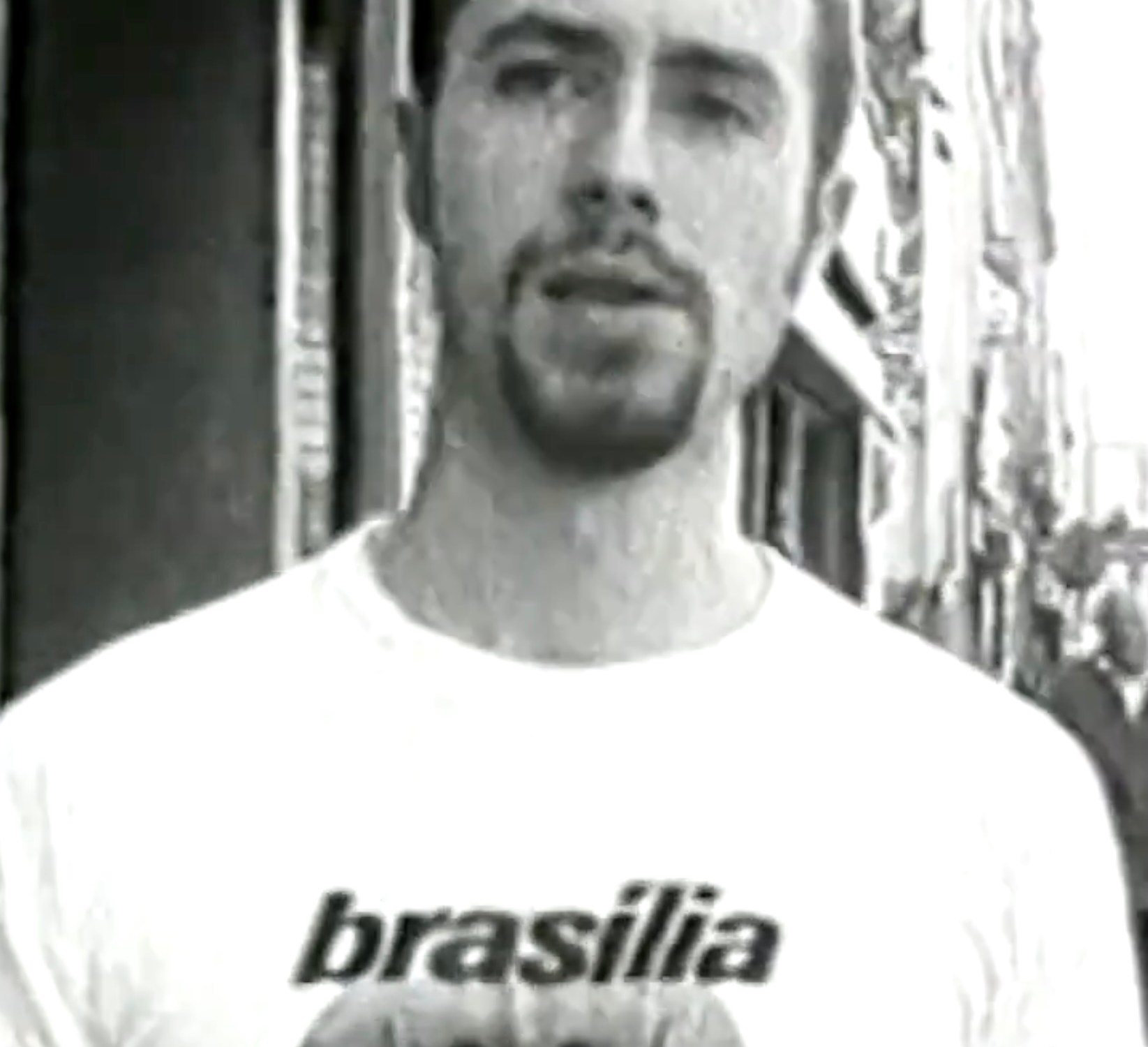
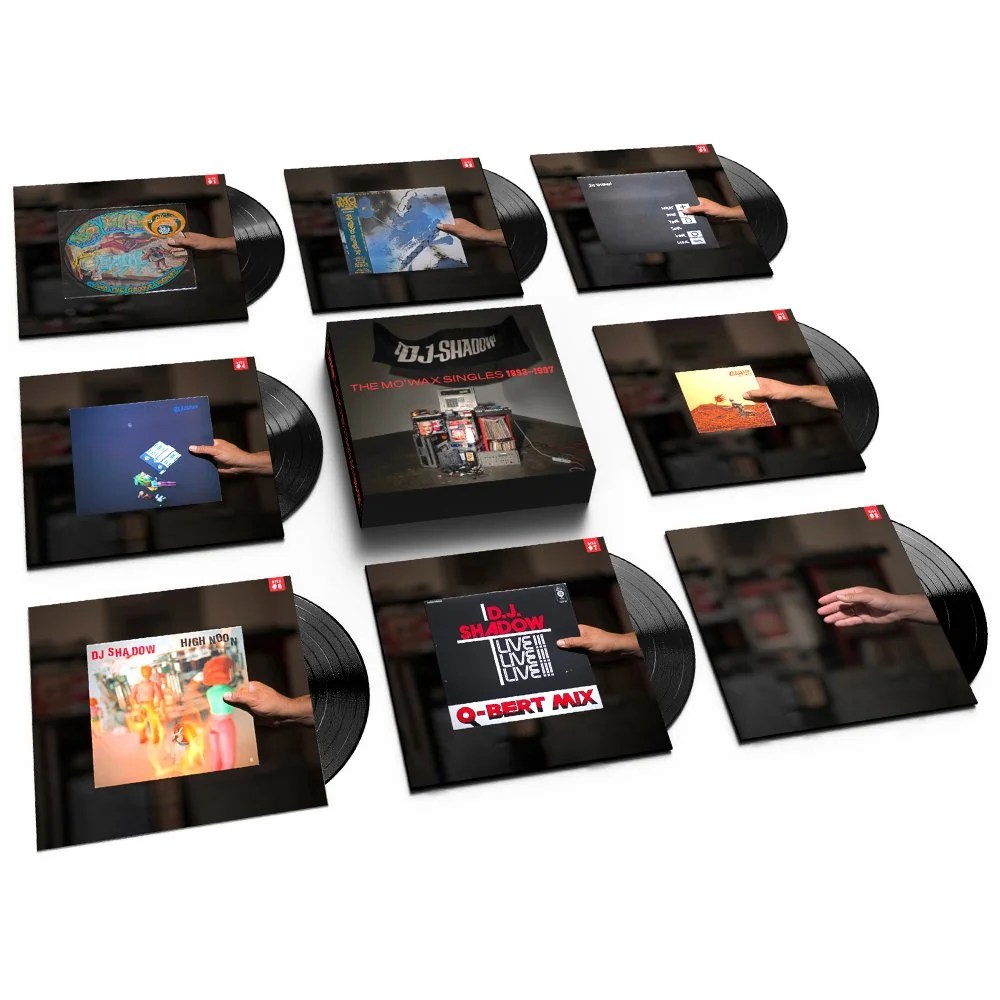
Next month, Josh Davis aka DJ Shadow is reissuing his groundbreaking Mo Wax singles as a lavish boxset. Those records made a huge impression me, so I polled the rest of the Ban Ban Ton Ton writing team, to see if they had experienced something similar. Here, Patrick Syms shares a few memories around 1993’s “Hindsight”.
Pukka prose by Patrick Syms.
In the corporate world you inevitably find yourself in big meetings designed to establish some facade of consensus among a disparate group of people who don’t know each other and have little interest in getting along. Whatever your version is called – workshop, working session, breakout – they usually begin with some sort of ice-breaking exercise in which everyone introduces themselves. A hackneyed but frequent choice is to ask attendees to describe themselves in three words. This was particularly popular when I worked in New York. I used to fantasise about pulling the pin on a little sarcasm grenade. A dose of self-recrimination for painting myself into this corner in which I had no desire to be. If I was feeling particularly resentful, I’d dare myself to drop “Bad – Career – Choices” on my irony-free American colleagues. Of course, I never did pull the pin on that grenade. And, unfortunately, my poor judgement was never limited to my career choices.
Twenty years before the nadir of my corporate life, I was at Manchester University, planning a very different future. I’d arrived at the end of 1992 intending to become a filmmaker. An auteur. I wanted to write and direct. Perhaps I was greedy, possessive, wanting all the fun and potential glory to myself. Looking back, it was more likely insecurity, a fear of losing control if I allowed anyone else in.
The obvious route towards this objective was to begin by making short films, a path I’d started down during a break between my second and final years at Manchester. With my debut short behind me, I arrived back in the city, ready to make a second. I could picture my Oscar acceptance speech.
The film I made that year was about a young guy who encounters his double on the streets of Manchester – in Rusholme, passing Dry Bar, outside the old Odeon. The double starts infiltrating his life, taking it over. Or so he thinks. His mental health deteriorates and, by the end, we understand that he’s considering suicide.
Looking back, the script started clearly, developed well and then failed to deliver on its early promise. The problem: I chose a terrible ending. A bad decision. Perhaps if I’d shared the script with others beforehand for feedback it could have been improved. Without that, it was just an over-earnest attempt to make a serious film. I think I’d been watching a lot of Eastern European cinema. But I didn’t seek other views. Mine was the only opinion that mattered. I was possessive, remember? It didn’t seem like a choice at the time, but it was a choice.
The film had no dialogue, partly because I had a silent super 8 film camera and didn’t want the hassle of recording and syncing sound; partly because the discipline of purely visual storytelling appealed. But I didn’t want to make a silent film. It needed noise. It needed music. Enter DJ Shadow. More precisely, enter the 12” of “In/flux,” on the flip of which is “Hindsight”.
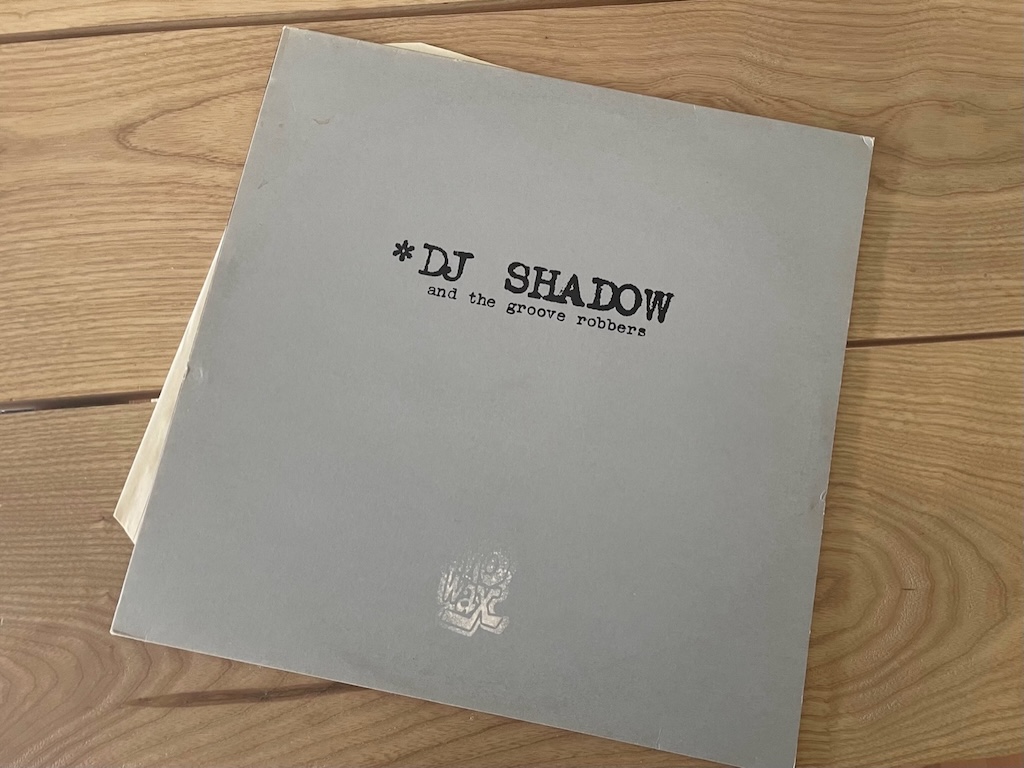
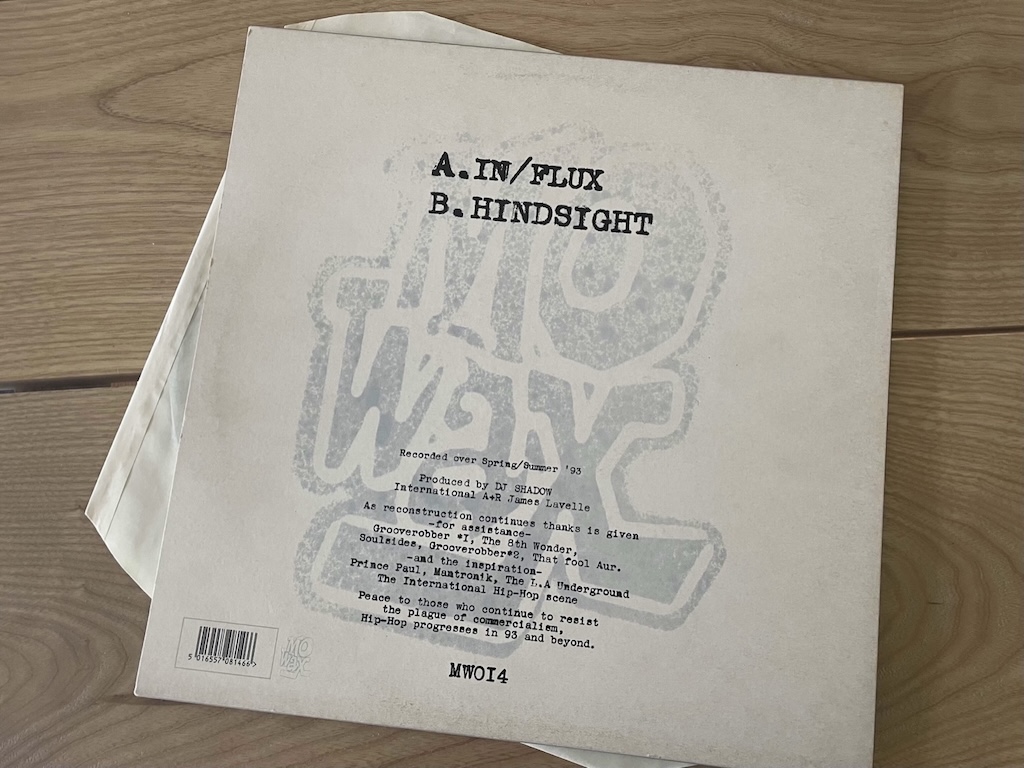
I’ll leave a dissection of “In/flux” to others. Suffice to say, it’s a symphonic masterpiece of sampling. “Hindsight,” in contrast, is a more modest proposal, one with quiet but deep qualities: a brooding, ominous advance that threatens all sorts of hidden dangers. Sparse and disquieting, the track comprises samples that fall into two main groups: drums and moody, atmospheric strings or pads. Of the seven sample sources listed on whosampled.com, four are film soundtracks. The musical elements, the samples that aren’t drums, feature no obviously recognisable hooks from the original tunes. The closest to anything immediately identifiable are the two lifts from Roy Ayers’ He’s Coming, and even those are hiding in plain sight. I’ve been listening to this track for years and never spotted the sample from “We Live in Brooklyn, Baby.” The result is an understated and unassuming piece that sounds like a film score but simultaneously sounds nothing like the soundtracks from which it was constructed. It suited my needs perfectly.
But there was one problem. And here’s perhaps my poorest choice of all. At about a minute into the track, there is a sample of dialogue. Just seven words: “The tracks go off in this direction.” It’s clearly a lift from a film. At the time, I assumed it was a heist caper or a western. I felt that something so obviously from another film would not sit well with my film. It had to go. Back then, my stepfather was a sound recordist and sound editor. A few minutes’ work and ta-da, DJ Shadow’s track was butchered. No more dialogue.
This act of desecration could have gone unnoticed and therefore, perhaps, forgiven. In the mid 1990s, there were fewer opportunities for perky young filmmakers to exhibit their work. This was ten years before the arrival of YouTube. If a short film is made and no one sees it, does its adulterated soundtrack really dishonour the composer? Perhaps not.
But I was determined that people would see my grand opus. I submitted it to The Manchester Kino Short Film Festival. It was accepted. By this time, I’d graduated and was back in London, out of work and short of funds. Did I scrape the money together to attend the festival screening to network, make connections, find allies? No. Another stupid decision.
Around the same time, I had the idea that if he liked it, Shadow could use my film as the video for his track. My work on MTV? Yes, please. So, I packaged up a VHS and dropped it off at the Mo Wax office on Caledonian Road. Shadow was playing in the UK a little after this and I duly took my hustle down to the event (almost certainly this night at London Tramshed). I managed to have a word with Josh in the booth and he told me, yes, he had the tape at the flat where he was staying and that he would take a look.
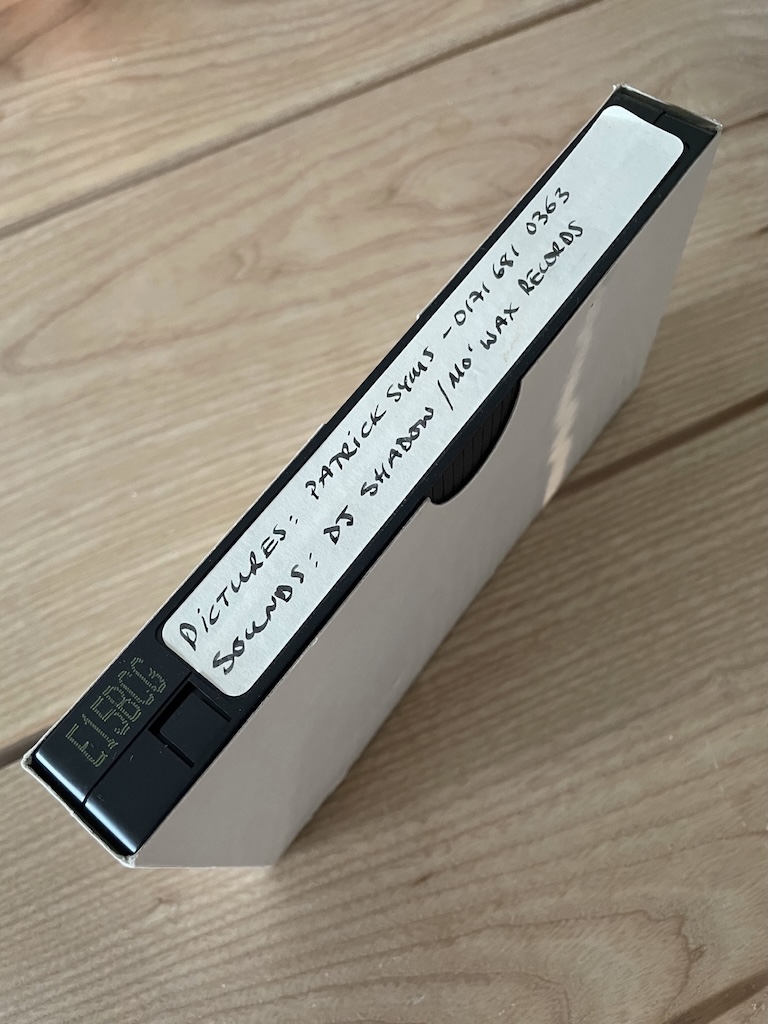
Did he watch it? I have no idea. Would it have been sensible, respectful, to have replaced the dialogue before sharing it with him and his record label? Definitely. Would it have made sense to re-edit the footage explicitly as a video for the cut, edited to accompany the entirety of the track, rather than shortening it to fit my narrative? Almost certainly. Did I do either? Nope. So, honestly, I hope he didn’t see it.
Me and You, 1996. Music: Hindsight, DJ Shadow*
I’ve always looked back on this episode as one to learn from, as an example of how not to be. I still cringe a little at my poor judgement but largely I’ve reconciled myself with these missteps. But then I came to research this piece and it led me to the true source of the dialogue that my stepfather had amputated. With it, I discovered that in altering the original, I’d insulted not just Josh Davis but, in a way, George Lucas: the sample was from Star Wars. My shame was complete.
*By way of belated apology, this version has the Star Wars sample restored although the track still fades out a minute or so early. Here’s the full version:
DJ Shadow’s “Hindsight” can be found on a forthcoming boxset, which comprehensively, and lavishly, across 8 x 12”s, documents Shadow’s Mo Wax singles. You can find more details on Shadow’s site, where you can also pre-order this deluxe item directly.
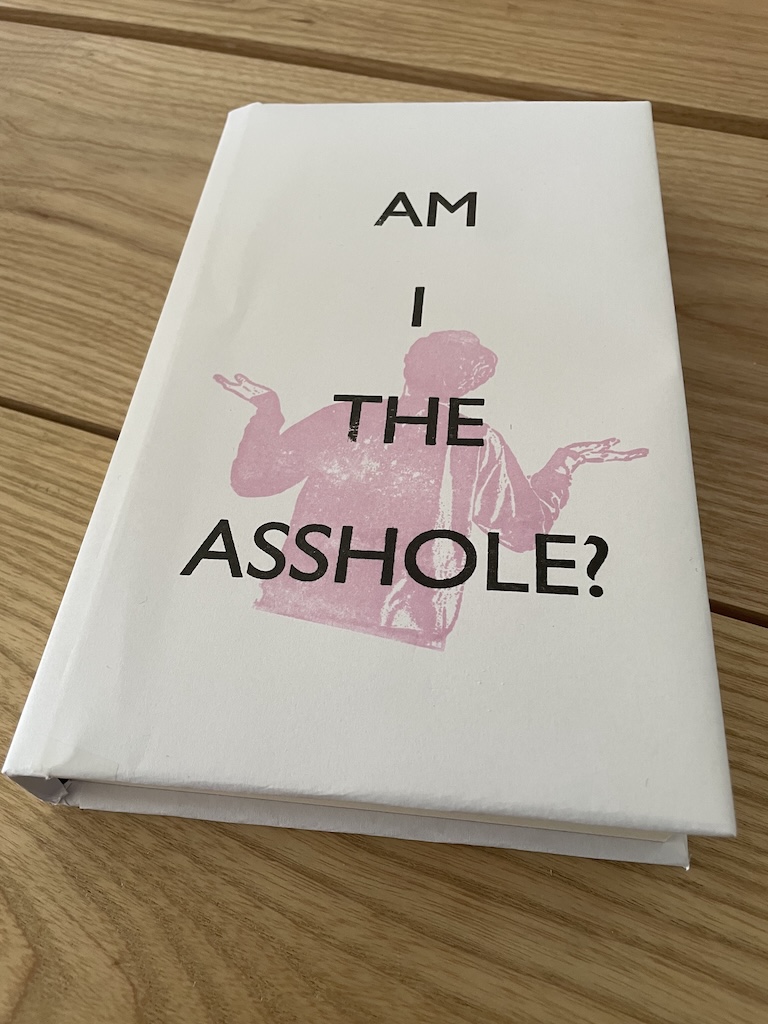
You can also purchase a copy of Patrick Syms’ debut novel, “Am I The Asshole”, here.
Discover more from Ban Ban Ton Ton
Subscribe to get the latest posts sent to your email.

