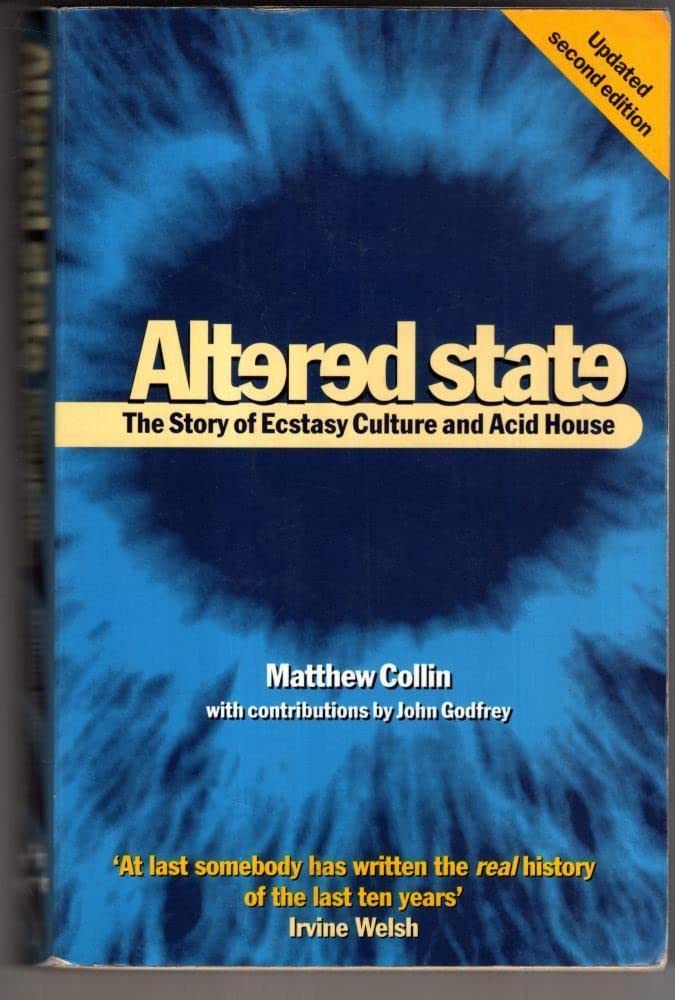
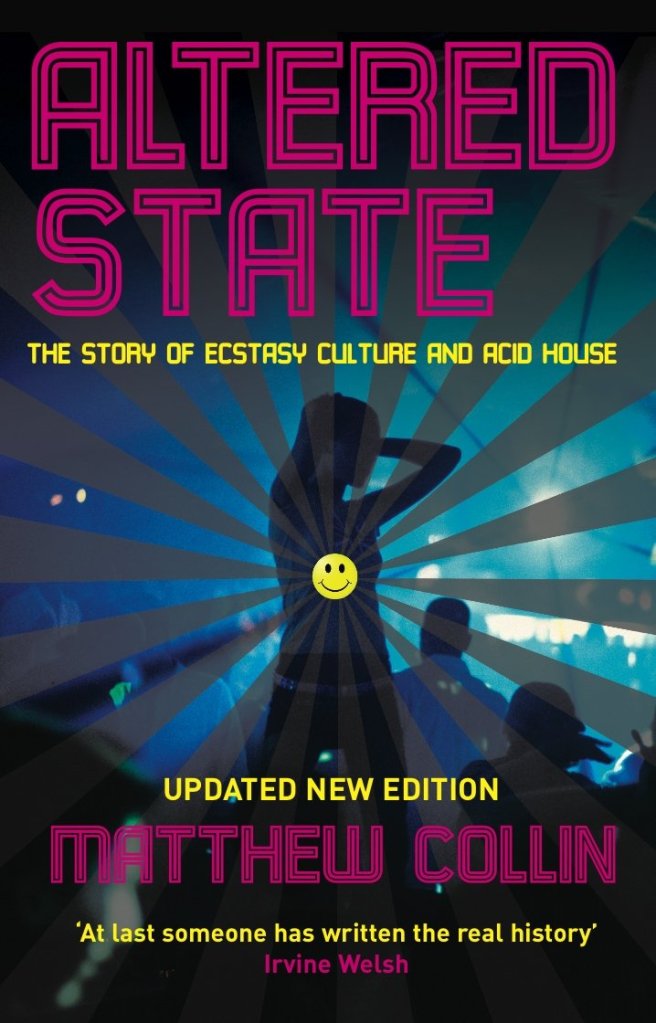
Matthew Collin first published “Altered State” in 1997. The book is a page turning account of how MDMA helped shape UK dance music culture. It is, in my opinion, the definitive, reference text on the subject, since it tells this story in an unbiased manner. Balancing both the good and the bad. It is neither rose-tinted nor judgmental. It is exhaustive in detail. The book enthusiastically taking you on this journey, one that Collin clearly experienced first hand, and explaining every plot point along the way. It’s full of interviews and anecdotes, but it certainly isn’t exploitative or sensational. It doesn’t simplify the narrative. It has no personal agenda. It just wants to get the real story straight.
“Altered State” has been updated a few times, but the last time it received an English reprint was in 2009. White Rabbit Books are set to address that with a new edition. Chapters have been revised and expanded, for example, to now include Goa trance, plus more time is spent exploring scenes that developed in Glasgow, Edinburgh, Leeds, Liverpool, Sheffield, Stoke and Belfast. There’s also a fresh foreword by journalist and broadcaster Kate Hutchinson.
That said, the decision was made not to bring the book bang up to date. Not just because that would be an impossible never-ending task. Messing too much with this masterpiece would also rob it of its unique voice, which captured the culture as it was actually happening. Not in hindsight. A tale equally inspiring and cautionary. Written in the now. Not then.
Here, Matthew talks about how he came to write “Altered State”, the book’s themes and a little of his career as a journalist and author.
The first question I have is, the prologue for the book has you taking your first E. Where and when was that?
That was the Hacienda, in Manchester, in 1988. I’m actually from Nottingham, which is a relatively small city, and so, at the time, it was the kind of city where people had travel to other cities that had, let’s say, more attractions in terms of nightlife and culture. So, we would go to Sheffield. We had a club, called The Garage, who would run buses to Jive Turkey. So we’d go up there once a month. We’d also go to Manchester for the Hacienda. I had friends in London, and we would also visit them.
We were kind of in the middle of this, north-south divide, and we were excited about seeing and hearing everything going on in the other cities. Through doing that we made connections. We were very lucky to have The Garage. It introduced us to all sorts of different music. Graham Park played was the resident DJ and he was playing hip-hop, electronic soul, early house, early techno, New York garage, all that kind of stuff, from the mid-80s onwards. He was also mixing and scratching as well. We didn’t know how groundbreaking that was at the time. We just thought it was normal.
In London, we’d go to Pyramid at Heaven, where Mark Moore and Colin Faver DJ-ed. RAW in the basement of the YMCA. Jungle at Busby’s. The Fridge. Then serendipity had it that I moved to London in April 1988, to try and make it as a freelance music journalist.
How did you get into writing and journalism?
While I was still at school my friends and I put together fanzines, covering the post-punk scene… Fast Product, Rough Trade, Factory Records… that sort of stuff. Then when I left school I was working as a screen printer in a factory, but I really wanted to write about music.
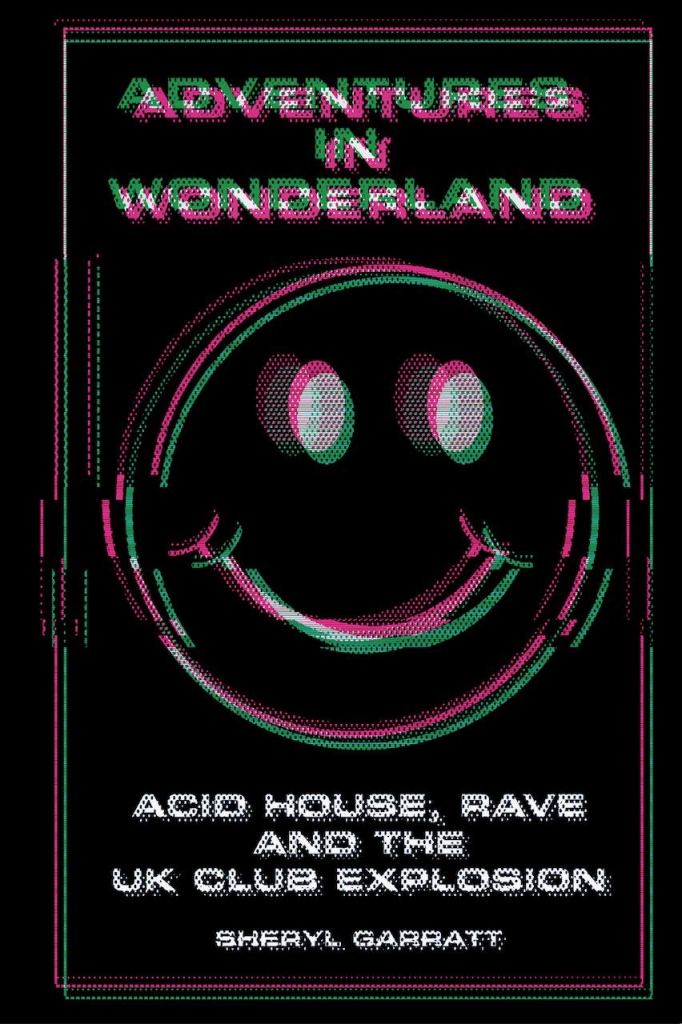
A really good friend of mine, Sheryl Garratt – who was one of the first UK writers to cover the Chicago house scene, and the author of a brilliant book called “Adventures In Wonderland” – one night, in a club, introduced me to the editor of a now now-defunct, London listings magazine called “City Limits”. They commissioned me to write an album review. Now, I can’t even remember what it was, but when it was published, I was so excited that I quit my job immediately. Three months later, I got the cheque for £12.
So, unemployed, I went on the Enterprise Allowance Scheme, moved to London and tried to make it as a freelancer. In hindsight, I ended up in the right place at the right time. The whole acid house thing was starting to reach liftoff velocity. It’s impossible, now, to understand, just how strange, and exciting house music was. How fresh and raw and radical it sounded.
I was lucky, in terms of being a music writer that there weren’t that many people writing about house at that point. I have no claim to being a musicological expert, but the majority of the press viewed rock music as “serious” and house as just another passing fad. Of course, as a writer, that was both good and bad. Good in that you’re one of the few people writing about it. Bad in terms of the fact that not very many people want to commission you to write about it.
The people who were into house felt a real commitment to what they saw as a musical cause. This was was the music of the future. This was the music that really meant something. A friend of mine, Nicky Trax, said, in her interview for “Altered State”, that if you were into house then you were part of some kind of secret society. When you met someone else who was into it, you had this strong cultural bond immediately. It felt like everything was up for grabs. What a time to be young.
People have talked about “The Second Summer Of Love” being an apolitical movement, and, for me, coming from South London, I didn’t really feel like that. It gave loads of people who were around me creative opportunities that they wouldn’t have had otherwise. A way out of a dead-end job or the dole. Do you think it was apolitical?
I think that it was so exciting that people wanted to be involved, to participate, but, but different people had different things that they wanted to achieve. It provided a support network for creativity, because you had, in economic terms, the clubs and record shops, which generated the money that was able to sustain people in creative careers, which as you said, they may not have been able to take up otherwise. It created this whole economic support network for a creative culture, basically.
The other thing that I was thinking was that, if you were going to the same club every week, it really created a sense of community, something which the government at the time had gone to a great effort to destroy. For me personally, this was really important.
All cultures are influenced and shaped in some way by the social and economic environment in which they emerge, and the environment at the time was Thatcher-ite, an entrepreneurial, capitalist, ideology which was about personal achievement and, not about the collective. In fact, very much anti-the-collective, anti-trade union.
There’s a famous from Thatcher, “There is no such thing as society”, while The Second Summer Of Love was a celebration of the collective. That human desire to gather together and celebrate together, to be part of something bigger, to be part of a society. Was it a coincidence that at a time when individualism and materialism were being celebrated by the mainstream as the predominant value / ideal, a movement emerged that was completely counter to that, that thrived on collective activity and communal celebration? I don’t know, but the fact is that it happened.
So you had this cultural movement, as I say, that was based on the collective, however, at the same time, it was also shaped by those Thatcher-ite values of entrepreneurialism. You had people who were there to make money, be it organising parties, selling T-shirts, making records, running record shops… or selling drugs.
Ecstasy was both the spark that started the whole thing, and ultimately the reason for its downfall as well.
Any culture, that’s intimately bound up with illegal drug use is going to run into problems of criminality. It’s gonna run into problems of official backlash from the authorities, and it’s gonna run into problems with excess and harm. That is inevitable.
In “Altered State” you don’t shy away from those observations at all. That was one of the things I really liked when I first read the book. I’d seen a lot of that firsthand. Initially it all felt fairly innocent, you know, you don’t stop think that you’re doing something illegal, or harmful, because everybody else is doing it, but once the money comes in, the more serious criminals get involved, and then it starts to get pretty dark. You’ve also got people who are spending all their money on gear, and they end up with substance problems and move onto heavier drugs…
That’s exactly what I’m talking about, yeah.
The book doesn’t rose-tint anything. It documents both sides.
That’s possibly because when the book was written, which was the mid-90s, after the first, kind of rush of excitement. By that time, we’d reached a point where we could take a good, hard look at ourselves, and work out that loads of things were absolutely brilliant, but there were other things that were certainly to the detriment of people’s health, psychological welfare, and in some cases, their personal liberty. A lot of people got overexcited, and started serving up a few pills, got caught, and suffered life-changing consequences. That can’t be denied.
No one really tells that story, though, do they? I sometimes get criticised by my friends, the people I used to go clubbing with. They say, “Whenever you write about that stuff, you’re always fairly negative about it.” But it’s just because I did that “Withnail & I” thing, where I hung onto the balloon for too long, you know? Instead of quitting while I was ahead, I stuck around for long enough to see the dark side of everything. These friends, they didn’t.
It’s all about how you want to look at things. Rob, do you ever read the comment sections on Youtube below posts of classic house tracks? There’s this intense nostalgia for what a lot of people remember as the greatest time ever. They’re full of joy.
To be honest, I think I had to get the kind of negativity out of my system in order to be able to look at it positively again. I personally had stuff to work through. I mean, I got to the point where I was bored with everything about clubbing, and what I should have really done is found something else to do, but I didn’t, I just kept going out and took more and more gear. That’s where it all went wrong.
What was lucky for me, personally, especially as a journalist, was that once we got to the mid-90s, the culture started to diversify really rapidly. You had hardcore, then jungle, which became drum & bass, and we got UK Garage spinning up off of that. You had all these people getting involved, really desperate to express themselves creatively, and having the means to do so. An explosion of creativity and all these different styles and scenes shearing off into their their own spaces. This was hugely exciting, and, something that I look at in the book, for some of these scenes, Ecstasy was no longer a factor.
The book maps the development UK dance music, but its primary focus is the story of how Ecstasy influenced that.
Yeah, it’s definitely not a history of British dance music. It’s about how the 2 are intertwined.
Re-reading the book in prep for talking to you, the story of Ecstasy – in terms of the source of “fuel” – seems to come to an end around 1992.
Yeah, I mean, in certain scenes, it remains dominant, but certainly by the mid-90s, it was no longer the defining force. You had exceptions – like Goa Trance – which started in the early 90s, and I now cover in the revised book. This was directly connected to the original Balearic beat / acid house thing by people such as Ian St. Paul, who was central to both scenes.
When did you originally start compiling the research for the book? I mean, it’s so exhaustive and extensive. Were you interviewing people for your freelance work, or your work at I-D, and then realised that you had a load of material that you could pull together. What made you decide to kind of look back and put it all together?
It wasn’t really looking back at that point. I think the original pitch was written in `92, put together with my colleague, John Godfrey. John had been the editor of I-D, and when he moved to The Face, I took over from him at I-D. This was in 1990. I met John in a club in London in, I think, 1987, and that’s how that all started. Sheryl was there too. As I said, at the time it was small world of people being into this music.
Something you can see in hindsight that is that being out and about in that world in London when acid house hit, everybody made so many connections.
True. The same is true about all the big cities, Manchester, Glasgow…
In 92, none of the publishers we approached was interested. Rave was seen as a passing fad that maybe had already passed, and the big thing at that time was, Nirvana and Grunge. We were told that ravers don’t read books, and… This, is not a subject that’s worthy of serious chronicling.
Then in 93 it was commissioned by one of the smallest independent publishers in London, Serpent’s Tail, who had a history of radical, counterculture book publishing. From there, the book was completed over the course of a couple of years. It took that long because both John and I were, of course, working. There was an advance, but this kind of stuff is always has a larger element of labour of love, and not financial reward.

Another thing that I really liked when I first read “Altered State” was the fact that you’d made a real effort to talk to people who hadn’t been interviewed before. One that springs to mind is Roger Beard. No one had really mentioned Roger. I was just wondering how, one, how you found out about those people who were lesser known, and two, how you went about tracking them down.
They were all friends, people we had met clubbing, or friends of friends. If I had the chance to do the book all over again, I’d do a lot more interviews. There’s so much more material out there now. However, first and foremost, we were trying to be storytellers. We didn’t need to talk to all the key players, we were primarily telling this story about the spread of and influence of Ecstasy on British dance music culture. The narrative needed to be clear and not unnecessarily side-tracked.
When we were researching the book, we were living it, and it was actually happening, but you knew much less about it. There weren’t all these in-depth oral histories, Q&As, explorations of this particular club, or this particular micro-scene, or this particular city. There was none of that. Rob, there was no internet.
John and I became very well acquainted with the National Newspaper Library in Collindale. Both of us endlessly turning the microfilm, trying to find any reference to Ecstasy in the newspapers. There was no keyword search.
But that’s how you managed to get closer to a truer story, though, isn’t it? I think if you were to try to do it today, using the internet as a tool, you’d just keep getting the same oversimplified story a lot of the time.
The enthusiasm with which the book is written drives it. It’s non-fiction, but you can’t put it down. It’s a real page-turner, because of the way that it’s written.
The narrative was paramount. One of the big questions we had when doing the new edition was whether to introduce hindsight. There was the temptation to remix our view of the past to suit the contemporary environment, and the contemporary perspective. As times change, perceptions of history change.
I’m so glad you decided not to do that.
We decided that the original frame must remain. So the book stays a time capsule of how things were seen at that time.
Adding hindsight would really spoil the book. It’s genuine enthusiasm, it being of the moment, is a huge part of what makes it so special. Also if you were to begin updating and adding hindsight, wouldn’t this become a never-ending task?
Yeah, it would be a completely different project. Also this question, that we’ve already touched on, you know, what did it all mean? You know, perception has moved. Changed.
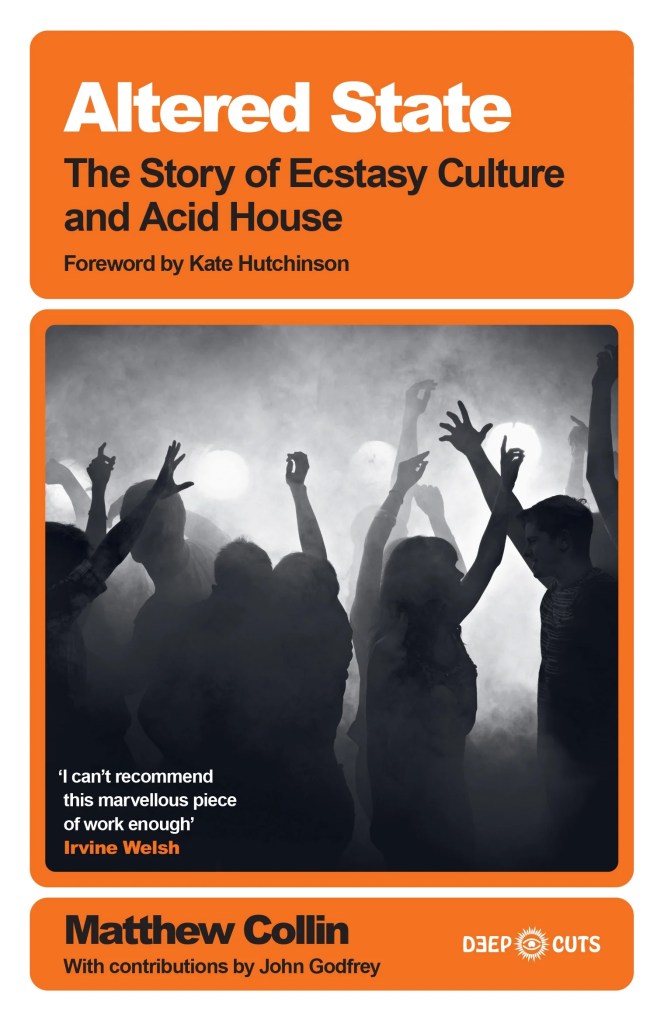
Reading the revised edition, I felt like you’ve tempered your views, a little bit. You know, over the apolitical / political thing. Your take home message now seems to be that rave’s primary purpose was as a much needed form of escapism.
For some people it was political, for some people it wasn’t. In some ways it was, in some ways it wasn’t. There are a lot of different perspectives, depending on who you are.
At the time we were completing the book, one theory that was very popular was this idea of creating a free cultural space, if only for one night. This idea of a temporary autonomous zone that materialises and dematerialises, but provides a space of pure freedom. That was how rave was being being theorised. There is also the idea of nightlife providing an environment, for the free expression of creativity. The idea of clubs as open spaces for marginalised communities to not only exist, but to thrive. This idea of club cultures being a platform for tolerance and inclusivity… and then there’s the classic, “Saturday Night Fever”, worked all week, I need some release. That’s an emotion that’s expressed so vividly in so many records.
So, you’ve got all these different perceptions of what it means, depending on who you. What you bring to it to the culture also determines what you get out of it.
With history, inevitably, there has come a wider diversity of views. I was talking about before, how, now, with the internet, there’s much more space for the culture to be explored in much more depth, and detail than ever there was back at the time. Thirty years ago. So, you’re getting a wider, a much more diverse picture, and that’s continuing to become even wider and even more diverse. That can only be a good thing.
“Altered State” is a story of its time, written from a certain perspective. Now, with wider access to publishing, if you’re willing to do something for nothing, you can publish your own take on the narrative, what you think it means, or your city, or your scene, your sub-genre. Anyone can self-publish, especially online. I think this is absolutely brilliant. There is no definitive history. By the time we were doing “Altered State”, some people were already reinterpreting dance music culture history to suit the needs of their careers. So, history is not necessarily as fixed as we would like it. All we can do is capture something as best we can, as we see it now. Leaving behind a trail of these time capsules. You’ve got brilliant stuff coming out now, from publishers like Velocity Press.
They’ve made a point of covering scenes that haven’t previously been covered.
Yeah, it’s fantastic, and you’ve got to support that kind of stuff. Independent people doing good things, this is what it’s all about.
Where are you based now?
I’m currently in Novi Sad, Serbia, but I’m mainly based in Tbilisi, Georgia.
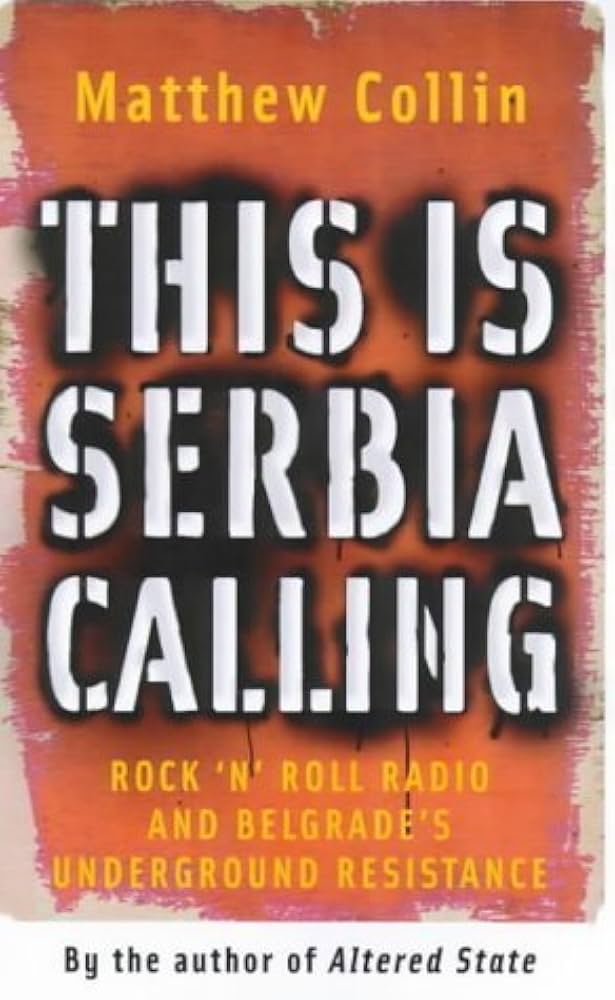
You’ve written a book based out there as well, haven’t you? “This Is Serbia Calling!”, plus a lot of pieces for The Guardian.
Yes, that came about just after I finished “Alter State”. Being a journalist, you’re always restless, looking for new subjects, and I went to cover the student protests against Slobodan Milošević’s regime. This was around 1996. I found an email address, which was unusual at that time – not many people had email addresses in 1996 – of someone who was running a club in Belgrade. I asked them, “Have you got any advice on hotels in Belgrade?”, and they said, “You’re not staying in a hotel. You’re coming to stay with me!” That ended up becoming a lifelong friendship. Another connection through music and politics. That’s the thread that’s run through everything. The people running the club were also running a radio station that combined independent journalism with forward-thinking music. Exactly the space that interests me.
Anyway, to cut a long story short, in the early 2000s I left my job as editor of The Big Issue and went to work in the newsroom at the BBC World Service. I’d switched completely from culture journalism to news and current affairs. I then got a posting as the BBC’s Caucasus correspondent, based in Tbilisi. I went out there in 2006 and never came back. I now work for an independent media network based in The Balkans.
Didn’t you work for Al-Jazeera at one point?
Yeah, after leaving the BBC. I was there a couple of years, and then the French state news agency, Agence France-Presse, as their Caucasusbureau chief for a couple of years, before switching back to this current non-profit NGO.
Do you still have time to do any music writing?
I’ve been asked to do a couple of things around the “Altered State” reissue. Sometimes I will get commissions for specific events.
Again, I’ve been massively lucky as It’s been a very exciting time to be in Tbilisi. Their techno scene, for which they’re justifiably renowned, only started to emerge around 10, 12 years ago. So to be there for the emergence of a really, you know, important new cultural development was really exciting. You may remember there were massive police raids in 2018 on the main clubs there. The techno culture in Georgia is really connected with political activism and progressive thought.
Raving in Britain in the late 80s could have been considered to be political if your mindset was to see it as political. It depended where you come from and what ideas you brought to the situation. But lots of people just saw it as the ultimate good time. I don’t think there’s anything wrong with the ultimate good time. I don’t see anything wrong with joy.
However, in Georgia, it was very much connected with breaking with the Soviet past, and looking away from authoritarianism, the suffocating grip of, traditionalist conservative values, and looking to a freer, more diverse, more liberal and tolerant future… and so for a generation of young people, techno was a soundtrack to not just a way of life, but a way of thinking. It was an amazing experience.
What kind of music do you listen to now?
Living in Tbilisi – the capital of Georgia – for the past few years I’ve been really lucky to get introduced to loads of new music through our beloved techno club Bassiani and through Mutant Radio, the city’s community internet radio station, which is a focus for imaginative left-field music of all kinds. I’ve also been playing the occasional electronic selection on Mutant.
(You can listen to a couple of Matthew’s Mutant Radio shows here and here).
In the new book foreword Kate Hutchinson mentions that about 3.7 million over-45s are currently partying at least once a week. I have a mate in his 60s, who for the last few years has been going out almost as much as we did in our late 80s / early 90s peak.
Another friend observed that clubs / raves have just become our generation’s default form of socialising / recreation. Where our parents might have gone to a Stones concert, we are more likely to be buying tickets for a Shoom reunion. Do you think there’s any truth in this?
Clearly there’s a lot of people who started raving in their teens and twenties who still love dance music and going out. But there is a difference between nostalgia-driven ‘back to the nineties’ or reunion-type parties and going out to hear cutting-edge contemporary music. I think that what’s important is not necessarily the age of the people going out, but whether they’re not just sustaining the culture but pushing it forward. Like any living culture it needs constant regeneration, new people coming in bringing new energies and ideas, questioning what has gone before in order to reinvent it. It has to keep moving or it risks stagnation – it’s got to keep looking to the future.
Tell me a little bit about the events that you’ve got planned for the “Altered State” launch. What have you got coming up? You’ve got Manchester on Monday?
Yes, Manchester Monday, Nottingham Wednesday, and London on Thursday, and I’ve got something coming up in Berlin in a couple of months, and then I’m gonna do another round of events in September. These will all be Q&As in record stores and independent bookshops.
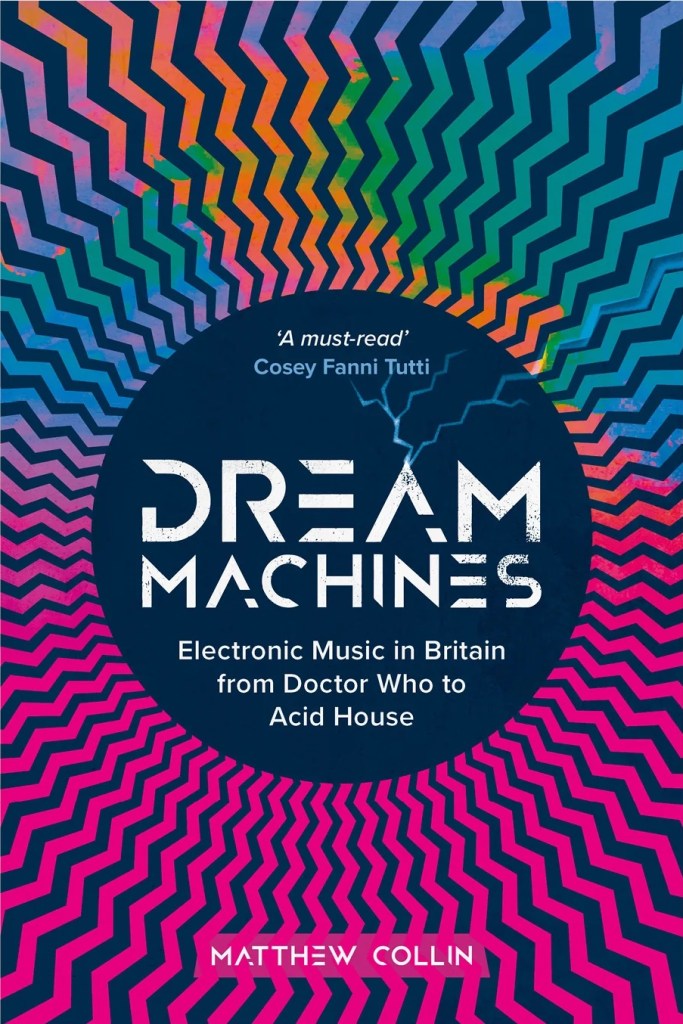
You did “Dream Machines” a year or so ago. Are you working on a new book at the moment?
You’re always thinking about two or three projects, thinking what’s gonna work? With the book trade being in the state that it is today, something that’s going to be commissioned has to be commercially more viable than it was even 5 years ago. The internet has changed the way people access information, and, of course, affected their attention spans. I have a few ideas, but I’m not going to share them just yet.
I’d really like to collect some of my stuff together. I’ve been looking at everything I’ve written wondering if it could be edited into a book.
If you start to order it thematically, to give it a logic and a structure, and then fit it into that. You will find, “Oh, there’s some gaps, I might need to do some new stuff here”, but try and think about what are the key themes that emerge over the whole period of your writing? You could ask AI to do that for you.
Because my pieces are all generally relatively short, I need a bigger narrative for them to fit into. I’ve never used AI.
Since your life has some kind of narrative, there probably is a narrative, but maybe you’re too close to recognise what it is. When writing you will inevitably gravitate to the things that are important to you, and therefore those are your themes.
Thank you. I have been giving it some thought for the last 6 months or so. I would kick myself for not trying.
Yeah. Why not? But I can guarantee you’re not gonna make any money out of it, Rob… and it’ll suck up 10 times as much time as you think it’s going to… But you’ll really enjoy it, so do it. As Joe Strummer said, “The future is unwritten.”
The 2026 edition of Matthew Collin’s “Altered State” can be ordered directly from White Rabbit Books.
Discover more from Ban Ban Ton Ton
Subscribe to get the latest posts sent to your email.


Great interview, really interesting.
Get writing that book!
LikeLike