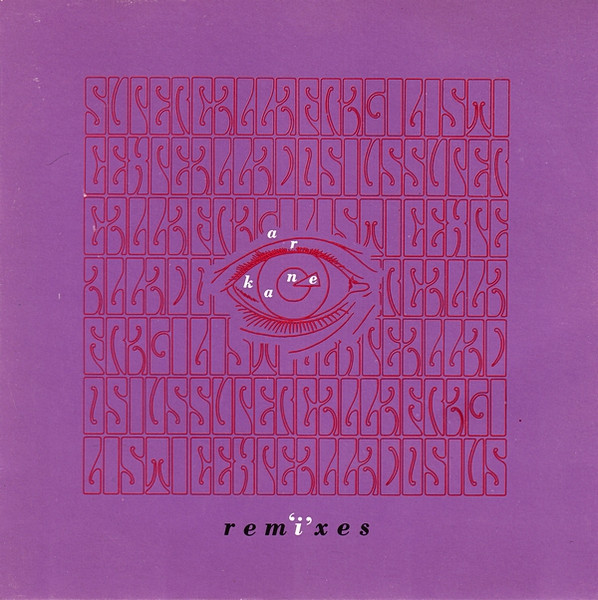
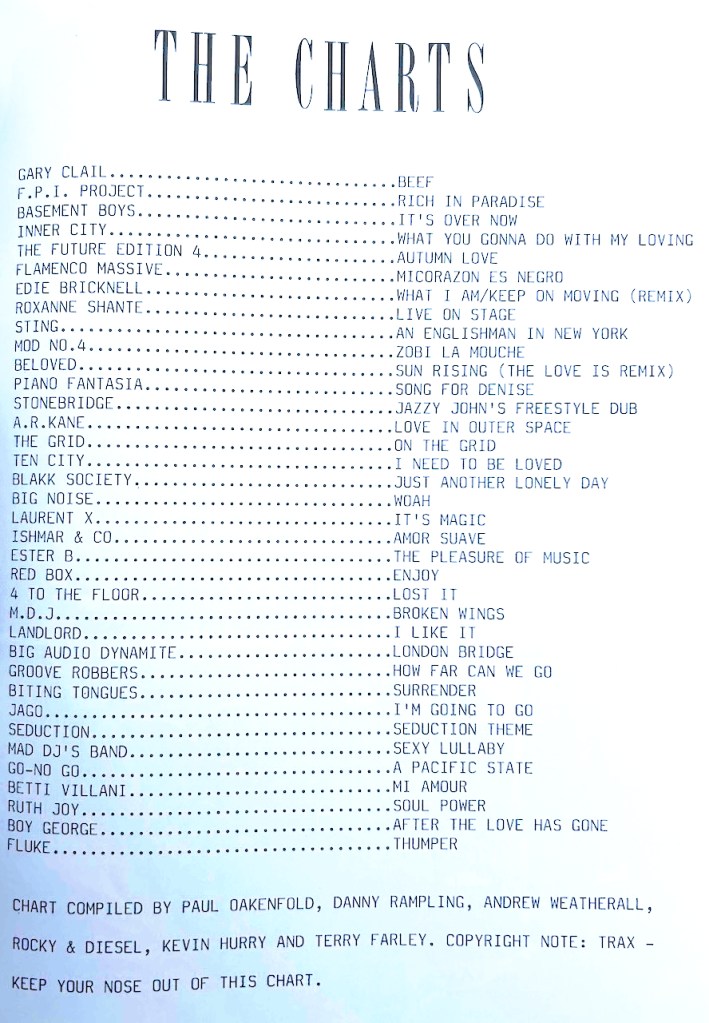
Me and my mate Davey used to play records by A.R. Kane. In our teens, listening to them on cassette, driving around in his car. trying to escape the boredom of Croydon. “When You’re Sad” and “Lollita”, especially. Then I left London for uni, and money for anything other than booze and drugs became scarce. I lost touch with the duo until I returned, in 1989, at the tail end of the extended “Second Summer Of Love”. Christian, someone I’d met at a temp job, lent me a copy of a fanzine called “Boy’s Own”. In it was a chart, compiled by the DJs Terry Farley, Paul Oakenfold, Danny Rampling, Rocky & Diesel , Kevins Swain and Hurry, and Andrew Weatherall. Man, I poured over that list, trying to make some sense of this “Balearic Beat” thing. I only recognised a handful of names: Sting, Roxanne Shante, Red Box, Boy George, Big Audio Dynamite, The Beloved (The Beloved I knew were sorta Smiths wannabes), and A.R. Kane. I obsessively, eventually, tracked everything down, but it was the familiarity of “Kane”, and knowing how strange they could be, in my memory a mix of The Cocteaus and JMC, that immediately spiked my curiosity.
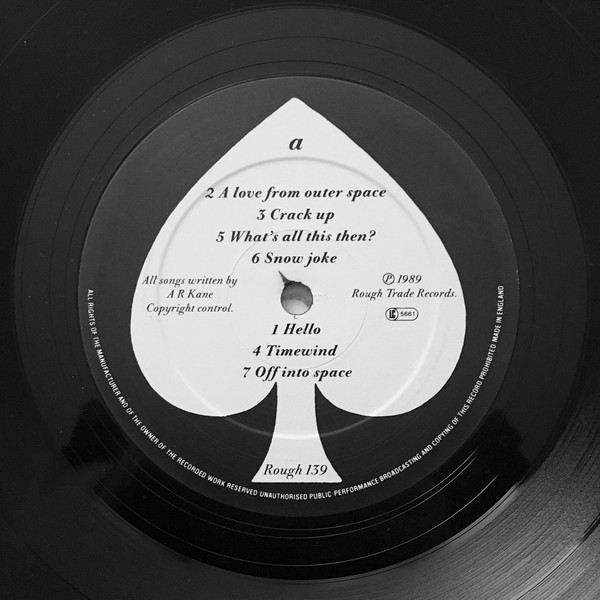
I found a copy of their double LP “i” in the local Virgin, and spotted the singled out song, “A Love From Outer Space”. Spinning it, I was surprised to be hit with a joyful, innocent shot of piano house. When the lyrics’ went “Sha la la la hey” the top of my head tingled like I was still on an E.* This must have resonated with far more folks than just me, because, in 2010, when the aforementioned Weatherall, together with Sean Johnston, launched his new club night – “An oasis of slowness in a world of increasing velocity” – he named it after the tune. Cementing the song’s legendary status.
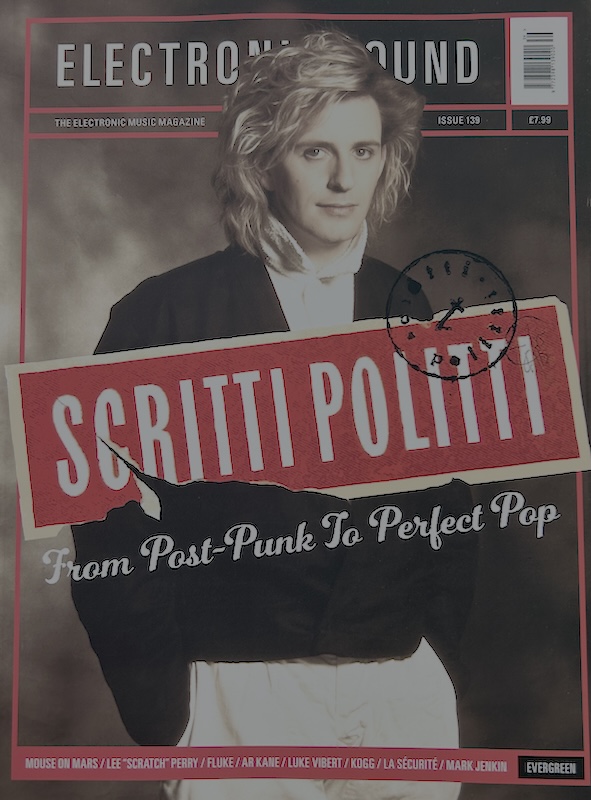
A few months ago I got the chance to interview Rudy Tambala, who alongside Alex Ayuli was one half of A.R. Kane. The purpose was to primarily help promo the Music From Memory reissue of a later Tambala project, Inrain. However, he very kindly agreed to also answer a ton of questions about “A Love From Outer Space” too. An edit of that conversation has just been published in the latest edition (139) of Electronic Sound, as part of their Landmarks series. Below, though, is a far longer cut, where Rudy talks in detail about his relationship with Alex and not only “A Love From Space”, but how, musically and production-wise, they got there. The impact of “Pump Up The Volume”, the global, chart-topping, game-changing single they collaborated on as M/A/R/R/S is inescapable, but he also shares lesser known stories of the pair’s Adrian Sherwood / On-U Sound connection.
You built your first studio in Alex’s mum’s basement with the advance from Rough Trade for “sixty nine”. Could you please tell me what was in the studio set up?
Ray Shulman, our friend, mentor and producer, took us shopping with our advance from Rough Trade. We bought a 16 + channel TAC Scorpion desk, a 16 Track half inch Fostex E-16, a Midiverb, a compressor, a noise gate, a Neumann U87, a Shure SM58, a Realistic PZM, a Casio FZ1 sampling keyboard and a EMU SP1200 sampling drum machine. A reconditioned ½” mixdown machine – may have been an OTARI or Studer… it had a great sound but the transport circuit board was always breaking down. We also already owned a Marshall Head and Box, Peavey 130 Special, TR-606, WEM Copycat, Roland Space Echo and an array of Boss pedals – Delays, Chorus, Flanger, Phaser, Distortion, Overdrive – oh, and my trusty Atari 1040 with Steinberg Pro24 and later Cubase. For the vocal booth we leaned a couple of old doors at right angles together in the corner of the room and hung carpets over them. It was in this space that we created ‘sixty nine’.
What made you decide to build your own studio?
We wanted to learn how everything worked and we wanted total control – already at that stage we’d had some prickly moments with studio engineers telling us, “That’s not the way to do it”. We knew what we were trying to do, and we knew we didn’t want to do anything the normal way, we wanted to create our own sound, drawing from a mix of influences and recombining them in new ways. We’d seen Adrian Sherwood mixing dub in his studio and we loved the way he used the desk as an instrument. We wanted that level of freedom.
Can you please tell me more about the Sherwood connection – “Catch My Drift” could easily pass for New Age Steppers. The remix of “Catch My Drift” features lyrics from Pablo Gad’s “Hard Times”. I’m a huge ON-U fan. How and when did you meet?
Pablo Gad. That is a serious tune. I still use the “collie weed” section on a new song when I play live.
We were heavily into Playgroup, New Age Steppers, Tackhead Sound System, African Head Charge and that whole post-punk /punky reggae dubwise scene. When we started out with One Little Indian, they were also connected to that scene and intro’d Adrian. It turned out he lived just around the corner from us so we’d go and hang out at his flat overlooking the West Ham football stadium. Burn a lickle ganja and vibe on music. He is a sweet guy. Enormous talent. We were a bit star struck. I remember being on a boat party on the Thames with Adrian and Lee Perry – it was an insane evening. What a larf.
Was there ever any chance of you doing something together?
Yes, it came very close. Alex and I wanted to make a dance record after our first, noisy pre-shoegaze single “When you’re Sad”. We’d grown up clubbing and partying and this was most natural to us at the time.
We thought a cover of the Temptations “Ball of Confusion” would be cool – it was soulful and also had a proto-rap vibe that aligned nicely with the growing hip hop scene. Adrian suggested we do it with him producing and the Sugar Hill gang rhythm section – Keith Leblanc and Doug Wimbish. We spoke to our then label, Ivo at 4AD, and he poo poo’d the idea and said he’d rather we work with one of the label bands – Colourbox. We loved their drum sounds so we said, why not. M|A|R|R|S was born instead.
Maybe you could have a whole LP of Sherwood dubs – similar to what Adrian’s just released with Nightmares On Wax?
Maybe. Worth thinking about. I’d really need the backing of a label for that kind of project.
Do you think that having your now studio and the space to experiment in, without having to worry about time or money spent, helped shape A.R. Kane’s sound?
Yes. 100%. Alex had a full-time job at that time and so could only really work evenings and weekends, so this was an ideal setup. I’d go around in the day and work on things, then Alex would come back, have some food, then we’d get going together.
Was this studio H.ark!?
Yes. H.Ark! was the name we gave to our productions and our studios. It was derived from ‘Home of A.R. Kane’ and ‘listen’ and the biblical Ark; The animals went in two by two.
Did you upgrade the equipment over time?
We added a few bits but not much. The main change was that we decided to take the studio out of Alex’s mum’s basement and relocate it to Unit 1B Stratford Workshops, in Burford Road, E.15. I hired a guy that designed studios and speakers to draw up the plan. It was a floating box design in the main room, fully sound designed, with a booth above that had a big glass window – looking down into the main room – we used this for live drums and vocals.
We decided early on that I’d take on the sampling and sequencing duties and Alex would look after the recording. We mixed it up a bit as we progressed but that was the core split of duties in the beginning. Not long after we completed the Burford road build though, Alex up’d pegs and left for America. I used the studio as the base for H.Ark! Records and Productions and also ran it as a commercial studio, to make it pay for itself.
Jeanette Leach’s brilliant book on post-rock, “Fearless”, describes the work you did at H.Ark! with Papa Sprain and Bark Psychosis. Jeanette says that you eventually had to move out because the local gangs were threatening to steal your gear. Have I got that right? When was this?
Around 1992 there were a series of break-ins at Stratford Workshops. Two other working studios were broken into and I was warned by an old school friend that mine could be next. It was some local bad boys. It was getting heavy, so I sold up to some rich kids and moved on. I heard later that they did get turned over and lost everything, including the bits I loaned them – my Space Echo! Stratford is a funny place, it eats its own. Still to this day I have dreams of that studio. It was a beautiful thing.
How did the creative process work between you and Alex?
It varied. Sometimes we jammed on guitars and saw what came out, developing ideas, themes, sounds as we went. We used the TR606 for basic back beat and looped samples, we played our guitars through heaps of effects, playing off the effects too – delays, tape echo, phaser, feedback. Other times, one of us would say, ‘look, I got this idea’ – It could be some lyric or a few guitar chords, a drum beat, or someone else’s song that we liked a bit of – maybe the lyric or the reverb on the snare or the bassline.
We were both keen on wordplay, hidden, cryptic and multiple meanings. We used the Burroughs cut up technique sometimes, to generate new ways of thinking. We’d play with these ideas and keep our senses primed for that special moment; we called it ‘Kaning’ the song. Kaning meant it had lifted to another level and had something unique and exhilarating. When I accidentally switched pick-ups on “Lollita” and the guitar exploded into feedback and noise – that was a Kaning moment. We’d say to each ‘Yeah, it’s OK, but it needs Kaning.’ With “Up” I wrote a baroque guitar part, played through dense layers of effects. I played it to Alex. He started writing a lyric – ‘Forward ever ascending …’ I think the song came together in a matter of minutes. We sometimes wrote alternating lines in a song seamlessly as if it was just one person … called Kane. The Kaning moment was in the composition but also in the performance and the eventual mix – drawing on a dub approach. I think “Up” may be the first fully-fledged shoegaze song.
We had an attitude that was anti-pop; pop was to be accessible, as popular as possible. We believed people should make an effort to listen, that music should not be served on a plate and made easily accessible, and so we used ways to keep people from easy listening to A.R. Kane. Make the effort, earn the reward. Seems a little arrogant now, a bit arty, but we were sincere. It’s a wonder we sold any records.
I’ve read interviews where you talk about an almost telepathic connection between the 2 of you, because you’d been close friends for so long… Like Alex would hum a tune down the phone to you and you’d start arranging it in your head. Had you had any formal music training? How were you able to do this?
We were very close. Closer than brothers. We were a bit odd, outsiders, very cerebral, a clique of two. When it came to music we were junkies – that was part of the culture we grew up in. Music was life, escape, future, hope, sex and identity. I was a soulboy, Alex a reggae boy, but later we both embraced punk, new wave, post-punk, prog rock, psychedelia, jazz and dub, and went on a journey of discovery together. We had no formal training. Alex had a battered old acoustic, which he used to show me how to play The Sex Pistols’ “Pretty Vacant”. We both really listened to music, became immersed in it, from an early age. My oldest memory is lying in a pram, watching the coloured streamers blow in the breeze, listening to Chris Montez singing ‘…the more I see you …’. When I listened I used to try and figure out what instruments were playing which parts, and why. This, I think, made it easy to arrange our own songs, not just for guitar, drum and voice, but also strings, brass, keys, harmonies, and so on, and different genres. Curiosity. I was always curious about how things worked, why they were designed in a particular way – from songs, to toys to transistor radios to ecosystems, DNA, the mind and everything in between.
Did you both switch about on instruments? Play a bit of everything?
Yes, we mucked in. Alex was good with the 606, I was more Steinberg. He liked Gibson, I’m a Strat man. Alex did most of the vocals – my guide vocals were often erased. I hated my own voice back then.
When describing your music to the press, you coined the term “Dream Pop”. Were you still using lucid dreaming to write lyrics by the time you came to write / record “A Love From Outer Space”?
I think we were starting to move on from lucid dreaming by then. We were still into mind expansion and experimental psychology but were trying different approaches. The lucid dreaming had some scary moments that made me decide to put it to rest. It wasn’t all good.
Is there a story behind the song that you’re willing to share?
Let me think. It started as a simple guitar and vocal piece but just kept growing. There’s something in the chord progression and repetitive vocal that creates so many ideas. I think it is F, A minor, D’Minor 7, E minor 7. The F is what we call a ‘Kane F’ – it has the top top E string played open, so the F note is dropped a semitone. There’s probably a real name for that but don’t ask me.
When we were making the song Sandy Shaw – who was also connected to Rough Trade via The Smiths – would drop by and just hang out with us. Once she sent a cab to deliver us huge ice cream sundaes with sparklers in. She almost sang on the song but for whatever reason it never happened. Alternate realities, eh?
When Bonjo I from African Head Charge came down to record his percussion part, he brought around 30 instruments, from the tiniest cymbals to a monster size drum. It was insane. I think he played all of them. That’s one of things that makes the song unique for its genre – house – it had so much live, unsampled percussion. The strings were originally sequenced in Cubase, but Billy McGee then worked with us on scoring them, and they were then performed by the False Harmonics at The Church. The session was really trippy. Beautiful.
Was the title a deliberate riff on Sun Ra?
You betcha. “Love in Outer Space”. Alex and I used to go to Mole Jazz, in Kings Cross, on our way to visit Rough Trade, and buy Sun Ra and ECM LPs. We had quite a collection.
“A Love From Outer Space” was house-influenced. Were you going out to clubs and raves?
Raves, warehouse parties, house parties, clubs and gatherings. There was always something happening.
Were there any house records in particular that were an influence?
Tony Thorpe, of The Moody Boys, gave me a copy of his “Acid Beats Volume 1” and that seeped into my consciousness slowly and started fucking with my brain’s wiring and my Steinberg. The only reason there’s no TB-303 acid bassline on “A Love From Outer Space” is because I never knew how to make that acid squelch sound. I tried with the studio synths but couldn’t make it work. If I’d known at the time that it was the 303 and that they cost about £10 in junk shops back then, well, the sound would have maybe been different. “Can You Party” and “Move Your Body” were massive. “Voodoo Ray”, of course. Piano house was everywhere, like a rash, kind of corny but the style worked for the sing-song nature of “A Love From Outer Space”.
The thing that I’ve always loved about “A Love From Outer Space” – a bit nursery rhyme like, full of childlike innocence – is that it really does carry that rush of the first flush of love… and that of an E. “She says “Hi” and I say “Sha la la la hey” … takes me right back there. I hate to ask, but is it you or Alex singing?
Alex. Two backing singers too. Girl and Lorna.
I read in one of your interviews that “A Love From Outer Space” was really expensive to record. That you wanted to move away from your earlier “Lo-Fi” productions and try something new? Could you please explain?
Lo-Fi for us back then was bouncing between two stereo cassette players to create an overdub. What we were looking for after “sixty nine” was luxury. We didn’t want to repeat ourselves, and we wanted a big sound and expert engineering. I don’t know how many studio hours we used on “A Love From Outer Space” but it was a lot. Plus the session musicians. The song demanded it and the label indulged us.
Is it true that, generally, songs were produced at H.Ark! and then polished at studios such as The Townhouse and Abbey Road?
No. In most cases, if a song was recorded at H.Ark! It was also mixed there. “sixty nine”, “Green Hazed Daze”, that’s the H.Ark! sound.
So, was this the case for “A Love From Outer Space”?
Not really. The initial sequencing was done at H.Ark! but it was recorded at several London studios including Matrix, Good Earth, Orinoco, The Smokehouse, Blackwing, and The Church. Mixing for the project took place at Blackwing and Orinoco studios.
Did you use any special bits of kit?
There were a couple Roland synths – a Juno 60 and Jupiter – that I went mental on to create some of the squeals and textures.
The track has this strange kinda scratchy / wah wah effect running through it – adding to its urgency — how for example did you achieve that?
A couple things. A strummed 12 string that was gated to a midi pattern and sent to various effects, and the same pattern playing a percussive synth patch with some Q tweaking.
Were any samples used?
No samples used. All original freshness.
The single before “A Love From Outer Space”, “Listen Up!” Also seemed club influenced, with Andy Clinton from Spiral Tribe on scratches, plus some free-jazz skronk.
Full of samples “Listen Up!” reminds me of some very “Balearic” tracks – “Jim & Gene Are Into Shakes” and 2 Men A Drum Machine & A Trumpet’s “Tired Of Getting Pushed Around” Were these records that you were familiar with?
Yes and no. After “Pump Up The Volume” there was an avalanche of sample-based tracks. It was impossible to avoid them. We wanted to add African elements and live sax to a basic groove. We probably oversampled on that track, and definitely over-scratched.
Were you aware that Andrew Weatherall charted “A Love From Outer Space” in the Boys Own fanzine at the time of release?
No.
Were you even aware of Boy’s Own?
No.
Did you ever hear “A Love From Outer Space” played in a club back in 1989?
Yes, I think I probably requested it (laughs).
I have to say that it’s highly likely that Weatherall also played “Listen Up!” When years later, he adopted “A Love From Outer Space” as the name for his new party did he at that point approach you? Ask your permission?
No. I never knew about it until the Ministry of Sound emailed me to license the track for the Weatherall “Masterpiece” compilation.
Have ever been to ALFOS?
No. But Sean Johnston has DJed at a couple of our shows which was lovely.
What did you make of Weatherall’s cover version? Personally, it feels really poignant now.
It’s a compulsive groove, reminiscent of the punky electronica I used to dance to in the early `80s – kinda new romantic meets acid. It would make a great football terrace chant. I’m flattered they did that.
I know the French band Tahiti 80 did a cover. Have there been any other takes on the tune?
Not that I know of. I really like the Tahiti 80 version – they later did “Crack Up” too.
How did you make the connection with David Byrne and Luaka Bop?
They reached out to us and asked if we would sign to them for the US. We fit their mould – which means we don’t fit the mould- -outsiders in our own environment. Weirdos. David and the label boss, Yale, were lovely, generous, switched on.
The John Luongo US remixes of “A Love From Outer Space” are really hard to find / rare now. I was wondering what you made of those remixes at the time.
I didn’t like them at first. It was part of our US intro. I don’t mind them so much now, there’s some really good work, but the synth riff … nah guy!
I was fascinated to learn that the track has since evolved live. I watched a brilliant clip from Primavera Sound in Barcelona, from 2016, where the song starts as cute lovers rock and ends in a space rock freak out.
Have you ever thought about putting any of these versions out? Or re-releasing / remixing the original?
Yeah, Barcelona was fun. I recreated a new version for my current live set; it’s sequenced in Ableton Live and I perform using a PUSH 3 standalone. This new version goes into a prog house vibe, with spacey guitars and ends in a Sun Ra wig-out with clarinet player Stephen Benjamin. There’s a clip of us playing it at the Jazz Cafe. I am half way through a studio recording of this and aim to release it later this year.
A considerable amount of A.R. Kane’s influential archive can be located on Bandcamp.
The Inrain E.P. can be ordered from Music From Memory.
AR Kane feature in the latest issue of Electronic Sound, which can be purchased from their website.
They also get a fair amount of coverage in Simon Reynolds’ new book, Still In A Dream.
Great in-depth interviews with Rudy Tambala, which I used to help map out my questions, can be found at the Tone Glow Substack, again from Mr. Reynolds at Pitchfork, and the late Neil Kulkarni over at The Quietus.
*Once, in a past life, I spent Christmas alone, in between lines of coke and shots of vodka, playing “A Love From Outer Space” over and over.
Discover more from Ban Ban Ton Ton
Subscribe to get the latest posts sent to your email.


What a great read! Thanks Rob and Rudy
LikeLike
Lovely & learned much that I have often wondered about, thanks so much
LikeLike
Jim, thank you for taking the time to read the piece, and leave a comment.
LikeLike