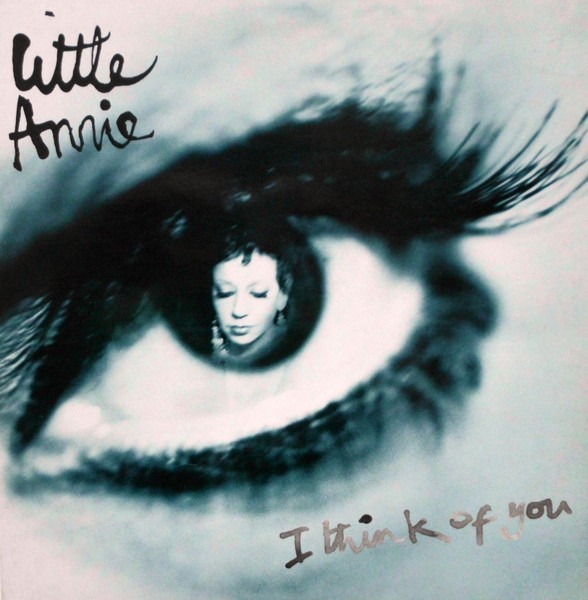
Little Annie Bandez began performing in New York, in the late 70s when she was still in her early teens. Taking to the stage at venues like Max’s Kansas City, both solo, and in the band Annie & The Asexuals. Her circle included artists such as Lydia Lunch and Alan Vega. In 1980, a chance meeting Steve Ignorant of anarchist collective Crass resulted in Annie relocating to the UK, joining the group and living communally at their legendary squat, Dial House.
Through working with Crass, Annie met all sorts of musical folk, from all sorts of musical genres – such as Coil, Current 93, Soft Cell, and Adrian Sherwood and Kishi Yamamoto of radial reggae / dub label On-U Sound. A regular contributor to On-U’s often all-night studio sessions, Annie eventually relocated again and took up residency in Sherwood and Yamamoto’s garden shed. The pair, together, produced Annie’s albums “Soul Possession” and “Jackamo”.
In the early 90s, Annie signed briefly with the major ATCO – a subsidiary of Atlantic – before moving back to The States, where she toured with, amongst others Grace Jones and The Swans. Now based in Miami, Annie continues to write, perform and paint today.
On-U Sound recently reissued a deluxe version of Little Annie’s 1992 long-player, “Short And Sweet”, which gave me the opportunity talk to Annie, about the album, her life and her creative process. The distance between us meant it was both the beginning and the end of the day, but, and despite the heat, Annie was incredibly generous with her time and her story telling.
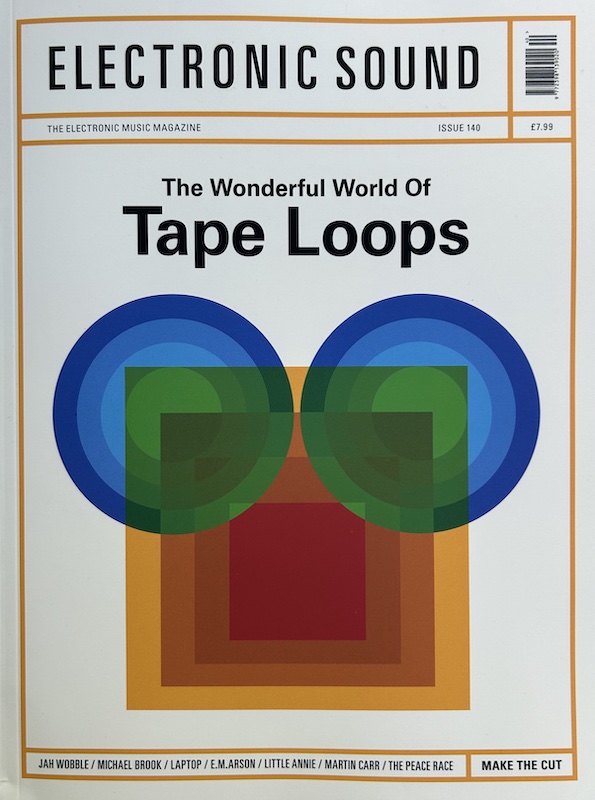
Part of that conversation, focused on the song “I Think Of You”, appears in the latest edition of Electronic Sound, as part of the magazine’s “Landmarks” series. Below, though, is a longer, largely unedited transcript of me being charmed by the diminutive but formidable force that is Little Annie.
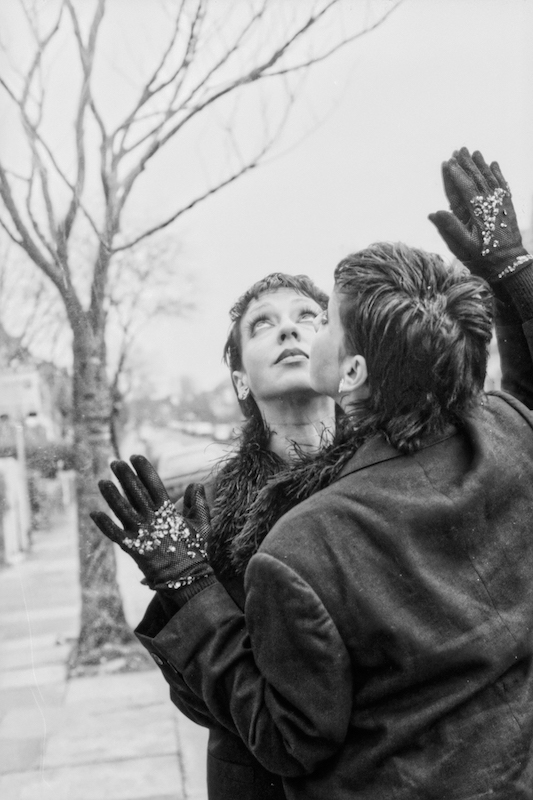
Portrait of Little Annie from the archive of Coneyl Jay.
Annie, how are you?
I’ve lost my voice from shouting at the television. I watch the news, the so-called national news. All I do is sit there and go, fuck you, fuck you, you lying fucks.
Well, I guess it gives you a lot of material for poems and songs. I feel like social media bombards us, to the point where you either engage, and get very frustrated, angry, or depressed, or you completely disengage, and you become… you ignore it. Neither of those are a solution, so it would be good to do something.
I was just thinking the same… because it’s a war of attrition. In the first category, War is Truth. Here we have our own government doing it to us, spreading the lies and propaganda. Having one’s own peace of mind, comes with a feeling of total inertia and impotence.
Social media has been weaponised, for sure. The level of problems, on a global scale, look so immense that you don’t know where to start, and you feel like you can’t do anything. But recently I went to a Human Rights Watch fundraiser, and I was talking to people there, and their message was to first address small things, and with every small victory, if you can publicise that, leads to people understanding that they can take on a slightly bigger problem.
Paul (Wallfisch) and I, who I worked with the last 25 years, we have a saying, “victory today keeps suicide away.” I do try to stay grateful for everything.
You’re a real survivor. I mean, the life you’ve had.
Yeah, but I’ll tell you what, nothing prepared me for this. I said 25 years ago, there’s gonna be fucking concentration camps again. Now I’m living in Florida, and we got one in the Everglades. I’ve never felt this impotent before. We walk down the street, and smile at a stranger, and that’s a victory. You know, those things matter. Those things have saved my life.
That’s it. If you can concentrate, at least initially, on local community, if you can make a difference there, if you can pull those people together, then together, you can move to bigger things. They want you to give up.
I live in Miami. I have neighbours here who would come in and save my life. People who voted for fucking Trump. But the system is fucked. There used to be like a meeting ground, because you all share the same neighbourhood, but it’s gotten like you can’t discuss anything, you can’t agree to disagree. You have to take a side.
My parents, who were so hip but didn’t know how hip they were at the time, they would make pasta or something and then they’d sit around and drink, and debate. That’s how you learn. You go into a debate not wanting to be right. You go into a debate with the idea, that your mind might be changed. That’s important.
I’ve been here, what, like, 11 years. I was living in an apartment downstairs with my late ex-husband, and I was painting the place, and they said Trump was gonna run. I go, he’s gonna win! He’s gonna win! I knew it! I don’t overestimate the intelligence of the United States, but also, a lot of people got left behind. This didn’t happen in a vacuum, it happened over decades, and worldwide.
On TV now they’re showing Trump in China, and saying what an event this is. But I’m old, I know this isn’t new. Nixon was there in the 70s. Social media, I think, it’s like giving fire to monkeys. It’s not bringing us together, if anything, it’s just more and more division.
I think social media is unrecognisable compared to what it was before the pandemic. It’s just completely changed. Once we used the internet to actively search for information. Now, algorithms feed us.
You’re right. During the pandemic they slipped a lot of shit under the door.
One of the things I wanted to talk to you about was your writing process. I know that you’ve kept notebooks and journals from a young age. What prompted you to do that in the first place?
Honestly, I don’t know. My pops, my father, who’s in heaven, God willing not watching the news, was a printer. For me, my writing was a sort of concretism. I’ve always heard music in between the beats of day to day noise. You know, the rhythms, like a subway train, or wheels turning, and my father’s printing presses. I’m all about cadence. How things land. I’ve always written, I don’t know why. Lately, I’m finding it harder, the past few years, because I was thinking if I’m gonna write something, it should address the existential questions of the universe, and right now, like everybody else, I don’t know what the fuck is going on.
A lot of your lyrics address the existential, but they do it in a way that’s observational about day-to-day stuff. Were there any books that you read at a young age that inspired you to start writing?
No. From a really young age, it was things like “West Side Story” that inspired me. I was like a miracle baby. My parents were older than most. My father fought in World War II, so he’d sing Marlene Dietrich songs and stuff like that influenced me. My parents dragged us around museums. They took me to films. I was probably way too young to be seeing such stuff. But they were so hip, they didn’t know they were hip. They were so… now they’d be called progressive. They were involved in civil rights before they knew what civil rights were. My mom was a painter. They were so supportive of anything and everything, as long as it kept me off the corner.
But you still rebelled against that, though. Didn’t you leave home at 14?
Yes. As cool as they were I just had to do what I’d had to do.
I read somewhere that you said that you never really planned to have a career in the arts. Before you became a performer, did you have an idea of what you wanted to do?
All I knew was that I didn’t want to be like everybody else in the neighbourhood. Which is a little bit hateful. It was, you know, like, cop, fireman, factory worker that… but it even at 5 years old, I knew the place was full of prejudice and I didn’t want to be part of it. A few years ago they made a show, called “Show Me A Hero”, about the place where I grew up. Explaining the illegal segregation. It’s a pretty fucking tragic story. I found it oppressive from such an early age. So, it wasn’t, like, to get away from my family, it was just I knew there was a whole world out there.
When I had to call my father in Yonkers, and I hid my fucking area code. That’s how fucking embarrassed I was about my hometown. Have you seen the film “Saturday Night Fever”? That’s what it was like. That’s how different it was if you were outside of Manhattan. By car it was only 20 minutes away, but it might as well have been Mississippi.
I was wondering if you influenced by the beat poets? I mean, when you listen to your lyrics, it’s kind of easy to make that assumption, but I… I’m not sure whether that’s actually the case.
No. I was too young for that. Having said that, I met Allen Ginsberg, when I was a kid, like a teenager, maybe 16, and Peter Orlovsky, when I was living in Chelsea. I said who the fuck is Jack Kerouac? He was already long dead by then. I love Ginsberg, and “On The Road”, now but I didn’t read that till years and years later.
I wrote simply because I had to do something. The same reason why I paint now. I still kind of write in my head all day long. Now, though, it drives me crazy, because now it’s like an inner narrative. Sometimes I just want it to shut the fuck up. It’s funny, because the world will push you places, and I always thought that meditation was about emptying your mind. But it’s not, it’s actually about listening. This is gonna sound really pretentious, but when I’m on stage, which is my happiest place on the planet, I channel. My words often just come to me, and I’m always wondering am I plagiarising somebody, especially when it comes too easily. That’s why, when I’ve got an assignment, I don’t listen to anything, for fear of subconsciously copying it. My frustration lately has been that my inner narrative has been so fucking loud that I’m not channeling.
I did 23 dates with The Swans in the autumn, which was just bliss. On this stage, I just vanish. I guess that’s what people try to do when they meditate. When it’s live, it’s not about me, it’s about the audience, and you can’t give enough back. The channeling is why I’m a terrible actress. I’m the worst, and I try to explain that to directors. I’m directed from above.
Were any of your New York contemporaries influencing what you were doing at all? People like Jim Carroll, Lydia Lunch, Patti Smith…
Well… Lydia (Lunch) I met when she was bartending in a place I was dancing in. She’s about a year older than me, but we were both underage. Lydia’s always been a sweetheart. Back then I didn’t know how the world worked. I still don’t, but then I really didn’t know… I didn’t know about that people had trust funds or whatever. All I wanted was eyeshadow and some shoes, you know? Everybody seemed so glamorous and sophisticated. Alan Vega was a lovely, lovely man. He always made sure that I ate something. Jack Stern, who was one of Patti Smith’s mentors took a liking to me. Also Nico. I had some really fucking rough things happen, but ultimately I was lucky. New York attracted a lot of creative people, because it was cheap.
There’s a lot of great wordplay, kind of puns, and plays on phrases in your lyrics. For example, I really like the line, “gin and panic”. Were you playing with words all the time?
Yes. I still do. All day long.
When I reviewed “Bless Those”, I compared the list in the lyrics to Charles Bukowski. Was Bukowski an influence at all?
I did read Bukowski, but after I wrote that song. I think he’s been so misrepresented. I find him very vulnerable. I remember the first time I read “Women”, and was like, “Wow, this is ugly.” But when I read it a second time, I thought he was one of the most vulnerable human beings. For me, the same with Hemingway. I’m probably more macho than both of them put together. Now that I’m older, all I see is people putting on a front. All I see is Fear. The more you fear, the more macho you have to be.
I left school at 14. I stopped going. I took my high school equivalency early, but I ended up getting a phoney GED. When I went to London, in 1980, and started living with Crass, there was no radio, and no TV, so I started reading books. The first book was I read was Hubert Selby Jr.’s “Last Exit to Brooklyn”. That was a long fucking night.
When I read “On The Road”, that made me sad… because that’s what I wanted to do with my life. Having already been assaulted a few times, I knew I couldn’t. I’d fucking hitchhike from Quebec City in a fucking blizzard as a teenager. I had balls, like, cojones, really… Huge! But reading “On The Road” broke my heart a little. It was so beautiful, and I was so jealous.
No one really gets the chance to do that “On The Road” thing though, do they? Kerouac and Cassady only achieved that by being super selfish. They didn’t seem to care at all about anybody else.
You’re right. You have to be mercenary.
They’d raise gas money and then just head out wherever they wanted to go and leave everybody else behind. It was a great ideal, but in the reality of it, it was probably quite different. As much as I love the book, and the dream.
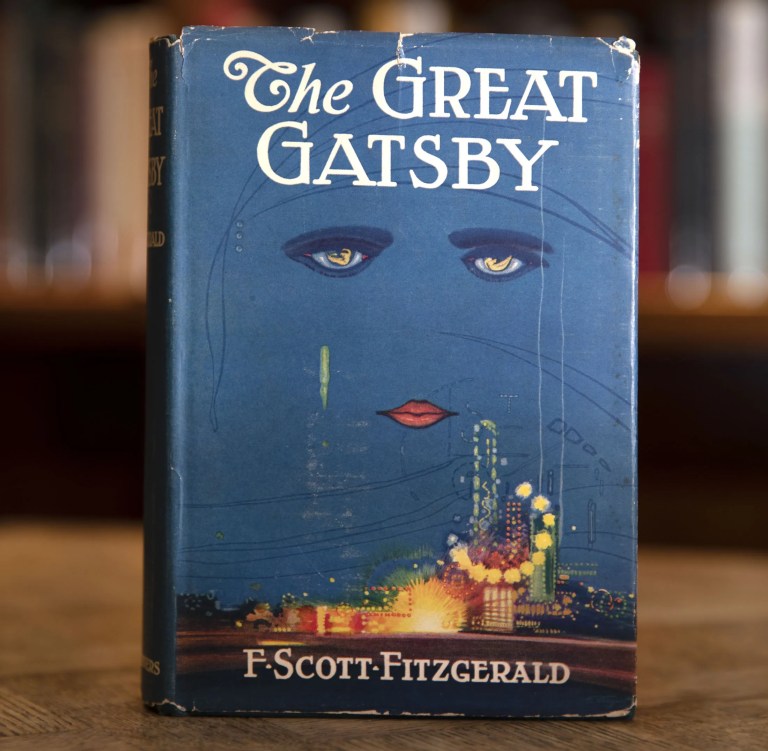
Kerouac saddens me. I mean, he died in his 40s at his mother’s house in Massachusetts… and it’s the same with Hemingway. How could you feel anything but compassion for these people who wrote so beautifully… Fitzgerald. I love, love “The Great Gatsby”. I usually read that once a year. Every sentence is its own mountain. It’s so stunning.
So all this literature, was this stuff that you were introduced to when you stayed with Crass?
No. A lot of it was much after. But Selby and Kerouac, I read there. I hadn’t picked up a book from the time I was 14 till I was 18 or something. Staying with Crass, at Dial House, that was my education.
When you come to put songs together, is that a case of going through your notebooks and finding lines that fit – like a kind of collage, or do you actually write a song as an actual song?
I usually write a song as a song. Having said that, I’ve got a drawer full of fucking notebooks, and a lot of them are mainly one-liners. I’ve been blessed in that I’ve always been very disciplined, no matter how crazy life’s gotten around me. If I’m not touring, working or writing, I’m cleaning.
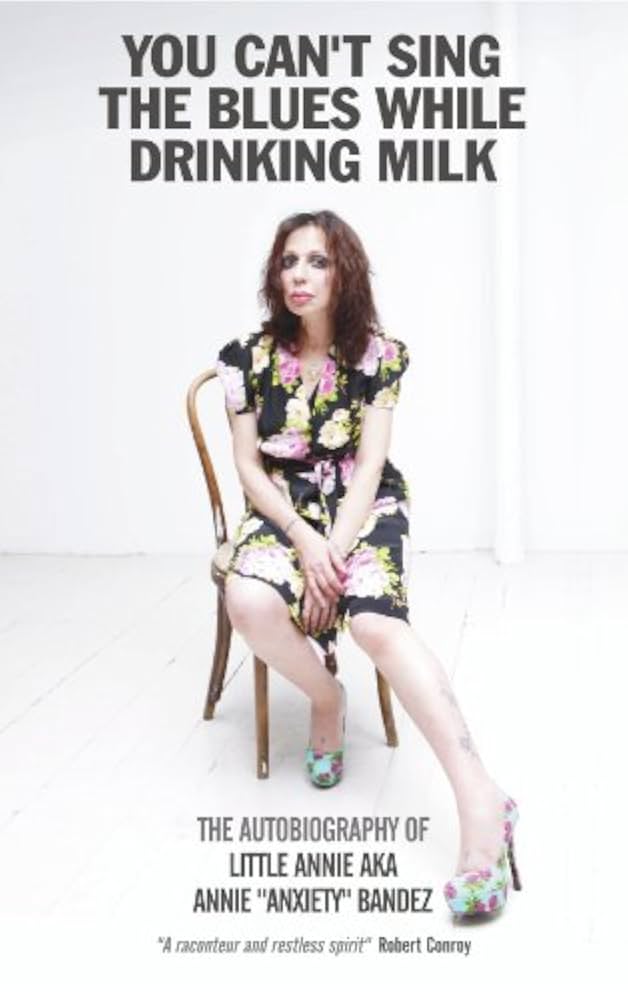
You need to do the second part of your autobiography. What was it? “You Can’t Sing The Blues While Drinking Milk.” That was 10 years ago.
I was thinking about that. That was a Disney version, too. I gave myself 2 rules. I’m not gonna talk bad about anybody, and could I live with this? So that was the light version. I’m in a conundrum about it, because of social media, there’s so much words, words, words, words, words… and I don’t want to add to the noise.
But getting down how you feel at a particular point in time is extremely therapeutic. Like, if your head’s confused, if you write everything down you can put it away and move on a little bit.
Right now writing feels like my nemesis. Like, part of me wants to… but
Well, people who write tend to have this thing where you want to write, and you’re sort of scared to write at the same time. Part of it might be a fear of going somewhere inside of yourself, and another is a fear of being able to capture it honestly.
True.
Just like you, I’ll spend a week cleaning my kitchen before I sit down to write. The build up seems to be part of the process. Because you’ve got all these things in your head, and it’s easier to keep them at bay and clean your kitchen than it is to sit down and let these things out, you know?
Oh, hell yeah! Okay, for transparency, a couple years ago I wanted to do a stage thing. So I wrote a musical comedy. But it got hijacked and I let it get hijacked. For one, it wasn’t funny. It was with puppets, but it wasn’t for children. Trust me, it was not child-friendly. That was the last time I really got engrossed. I love that feeling when you can’t sleep, you can’t smoke, you can’t eat, you can’t do anything, because you gotta keep writing, you know? And then it kinda just sat there dying. But, no, you’re right, I’ve got to start writing again. I’m old though, now. Which is a whole different revolution. You keep getting humbled, which is actually good for writing.
It gives you hindsight. If you’re lucky, it gives you a bit more empathy for other people as well.
My karma’s so fucking quick. It comes on instantly. It gets realer and realer as we go. Do you know Candi Staten? That song, “Young Hearts Run Free”? I’m a victim of the very songs I sing. I had to cover that. When I heard those lyrics, I went, “bingo!” Maybe the fear of writing things down, is the fear of facing oneself.
There was a pretty big gap between “Jackamo” and “Short And Sweet”. 5 years? You had the ATCO deal in between, is that right?
Yeah, that ate a few years up right there.
Did “Short And Sweet” take a long time to put together?
No. What a blessing that was. It came together really easily. I was living in a company let, in Muswell Hill, a few blocks from Adrian (Sherwood) and Kishi (Yamamoto). They were just down the street. The Tackhead guys, the Sugarhill guys, Keith (Leblanc), Doug (Wimbish) and Skip (McDonald), sometimes they’d stay with me. They would record the backing tracks at Adrian’s home studio. I would then take them back home, on cassette and listen to them on my Walkman. Come up with the lyrics, and record my vocals into a DAT machine that I had in my apartment. It was wonderful. This was another time, kind of like now, where I thought my career was done.
I’d been dropped by ATCO and I didn’t know people got dropped from labels. Luckily it happened when I was still young, around 30. So, I was able to crash and burn over and over again, you know? I’d have the backing tracks playing in my headphones, and then put another pair of bigger headphones over them, record my vocals, and then run the DAT across the street.
There were a few tracks done in different studios. “If Cain Were Able”, the vocals for that were done at Brian Ferry’s place. What a lovely man. Very Handsome. Richard Norris, not Richard from The Grid, but Brian’s engineer, also helped out.
Was any of the stuff on “Short And Sweet” reworked from the ATCO sessions?
Nope. It was all brand new. Honestly, once I do start writing, I write. I don’t fuck around.
Was there anybody else contributing to the sessions?
There was Sonny Akpan, from African Head Charge. Bonjo (Iyabinghi Noah) might also be on some of the tracks.
But their percussion was already on the rhythms that you were given? You weren’t all, like, sitting in the studio coming up with these things? The early days of On-U seemed very collaborative and spontaneous, where it was kind of whoever was in the studio contributed to the recording. This wasn’t like that?
No, but yes, in the past I used to sit on everybody else’s sessions, and write. I did some specifically stuff for Bim (Sherman), but I would literally write all night long. Sitting there listening, that was my musical education. Yeah. You know, like, Bliss. I remember Mikey Dread coming in, nodding his head and going, “Roots”.
Compared to the song, “Soul Possession”, “Short And Sweet” is quite a poppy album. Were you kind of aiming for something poppy?
No. I did that with ATCO, and it didn’t work out. The ATCO stuff, I thought it was disco… I always thought I was doing disco. It was always about the beat. I’m still always about cadence, and rhythm and beat.
<iframe width=”610″ height=”400″ src=”https://www.youtube.com/embed/PIC2DA3t1nY?si=rJKRwoJr5A2Fktnh” title=”YouTube video player” frameborder=”0″ allow=”accelerometer; autoplay; clipboard-write; encrypted-media; gyroscope; picture-in-picture; web-share” referrerpolicy=”strict-origin-when-cross-origin” allowfullscreen></iframe>
If you listen to that first record you did with Crass – which is great – it’s like, this electronic voodoo.
We thought, we thought it was gonna be a disco hit.
Also the thing about your album “Jackamo” that I think is great is that it’s all these collaged samples, but there’s still a real groove to it. In a way, it’s very experimental and very abstract, but it’s got a very accessible groove. I think it’s a great album.
Thank you. “Jackamo”. That was Kishi. Honestly, I thought I was writing stuff for the dance floor. The same as at ATCO. Hits, you know. But the lyrics were a a little bit fucking heavy.
I think you achieved that with “Short and Sweet”. A lot of those tracks were played on the early London Acid House / Balearic scene. A lot of those tracks were hits there. “Thinking Of You”, “Bless Those”, “You The Night & The Music”. They are dance floor records, I think. Despite the the fact that they’ve got, like, political edge or kind of ironic lyrics. There’s a tongue-in-cheek humour to it, isn’t there?
Of course! The whole thing about going through life, is that there’s a punchline. Humour is funny because it’s true. It’s a way of imparting the truth without hitting people over the head with it. These days, good luck, bon chance, with that.
I think people are still open to subtlety, I just don’t think, with movies and TV, they’re given they’re given the opportunity to work things out for themselves anymore.
No, because they get offended too easily. It’s gotta be funny, you know? Because life is absurdly beautiful. One thing my parents gave me, one of the earliest albums I had was Lenny Bruce. We have to laugh at ourselves, you know? All humour is actually internal in space, on oneself. There’s mean humour… that’s based on stereotypes, pointing the finger at somebody else, but there’s also humour that’s just about how ridiculous humans / we all are! We’re just crazy! Ultimately, everything is about oneself. How one interprets things.
On “I Think of You”, you’ve got these ethereal backing vocals, is that you as well?
No. The French stuff? I don’t know who that was.
The song reminds me of Mark Stewart’s “Stranger to Love”, do you know that track? The one with the Satie piano.
I love Mark. I remember I was in the studio when he came in, and he said, “Look, I’ve got lumps on my head. Feel my lumps.” He wanted me to feel how big his brain was. Losing him was heartbreaking. He could be such a pain in the ass, in the most wonderful way. He would come in, talk about lyrics, he’d come into the studio with, like, a suitcase full of fucking pieces of paper.
The bass-line of “I Think Of You” seems to slips into “Walk on the Wild Side”. Am I imagining that? Was it deliberate?
Not that I know of.
Okay. I was thinking that it might have been a nod to the New York life you lived / survived. Plus you just mentioned Hubert Selby.
My big fear is being, plagiarising. I don’t read when I write. Writing is probably the most zen thing I do.
There’s a deliberate bit of plagarisation at the end of the track, though, isn’t there, where you slip into Sheena Easton.
Oh, my baby works from 9 to 5? That’s a great example. I didn’t know it was Sheena Easton until after. Obviously I must have heard it somewhere and it stuck.
I thought that was really cool, and the fact that you’re sort of referencing watching “Neighbours”, both at the beginning of the day and the end of the day.
Which was true! I would watch it twice a day.
The song is like a list of, like, daily chores, but it’s also pretty sexually charged. Was that what your daily routine was like at the time?
I don’t know about sexually charged, but I do clean. I’m still an obsessive housekeeper. One thing that was in that apartment were these royal blue carpets. I’d vacuum those motherfuckers daily. And Kilroy, oh my god, that was a handsome man. What happened to Kilroy?
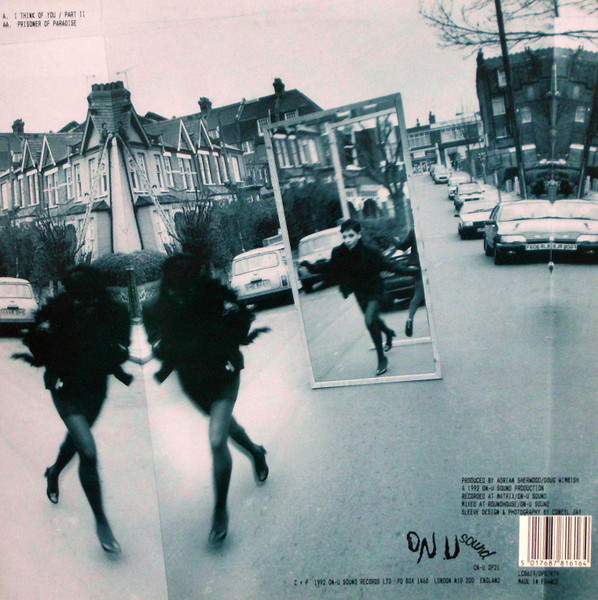
Can you tell me anything about the photo shoot? Because it’s got this amazing photo on the back of the 12-inch cover, where you’re running away from a full length mirror.
That was Coneyl Jay’s idea. I don’t look like that anymore. We set it up in Muswell Hill. And it was fucking scary, because there was cars coming. The road wasn’t closed, so we had rush out into the street, with somebody holding up the mirror, whenever there was a break in traffic. Hoping we’d get a shot we could use.
The single was really well received, and one of the things I wondered was why you didn’t do more with On-U after “Short and Sweet”, because that was, like, 1992. You had the EP that came out, “In Dread With Little Annie”, with the Lee Hazlewood cover on it, but you didn’t seem to do anything else new with the label.
That’s because I moved back to the U.S.A… and because On-U doesn’t work that way. I mean, God forbid we should do anything commercial. I came back to The States to open for Grace Jones. I love her. I ended up moving back, which I regret deeply right now. My career’s never been thought it out. I love Adrian and Kishi so much. They’re my family.
Are you still in touch with Kishi?
I spoke to Kishi a few months ago. I gotta give her another call. I wanna re-release “Jackamo”.
I’d really, really love to interview Kishi. Adrian gets interviewed all the time, but I don’t think anyone has really spoken to Kishi. I’m guessing that’s because she doesn’t want to speak to anybody. Please put a good word in for me.
Kishi is a genius. I talk about my work ethic, but I get that from Kishi.
She was involved in the music, the art, everything that defined the early On-U aesthetic.
She’s my hero. Fuck Kerouac, Fuck Hemingway, it’s Kishi. Kishi was the one who got me into painting.
This is the last question I have. Is there any potential for you to do anything new with On-U, in the light of the reissues? You did something with David Harrow a few years ago.
Oh, I would love to. I think, the track with David was the last thing I did. God rest another joyous soul, but I also got a call from Andrew Weatherall, because a while back I recorded something with the Sabres of Paradise. Jagz (Kooner) actually got in touch about a week ago. They’re trying to recover it from the DAT.
Wow! I’d love to hear that. What will you do with the rest of your evening?
I’ll probably take a Xanax. I’m trying to navigate a world I don’t really fucking understand right now. Do you mind me asking you questions? How does one navigate something without being a narrator. I mean, this is crazy shit. How does one be pertinent in this world? I don’t want to just add to the noise.
They encourage you to think like that. I understand that thing about adding to the noise, but to write songs, or a book, or a musical production, that’s not adding to the general buzz of fake news and lies. I think, particularly someone like yourself who’s a creative person, if you don’t have an outlet to express yourself, it’ll drive you crazy. So if you’re painting, or if you’re writing, it helps to keep you sane.
If you’re looking at the outside world, and there are things that really frustrate you, or really make you angry, to express yourself, creatively, about those things, it’ll help you and potentially help other people. Ignoring the situation and not entering the conversation is what they want. They don’t want you to have a voice.
Like what you said about when you went to that meeting.
Exactly. It really inspired me, because I was thinking, the situation is hopeless, things just seem to get worse and worse, I just don’t know what to do, and the guy was just saying to me, if you can have a small… any small victory, and then publicise that, because you never see any positive news, we can help to change the narrative. Publicising small successes, will give people the confidence to address other and eventually bigger issues.
Okay, I’m holding onto that. We’ve got the whole thing of cops killing folk here. I almost lost my mind. I was taking social media like it meant something. To be silent is to be complicit.
You could vent your frustration into a new song. Adrian and you the On-U camp have always been highly political. I’m sure they would love to do something like that. The “End Of Times” single with did with David Harrow, that was politically charged.
That was me on a positive day. What’s sad about this whole thing? I’m not shocked. It’s been broken for a long time. Yeah. Maybe it all has to completely break down. That having been said, when I was on tour with The Swans, the audience was an average age of 17 or 18. and these kids, thousands of them were so much more advanced. So, I have hope. I’m not hopeless.
Well, if you’re touring with the Swans, you have an outlet right there.
Yeah, I wish I could just be on tour 365 days a year. These kids I met were so caring for each other. Honestly, I was so impressed by the audience, I go, “How do you even know about The Swans? They’re even older than I am.” It was wonderful.
Yeah, I don’t think we should give up hope, and I don’t think the representation of younger generations that we see online or social media are accurate either.
No, God forbid.
It’s just more propaganda. More division. The younger generations are as frustrated and angry with the situation as we are. If you’re out there performing to those people, then that has a huge impact.
I’m not hopeless, I’m just bemused, bewildered.
You’re just in an interim phase while you work out what you’re going to do next.
Yep. Like everybody else, I’m just wondering, what the fuck should we do?
Something.
Something.
“Short And Sweet” can be ordered directly from On-U Sound. “End Of Times” can be ordered directly from David Harrow. Issue 140 of Electronic Sound, featuring Little Annie, is on sale now.
There are couple of great online interviews with Little Annie, conducted by Jesse Rifkin (Walk On The Wild Side NYC) and Val Siebert (The Quietus) which helped me pull some of my questions together.
Discover more from Ban Ban Ton Ton
Subscribe to get the latest posts sent to your email.


‘a while back I recorded something with the Sabres of Paradise. Jagz (Kooner) actually got in touch about a week ago. They’re trying to recover it from the DAT’.
This is news!
LikeLike
I know. I was excited. I mentioned it to Martin, but I think he already knew. The unreleased Sabres stuff I`ve heard is brilliant. I really hope it all sees the light of day.
LikeLike
Apparently I knew this as well! But had forgotten. Duh.
Exciting that the DAT exists though and that Jagz has been in touch with Annie.
LikeLike