James Bleakman is a self-confessed house music obsessive. Now based in Sydney, Australia, but born and bred in the UK, in Birmingham, he’s recently published a book, titled “1990 – 2000: The Decade That Was House Music”, that documents his journey from teenage Nirvana fan to bedroom DJ to bar / club resident and seasoned clubber. His obsession beginning with a mixtape borrowed by chance, from his older brother, back when he was too young to legally enter any licensed venue.
Honing his skills at home, with radio and magazines fuelling his passion, and imagination, for years, before the internet, and before he ever stepped foot in a club. The importance of Pete Tong and Danny Rampling’s weekend shows, Mixmag, DJ Mag, Muzik and Saturday night rituals, are all discussed in detail. The tome translates his excitement, and joy, at buying turntables, discovering beat-matching, learning DJ / club names / legends, hearing landmark mixes, shopping for white labels, plus, of course, attending parties.
Local stores and clubs such as Atomic Jam, Code, Miss Moneypenny’s, The Steering Wheel, Wobble, alongside the superclubs of the era, Cream, Gatecrasher, Ministry Of Sound, Renaissance, are reeled off, compared and contrasted. Key labels, like Strictly Rhythm, Roule, Nervous, Naked music, and Junior Boys Own are praised and discussed. James uses fads, phases, in house’s evolution, such “The French Touch”, to illustrate the music’s growing international, inclusive, appeal. Describing how this Brummie kid could travel the world via his record box.
While the trip the book takes is personal, it will no doubt resonate with fellow obsessives no matter when and where they’re from. The book makes plain how memory and music are intertwined, and especially how a physical, vinyl record acts as a powerful mnemonic.
Along the way, and in the final chapters, the “Bonus Beats”, James runs some down his favourite releases, one of which happens to be Sasha & John Digweed’s “Northern Exposure”. Since this seismic, scene-shifting / shaping mix / collection has just been revisited, “redux-ed” and reissued, via Late Night Tales, It was an absolute no-brainer to invite James to tackle a guest review.
Retrospective reflections care of Let’s Go Disco head honcho James Bleakman.
A Doorway North
It was late September 1996 when my best friend John loaded Disc One, “North”, into the stereo of his red Ford Fiesta. John was a few years older than me. Cars were not really our thing, but we liked our music loud and clean, so the modified sound system was the one feature that mattered. John said nothing. The voice of David Attenborough appeared through layers of atmospheric sound and I looked across at him, confused and intrigued in equal measure. He looked back and said, “You’re gonna fucking love this.” I laughed and went with it. He was right.
That was how music found us then: passed between friends, without introduction or explanation. The music sounded familiar but brand new, chilled but intense, warm but precise. It seemed to operate according to rules I could almost recognise but could not yet fully understand. Thirty years later, Sasha and John Digweed have returned to that material for “Northern Exposure Redux”. Hearing it again is not simply an exercise in nostalgia. It means returning to a record bound tightly to a friendship, to the beginning of my life as a DJ and to a period when a mix compilation could feel like access to an entirely different world.
I was sixteen when I first heard the original. I had discovered house music sixteen months earlier through a borrowed cassette in May 1995 and had started DJing by the end of that summer. By 1996 I had already found Digweed’s “Renaissance Mix Collection Part 2”, my first real introduction to a more refined style of progressive house. I listened to it obsessively, studying every selection, transition and change in mood. It showed me that a mix compilation could have structure, patience and purpose. It could reward the same attention as an album.
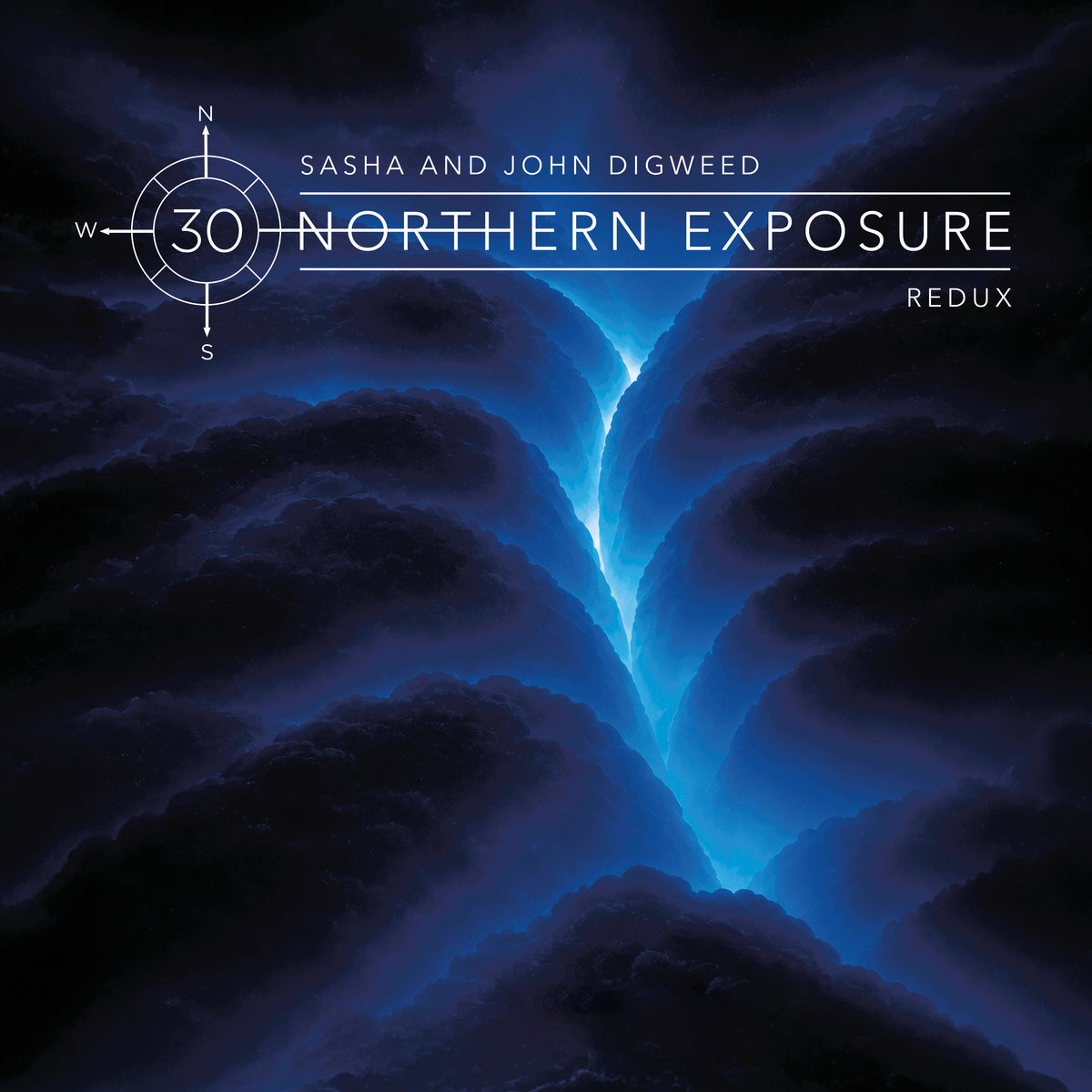
Against that background, “Northern Exposure” felt like the next stage of an education I had only just begun, but it was broader, stranger and more immersive than anything that had come before it. Even the artwork was obscure. It did not immediately announce house music, a DJ mix, Sasha or Digweed. To me, it looked more like the cover of National Geographic. That worked because the compilation was not really selling the DJs as personalities. It was selling exploration, landscape and experience.
Over the following years, John and I listened to it constantly. New records, compilations and recorded Essential Mixes came and went, but we always returned to “Northern Exposure”. Some of my fondest memories are of late nights at home with John and other friends, playing pool, darts or cards with the music turned up, while part of my brain continued trying to locate every transition.
At sixteen, the album felt both aspirational and distinctly distant. I wanted to play music like this, yet could not imagine the rooms or crowds capable of holding it. That frustrated me, but it also made the sound feel protected by its difference: too patient, atmospheric and uncompromising to be easily commercialised.
I did not actually buy the album at the time. John went everywhere with a CD wallet filled with mixes and compilations, so I never needed to. It is a strange contradiction: this is probably the most-listened-to compilation of my life, yet for years I did not own it. I acquired copies later, and it has remained a constant companion ever since.
Two Routes Through the Same Landscape
What still impresses me is that “North” and “South” clearly belong to the same world without feeling like mirror images. Both carry an atmospheric, almost melancholy character, but each moves through it with a different energy. They are two routes through the same landscape.
“North” is carried predominantly by breaks. Its opening stretch moves broadly between 125 and 127 BPM, yet the broken rhythms make it feel spacious rather than hurried. It is not until Track 7, Aether’s “Kites“, that the mix settles into a more familiar four-to-the-floor pulse. The pace then holds at around 122 BPM, relatively slow for a Sasha and Digweed mix. For comparison, Mix Three of Digweed’s Renaissance Mix Collection Part 2 sits at 133 BPM.
Those numbers do not fully describe the sensation. When “Kites” introduces a steadier four-to-the-floor structure, “North” feels as if it has gained momentum even though the tempo has fallen. For me, the deeper achievement lies in the selection. Sasha and Digweed took inherently slower, more atmospheric pieces, such as William Orbit’s “Water From A Vine Leaf”, originally released around 102 BPM, and Banco de Gaia’s “Last Train To Lhasa”, around 108 BPM, and made them feel completely at home within a progressive house compilation. It reveals a curatorial instinct for hearing relationships between music drawn from different genres and tempos, then ordering those records so the connections feel inevitable.
The sequence embedded most deeply in my memory from the “North” mix comes at the end: William Orbit, Apollo 440 and Banco de Gaia. Those final tracks do more than close the first disc. They form a bridge into “South” and leave the journey unresolved in precisely the right way. The response is not satisfaction so much as need: now I have to hear the second disc. The new third disc left me with that same unresolved pull, sending me back into “North” and “South” rather than bringing the journey to a definitive end.
“South” works differently. It holds a steadier four-to-the-floor pulse at around 130 BPM and can be understood as the more traditional progressive house mix of the two. Traditional does not mean predictable. The sequence I consistently return to begins with Castle Trancelott’s “The Gloom” and moves into Pete Lazonby’s incredible “Wave Speech”. From there it rises into Evolution’s euphoric “Phoenix”, the standout track of the entire compilation for me, before The Light’s “Dusk” pulls everything back into a darker groove. Track 8, by Mellow Mellow provides a heavy, chugging release and a brief invitation to resurface for air, followed almost immediately by a sharp turn back underground for the closing stretch.
That combination of ascent, descent, release and return is why “South” remains so fresh. It is my favourite of the two mixes, but only just. Each disc feels like one continuous piece with diversions, climbs, descents and hidden turns. Even now, after decades of listening and my own experience as a DJ, there are transitions I still struggle to identify. For me, that remains one of the clearest measures of a great mix compilation: the joins disappear, but the journey stays with you.
I do not believe that “Northern Exposure” captured the progressive scene of 1996 or pointed towards what came next. That is not a criticism. Its significance lies in the fact that it stands apart. The closest comparison was Renaissance, but the two represented different things. Renaissance grew from a club, a brand and a miniature ecosystem of sophisticated progressive house. “Northern Exposure” also had roots in a club night, beginning with a Brighton event and later becoming a touring identity, but the album was not constrained by that history. Sasha and Digweed used the format to explore after-hours and home-listening records that could not always be played in clubs. It sounded self-contained, as if they had created a lane that existed only for the duration of those two discs.
That helps explain why I do not hear it as a blueprint for what progressive house became. Even Sasha and Digweed did not try to reproduce precisely the same atmosphere on “Northern Exposure 2”. The first volume became a piece of house music history by sounding like nothing but itself.
Cinematic Reconstruction
The “Redux” presentations of “North” and “South” remain, to my ears, essentially faithful to the originals. The structure and emotional movement are almost identical, with subtle enhancements. Certain elements feel cleaner and tighter, but the mixes have not been modernised at the expense of their character. The larger question of what “Redux” adds belongs with the new third disc.
Cinematic. That was the first word that came to mind when I heard it and, after three listens within twenty-four hours of receiving it, remains the strongest description I can offer. The most obvious departure is the removal of the drums and beats. In their place is a beatless, textural blend of familiar melodies, atmospheres and details brought to the surface.
Some listeners may hear this as a deconstruction of the original compilation. I hear it as a reconstruction. Sasha and Digweed have not dismantled “Northern Exposure” merely to demonstrate what modern production tools can do. They have taken recognisable fragments from the original track selection and reassembled them through a modern lens, while preserving the character that made the source material important in the first place.
The journey develops in much the same spirit as the original. It flows effortlessly, each piece giving way to the next without breaking the mood. The difference, for someone who knows the first two mixes intimately, is that the transitions can now be heard and anticipated in another way. Every new track announces itself with an immediate moment of recognition: “Oh yeah, this one. Let’s see what they have done with it.”
That recognition is a strength, not a limitation. There must have been a temptation to manipulate the source material until it became almost unrecognisable, particularly with the technology now available, but doing so would have weakened the connection. The achievement is in the restraint. The music has been altered enough to reveal another perspective, but not so much that it loses its identity.
Modern stem-isolation technology made it possible to extract individual musical elements from the original tracks and reshape them for this third disc. The value is not in the technology itself, but in what it allows us to hear: more space around familiar melodic details, a renewed emphasis on mood and texture, and fragments once carried beneath the rhythm now brought into the open. The technology serves the music rather than becoming the point.
I do not feel that anything meaningful has been lost. The third disc works precisely because “North” and “South” already exist. It is not trying to replace them. I occasionally wondered whether the drums might arrive and turn it into a more traditional mix, particularly towards the end, but I was equally unsurprised when they never appeared. Remaining beatless is part of the reconstruction’s discipline. The original mixes retain the momentum and physical energy; this third journey is free to occupy a different space.
It left me happy. Happy with the restraint. Happy with the respect shown to the original compilation. Happy that Sasha and Digweed did not force it into a contemporary mould or reshape it in pursuit of a new audience. That does not prevent a younger listener from discovering it. It simply means that the integrity of the original remains the priority. That may be the third disc’s greatest success. It feels familiar without becoming redundant, contemporary without becoming fashionable, and newly revealing without trying to replace the experience that came before it.
Beyond Nostalgia
The question of how a younger listener might receive “Northern Exposure Redux” is difficult to judge. The project feels aimed most directly at the people who lived with the original and who are now largely in their forties and fifties. They already understand its language, pace and emotional weight.
My immediate reaction was that the house music scene is now so far removed from the mid-to-late 1990s that a younger audience might not understand what “Northern Exposure” is trying to do, how it moves or why its patience matters. They might simply not care. On reflection, that overlooks one of the qualities that made the first volume so important. “Northern Exposure” was already removed from much of its own time. It did not behave like a typical club compilation in 1996, which may be precisely why it does not have to behave like one now.
For me, the first volume is timeless. If that is true, it should remain relevant to at least some younger listeners. It is not attempting to recreate a night in a club or deliver a succession of recognisable dance-floor moments. It is music for listening beyond the dance environment: at home, in a car, with friends or alone. A new listener does not need to share my memories to respond to atmosphere, movement and a journey that unfolds over time.
The greater obstacle may not be age, but the way music is consumed. When acquiring new music meant waiting, saving money and travelling to find it, the purchase carried weight. You lived with the whole record, returned to it and learned to appreciate every part. Streaming has altered that relationship. With almost unlimited music immediately available, it is easier to move on before an album has had time to reveal itself.
That does not mean every younger listener consumes music in the same way, or that an older generation automatically listened more carefully. Attachment still comes down to what resonates and how someone perceives value. “Northern Exposure Redux” cannot force patience, but it can reward it. Its future relevance may depend on the same thing that secured its place in the past: someone hearing it, staying with it and allowing it to become personal.
A Moment That Cannot Be Repeated
House music is still a relatively young culture and scene, and to my mind “Northern Exposure” represents one of a limited number of moments within that history that feels genuinely unique. It was not simply an excellent compilation released at the right time. It became part of the lives, friendships and musical education of the people who experienced it.
I hope the “Redux” release reminds those who first heard it in 1996 how fortunate we were to be part of that experience the first time around. There is something humbling about recognising, thirty years later, that a record you loved as a teenager has endured and accumulated a significance you could not fully have understood at the time. We were not listening because we believed we were participating in history. We were listening because the music reached us. History gathered around it afterwards.
I am not sure there will be space for another mix compilation to carry quite the same weight. That is not because equally gifted DJs or important music no longer exist. The conditions surrounding music have changed. The scarcity, anticipation, physical commitment and repeated listening that allowed a compilation to become part of someone’s life are harder to recreate.
I have already pre-ordered the “Redux” vinyl edition, but I have not bought it primarily to play. For me, it is also a piece of art. It will sit in a display case above my 1210s, connecting the music I first encountered at sixteen with the equipment and culture that shaped everything that followed. I will happily talk about it with anyone who notices it and wants to know more.
That does not make it a museum piece. The music remains alive every time someone listens, remembers or discovers it for the first time. I would recommend Redux first to those who lived with the original and understand what it meant, but not exclusively to them. It also deserves the attention of younger listeners willing to give a long-form mix the time and patience it asks for.
Perhaps that is the most fitting place for “Northern Exposure Redux”: above the turntables, but never entirely removed from them. Preserved as an object, alive as music and ready to begin another conversation.
Sasha & Digweed’s “Northern Exposure Redux” can be ordered directly from Late Night Tales.
The new beatless Dub mix is included as Disc Three of the three-CD edition. The standalone “North” and “South” vinyl editions contain unmixed, remastered tracks and do not include the Dub mix. The deluxe vinyl box set, however, includes this mix as a download.
James Bleakman’s “1990 – 2000: The Decade That Was House Music” can be purchased from Let’s Go Disco.


Discover more from Ban Ban Ton Ton
Subscribe to get the latest posts sent to your email.

