Musicians’ minds mined by the marvellous John Matthews .
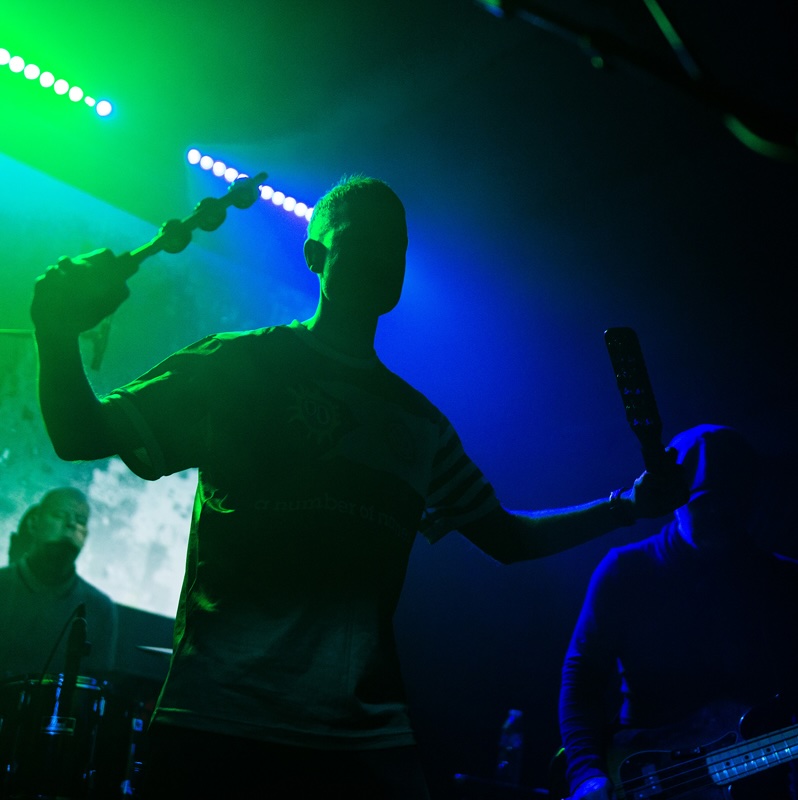
Main Image: Deeply Armed Live by Simon Murphy.
Throughout our lives we meet countless people but it is rare to encounter someone you instinctively recognise as a kindred spirit. That is exactly how I felt three years ago when I was introduced to Michael McKeown. We instantly bonded over a shared sonic DNA as well as our deep respect for a mutual friend, the late Andrew Weatherall whom Michael had famously brought to his hometown of Belfast to DJ back in the 1990s. I remember the night we met our passion for music ran so deep that Michael’s poor wife threatened to pack her bags and fly back to Belfast if we didn’t end our elongated conversation immediately. By then it was the early hours of the morning but I was completely captivated by Michael’s tales of acid house capers in Northern Ireland and, in particular, by the fact that he was the singer and instrumentalist in a band called Deeply Armed. My intrigue only grew when Michael revealed Deeply Armed had already recorded an album and that several of my favourite artists had remixed and reinterpreted a handful of the tracks. The unreleased music he later shared with me was remarkable. I was baffled as to why such strong material hadn’t yet been released and I immediately made it my mission to spread the word.
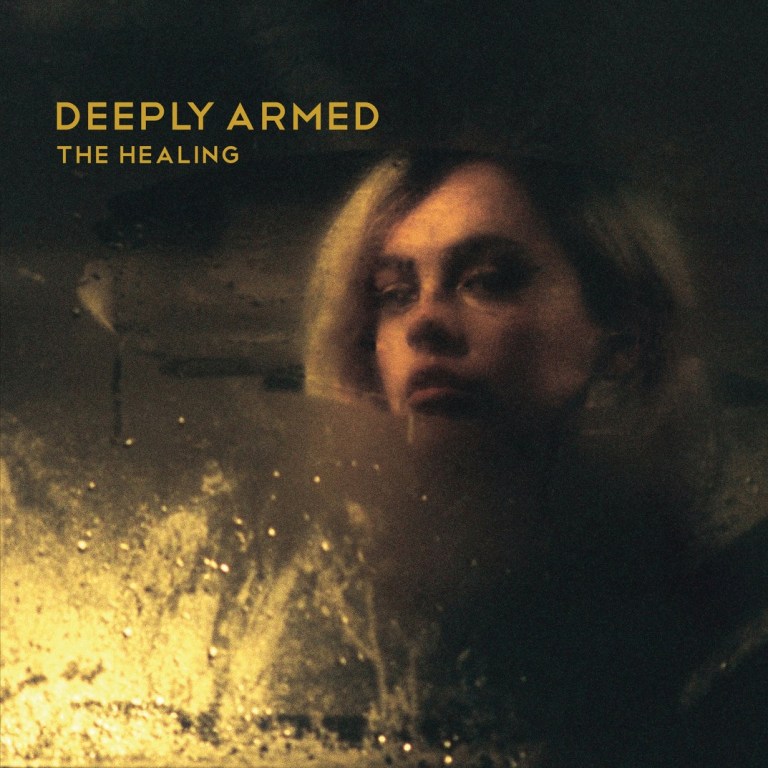
Deeply Armed are the aforementioned Michael McKeown on vocals, guitar, synth and percussion, Aaron O’Neill on electronics, guitar, synth and engineering and Kenny Whaley on bass and synth. They are augmented live by drummer Saul Rayson and classically trained vocalist Marion Jordan. The music they make is a melting pot of influences—from krautrock and post-punk to dub, techno, baggy, and soul—all wrapped up in a distinctly punk-rock attitude. This gives the band a unique sound that sets them apart from their contemporaries. This year Deeply Armed have played sold-out live gigs in London, Glasgow, Belfast and the legendary Golden Lion in Todmorden. The band delivered an electrifying performance at their debut London gig in April 2026 where they were invited by award-winning author and longtime fan David Keenan to celebrate the launch of his latest book, Boyhood. They have so far released two outstanding singles on their own Echo Pet Recordings imprint (“The Healing” and “Black Ice”) that have included remixes by Richard Fearless, Keith Tenniswood, Mad Professor and Andrew Fearns of Sleaford Mods.
I sat down with the band to gain further insight into the Deeply Armed story so far.
Can you give me a bit of background on the band and how you all met?
Aaron O’Neil: We went to Michael’s club night at The Front Page Bar in Belfast. I was at a stage of life where I needed some emotional consolation, and there he was!
Michael McKeown: Good times. Dark rooms and dirty kitchens around Belfast. Conversations about life and music. That was around the time Mani told me that we must start a band. It only took 15 years for us to get round to it.
What have been the influences on the band, both musically and culturally?
AON: Musically? There’s a bit of everything in there.
MM: Culture that rises in the face of oppression, injustice and heartache. Hardship fuels creativity. “Fight the Power” by Public Enemy. Enough said.
Kenny Whaley: I like punk rock and ska. I love The Specials and got really into the Manchester scene – New Order, A Certain Ratio, Happy Mondays, those sorts of bands. My dad was a jazz guitarist. I fucking hated jazz when I was a kid but I grew to love it because he used to play it in the house. t’s a really big influence now. I love Miles Davis, Coltrane and Lester Young.
MM: Yeah, my Dad was into jazz as well. He loved Benny Goodman and all that swing jazz like Glenn Millar. Also boogie woogie like the Andrews Sisters and the main man Buddy Holly.
KW: I love the Beatles as well. Also the Bristol sound, Massive Attack and especially Tricky. I remember being so excited by that whole infusion of the dance scene. And it really felt like this music is just going to keep evolving forever, which I guess it has.
AON: My first love was probably “Thriller”, then AC/DC and then industrial music.
MM: There was always a bit of Marley floating about our house. I remember “borrowing” a Yellow Man album from my brother. It opened a door into the reggae multiverse which blew my mind.
KW: I think there’s a real spirit that runs through all our musical tastes and the type of music that we make. There is a punk presence and attitude to it, especially when we play live. We play it like we mean it.
Was growing up in Belfast an influence on your music and if so how?
MM: No
KW: No
AON: No
MM: Actually, maybe on some level – the weather is grim so it forces you indoors, and making music is better than hoovering.
How would you describe Deeply Armed’s music?
MM: I think it’s been difficult for people to categorise. It’s a pure thing, and an honest thing, and it’s got energy and soul. I think that’s more important than sticking a label on it.
AON: It’s like a sacred thing. More like a ritual.
MM: I heard an interview with the Irish fiddle player, Martin Hayes – he said something like “it’s not about making music, it’s about allowing music.” That’ll do.
Is the sporadic nature of your live performances a deliberate strategy to make each show feel special?
MM: I think the traditional live formula can be quite dull and uninspiring. Band plays, lights go up, that’s it. We like to create happenings. That template of early acid house parties, the hybrid thing with great DJs and live bands on the same bill, with those worlds colliding. The energy is different, it’s more exciting and people can have proper night out.
So how many gigs have Deeply Armed played to and what have been the standouts?
AON: I can’t remember how many, probably around 10 so far, with more to come. The Menagerie for God’s Waiting Room in Belfast was amazing.
KW: Let’s not forget the first gig – invite- only in a shebeen in Belfast. One of our mates was DJing just before the band went on stage and he fell face first through the decks and onto the floor. I think he died and came back to life again.
MM: He was on medication and wearing a woolly jumper. We’d invited 75 people – they all turned sheet white, thought he was dead. He came around, thankfully. A West Belfast taxi driver suddenly appeared and took him straight to hospital. We also played in Glasgow for Manifesto of Bliss. The energy was off the scale. The Golden Lion in Todmorden was great. Beautiful people.
KW: Our most recent gig was in The Social in London, in Soho – that was our best yet. We really hit our stride. The crowd was really up for it. We’ve been learning how to make it work live, it’s coming together. Our sound engineer Chris McCorry is fantastic and Saul Rayson, our drummer, is the backbone of what we do live.
MM: We’re blessed to have them. Saul and Chris have been instrumental in helping us to take the songs out of the studio and translate them within a live context. They’re our in-house spiritual advisers.
Over the last few years, your discography has remained fairly elusive—just two 12” releases and the standalone Richard Fearless remix. Was that sparse release schedule intentional?
MM: It was more about the process of making and finishing songs, rather than releasing stuff. But then we were coerced into releasing it by Keith Tenniswood (aka Radioactive Man and ex Two Lone Swordsman)
KW: And bullied into it by a bunch of Glaswegians who wouldn’t take no for an answer, but that’s a story for another day.
MM: There’s a stockpile of finished music but we just haven’t got round to releasing much of it yet. We have our own label, Echo Pet Recordings, so we’ll keep it coming.
AON: To be given that gift, to be creative, is not to be taken for granted. I’ve been making music since I was 14 but kept it close to my chest. I can feel the weight of that now so it’s time to give it back.
When was the album recorded and what kind of sound can we expect from it?
MM: Between 2014-2018, just before COVID. We finished the album, set it aside, and then worked on remixes and new tracks. We used lots of different instruments and electronic hardware and only really used the computer to record. It’s a mixture of different styles and dynamics that bleed into each other. It sounds quintessentially us, whatever that means.
AON: It was a fun process of discovering that we could create a finished album. We basically just started experimenting. Michael and Kenny had already recorded some jams. I had just got a new desk and they sent me some files. That was when I did my first kind of dub style mix and realised that it sounded different and we could work this way going forward.
MM: Kenny and I recorded some demos in my old flat using my drum machine, sequencer, our guitars and old effects pedals. I knew Aaron could unlock it – he was the only person I sent them to.
AON: It was pretty effortless. It’s not easy to make music with just anyone, no matter how talented they are. It has to blend, personality-wise.
MM: We weren’t thinking of a live band at that stage. We made the entire album without playing cohesively together as a band. The live act is almost a separate entity and a reinterpretation of the studio recordings.
AON: We really grew in that space. There’s a lot of songs that didn’t make it on the album. It was never like “we’re going to be like this” or “we’re going to do this style of track.” It was literally about what was channelling through.
MM: The album was finished and filed but nobody had heard it. We produced it ourselves. We only sent it to Keith Tenniswood because we wanted someone to master it properly and we felt we needed a perspective from outside. I then sent it to Andrew Weatherall. That was about it. It’ll be out next year, which will be good because people will stop asking when it’s coming out. One of our mates has a copy and posted on a forum somewhere that he wishes we’d release it because he’s been listening to it for years and he’s getting sick of it. I wouldn’t be surprised if an archaeologist dug it up somewhere before it comes out.
What is “Black Ice”, the latest single, and does it include and specific influences? Also can you tell us more about the fantastic remixes by Mad Professor and Andrew Fearns?
AON: It has a dark, treacherous tone to it.
MM: Black Ice. You can’t see it coming, but you have to deal with it before it deals with you.It’s angular. I suppose it’s got a punk attitude and it’s a bit filthy.
KW: It’s hard hitting. Marian Jordan’s backing vocals are quite soulful and provide a real counter balance to the hard edges. That really makes it for me. The remixes are both mega.
MM: Andrew Fearn from Sleaford Mods was sent a few tracks to consider. He honed straight in on Black Ice. I love his mix – it sounds DIY, lo-fi but very fresh. It fits with our aesthetic.
KW: It’s absolutely fantastic. It’s got a haunting atmosphere. What an outro.
MM: As for Mad Professor, our good friend Carla was interviewing him for a radio show on BBC London and made the connection. She charmed him into it by telling him we wanted to work with one dub producer and we’d chosen him. I don’t quite know how that worked – we had never released anything and never played live. He loved the music and offered to mix two tracks. He has such an incredible catalogue of work, especially his work with Lee Perry. He’s such a dude and one of the nicest people you could meet. No airs or graces, despite his success. He just went at it, live in the mix and produced four live mixes of Black Ice. So there is another three mixes in the safety deposit box.
I noticed much of the album is instrumental or has minimal vocals. Was that a conscious decision from the start?
MM: We didn’t feel that the songs should necessarily be vocal led. I like that with Krautrock – just going with the flow. Sometimes the vocal is dominant, sometimes it’s just present and sometimes it’s not needed at all. No rules.
AON: I think also because of the way we were initially recording – overdubbing vocals, getting lost in it, so the mantra thing really works. We’re not following a formula – it is telling us and we’re just working to reveal it.
How did the remixes come together and how were remixers chosen?
MM: We only picked people we respected and whose music we loved. Some are mates and some are mates of mates. We sent the tunes and they were well received. We didn’t provide instructions apart from “do what you like.” There has been such positivity from everyone we’ve worked with on the remixes. It’s very refreshing and reminds you what’s good about music – that simple excitement about sharing good tunes with good people. It’s a real buzz to hear different perspectives on our music, from all these different worlds. It’s going to end up like a Deeply Armed multiverse.
AON: I have too many remix EPs that just all sound the same. We’ve tried to release our music in this carefully curated format. The process of remixing our own demos is central to how we make music. The remix of the remix – that was a process we developed over time in the studio. It’s a technique and that’s a part of why we sound the way we do. We don’t really use samples, but we do sample ourselves, so we create these movements in sound. We don’t want to be told what to listen to by fucking Spotify who hold music hostage and spend profits developing drone warfare.
MM: Military-industrial algorithms. No thanks.
Finally, who are your current favourite artists and DJ’s?
KW: I was at the Convenanza Festival and thought Elijah Minnelli was amazing. His album, “Clams as a Main Meal”…love it. The new Radioactive Man EP – “Hole in the Fire” sounds great.
AON: I’m loving Forest Drive West. That minimal dubby techno thing. Also, a bit of Deadbeat. I’ve been digging that as well.
MM: In terms of new music, I’ve been listening to a mix on a loop by an Italian DJ called Gabriele on Soundcloud. Deep, dubby psychedelic techno. Love it. The last two singles by Earthsignchels – slam poetry hip hop and great videos; Joshua Burnside’s album “It’s Not Going to be Okay.” It’s about the loss of a friend. Raw, but beautiful; Shokh – hypnotic minimal techno; The new Salem album: “Red Dragon.” Ghost Dubs; Black Bananas; Vendetta Suite; The most recent Tricky album.
KW: One final shout out. Aaron’s side project “Priests of Amun” will be out soon with a great remix by Phil Kieran. He’s been working on it for about 100 years but it’ll be worth the wait.
If Deeply Armed aren’t on your radar yet, consider this your official warning. 2027 is shaping up to be an explosive year for the band with both their third single and self-titled debut album ready to drop. Having already built serious momentum this next chapter promises to take things to a whole new level. Check out both releases and don’t miss the chance to see their live show when it comes to a town near you. Trust me, you won’t be disappointed.
Deeply Armed play Midnight Rockers at the Ulster Sports Club on December 12th with DJ’s David Holmes and Keith Tenniswood.

Discover more from Ban Ban Ton Ton
Subscribe to get the latest posts sent to your email.

