This tale of what happened next has been told and retold so many times that most folks – even those with only a passing interest – can probably recite it by heart: Four London DJs travel to Ibiza and discover the “Balearic beat”. This story is, of course, UK-centric and London-centric, and only partly explains how the energy emanating from Amnesia took hold across the globe. For example, in Italy they had Macrillo and Movida.

Poster courtesy of Leo Mas
Macrillo was the first Balearic club in Italy. Located in the small town of Gallio, up in the mountains, near Asiago and Vicenza. It had a capacity of 800 people but by the time it shut up shop there would be 1500 people there. Opening in the winter of 1987, it was populated by the Italians who’d summered in Ibiza. Macrillo’s promoters would hire and fly over the entire staff of Pacha and Ku, putting them up in a villa. Here they worked and partied for the three month long winter season. Alfredo Fiorito and Leo Mas were both resident DJs. Then, when Mas and Fiorito fell out in ’89, Mas ditched Ibiza and played instead at Movida in Jesolo – the second biggest beach in Italy after Rimini e Riccione. Teaming up with fellow Italian DJs Fabrizio Lazzari and Andrea Gemolotto – the three of them sometimes referred to as La Triade – he continued with the musical mix he’d pioneered with Fiorito at Amnesia.

Poster courtesy of Leo Mas
However, while critics may forever look for errors and details that have been missed in the constant re-telling – and subsequent simplification – of the “fable of the famous four”, the truth of it is that it was this handful of South London soul boys who were largely responsible for inventing the term “Balearic beat” and using it to create a global dance music industry. As much as many might not want to, they must be credited with that.
In 1985 Amnesia remained a secret, and “Balearic beat” didn’t have a name. Both of these things were about to change. While Amnesia’s crowd had grown, it was confined to the wilder end of the jet set – those who still wanted to party after Pacha and Ku had closed their doors – and the island’s workers – “unwinding” once their day / night was through. The sessions were very much a word-of-mouth thing. To know you had to know someone who already knew.
Among the initiated were a number of kids from the UK. Working-class youngsters, perhaps better described as “non-working-class”, since they’d opted out of any idea of a 9-to-5 existence. They were the “dead-end” children from council and sink estates who rejected the zero opportunities offered by Margret Thatcher’s Conservative government. People who instead of “getting on their bike” and looking for shit jobs that simply weren’t there, packed a holdall, boarded a Stagecoach bus, and then a ferry to the continent. From the north of England, Wolverhampton, Sheffield, Manchester, and Scotland, Aberdeen and Glasgow, they travelled across Europe on InterRail passes. Moving between Stockholm, Paris, Oslo, Milan, Dusseldorf, Barcelona, and Amsterdam. Making money robbing and stealing (1). Modern folklore has christened them “International Tourist Thieves”, the ITT. They would winter in Tenerife, Gran Canaria, and summer in Ibiza. Surviving the seasons by selling the goods they’d “acquired” and picking up work in shops, restaurants and nightclubs. Just like the Vietnam draft-dodgers, political exiles, and the LGBT+ community before them, Ibiza provided safe refuge, sanctuary, escape. These kids were in on Amnesia’s secret, and they kept it to themselves.
Most Brits who visited Ibiza ended up in San Antonio. While Ibiza Town was a high-roller’s playground, San Antonio catered to the “budget market”. Tax incentives designed to increase the island’s income from tourism led to countless hotels being hastily built in the former pretty fishing village of Sant Antoni de Portmany. Its name truncated to accommodate the hordes of working class youths from all over Europe who flooded in on package tours that promised cheap sun, sex, and booze. Establishments – hotels and bars alike – competing for their custom with cut-rate rooms and liquor prices that made for a week-long happy hour. Franchises like England’s 18-30 flew in plane loads of football hooligans and conga-dancing soul-boys and girls on trips that weren’t so much “hedonistic” as plain debauched. Like a Carry-On film with alcohol-poisoning. Casual sex wasn’t just encouraged but enforced, and you drank until you dropped.

Sant Antoni de Portmany in 1930, before 18-30 arrived.
English crews could be found carousing the village’s West End. Chanting “Ole, Ole” and fighting amongst themselves over soccer rivalries. Fighting with anyone who didn’t speak English, like the locals, and clashing with police. Heaven help you if you were German. The places they frequented in the main were themed pubs, English and Irish bars, Fish & Chips shops – “like Hackney transported to a tropical island”. But San Antonio also boasted the beautiful opulent open-air Lluis Guell-designed nightclub, Es Paradis. The venue was however denied the upmarket clientele it deserved simply due its location and the budget Gomorrah that had sprung up around it. The resident DJ at Es Paradis in the late 70s was Jose Padilla. When Padilla left for a new three-floor “macro-discotechque” club called Manhattan, he was replaced by a DJ named Carlos, who played an eclectic style – a mix of black music and white Indie rock – very similar to that being pushed by Alfredo in Amnesia. Some have stated that Carlos was a direct influence on Alfredo.

One of Carlos’ biggest fans was Trevor Fung. A South London soul-boy who’d been visiting Ibiza since the start of the 1980s. Taking advantage of cheap flights obtained through his job at a travel agency, he’d hit the island several times a year. Sometimes for a weekend, sometimes for a week, and then for whole seasons. In the beginning Trevor’s adventures were confined to San Antonio and 18-30 japes. In the UK he was an up and coming DJ. Spinning around the suburban London soul circuit. However, he was tired of the clique of aging DJs who controlled that scene, and also bored by the trendiness of the inner London rare groove alternative. Together with friend Paul Oakenfold he began hosting club nights in the south east of the city – for example Scamps in Croydon on a Wednesday night – eventually, in 1984, settling on a basement venue, below a pub on Streatham High Road, called Zigi’s. Mixing up jazz, soul and the then new sounds of electro and hip hop. Hearing Carlos DJ in Es Paradis resulted in a radical change in Trevor’s idea of dance music. Encouraging him to incorporate independent post-punk, pop and rock into his sets. In 1985 changing Zigi’s name to Funhouse he span this style back home. But it just left his soul boy and girl punters confused.
Fung got to know Carlos, and would sell the DJ records brought back from London. The two influencing each other. Carlos got Trevor gigs DJing in San Antonio’s small bars and clubs: Exstasis, Cafe del Mar, and The Star Club, the latter situated opposite Es Paradis. Eventually leading to Fung being hired as the resident DJ at Amnesia in the summer of 1983. However, the club was so quiet that after a month they were forced to let him go. Fung began selling records to other DJs on the island – including Jose and Alfredo – and also supplying some of Ibiza’s stores. To get by he also sold mixtapes and t-shirts on the beach. Through these activities, Carlos, and the DJing, Fung became well connected with the local community and started to frequent the larger more exclusive nightclubs, like Pacha and Ku. In 1986 he took Ecstasy.

Trevor Fung & Ian St. Paul in Amnesia courtesy of Jay Dykes.
In 1987 Fung returned to Ibiza for the season with his cousin Ian St. Paul and rented a bar in San Antonio. Downstairs housed a small club, while Trevor and Ian ran the upstairs area. At this point the parties at Zigi’s had been rechristened The Project Club, and they gave the Ibiza venture the same name. Through Trevor’s connections they stocked tickets and t-shirts for all the big nightclubs and bar became a hangout for the ITT and the British kids in the know. “The Project” would close at 3 or 4AM and the whole place would relocate to Amnesia, then Glory’s, and go barmy until around midday.
In August 1987 Trevor organised a trip for a few friends, designed to celebrate two of their birthdays. Oakenfold was going to be 24. Johnny Walker was turning 30. With them were Nicky Holloway and Danny Rampling. All four were deeply involved in the London soul scene. All of them had been to Ibiza before. Oakenfold worked with the record label Champion, and ran a music promotions company called Rush Release. Radio plugging for labels such as Profile, working with Run DMC, and managing tours for Def Jam artists like The Beastie Boys and LL Cool J. Also helping to get the first house records to cross the Atlantic, such as Steve Silk Hurley’s Jack your Body, to the top of the UK pop charts. Walker worked – with Pete Tong – at another record label, Full Frequency Range Recordings, or FFRR. Holloway threw parties under the banner of The Special Branch. Since 1983 he’d been hosting regular nights at The Royal Oak on Tooley Street, and one-offs at venues such as The Natural History Museum and London Zoo. In 1985, with Fung, he’d actually hosted a Special Branch package holiday in San Antonio, taking over the Cafe del Mar. Rampling was a DJ, with a weekly radio show on the pirate station, Kiss FM. He worked closely with Holloway, and played the warm-up at The Project Club with Oakenfold. Fung found them a villa, gave them an E and took them to Amnesia. The combination of Alfredo’s energetic, musical mix, the eclectic, cosmopolitan crowd and the drug caused each of them to experience an epiphany. All subsequently played a role in turning what was happening in Amnesia into a worldwide phenomenon and a global industry. They would spill the beans.

Back in London, Oakenfold was on a mission. He used his record industry network knowhow to track down as many of Alfredo’s tunes as he could find. Titles either confirmed by Alfredo himself, or identified from the tapes that the DJ sold in Amnesia. In November 87, he and Fung returned to their Friday nights on Streatham High Road, and also started holding Ibiza reunions. Hiring the sound system from Brighton-based DJ Carl Cox, an early house music devotee, who would also help out on the decks. East London DJ Tony Wilson was another resident. Closing at 2AM, they’d march everyone out and then let a select gathering of White Isle veterans in through the back door. E coming in through a contact in Amsterdam, and re-starting the dance until 5 or 6. This continued for six weeks, and in December they even flew in Alfredo, who was surprised to hear all of his Amnesia tunes being played (2). However, this was also the night that police cottoned-on and the party was closed down (3).
Determined to keep the Amnesia vibe going St. Paul and Oakenfold hired The Sound Shaft – a 100-odd capacity venue, attached to the much larger 1,500 capacity Heaven, on Villiers Street, near Charing Cross Station. Both owned by billionaire Richard Branson. Warming up for Oakenfold and Wilson on the wheels of steel was Nancy “Noise” Turner, making her DJ debut. Like Trevor, Nancy was an Ibiza regular – having discovered Amnesia in the summer of ’86 – and, like Oakenfold, a collector of Alfredo’s greatest hits.
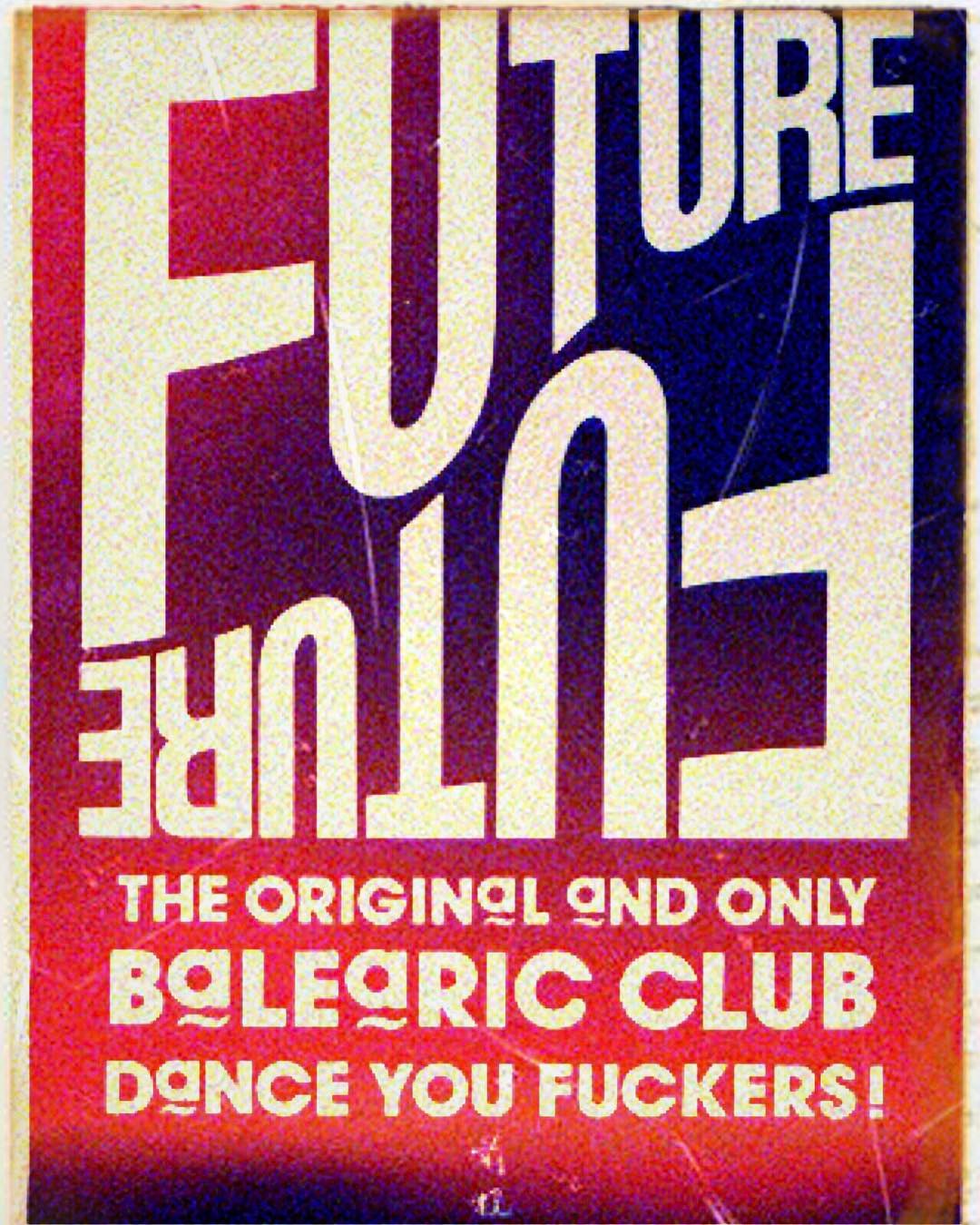
Noise also knew everyone, and it was her job to let them all know. St. Paul tells a story about giving Nancy a bag of coins and sending her and her address book off to the nearest public phone box. They were all told to arrive at Heaven’s main entrance at 9 O’clock, with a fiver. Since Oakenfold and St. Paul were skint, money had to be collected from folks up front, to pay the venue’s 300 quid rental fee. They also had to enter the Soundshaft via Heaven, since there weren’t the funds for a separate security guard (4). A hundred people turned up on that Thursday night, and in January 1988 it became a weekly event called Future (5). The flyers were drawn by a graphic designer named Dave Little, who had considerable impact on how the scene would be visually marketed. The promotional tag line was “Dance you fuckers”, and dance they did, every Thursday night until the final party in 1990.
This remix features the voices of Nancy Noise and Terry Farley.
The success of Future inspired ideas of expansion, and in April 1988 St. Paul convinced the venue’s manager, Kevin Millins, to let him have the far larger adjacent Heaven on Monday night (6). This became Spectrum: Theatre Of Madness. Johnny Walker joined Oakenfold playing music to the main floor. Roger “The Hippie” Beard and Terry Farley manned the upstairs “alternative” room. Farley was a recent Balearic convert, an ex-rare groover, and one of the people behind London club fanzine, Boy’s Own. He warmed up at Future, alongside Nancy Noise, but at Spectrum he played soul, reggae and dub (7). Beard was an old friend of St. Paul’s. In 1968 he’d hitchhiked to India, and since ’74 had regularly visited Goa. He was also a “traveller”, he owned a bus, and was a veteran of The Stonehenge Free Festival. Hence his nickname. Beard had never DJed before but had a large collection of ’60s and ’70s psychedelia – nearly all 45s – which St. Paul wanted, to compliment the acid house spun downstairs. Beard also brought in a vintage ’60s lightshow. According to Farley on the opening night of Spectrum there were only 100 people there, and they were all given a free E. Within 6 weeks the venue was full.
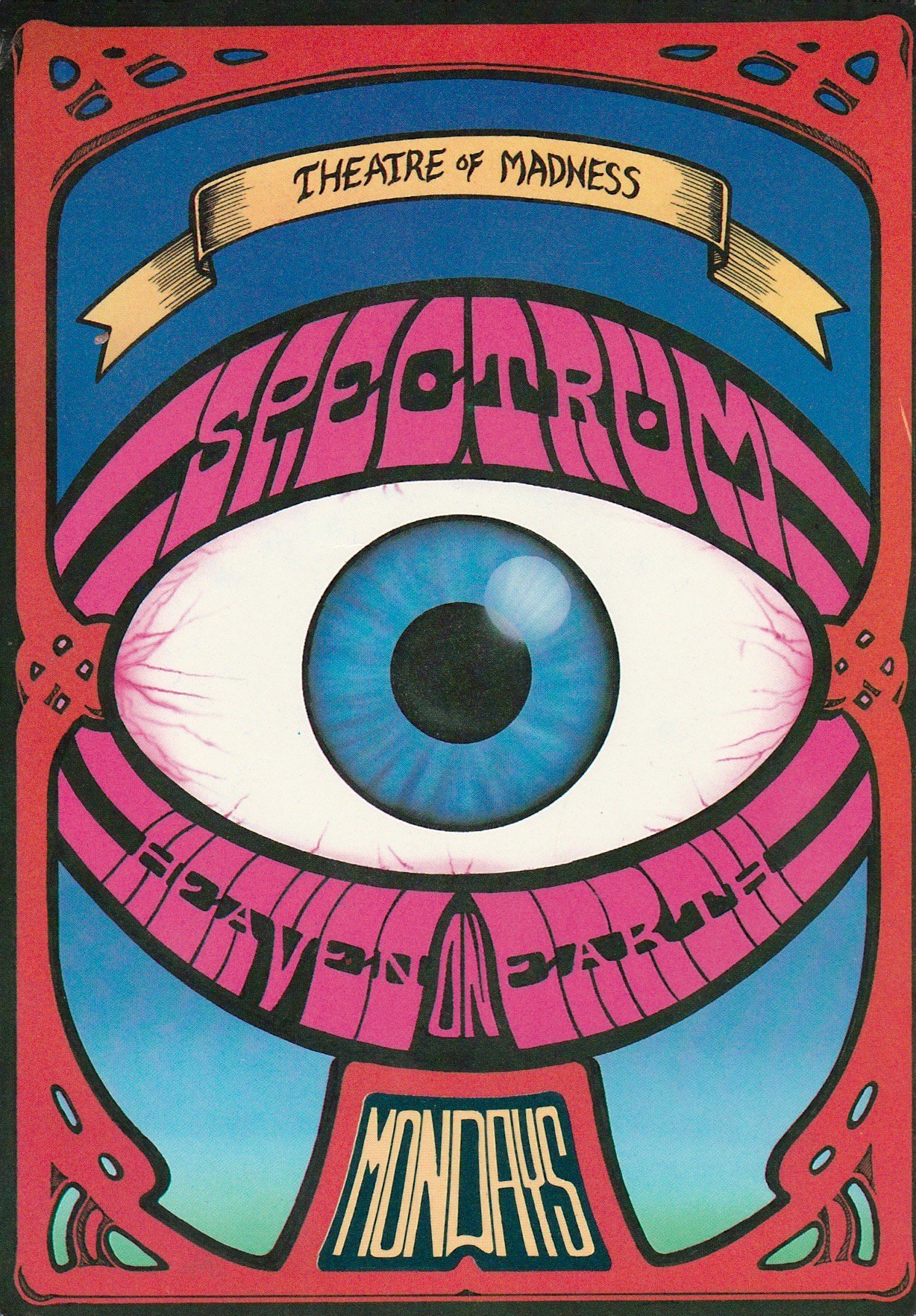

Converting 1,500 kids on a school night, Spectrum was an event. Amnesia was the flame, Future carried the torch, but Spectrum set fire to a city. Two cities. All through 1988, Fung, together with Colin Hudd, on a Monday night, took Spectrum to Legends in Manchester. Hudd had been DJing since the late `70s, holding down a near decade-long residency at the Dartford club, Flicks. He was an early advocate of house, so had all the records, and was an old friend of Fung and Oakenfold`s. Hudd had given Oakenfold one of his first breaks – a new romantic night at Flicks – and he and Fung had been the first DJs to play house at a Caister Soul Weekender (8).

Trevor Fung & Colin Hudd at Caister.
When the tabloid media got a whiff of Spectrum`s success, front pages carried stories of crazed dance / drug cults, and demanded that the club be closed. Branson came down to the venue – saw the money involved – and told St. Paul to keep going, just change the name. For a week it was “The Club With No Name”, and then Spectrum became Land Of Oz.

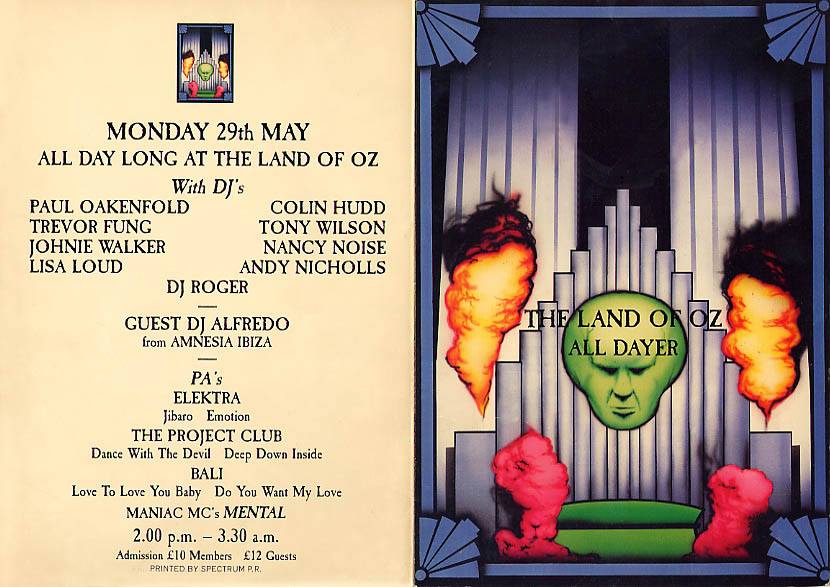
Due to numbers, Heaven’s middle floor, The Star Bar, was opened. Beard would now DJ here between 10PM and 1AM, sometimes with Wilson and followed by Farley. The playlist expanded to include pop tunes, at a very Balearic 100 to 110 BPM. The first track of the night was always Steve Miller’s I Wanna Make The World Turn Around. The Mutoid Waste Company had overhauled the decor so that the room looked like a giant skull, and you entered through its eye sockets.

Upstairs became a VIP room, soundtracked by Jimmy Cauty and “Dr.”Alex Paterson. Nancy Noise had met the pair through her day job at Stock, Aiken and Waterman’s Borough studios (9). Cauty’s band, Brilliant, recorded there, and his bass player, Martin “Youth” Glover, was an old school pal of Paterson’s. Noise kept them all clued-up on the capital’s coolest clubs, and introduced them to Oakenfold. Since 1983, Cauty, Paterson and Youth had been running squat parties on the “Barrier Block” – the fortress-like estate, Southwyck House on Coldharbour Lane. Armed with ambient, sound effect, and kosmische records, such as Manuel Gottsching’s E2-E4, they would create seamless, spaced-out soundscapes. These were the first rumblings of what became The Orb and The KLF, and these are what they brought to Land Of OZ.
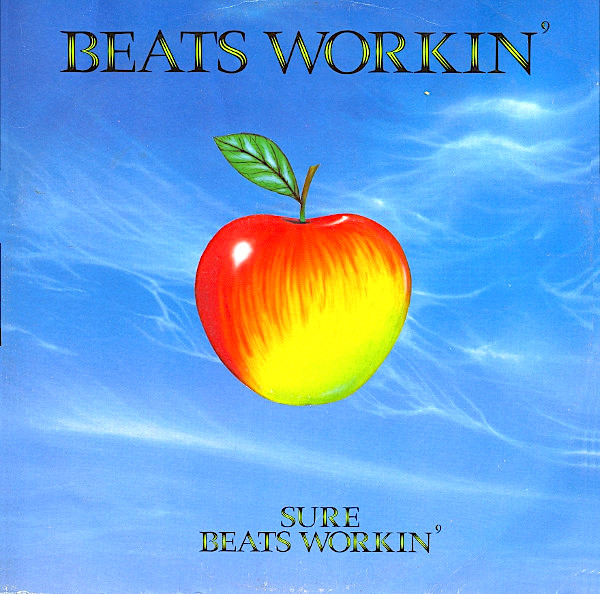
When Spectrum took off Pete Tong had approached Fung and Oakenfold and asked them to put together a compilation of Ibiza tunes for FFRR (10). Culling everything from Alfredo’s sets, the resulting record was called Balearic Beats Volume 1. Released in September 1988, this is how Amnesia’s lightning was bottled, marketed, and sold to the masses. This is how Ibiza’s eclecticism was given a name, and became a, somewhat impossible to define, genre (11). The compilation featured eight originals, plus a couple of remakes / covers. Oakenfold – as Electra – and Holloway – as Beats Workin’ – put their own stamp on Elkin & Nelson’s Jibaro and Icarus’ Stone Fox Chase, respectively (12). Marking the start of Oakenfold’s move from DJ to remixer, producer, and stadium-filling superstar. At the same time, an associate of Oakenfold’s, songwriter / producer Rob Davis – a former member of ’70s glam rock band, Mud – released Dance With The Devil. Borrowing the moniker The Project Club he appropriated the vocal hook from The Woodentops’ Why Why Why and the ominous bells from Fini Tribe’s De Testimony – both Amnesia classics – and replayed them over a UK approximation of Chicago house. Phil Harding, one of Stock, Aiken and Waterman’s in-house producers, made a cover of Boytronic’s Balearic hit, Bryllyant, using the moniker Fiesta – no doubt inspired by the music he heard Nancy Noise play in the office.

Danny Rampling, compared to Fung, Holloway, Oakenfold, and Walker, at the time, was still trying to catch a proper break. He’d been DJing since the start of the ’80s. Picking up gigs in the “disco-pubs” of The Old Kent Road, places like The Dun Cow, Bugles, Jilly’s Sampsons, plus the odd wedding. Before falling in with Nicky Holloway’s Special Branch – setting up and warming up – and then, in 86, with Oakenfold at The Project Club / Zigi’s.
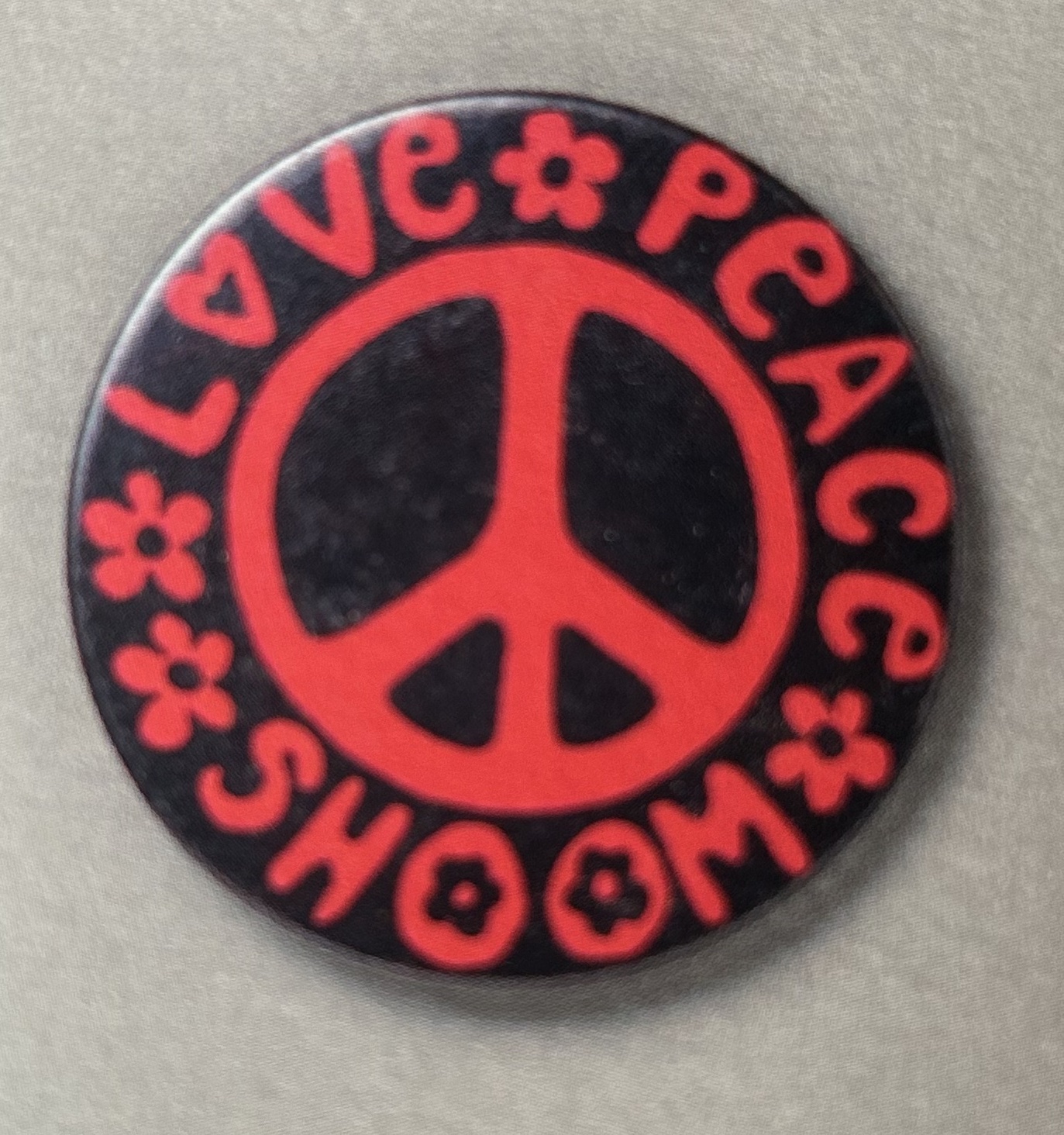
Shoom badge snapped from Rob Ford’s Members Only.
For Rampling the Amnesia experience had been more intense than for the others, and perhaps practically religious. Having just returned from a stint working construction in the US, and having also just survived a near fatal car crash, Rampling was reborn. Like Fung and Oakenfold, tired of not being given a chance by the established “soul mafia” he decided to do this own thing. He found a venue in an unmonitored area of London, that no one cared about, and with his wife, Jenni, opened Klub Sch-oom, quickly shortened to just Shoom. Named after a word one of Fung’s Wolverhampton mates coined to describe Ecstasy’s rush. Flyer-ing the few London clubs that played house music at the time – Delirium, Jungle, and Pyramid – the party started at The Fitness Centre on Southwark Street, in Bermondsey, S.E.1, on Saturday December 5th, 1987. Shoom’s artwork was handled by interior designer George Georgiou, who was also responsible for Holloway / Special Branch’s “look” (13).

Shoom’s doors opened at 11PM, and closed to the world at midnight, not reopening until the club shut at 5AM. Rampling has described inside as “an outlaw state”, where anything, as long as it complimented the vibe of peace and love, went. Music would start around 105 BPM, with tunes like Barry White’s It’s Ecstasy When You Lay Next To Me, and slowly build to 120BPM house anthems such as The Nightwriters’ Let The Music Use You. Due to the limited capacity of 250, if people were spotted standing around – not getting it – then they were offered their money back and asked to leave.
Shoom was intense. A small packed space, with mirrored walls, constant strobes and smoke machines – the loud! trance-inducing music, and the drugs. Carl Cox, Colin Faver, Mark Moore, Fung, and Oakenfold were all early guest DJs, but Rampling was – now finally – centre stage. Rampling didn’t have some big plan for world domination. He just wanted to recreate his Amnesia epiphany, and share that with a few mates. He was surprised when the queues went round the block, and they had to start turning people away. He was more than freaked out when “the converted” started treating Shoom like their church, and worshipping him like a messiah. However, it was an easy mistake to make since much of the music he played carried a positive or spiritual message. House was heavily influenced by gospel and Rampling’s sets were full of songs, such as Ce Ce Rogers’ Someday, calling for the abolishment of apartheid, for all races to join hands. The Woodentops’ Why Why Why rallied against nuclear weapons. Thousands of kids made pause-button cassette copies of Rampling’s “sermons” as they went out over the airwaves, every Friday, between 4 and 6PM, on his “Happy Happy Happy” Kiss FM radio show.
Some thought Shoom elitist, due to Jenni’s strict door policy – but this was largely dictated by the size of the Fitness Centre itself. Although Jenni must also have been a little star struck, as faces from the pop charts and fashion designers jumped the original “Amnesiac” queue. Shoom moved a few times – to the 1, 200 capacity RAW, in the basement of the YMCA on Tottenham Court Road, to Busby’s on Charing Cross Road, to The Park in Kensington to try to accommodate demand (14).
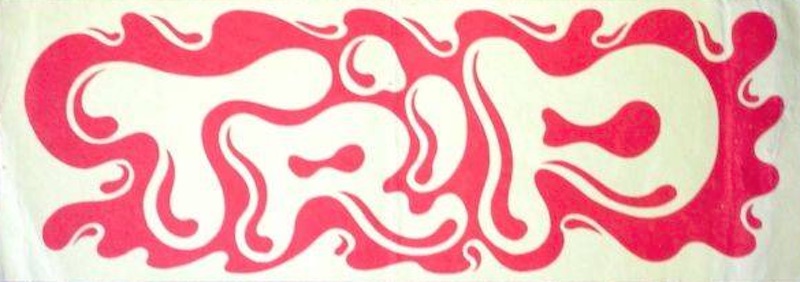
Like Spectrum, Shoom also went on the road. Travelling to The Hacienda in Manchester, then along the South Coast and over to Amsterdam (15). Both clubs were effectively performing their own versions of Ken Kesey & The Merry Pranksters’ mid-60s Acid Tests. In June 88, Holloway began a Saturday night called Trip, at the 2,000 capacity Astoria cinema / ballroom, almost next door to Busby’s. While criticised by London’s “acid house inner circle” for his commercialism, lasting only 10 weeks, Holloway’s Trip, unlike Spectrum, Shoom, and Future, perhaps due to its numbers and weekend slot, was truly mixed and multi-racial.
The carpeted upstairs foyer, the “Keith Moon Bar” became Cloud Cuckoo Land, and was presided over by Farley and his fellow Boy`s Own founder, Andrew Weatherall (16). Their incredibly eclectic selections stretched as far as Bill Laswell`s Lost Roads. On the main floor, Holloway’s last track of the night would be Thrashing Doves’ Sympathy For The Devil, and a bandana-ed and beaded crowd of all colours would flood, still dancing into the street.
In August, professional gambler, “entrepreneur”, and former Shoom regular Tony Colston-Hayter threw a series of huge parties in Wembley Studios, using the name Apocalypse Now. A TV crew, supposed to be interviewing DJs, instead captured footage of youngsters in altered states, creating a national furore. Forcing Colston-Hayter to rebrand his 20, 000 strong events, Sunrise. Colston-Hayter asked Rampling to come on board, to be a partner in his company, World Wide Promotions, but Rampling said, No. He wasn’t interested in money.
Amnesia’s secret was well and truly out and the so-called Second Summer Of Love ran through 1988 into 89. Those who attended Spectrum, Shoom and Trip, driven by both the need to share the “good, good feeling” and a chance to make some dough, turned Balearic beat into acid house and then into rave, and suddenly rave was everywhere. By the end of 89, the beginning of 1990, both Future and Shoom had closed. Rave had taken over, and Fung, Oakenfold, and Rampling were now DJing all around Britain, and abroad. Further spreading that word.
Everything exploded so quickly, in the space of a few years, perhaps due to the pressure cooker times. Three terms of the Conservative government’s Neoliberal “reforms” meant that a whole generation were in need of some kind of escape. With chemically-opened minds, dancing high on Ecstasy, people realised that they didn’t have to work that dead-end job, that they didn’t, shouldn’t, have to live like that. Everyone wanted to drop out. “The party” provided all sorts of new, exciting opportunities for would be creatives. It’s DIY ethic and unstoppable energy – like punk before it – convincing anyone with enough enthusiasm that they could be a DJ, set up a club, a clothing company, a design house, a record label, or record shop. Opening up avenues that people had previously thought walled-off, and allowing them to map out futures for themselves that didn’t end at the dole queue. The party became an industry, and a growth one at that. However, rave was about “house music all night long”. While it exploded, the eclecticism of the original Balearic beat went back underground.
References
Bill Brewster and Frank Broughton’s Last Night A DJ Saved My Life and The Record Players. Also Bill’s brilliant DJHistory interview with Danny Rampling.
Matthew Collin’s Altered State.
Ban Ban Ton Ton interviews with Roger Beard, Trevor Fung, Colin Hudd, Lisa Loud and Alex Paterson. Cool conversations with Nancy Noise.
Notes
1 – A lifestyle immortalised in the Happy Mondays song, Olive Oil.
2 – When I interviewed Alfredo, he did admit to feeling a little cheated.
3 – According to Ian St. Paul this was primarily because Johnny Walker and his mates had parked their van on the nearby Tescos loading bay. The old Bill arriving when the supermarket complained.
4 – The party in Heaven that night was Noel and Maurice Watson’s ground-breaking, house music championing Delirium.
5 – The design, with its Chinese characters was cribbed from a flyer that St Paul picked up in Hong Kong while attending the DMC DJ championships.
6 – Future was so packed, that St. Paul started a separate Tuesday night party for the original Amnesiacs. Nancy Noise and Lisa Loud were the DJs and so it was named, Loud Noise.
7 – I’m sure Farley once said that he would sometimes stick an LP on and run downstairs to join the main floor fun / mayhem.
8 – When Spectrum became Land Of Oz, Colin Hudd joined the team DJing to the main floor.
9 – It was Pete Waterman who gave Nancy her nickname.
10 – Pete Tong had established his reputation as a DJ playing hard, dance floor jazz, and FFRR was a club-focussed spin-off of London Records.
11 – It was Trevor Fung who came up with the name.
12 – The Icarus tune was itself an electronic proto-house cover of country rock band Area Code 615.
13 – According to Nicky Holloway, the first he knew that Rampling was throwing his own party was when he found a Klub Schoom flyer on the floor of a Special Branch do.
14 – The brief move to the YMCA in May 1988, was also a move to a Thursday. Putting Shoom in direct completion with Future. According to some people this created a division of loyalties within the original scene, and a falling out between Oakenfold and Rampling. Ian St. Paul definitely wasn’t happy, but I`ve interviewed and spoken to quite a few folks, and I haven`t really heard anything else that really backs this up. Nothing more than a few people (well, a lot to be honest) complaining that Jenni wouldn`t let them in.
15 – These Shoom trips weren’t always well received. There are some scary / funny stories about Rampling being shut down and even attacked while DJing at soul events held in Broadstairs and Rockley Sands.
16 – Farley and Weatherall would also DJ at Shoom, following the moves to Busbys and The Park, and well as throwing their own now legendary parties…
Discover more from Ban Ban Ton Ton
Subscribe to get the latest posts sent to your email.
 Ban Ban Ton Ton
cracking read
LikeLike
brilliant that rob
LikeLike
absolutely fantastic as always! Well researched and beautifully written. The definitive who when what where why and how of our lovely balearic scene.
LikeLike