
Having tested the music-making waters as Electra, Paul Oakenfold had become an in-demand remixer. Working with pop acts who were after some street credibility, and the indie- rock bands whose records he and Nancy Noise had played at Future. The most famous of these being Manchester’s Happy Mondays, a band Oakenfold subsequently – very successfully – went on to produce. In the process, helping to create the so-called “baggie” or “Madchester” sound which heavily-influenced Balearic beat in the UK.
Oakenfold also captained / created something he christened Movement 98. Borrowing from the music of Bristol bands such as Massive Attack and Smith & Mighty, and also the sound system aesthetics of London’s Soul II Soul, this was a slowing of tempos – to 98 BPM – and in part a reaction to rave’s acceleration.
Selected Oakenfold Remixes
Gary Clail / Beef
Cry Sisco / Afro Dizzi Act
The Cure / Close To Me
Frazier Chorus / Cloud 8
Happy Mondays / WFL (Think About The Future)
Happy Mondays / Hallelujah
Izit / Stories
Jesus Loves You / Generations Of Love
Massive Attack / Unfinished Sympathy
Max Q / Sometimes
Pleasure / Please
Red Box / Enjoy
Oakenfold would name his remixes after the clubs he was DJing at, so 12” singles would come with tracks labelled in brackets, Land Of Oz, Future, and The Raid. The latter taking place at The Limelight, on Shaftsbury Avenue.
The Limelight’s basement, decked out in camouflage netting, was the testing ground for Oakenfold’s remixes and his championed slower sounds. While Balearic had become a bit of a dirty word – due to its over and misuse – within the circles of the original Amnesiac crowd, downstairs at The Raid, Terry Farley, Kevin Hurry and Kevin Swain spun what they called an “Alternative” mix. Swain and Hurry – who would soon record as D.O.P. – had traveled to the Discomagic store in Milan, to ensure that they had a unique set of records. One of the tunes that they famously “broke” back in London, was Piano Fantasia’s Song For Denise.
Farley at this point was writing monthly charts and record reviews for the fashion magazine, I-D, and The Raid was notable because its crowd were no-longer dressing-down, or passing themselves off as neo-hippies, and instead were kitted out in designer gear. Labels such as Paul Smith, Stone Island, Michiko Koshino, and John Richmond. The dressing to impress, again, a reaction against, and an attempt to be seen as separate from, rave’s masses.
The Raid Playlist ’89 / ’90
Beginning Of The End / Funky Nassau
Dhar Braxton / Jump Back
Tom Browne / Funkin For Jamaica
Colourbox / Baby I l Love You So
The Cure / Lullaby
De La Soul / Say No Go
Gipsy Kings / Bamboleo
Richie Havens / Going Back To My Roots
Janet Jackson / When I Think Of You
Junkyard Band / Sardines
Kiss AMC / A Bit Of U2
Landro & Co / Belo E Sambar
Les Negresses Vertes / Zobi La Mouche
LTY featuring UF Force / Funk Express
Malcolm McClaren / Deep In Vogue
Bob Marley / Could You Be Loved
Mantronix / King Of The Beats
Mission Control / Outta Limits
NWA / Express Yourself
William Orbit / Fire & Mercy
Pet Shop Boys / So Hard
Phenix / Revelation (First Power)
Roxanne Shante / Live On Stage
RUN DMC / Peter Piper
Skipworth & Turner / Thinking About Your Love (Paul Simpson 1990 Mix)
Carly Simon / Why
Sting / Englishman In New York
Soul II Soul / Back To Life
U2 / With Or Without You
Never one to miss a business opportunity, Oakenfold also pushed faster sounds through his own imprint, Perfecto. The major label, BMG, financed the Perfecto, and its Baker Street offices, and Oakenfold brought in Nancy Noise, Steve Lee, and Johnny Walker to help. Lee had been supplying Oakenfold with bootlegs, European imports, UK promos, and white labels while at Phuture Records. Born in 1989, Perfecto might have started out as Balearic – licensing big tracks such as Izit’s “Stories” and Gary Clail’s “Beef” – but its BPMs soon started racing. In 1991, Steve Bicknell, as Lost, produced “The Gonzo”, and and Carl Cox delivered I Want You Forever. Both were relentless proto-hardcore. Perfecto released Robert Owens’ house anthem I’ll Be Your Friend in 1992, but from there, they parted ways with BMG and re-focused as a trance label, with Oakenfold being promoted to “superstar” status (1).

Steve Bicknell hosted a party called Kazoo, which took place on Saturdays, beneath The Great Western Hotel, on Praed Street in Paddington, through 1990. Not so much a club as a bar set up in a corridor. The DJ, sometimes a band, were located at one end, with a couple of optics of spirits and a crate of Red Stripe at the other. Farley and Weatherall were regular guests, and it attracted a mix of folks who could also be spotted at Future and the Fascinations events. Weatherall would spin stuff like The Beloved’s Hello – months before it was released – and bootleg mixes of of Edie Brickell (2).
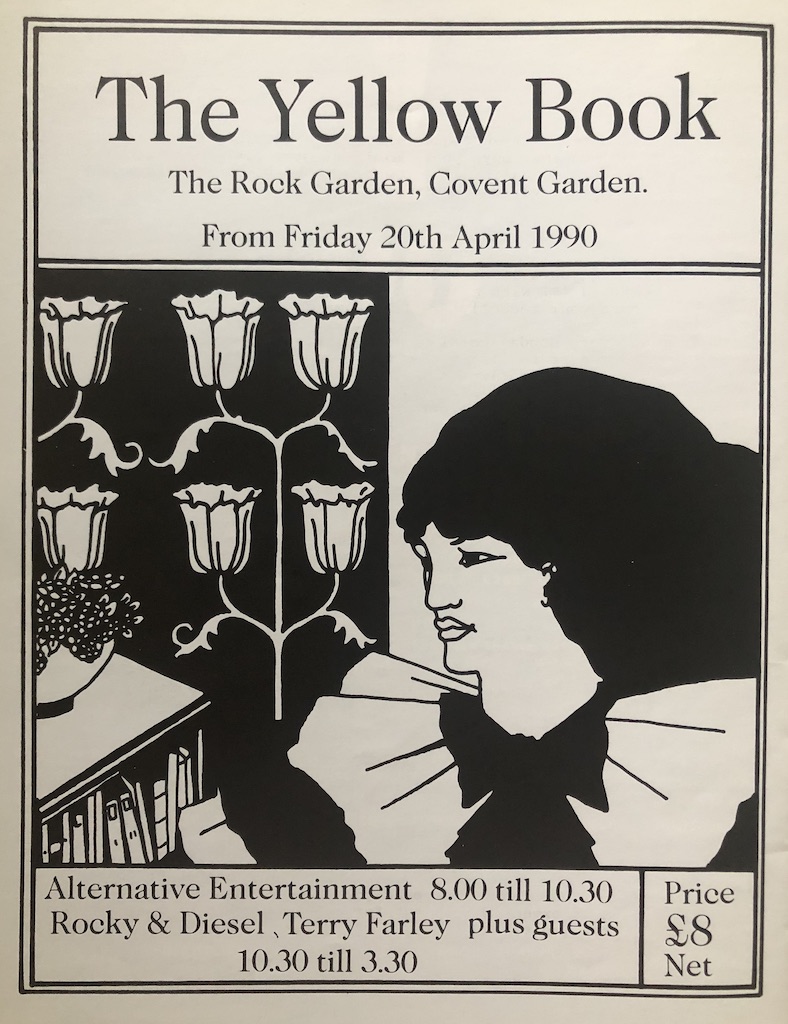
The Boy’s Own DJs were also involved in two parties held at adjacent venues in Covent Garden. Both were organised by a friend of Bicknell’s, Frank Perkins, and co-promoted by Heidi Lawden, a Raid regular. On Friday nights, starting in November 1990, The Rock Garden, managed by Jo Bartlett and Sean McDonnell, was home to The Yellow Book. The DJ residency spun between Farley, and new recruits to the Boys Own team, Alan “Stripey” Tribe, Darren Rock and Darren House – aka Rocky & Diesel. The Yellow Book lifted its name and its Aubery Beardsley artwork from a 19th Century literary journal. The publication promoted writing deemed to be sexually decadent – like Beardsely’s illustrations – and was linked to Oscar Wilde – during the Victorian era.
Stripey and Rocky were part of a larger group of friends from the suburbs west of London, which included Brandon Block, Anthony “Charlie” Chester, Glenn “Gunner” Egleton, Stephen “Lofty” Harper, Clive Henry, Ali Jobe, Jon Jules, Jagz Kooner, Phil Perry, and Dean Thatcher. All of whom attended, and most of whom DJed at, local soul and funk parties, in and around Ealing, Hayes, Hounslow, and Uxbridge. One of the hosts of these local parties was Simon Dunmore, who ran the club promotions division of record label, Cooltempo – which has since evolved into the dance music industry giant, Defected. The friends would go to Dunmore’s events, with Rocky eventually earning regular warm-up slots, and they would also attend Nicky Holloway’s Special Branch parties. Following Holloway’s Ibiza epiphany, this, of course, lead them all to Spectrum, Shoom, the Balearic beat, acid house, and The Trip. Diesel was the musical part of a small collective named POP, who did the backdrops and props for Special Branch, and then Shoom. Among their number was Michael Speechley and Mark Jones, who would later found the label, Wall Of Sound. It was in this social / cultural overlap between Special Branch and Gilles Peterson’s Sunday sessions at Richmond’s Belvedere Arms, that the two Darren’s met. The duo began DJing together in the summer of 1988 at a Tuesday night party called Trance, held at a venue called Barbarellas, near Greenford, on the Uxbridge Road. The event featured a live “acid house” PA from Adrenalin MOD, who included Jagz Kooner (3).
Rocky met Terry Farley in the Rough Trade record shop, in Ladbroke Grove. Both were looking for anything by The Woodentops, Nitzer Ebb, and Front 242. Music they’d heard at Shoom. Rocky recognised Farley as one of the DJs upstairs at the Trip. This meeting eventually led to Rocky & Diesel making their Boy’s Own debut in the autumn of 1989, at a party called Double Egg, Bacon, Bubble, And A Fried Slice, which took place under some railway arches in Lambeth. Their set demonstrated London’s evolving musical move away from rare groove.
Double Egg, Bacon, Bubble, And A Fried Slice Playlist
Bunny Wailer / Back To School
The Earons / Land Of Hunger
Elkin & Nelson / Jibaro
Family Tree / Family Tree
Kissing The Pink / Big Man Restless
Laura Lee / Crumbs From The Table
The O’Jays / For The Love Of Money
Soul II Soul / Keep On Movin
While Oakenfold was using The Raid at The Limelight to showcase his remix work, Weatherall and Farley’s remixes – the studio output of Boy’s Own Productions – defined the sound of The Yellow Book. Interviewed by The NME Farley stated that he’d love get his hands on something like A Tribe Called Quest, but for now at least, he and Weatherall were called in to bolster the ranks of the indie rock / dance crossover. Working with Creation Records, and Heavenly Recordings, a label founded by former Creation A&R man / press officer, Jeff Barrett. Boy’s Own also entered the studio with sometime NME scribe, Richard Norris, who was recording with David Ball (ex-of Soft Cell) as The Grid.
A Tribe Called Quest were actually remixed by two other London DJs, Ben Wolff and Andy Dean. South London associates of Oakenfold, they’d thrown their own parties throughout the 1980s under the banner of The Boilerhouse – sometimes in collaboration with Oakenfold. Together they hosted events at Cinderella Rockafellas in Croydon. As acid house broke they’d play tunes such as Mory Kante’s Ye Ke Ye Ke and Yello’s The Race. Through 1988 The Boilerhouse Boys DJed at The Fridge in Brixton, at Delirium!, at The Astoria, RAW at The YMCA, and Discotheque at Busby’s – all on on Charing Cross Road. By 1990 they’d moved into the studio. Their remixes mixed Soul II Soul-esque bass and beats, with alternative rock samples. For example slotting Lou Reed’s Walk On The Wildside and Ian Dury’s What A Waste into ATCQ’s Can I Kick It? Placing the tremelo’d riff from The Smiths’ How Soon Is Now? into Soho’s Hippy Chick earned them an American dance chart #1. This success led to production proper, and during the 1990s they divided their time between London and New York – working with charts acts, and aimed at radio airplay. Finding more success with artists such as Gabrielle, Joss Stone, and Texas.
As a consequence of all this rock industry / dance interfacing The Yellow Book was populated by music journalists, indie bands and their entourages. Sharing the dance floor, and queues for toilet cubicles, with Charlie-d up boys from Bexley Heath, clothed in Christopher New, they all shuffled to Saint Etienne’s reggae re-work of Neil Young’s Only Love Can Break Your Heart, and Foxy Brown’s lovers rock cover of Tracy Chapman’s Fast Car. The evening often ended with Moodswings’ Spiritual High.
Yellow Book Playlist
Bad Bascombe / Black Grass
Shawn Christopher / Another Sleepless Night
China Crisis / African & White (Steve Proctor Remix)
Gary Clail / Beef
Deeelite / What Is Love?
Demo Motors / DJs Pleasure
Electribe 101 / Talking With Myself
The Farm / Stepping Stone
Fluke / Joni
FPI Project / Rich In Paradise
The Grid / Floatation
History / Afrika
Horses Without Heads / What’s Your Name
James / Come Home
Major Force / Return Of The Original Art Form
Moonflowers / Get Higher
My Bloody Valentine / Soon
Snap / Cult Of Snap
Sinead O’Connor / I Am Stretched On Your Grave
Papa Winnie / Rootsie & Boopsie
Primal Scream / Come Together (Farley & Fabi mix)
Shabba Ranks & Krystal / Twice My Age
Diana Ross / I’m Still Waiting (Remix)
St Étienne / Kiss And Make Up
Sting / If You Love Somebody Set Them Free
Sister Sledge / Thinking Of You (Remix)
Sly & Lovechild / The World According to…
Soup Dragons / I’m Free
That Petrol Emotion / Abandon
Liz Torres / Payback Is A Bitch
The Yellow Book’s success played a significant role in its closure. Firstly it began to attract an increasing number of “undesirables”, and secondly Perkins was offered a Saturday night slot at The Gardening Club, the newly opened, larger venue next door. In October of 1990 The Yellow Book closed and Ophelia opened her doors.
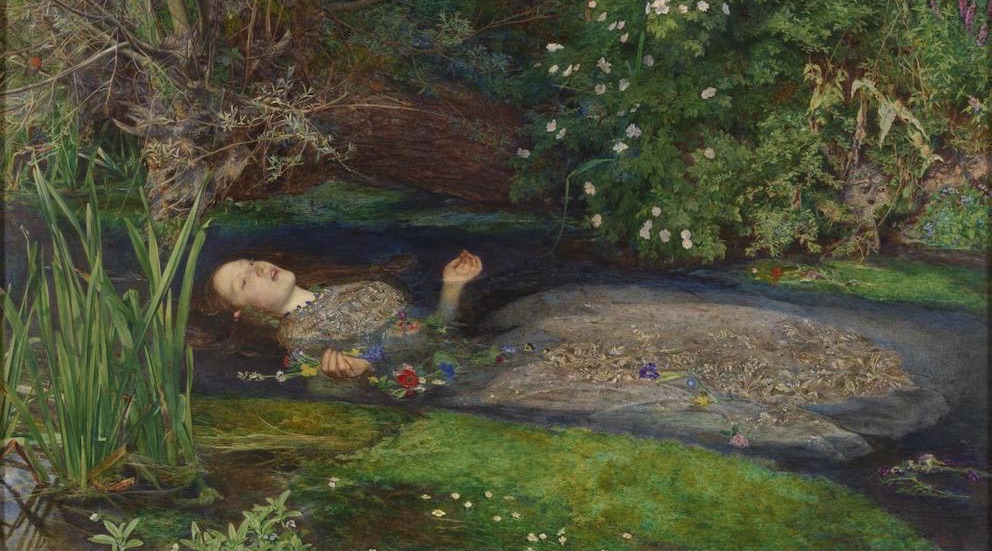
Managed by Shelly Boswell, Ophelia secured Glen Gunner, Lawden, Steve Lee and Nancy Noise as residents, with guests rotating between Shane Gibson, Rocky & Diesel and Laurence Nelson and Steven Hanson from the Piccadilly Circus-based store, TAG Records. The soundtrack was a more energetic piano and vocal packed mix of European and American house – plus a few pop surprises, such as the live version of Depeche Mode’s I Just Can’t Get Enough – which was an old Ibiza / Amnesia favourite (4). Lee would play Simple Minds’ Theme For Great Cities as a last tune.
Ophelia Playlist
4 For Money / Moment In Time
Antico / We Need Freedom (Jazzy Mix)
Arkanoid / Limit (Jazzin Flute Mix)
Baffa / Piano On
Charvoni / Always There
Cover Girls / Funk Boutique
Double Dee / Found Love
Frank K / Everybody Let Somebody Love
Madonna / Justify My Love
Mr K / Mix Max Style
LUPO / Keep It Up
Offshore / I Can’t Take The Power
Orchestra JB / Free Spirit
Neverland / Mato Grosso
Nitelife Cityrama / Running So Hard
Pako / Pakito Lindo
Ramirez / Hablando
RASE / Say It Loud
Rio Rhythm Band / Carnival de Casa
St Etienne / Nothing Can Stop Us
S’Express / Find Em Fool Em Forget Em (Eighth Out)
Stex / Still Feel The Rain
TC 1991 – 1991 (Fratty Mix)
Transformer 2 / I Can’t Get Enough
Ultraworld / Life After Death
Utopia Project / File #1
The spring of 1992 saw the last issue of Boys’ Own. The Balearic beat-inspired club scene that it fell into documenting had become divided. Perhaps reflecting the increase in cocaine use within a crowd previously “unified” by ecstasy. As the E wore off so did the feelings of love and unity. Weatherall for example, in the space of a few weeks, stopped playing Dizzi Heights in favor of trance and techno by Belgian and German artists such as DJ Hell and Mundo Muzique. The split was also a reflection of the increase in available dance music. In 1988 everyone in London had been scouring record shops for Alfredo’s Amnesia classics and spinning the same few dozen US house records. Their DJ sets by necessity overlapping, at least to some extent. However, by 1992 hundreds of folks – sparked by 1988’s extended second summer of love – were making their own music, either house, or Balearic-by-design, and major labels were commissioning house and Balearic remixes of everything. This exponential increase in choice allowed genre divisions and sub-divisions to appear. New York garage, Italian house, a Larry Levan remix, a David Morales’ Red Zone dub, and Underground Resistance… nothing listed in the final issue’s charts could be described as Balearic.
The “staff”of Boy’s Own had moved in the space of four or five hectic hedonistic years from clubland “foot soldiers” – photocopying and stapling together a fanzine – to back room DJs, to main room DJs, to promoters, record label owners, and chart-topping producers.
Weatherall’s work on Primal Scream’s Screamadelica, had help win the band the Mercury Music Prize, and Boy’s Own Recordings, the fanzine’s label, had signed “proper” bands, One Dove and Underworld, who could tour and required management. “Diffusion” imprint Junior Boys Own was born with Ashley Beedle’s edits and re-works of disco and house’s history – educating everybody – and with Fire Island – the production duo of Farley and Pete Heller – whose sound ruled ’90s dance floors. Also signed to Junior were The Chemical Brothers, whose Mantronix tribute, Song To The Siren, sought to replace the Balearic beat’s “chug” with a fusion of hip hop and rock.
The collective’s efforts and enthusiasm had lead to opportunities, and all of them just got too busy. They were looking for younger people to take over, push the fanzine forward, but unfortunately, at the time, that didn’t happen. Tow and a half decades later, however, in 2017, Boy’s Own relaunched as an on-line magazine, clothing brand, and they still throw the odd shindig.
NOTES
As a general note I would like to point out that it would be great to find out more, and perhaps do a separate piece about Blue Source and Fishtique, as I had some great nights out there. I my refreshed memory the layout at the venue, Woodys, was more like a house party.
1. BMG were funding both Perfecto and Deconstruction. Since Deconstruction had huge hits with artists such as Black Box, Perfecto was eventually dropped. Lee left to DJ in Buenos Aries.
2. Weatherall famously sampled the drums from this bootleg – themselves sampled from Soul II Soul – for his game-changing remix of Primal Scream’s “Loaded”.
When Kazoo closed, The Menace opened at The Starlight Club in Paddington. I never went to The Menace and so am not sure if The Starlight and the basement of The Great Western Hotel are actually the same place.
3. Together with Gary Burns and Andrew Weatherall, Kooner would go on to form The Sabres Of Paradise.
4. When Perkins left, Boswell continued Saturday nights under the banner Club 4 Life.
REFERENCES
Conversations with Jagz Kooner, Heidi Lawden, Steve Lee, Darren Rock and Kevin Swain.
Tune contributions from Chris Galloway, Damon Havelin, Justin Marr, John Matthews and Andy Thomas.
Jo Bartlett’s Indie Through The Looking Glass blog.
Boy’s Own: The Complete Fanzines 1986 – 1992, originally published by DJ History
Bill Brewster & Frank Broughton’s The Record Players
Discover more from Ban Ban Ton Ton
Subscribe to get the latest posts sent to your email.
 Ban Ban Ton Ton
Joining the dots so well once again and reminding me of great tunes to dig out and play again… thanks
The move to club wear from rave wear, I remember so well, putting away my Wallabies and heading to Floral St to shop.
LikeLike
Thanks Matthew – I loved the playlist at Yellow Book – still have a lot of time for those tunes… and yes Floral Street certainly was the essential destination for smarter weekend wear : )
LikeLike
There used to be a Paul Smith sale shop at the back of Bond Street that was my destination on apprentice money
LikeLike
Remember being in the Limelight the night after the Berlin Wall came down and Paul Oakenfold dropped U2s “with or without you” as they dropped fake snow everywhere. I rushed out to buy the 12” the next day then never played it. 😂 the power of the moment
LikeLike
That’s a great story. Power of something : ) I heard that U2 track at The Astoria. Have to confess that I still like it. My memory is that there were a lot of younger Croydon people in The Raid. All very dressed up.
LikeLike
Eno and Lanois what’s not to like
LikeLike
Damon – The Paul Smith Sale Shop is still there! On little Avery Row – it’s pedestrianised. I remember getting a suit there.
Rob – am working my way through your epic with immense enjoyment, and want to make a proper commentary once finished, but a quick thanks – it’s incredibly thorough, and has filled in esoteric little gaps in my knowledge that I was always curious about.
I was NOT there – I was just too young, but I remember reading the Time Out listings of places like The Milk Bar and being fascinated by it. My first related club night (after the indie clubs) was Sabresonic at Happy Jax. So I find this history absolutely captivating as it was just before when I was going out, and so adjacent and influential.
On a similar tip, I used to go to a comic book shop on Neal Street, and remember seeing the John Richmond shop (& Michiko Koshino nearby?) and being aware it was a big deal, but not really understanding!
Still in London, older not wiser, and I still can’t work out how I feel about the memories and ghosts down so many streets I walk down, given life is at a different pace now!
Thanks again for such a definitive piece.
LikeLike