Flying’s IBIZA 90 trip proved to be a considerable catalyst. It brought together most of the likeminded London DJs, and it also attracted interested souls from the north of England and Scotland. People who’d picked up a copy of Boy’s Own from a record shop – more often than not Manchester’s Eastern Bloc – and begun throwing their own parties, inspired by the attitude and the lists of tunes contained within.

Boy’s Own was a bit of a closed-shop, which added to its appeal. You had to know someone to get the nod. Flying on the other hand, was like Boy’s Own’s mad younger brother, and it welcomed everyone with wide open arms. So IBIZA 90 for many provided a way in. While not part of the official package a lot of northern DJs attended IBIZA 90 as holiday-makers:
“Sharing brown biscuits and going to Es Paradis, Summum, and IBZ Nightlife.”
Consequently this is when and where connections were made.
Following the trip the Boy’s Own fanzine ran a series of photographs entitled “Club Gangs”, which featured Spice in Manchester and Venus in Nottingham. Flying extended their guest slots to include non-London-centric names such as Justin Robertson and Greg Fenton from Spice, Timm Sure and Laurie Carter from Venus, Orde Meikle and Stuart McMillan from Slam in Glasgow, Ralph Lawson and Ali Cooke from Back To Basics in Leeds. Flying also began running coach trips up to these similarly sonically-inclined shindigs, and with this cultural exchange, established a UK “Balearic Network” of clubs, DJs and promoters (1).

Club-wise Manchester, of course, had the institution that was The Hacienda, the main floor of which had been rocking to US house and techno long before Oakenfold and Rampling’s Ibiza epiphany in `87. While the Hacienda could never be described as “Balearic”, three of the club’s residents were a big influence on a subsequent wave of Balearic-ally-inclined Manchester-based DJs.
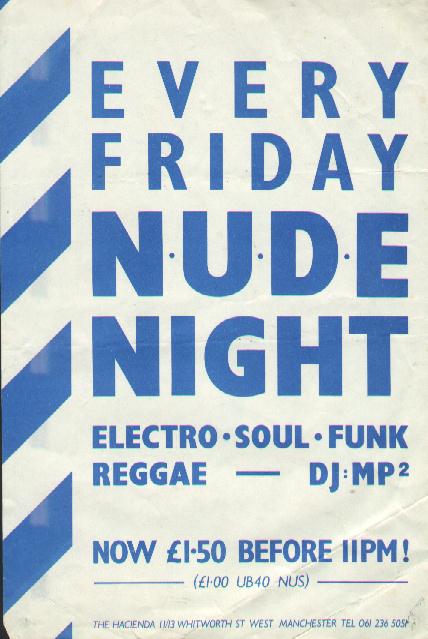
The Temperance Club, on Thursday nights through 1986, was primarily an indie rock event. However, the DJ, Dave Haslam, also mixed-in industrial funk and electronic dancehall. Records by Tackhead and Shinehead. Nude had been running at The Hacienda on Fridays, since October 1984. Promoted by Paul Cons and presided over by Mike Pickering and Martin Prendergast (billed as MP2), its playlist moved from electro, freestyle and Northern soul to proto-house and house – import vinyl sourced from The Spin Inn record store. By 86, JM Silk’s Music Is The Key, Dhar Braxton’s Jump Back, and Colonel Abrams’ Trapped were considered Nude classics, while away from the main floor at Nude, John McCready span the likes of Led Zeppelin in the Gay Traitor Bar – in stark contrast to the strains of Adonis’ No Way Back and Rhythim Is Rhythim’s The Dance. When the Hacienda launched a Wednesday house night, Hot, in July 1988, alongside Pickering, DJ Jon Dasilva (real name Jonathan Hibbert) built the atmosphere from sound-effects records, film soundtracks and leftfield dance, in much the same way that Leo Mas had done at Amnesia.
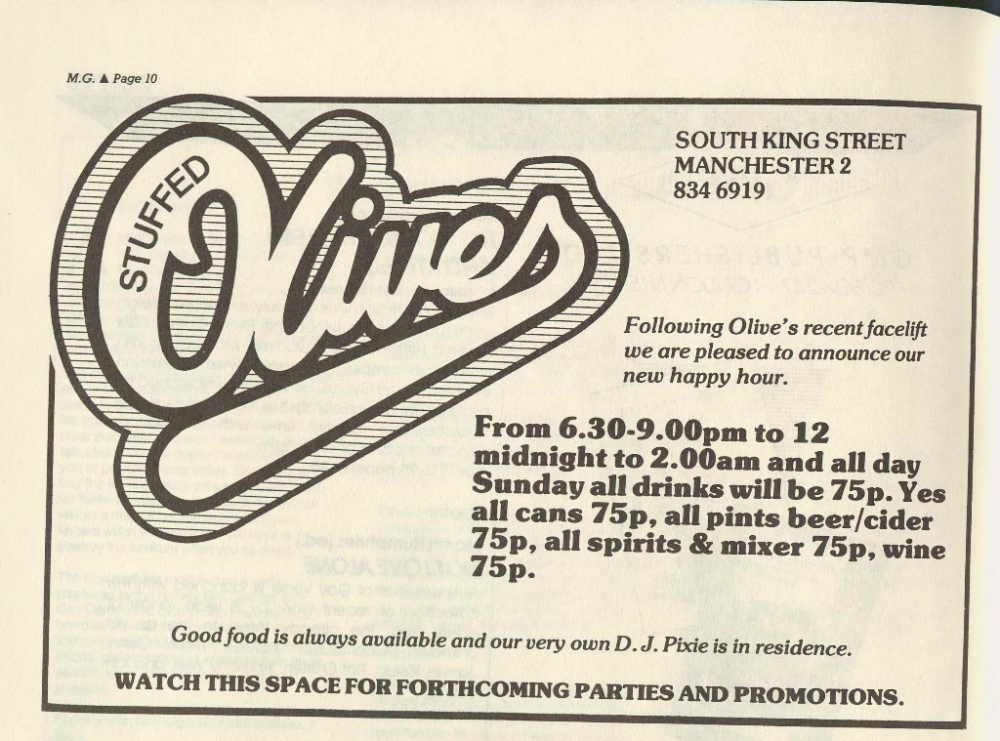
Dasilva was originally from Preston, but had studied in Canterbury. Returning to Manchester he’d been one of the resident DJs at the city’s legendary acid house “lock- in” at the gay bar Stuffed Olives – alongside Dominic Montague and Andy “Madhatter” Holmes. It was the arrival of ecstasy in Manchester that sparked the night at Stuffed Olives. The drug reaching the city – in the exactly same way as it had in the capital – via The Amnesiacs, and Amsterdam – late in `87. The Stuffed Olives stopped serving alcohol at 10:30, but fed amyl nitrate into its smoke machine. It was after experiencing a night at Stuffed Olives, that Paul Cons booked Jon for the Hacienda. Hot was only supposed to run for the summer, but in the end it lasted until December, when it made way for a new night called Void, where the music was still house, but less-arms-in-the-air, perhaps more sophisticated.
Justin Robertson made the decision to study Philosophy in Manchester, based not on the University’s academic pedigree, but the city’s musical pedigree – i.e. The Fall and Factory Records. As a student Robertson began attending the Hacienda – The Temperance Club, Nude and then Hot. First taking ecstasy at an event thrown by ID magazine, featuring London DJ Mark Moore, and first hearing European / Balearic sounds – tunes such as Code 61’s Drop The Deal and Landro & Co.’s Belo E Sambar – when Danny Rampling later also guested at Hot (the Mancunian crowd, in the main, hated it). A key factor in Robertson’s Balearic conversion were house parties held in a Victorian basement in Birmingham with a group of friends christened The Wigan Scream Team. It was here that he first heard Ibiza / Amnesia classics such as Tullio De Piscopo’s Stop Bajon.
Robertson’s record-buying habit meant he was a fixture in Eastern Bloc, which lead to a job there once he graduated. While throwing his own small parties called Compulsion, through Eastern Bloc Robertson met Chris Nelson and Tomlin, who DJed together as Jam MCs. Cutting their teeth at a party called The Kitchen, situated in two knocked through squats on The Crescent Estate in Hulme, Chris and Tomlin invited Justin to host a more Balearic back room at their house night held at a club called Konspiracy . Previously called Pips – the venue where the band Joy Division played their first gig – and located below a porn shop on the north side of Manchester’s Corn Exchange, the club consisted of several interconnected tunnels and rooms more like caves. Each was decorated with fluorescent wall paintings. Justin’s partner for the residency was Greg Fenton, a DJ who’d moved – in June 1989 – to Manchester from Belfast – where he’d played at a club called The Orpheus, as well as notorious after-hours venue, The Plaza. Catering to Konspiracy’s tough crowd, used to raving at The Thunderdome on Oldham Road in Miles Platting, Justin was once pelted with beer cans for daring to drop The Waterboys’ The Whole Of The Moon.

As well as hosting the room at Konspiracy, Robertson and Fenton, in January 1990, had started their own Balearic Sunday night event called Spice. Initially held in a club in Piccadilly Gardens, called The Cavern. This moved to a venue on Deansgate, and Robertson’s friend from down south, Karl Simmonds, joined as a third DJ. Robertson admits that he was inspired in no small part by Boy’s Own, while Fenton was on a mission to make disco cool again. Both were reacting against the house-only music policy of the Hacienda, and they booked guests such as Dominic Moir, Steve Proctor and Andrew Weatherall. Spice was a low-key, members-only, affair, which only ran for a few months. A bit like the Sex Pistols gig at the city’s Lesser Free Trade Hall, everyone who is anyone claims to have been there – but they weren’t (X). The clientele, however, boasted local faces such as The Stone Roses, Oasis and Tom Rowlands and Ed Simons who would soon throw their own parties called, Naked Under Leather, and form the chart-topping Chemical Brothers. Spice led to Justin being offered remix work, for local soul group, Yargo, and indie bands such as Mad Jacks. The Stone Roses themselves were associated with the Flower Show and Junction Box warehouse raves organised by Steve ADG.
Justin’s Spice Top 23
Bang a Gong / Ring Of Fire
Massimo Barsotti / Whole Lotta Love
Five Man Army / Five Man Army
Fluke / Joni
G- Force / Spicey
It’s Immaterial / Space (version)
Jah Wobble / Bomba
Jiraffe / Out Of The Box
La Union / Maracaibo (remix)
Ame Lorraine / Whole Wide World
Cheick Madani / Laya Habibi
Mad Jacks / Feel The Hit
Paul McCartney / Ou Est Le Soleil
Mc Sway & King Tech / Follow 4 Now (Instrumental)
Ryuchi Sakamoto / Shogunade
Sidecut DB / Vital Rise
Stonebridge / Jazzy John’s Freestyle Dub
Taboo / Hypnotique
Talk, Talk / Life’s What You Make It
Tantra / Hills of Katmandu
Tom Tom Club / Don’t Say No
Vanilla Sound Corp / I’m Starving
X-tended / Split

Spice soon shut, but in 1991 Fenton started Glitter Baby on Saturdays, while Justin hosted Most Excellent on Thursdays. Promoted by another ex-university student Ross Mackenzie, both Glitter Baby and Most Excellent took place at The State on Sackville Street (formerly the famed Northern Soul club, The Twisted Wheel). Most Excellent later moving first to The Brickhouse on Whitworth Street, and finally The Wiggly Worm (owned by Peter Stringfellow) on Wakefield Street. Most Excellent hosted a who’s who of guests, from Steve Bicknell to Andrew Weatherall. The music policy began as a mix of “Italian house and weird techno” and gradually moved in a progressive house direction. Glitter Baby was reborn, in1992, as Space Funk.
Justin’s Most Excellent Top 23
Bee Buzz / Baba Mhmmm
Captain Sensible / Glad It’s All Over
Digital Boy / OK Alright
Dub Federation / Keep On Giving
Dust Brothers / Song to The Siren
Erasure / Snappy (The Spice Has Risen)
Fini Tribe / Forever Green
Fleetwood Mac / Big Love (Arthur Baker mix)
Free Force / M.I.R.C.O
Clive Griffin / I’ll Be Waiting (Red Zone mix)
High Lonesome Sound System / We’re Go
La Banderita / Mediterranea
Los Chungitos / Corazon de Rubi
Major Maestro / Pump and Whine
Masters At Work / Just A Lil Dope
Meeting Place / House From Around The World
One Dove / Fallen (Nancy and Lee mix)
Original Rockers / Push Push
Photon Inc / Generate Power
Renegade Soundwave / Thunder
Severed Heads / Greater Reward
SLD / Getting Out (Most Excellent mix)
Voltage Control / Apocalypse
Manchester’s clubs were plagued at the time by gang violence – brought on by drug-dealing and territorial disputes (3). Most Excellent attempted to avoid attracting unwanted attention to themselves by moving from venue to venue. In the end, however, things were so bad that the majority of Manchester’s clubs closed and the city’s DJs instead sought safer work taking guest slots and travelling the country.

When Most Excellent called it a day, one of its residents, Adrian Gent started a party called Luvdup, with fellow DJ, Mark Van Den Berg. Gent had been DJing since early in 1988. Playing soul and then house at venues such as The Gallery on Peter Street, 49 Piccadilly and Isadora’s at Hanging Ditch, beneath The Corn Exchange. He was also one of the DJ’s on rotation on Blackburn’s pirate radio station, BBC, and played on The Kitchen’s opening night. During the day Gent worked at the Vinyl Exchange record store, and it was here that Justin Robertson had offered him the warm-up slot at Most Excellent as the party moved to The Brickhouse. Robertson was a regular in the shop, where he would sell and trade unwanted promo 12”s. Mark Van Den Berg was a South African, who had fled to the UK to avoid military conscription, and ended up working with The Farm, and running clothing stalls in both Liverpool, and Manchester’s Affleck’s Palace. He met Gent on new years eve 1990, in The Hacienda. The two of them threw the first Luvdup parties as a series of one-offs, in gay clubs and Chinese restaurants, starting in the spring of 1991. Eventually settling into a weekly residency at The Venue on Whitworth Street. Gent had been hipped to the sounds of Ibiza and its eclectic spirit by a Mixmag article, titled “Famous Last Words On Clubland’s Class System or How We Learned To Love The Balearic Beat”, published in July 1990.
Luvdup boasted a hedonistic gay / mixed crowd, handpicked by doorman, Elton Jackson. The playlist plundered Balearic classics, disco, house, and hi-energy. Productions by Patrick Cowley and Bobby Orlando, purchased from the basement of LGBTQ store, Clone Zone – run by former Twisted Wheel DJ, Les Cockle. When Luvdup produced their own fanzine, they caught the attention of The Face. The resulting exposure allowed them to expand, moving to Hell at The No. 1 Club, then in 1993 to Jolly Roger at The Paradise Factory – the site of the old Factory Records offices – FAC251, and finally to Home on Ducie Street. They were joined on the decks by “Luvdup Juniors”, Alan Stephens – a friend of Van Den Berg’s from South Africa, and “Balearic” Mike Smith – who also worked at Vinyl Exchange, and guests included the likes of Jon Pleased Wimmin, Danny Rampling, Tom & Jerry Bouthier, Kelvin Andrews, Farley Jackmaster Funk and Jeremy Healey.
A Little Bit Of Luvdup
Axe Corner / Tortuga
B4 / What I’m Feeling (Paradise Mix)
Circuit / Shelter Me
Desire / This Dub is Mine
Erasure / Sometimes (Danny Rampling Remix)
Fun Boy 3 / Our Lips are Sealed
Gaznevada / IC Love Affair
Ice MC / Cinema
Kwanza Posse / Wicked Funk
Last Rhythm / Last Rhythm
LUPO / So Hard
Madonna / Like a Prayer
Monkey Business / Everyone’s a Winner
Mr Luthero / Rotation
Giorgio Moroder / The Chase
Papa Winnie / Rootsie and Boopsie
Billy Preston / Heroes
Taja Seville / Love is Contagious (Ben Liebrand Remix)
TNT / Piano Please (Remix)
Trance Dance / You’re Gonna Get It
Stevie Wonder / Masterblaster
James Baillie, Sam Bowery and Steve Kirk were the people behind Venus in Nottingham. In the downstairs bar were residents Paul Wain and Christian Woodyatt, while Timm Sure and Laurie Carter controlled the upstairs dance floor. Sure’s tastes took in everything from reggae to goth. His DJ career began in 87, with a Ska night at the city’s Kool Kat. Progressing to playing a mixture of hip hop, house, and new beat, at a bar owned by Baillie called Papa Binns. Regulars on the floor at Baillie’s pre-Venus venture, Eden, Sure and Carter were obvious choices for the new night. Introduced to the Boy’s Own fanzine by Justin Robertson, while on trips to Manchester, Eastern Bloc and Spice, the Venus crew also had close ties to Nottingham’s own Balearic fanzine, Duck Call. Started in response to Boy’s Own, its contributors included author Matthew Collin (his book Altered State is THE definitive text on rave and acid house) and Sonny Takhar (who went on to be Simon Cowell’s righthand man at Syco Music). Takhar would sometimes DJ alongside Sure and Carter, while Woodyatt was one of the residents at Duck Call’s own parties. Once a month Venus and Spice would join forces at Sunday all-dayers called Eat The Pig (4).

A Venus Top 10
Axe Corner / Tortuga
Blow / Cutter
Club House / Deep In My Heart
Fini Tribe / 101
Happy Mondays / Bobs Yer Uncle (Perfecto Mix)
Jesus Loves You / Generations Of Love (Totally Outed Mix)
Mr Monday / Daybreak
Paradiso / Here We Go Again
Ramirez / La Musika Tremenda (DJ Ricci Remix)
Carly Simon / You’re So Vain
During the 1980s, Leeds’ foremost club was The Warehouse, located on Somers Street, near the city centre. Running in parallel was The Twilight Zone – a reggae blues shebeen held in Chapeltown. Similar in vibe to The Kitchen in Manchester, the playlist at the latter, spun by DJs Martin Williams and Drew Hemment, grew to accommodate acid house. One Twilight Zone regular was Dave Beer. A former art student, Beer had dropped out to roadie for bands such as The Sisters Of Mercy and Pop Will Eat Itself. On November 23rd, 1991 Beer launched his own club night, called Back To Basics – taking over the bottom floor of Rockshots – later renamed the>music:factory – a three storey gay club on Lower Briggatte. The Back To Basics DJs were Alistair Cooke and Ralph Lawson. Cooke was a friend of Beer’s from art college, who worked in Kik Flip Records, a shop situated in the basement of a boutique called Buffalo – the first Leeds store to stock Stussy. The walls were screen printed by local artist Moose, who also went on to design the decor for Back To Basics. Above Buffalo was the studio were Martin Williams engineered for techno / bass / bleep act, LFO. It was as a customer of Kik Flip that Lawson met Cooke.

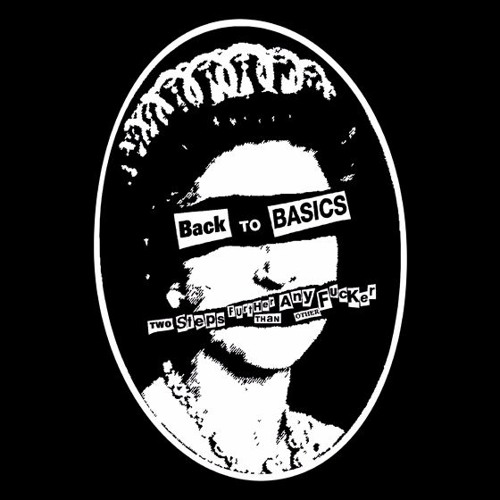
Back To Basics branded itself as a “punk rock” alternative to what mainstream Leeds had to offer. The first Basics flyer “borrowed” the artwork from Jamie Read’s iconic sleeve for the Sex Pistols’ God Save The Queen (the club also once toured the UK under the banner Back 2 Bollox – another nod to The Pistols). With assistance from promoter Mickey Hurst, Back To Basics was an immediate success. By April 1992 they’d expanded and taken over the whole of the 1,200 capacity venue. Lawson played house to the first floor. Upstairs, labelled Funk, Junk & What U Like, featured residents James Holroyd and Cziz Hall – plus guests such as the Jam MCs. Cooke was in the basement, with Paul “Huggy” Huggett. Both of Huggett and Hall were recruited from their day-jobs at the counter of Manchester’s Eastern Bloc record shop. Cooke was renowned for his eclecticism. According to Andrew Weatherall, spinning “whatever took his fancy, from hip hop to techno, dub to indie.” Inspired by a love of bands such as The Damned, Theatre Of Hate, and local act Sisters Of Mercy, Cooke leaned musically towards new beat, and EBM. Sounds more akin to those played by DJs Nelo and Esteban, after hours at Ibiza’s Glory’s, than perhaps Alfredo and Leo at the loved-up Amnesia. Mixing in the rock of CSS’ Whole Lot Of Love and Nirvana’s Smells Like Teen Spirit, with sample-heavy dance tracks such as RumbleDub’s God Is In The House and Beats Workin’s Burn Out (Don’t Fade Away).
Alistair Cooke Classics
Code 61 / Drop The Deal
Dante / Aman
Dunne / Espiral
God Squad / Keep The Faith & Floored
Laibach / Life Is Life
Moodswings / Problem Solved
My Bloody Valentine / Soon
Nitzer Ebb / Control I’m Here
Severed Heads / Big Car
Time Zone / World Destruction
West Bam / Alarm Clock
Back To Basics took part in the July 1992 Flying club tour of Rimini. Playing at Peter Pan and Echoes. However, tragically, on March 12th, 1993, Cooke was killed, along with Lawson’s girlfriend, Jocelyn Higgin, in a car accident, on the way to a gig at Slam in Glasgow. Back To Basics took stock but continued, and still continues today. Moving venues from The Pleasure Rooms, to The Mint Club, then Rehab, and My House / Stinky’s Peephouse. The “brand”, and Dave Beer, have come to be associated with no-holds-barred hedonism, and the club has adopted, instigated, slogans, dance floor “battle cries” such as “Fuck forever”, “Excess all areas”, “Two steps further than any other fucker”, and Beer’s somewhat ironic catchphrase, “Keep it tidy”. Lawson has gone on to have considerable success with both Basics, and also his own record label, 20:20 Vision.
NOTES
1. I think Liverpool had Rio’s.
3. Spice was poorly attended primarily because it coincided with the World Cup and also the Stone Roses led event on Spike Island.
3. On the occasion I “went” to Spice it was cancelled because someone had driven a stolen car through the doors of the club. I can also remember the queue outside Most Excellent scattering in chaos as a gunshot rang out.
4. Nottingham’s top house club was The Garage, where the DJs were Grahame Park and Martin Nesbitt.
I haven’t mentioned Mancunian clubs / parties such as Fizz at the Man Alive, Trash, Hewan Clarke at The Gallery, PSV in Hulme, or Stu Allan’s Bus Dis radio show, all of which were incredibly important in the developed of the “house scene” in the city – solely to avoid getting totally side-tracked while “looking for the Balearic beat.”
REFERENCES
Conversations with Greg Fenton, Adrian Gent, Richard Hampson, Justin Robertson, Mike Smith and Timm Sure.
Dave Haslam’s book, Life After Dark.
Ralph Lawson politely declined to be interviewed, because he didn’t want to look back. However, he very kindly allowed me to access and use the information on his website.
Discover more from Ban Ban Ton Ton
Subscribe to get the latest posts sent to your email.
 Ban Ban Ton Ton
Nice surprise for me in today’s post!
I wrote the Mixmag article Adrian references…although we worked together lots in the 90s, I never actually knew the piece had impacted him til we had a catch up a couple of years ago, when I found myself in Manchester when a Luvdup boat party was on. I subsequently dug out the issue it featured in, re-read it – and thought it was pretty incoherent and structure-less!
Mark VDB and I co-DJ’d at my son’s wedding earlier this year!
Keep up the great work, the volume you produce without letting the quality slip is phenomenal!
Sent from Outlookhttp://aka.ms/weboutlook
LikeLike
Thanks for the info, the article, and the kinds words – all the best, Rob
LikeLike
I feel like I learned more about UK geography reading the club listings in the pages of DJ Magazine and Mixmag than I did at school! The big clubs became a big deal in places I’d never been to, since I was in London. I remember meeting some girls from Stoke-On-Trent while backpacking in Europe, and the only thing I knew about it was Golden and Kelvin Andrews! I always wanted to go to Back to Basics – the whole ethos and the design were so impressive.
LikeLike
Once gain a great article Rob
Im (slightly) biased as a Venus regular but it felt like the catalyst as due to location would have coaches from London & Manchester for Flying which started regularly early 91. It also helped the club look was very London ( Ibiza even!) with White walls upstairs. No one goes on about when it has fluro patterns & DJ Sy scratching Warp Bleep in 90
The 1st in Leeds was at Corn Exchange Sept 91 which I think was before Basics opened – Worst sound ever due to cavernous roof
Need reprint of Boys Own guide to Balearic network spoof which featured a night Grantham from memory – I’ll dig it out
LikeLike
thank you – I think you are right – I never went to Venus – but knew lots of people who did – and the coach trips from London were the stuff of legend. I`ll have to dig that Boys Own article out too – did you write it?
LikeLike