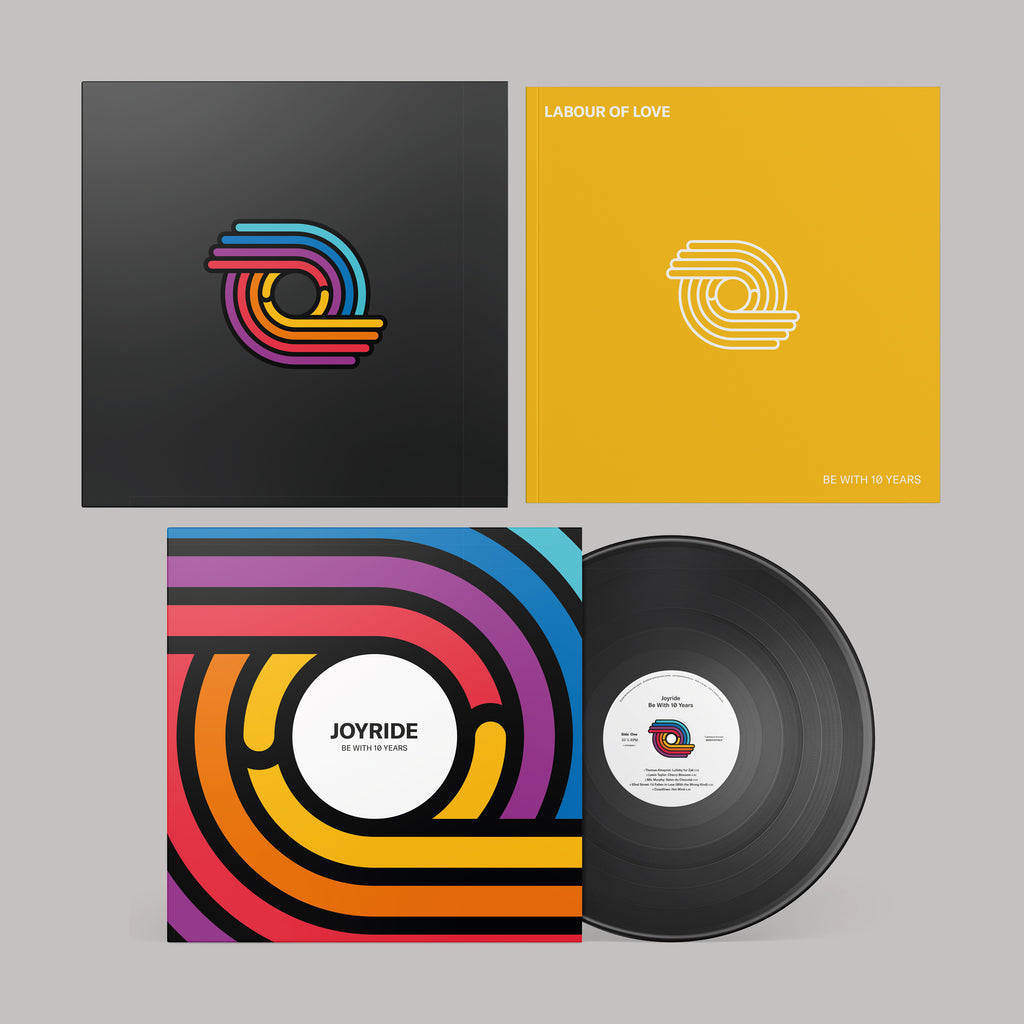
To help celebrate Be With Records’ 10th anniversary, here’s a second sortie through the label’s back catalogue, and the Ban Ban Ton Ton archive of “prose” on the priceless pieces they’ve reissued. Collected below are my Be With selections that provide the perfect accompaniment to a sunset Chocolate Milk & Brandy…
THOMAS ALMQVIST / NYANSER
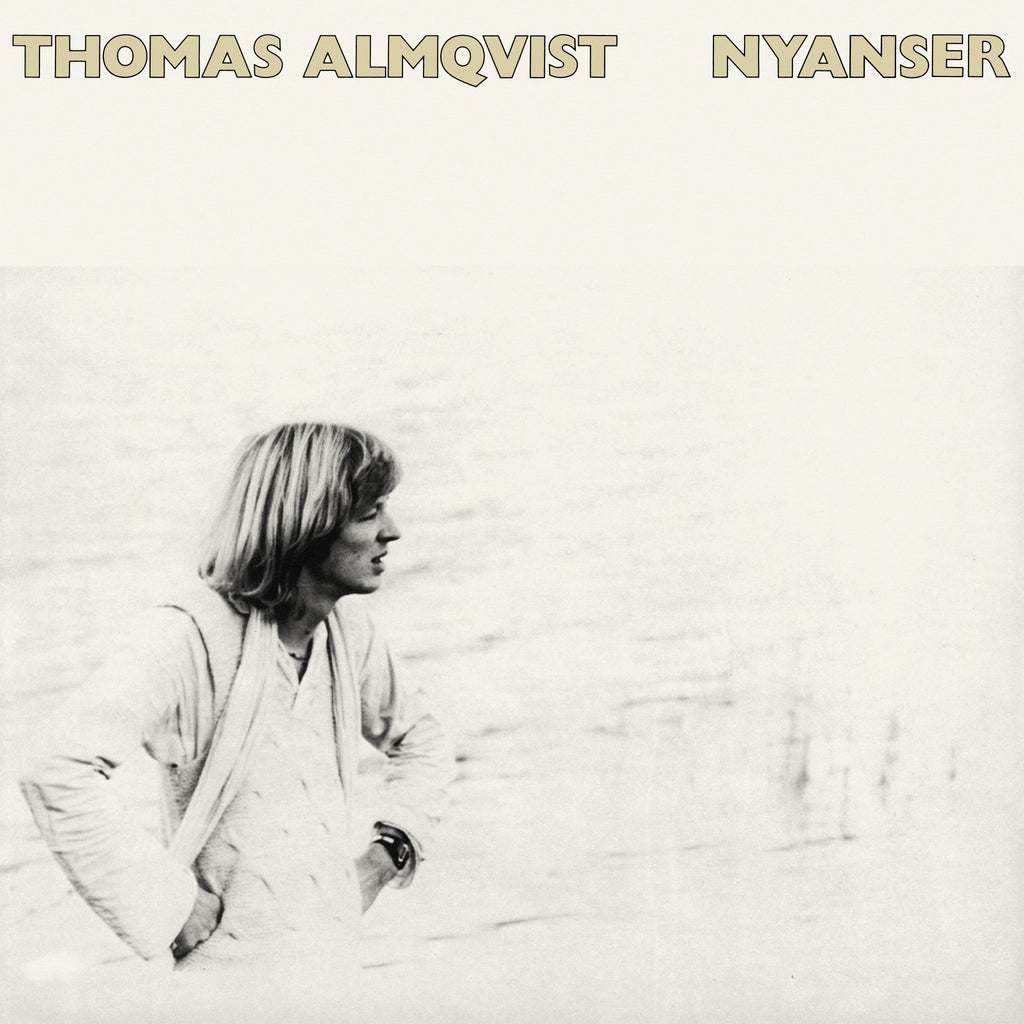
Released in 1979, the album Nyanser (“Shades” in English) finds Swedish multi-instrumentalist Thomas Almqvist fusing folk music from around the world. Kinda like a mix of kosmische and E.C.M. His virtuoso guitar picking is central to everything. His playing producing ringing 6-string harmonics, chiming chords, and cascading clusters of notes. Sorta Spanish / flamenco in spots. However he’s joined by marimba, bongos, berimbau, tabla, and gentle jazzy reeds. Mot Natten tumbles tribal, with a dancing drum circle dynamic. On the album’s most celebrated piece, Coral Reef, a love-in that adds hippie harmonies and psychedelic droning synths, everyone skipping joyfully, it’s like Penguin Cafe Orchestra scoring a Nordic pagan festival.
WALLY BADAROU / COLORS OF SILENCE
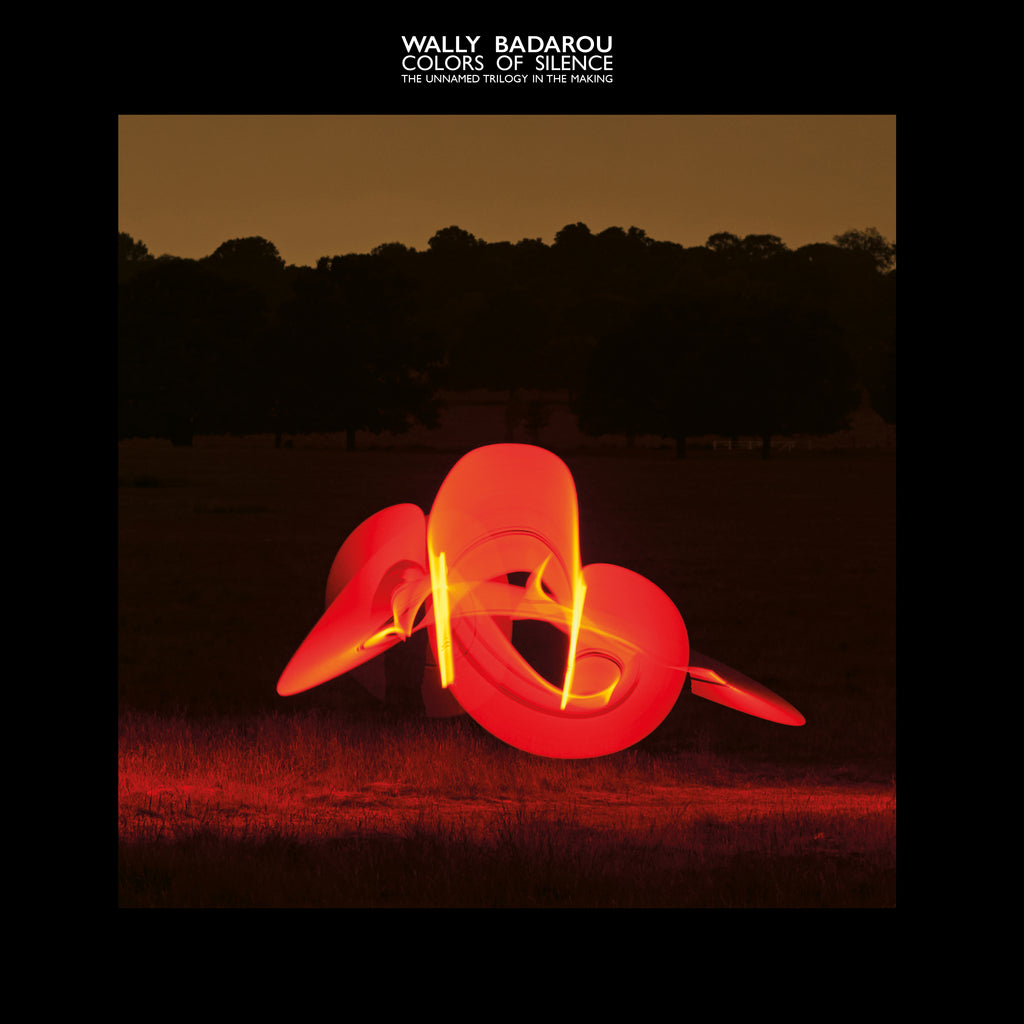
Subtitled, Musical Poetry For Yoga, Wally Badarou compiled Colors Of Silence from his unreleased archives to accompany a yoga instruction DVD made by French actress, Nathalie Delon. The music contained isn’t really a meditation aid or tool. It’s a bit more pop than that. Where Were We, for example, has a tropical lilt, a relaxed reggae “riddim” reminiscent of Carly Simon’s Why, while The Lights Of Kinshasa is uptempo, organ-led sunshine-filled soca. Happy highlife. Both are full of dancing faux flutes, and make-believe brass. From Pictures Of You, less than halfway through, however, everything from here on in could have cropped up on a Jose Padilla Cafe del Mar tape. All the tracks are standouts. A set of wonderfully romantic mini Synclavier symphonies. Expertly summoned from simple layers of countering piano, synths, and keys. In places the pieces recall the cinematic scores of Eric Serra, and, in other, those of Vangelis. Assembled from gently ascending melodies, birdsong, harp and hang drum-like harmonics. Pizzicato patterns. Soft synthetic sighs. Much of the LP is beatless, but Oriental brings the savannah sunrise percussion and polyrhythms back. An echo of Wally’s mid-80s masterpiece, Echoes, and his perhaps most famous track, the marvellous, much-sampled, Mambo.
COASTLINES
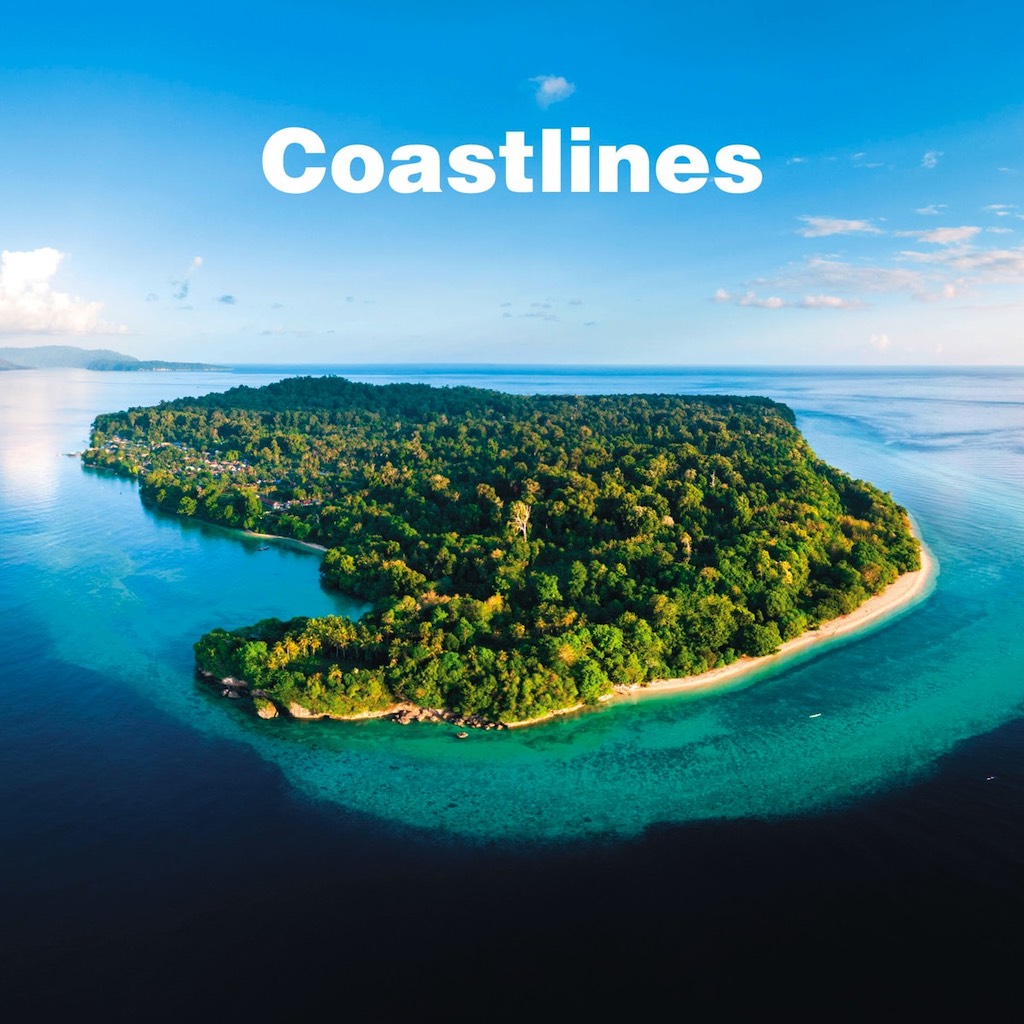
Coastlines is a collaboration between DJ / Producer Masanori Ikeda and Takumi Kaneko, keyboardist with the power jazz trio, Cro-Magnon. Their debut album collects the ten tracks. Sampled surf rolling in and segueing between them. Everything here is kinda Cantoma-esque, nova bossa novas that bump – like Leon Lowman – on sunset. Moving to the rhythm of a gentle tide, and characterised by cascading keys. The jazz-informed piano solos betraying Takumi`s time spent studying in New York. The bold beats borrowed from house`s boom, but set to a “Balearic” chug, serving as a reminder that Masanori was DJing in London in the late `80s, when everything went Acieeed. Sunset Reflection, for example, seems to begin with the keys from the start of Primal Scream`s Screamadelica.
Ralph McDonald`s East Dry River gets covered. As does Azymuth`s Last Summer In Rio. The latter is perhaps the album’s centrepiece. A near ten minutes of slapped bass and steel pans, that sounds like Marcos Valle seducing Mtume. There are more steel pans on Maracas Bay. A laidback reggae lilt. Japanese lovers rock. Like Sexy TKO, Little Tempo., or Ryuichi Sakamoto`s You’re A Friend To Me. The closing Down Town is a subtly strung, uplifting end-of-the-night boogie.
Originally born out of a soundtrack commission, and conceived as a kind of Library Music homage, Coastlines is neither cliche nor trope. Their compositions instead constitute a stripped back fusion. Like the classic arrangements of their legendary 80s counterparts. Musicians such as Hiroshi Sato, bands like Casiopea. The production though is very much now, not then. Not retro, just proper.
COASTLINES 2
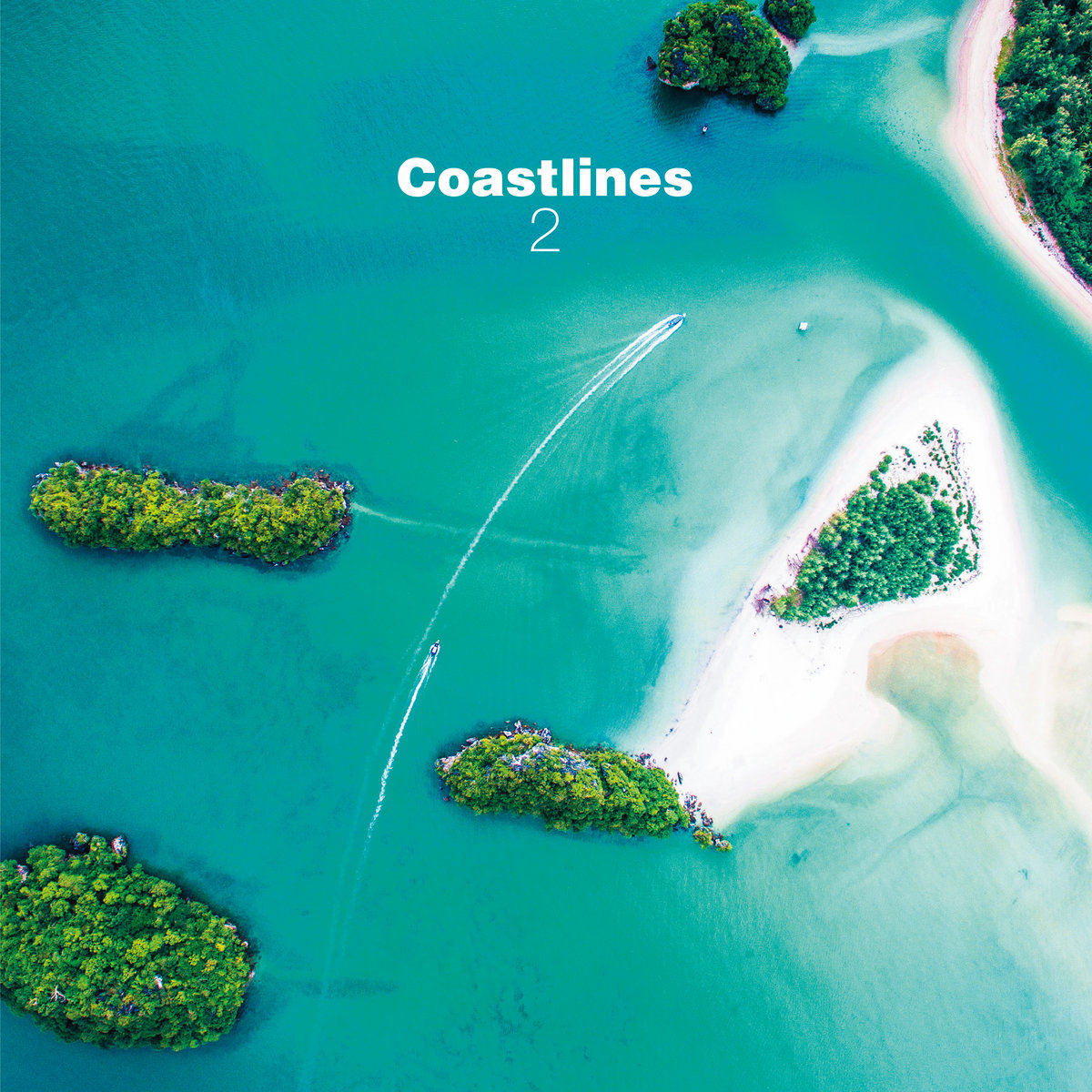
Coastlines` sophomore set, the simply titled, 2, doesn’t drastically alter their sonic template, or deviate from their musical mission too much. The pair stay focused on delivering 12 new tracks of tropical fusion. Everything is still a sophisticated sunset / sunrise serenade, a mix of rippling keys and gentle, lapping, percussive tides. Coloured by virtuoso displays, packed with jazz juice. Switching between warm Wurlitzer washes, Timmy Thomas “Why Can’t We Live Together” tones, and chunkier Clavinet, “Superstition”, strutting. The tempo that of bossa novas, sambas, lullabies and seductive slow dances. The melodies moving, emotional, most definitely romantic. The vibe that of an afternoon spent sipping cocktails, swinging in a hammock, in the sunshine. So if you`re sat, trapped, in the city, the horizon overcast, grey, and rain on the way, then it`s actually a deceptively powerful aural psychedelic.
Tracks, such as Waves And Rays, nod towards the squelchy `80s machine soul of Mtume, the productions of Jimmy Jam & Terry Lewis. The soaring, blue sky-scraping, synths summoning some Mandre 4-esque magic. In places these electro-boogie b-lines bend acidic, while in others the steel pan tunings are stretched into sitar-like shapes. Area Code 868 might, at least in part, be inspired Herb Alpert`s Rotation – the opening riff recalling that classic, before Takumi`s piano-playing takes it somewhere else entirely.
My favourites are Yasmin`s Theme, one of several Brazilian-influenced pieces present, and the kinda Art Of Noise ace-ness of Combustione Lenta. The former is driven, all be it ever so slowly, by the carnival beat of batucada`s big bass surdo drum, and harbours some haunting, happy, vocal harmonies. The latter has an “organic” Moments In Love feel, accompanied by keys that copy Peter Green-esque blues-y, electric guitar arcs. The combination creating a pretty idyllic, eyes-closed, reclining, relaxing on an isolated beach, holiday, soundtrack / score. Lower your lids, listen, and let the world, and that mess of stress in your head melt away.
KENNY DICKENSON / LES RIVIERES
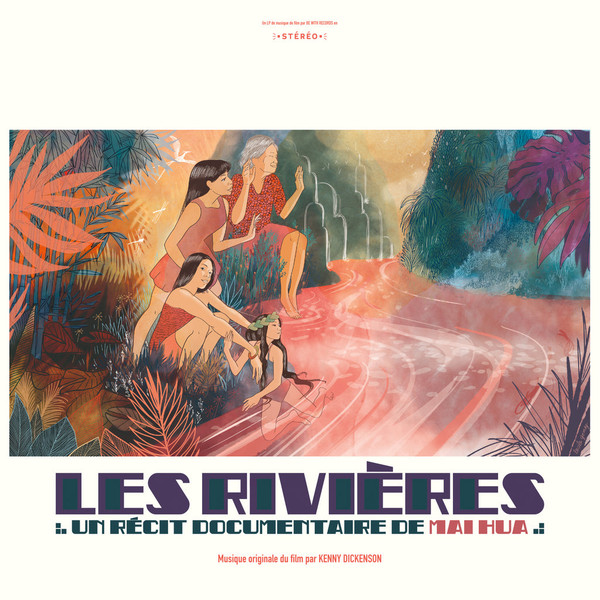
Be With Records` 100th LP release is Kenny Dickensen`s striking soundtrack to French-Vietnamese artist Mai Hua‘s 2020 film, Les Rivières. A suite of shortish themes and cues, the music moves through many moods. From feelings of optimism, adventure, and starting anew – accompanied by children’s laughter and chatter – to moments of melancholy, and even menace. On Le Reve Noir, for example, tribal percussion and metallic screeching dissolves into a drift of drones, sampled surf, and spoken narration.
The classy, classical, minimal arrangements, for piano, electronics, and cello, stop off along the way for jolts of jollity – dancing, playfully on joints such as the Penguin Cafe Orchestra-esque Trilogie III (Phoenix Rouge) and Je Revive. Blossoming on the beautiful Pour Marthe. Bowed strings ache, ivories tinkle, and mix with marimba, vibes, and music box chimes. Creating clusters of counterpoint within the hushed echoed atmospheres. On Regarde Maintenant, the poignancy is set to a thump like a racing heart, generating an air of anticipation. The same sense of anxious excitement that one might experience on a race to a station to eagerly greet a returning lover. Taken as a solely sonic experience, removed from the movie, the album is totally capturing, and stunningly cinematic in its own right.
STEVE HIETT / DOWN ON THE ROAD BY THE BEACH
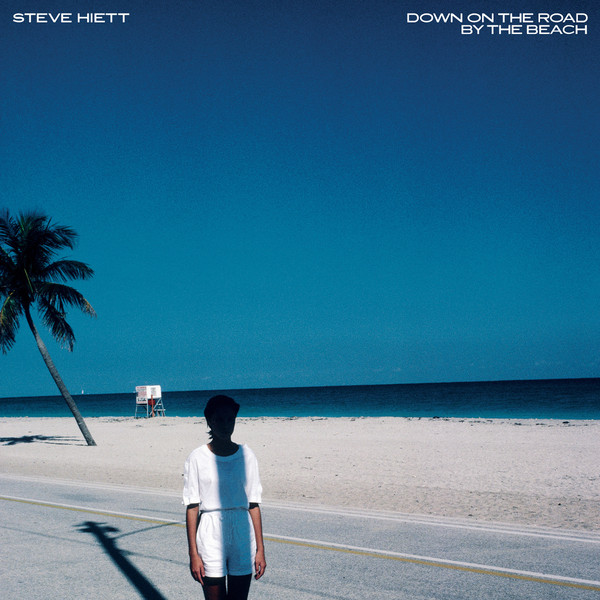
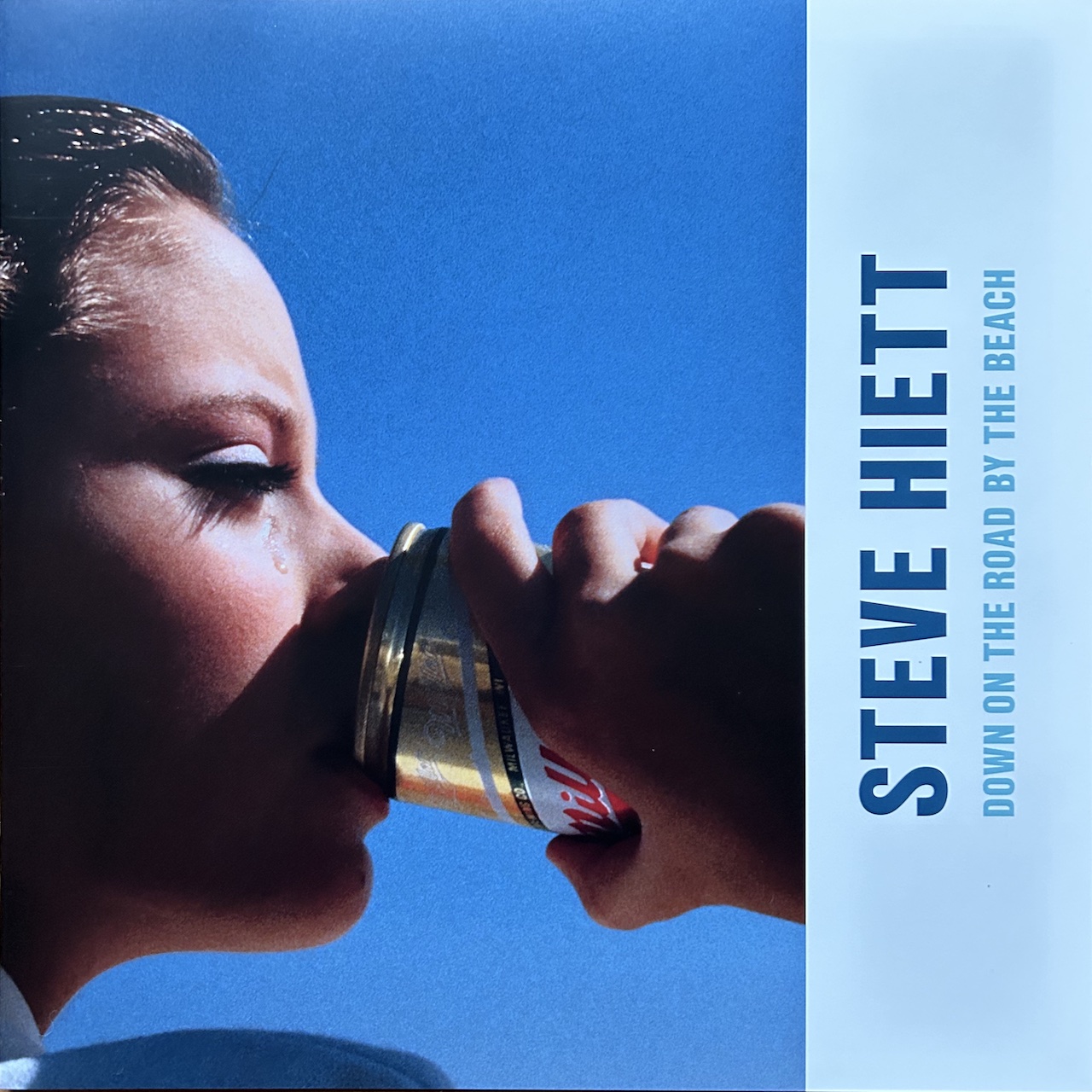
British photographer, Steve Hiett passed away on August 28th, 2109. His passing made all the more untimely by the fact that his musical output was only moments away from being reissued and reappraised. Hiett`s work as a fashion photographer earned him worldwide fame and recognition. In the late `60s, gigs in an art school band allowed him backstage access, which he used to snap stars, such as Hendrix and The Stones. This led to jobs with magazines like Vogue, Marie Clare, Elle, and The Face. Commissions that continued right up to his death. Hiett`s published recordings however were confined to a sole LP. Available only in Japan, it had become a coveted, collectable, cult item. After several years of label negotiations, Be With Records and Efficient Space, collaborated to make the the LP, titled Down On The Road By The Beach, plus a second album of Hiett`s archive material, Girls In The Grass, available globally for the first time.
After the camera, the electric guitar was Hiett`s other instrument. On Down On The Road By The Beach he plays like Peter Green covering The Durutti Column. Each track beginning ringing as if he’s about to launch into Fleetwood Mac`s Albatross, before weaving intricate six-string filigree. Slow dancing, slow blues licks, and bent, crying, tremelo`d notes. Betraying his post-World War II teenage years, melodies echo Tin Pan Alley pop and rock & roll hits of the `50s. Hiett covers Santo & Jonny, Eddie Floyd and Chuck Berry. The latter`s Roll Over Beethoven revived as a laidback sunstroked reprise. Swathed in reverb and with its bass strings buzzing like The Beach Boys` Good Vibrations. The whole album sounds like it`s been fed through an exotica filter, and translated for the twang of Hawaiian steel slide. Bringing comparisons to Japan’s own exotica obsessive, Haruomi Hosono, and so, in turn, young Hosono fanatics such as Mac DeMarco. Hiett must surely have been an influence on folks like Ducktails and Jefre Cantu-Ledsuma. Looking Across The Street drifts into a funky clip – reminiscent of Eno collaborators, Michael Brook and Daniel Lanois. Hot Afternoon could be an outtake from Eno & Byrne`s My Life In The Bush Of Ghosts. Its riff, scratchy and tribal. Standing There is Hiett`s own An Ending (Ascent).
Hiett recorded Down On The Road By The Beach in Paris, New York and Tokyo. The product of a commission from Tokyo`s Gallerie Watari – who requested two tracks for a promotional 45, to be given away at a 1983 exhibition of Hiett`s photographs. When the gallery heard the single they immediately flew Hiett in to complete a whole LP. Hiring Japanese band, The Moonriders, to provide backing. The band`s contributions, however, are subtle. Since in the main what you get are atmospheres emitted by Hiett`s unadorned guitar, recorded in crystalline clarity. Drums for example are absent save the odd gentle kick keeping time. Accompanied by a book of photographs, the album slotted right into the sophisticated highly-stylized art / pop world of Japanese bands sporting Issey Miyake and captured on limited-edition laser-disc – such as Dip In The Pool.
STEVE MOORE / ANALOG SENSITIVITY
I interviewed Steve Moore around the time of his fantastic Future Times E.P., Zen Spiders. I`d contacted him principally because of his darkly pumping Panther Moderns 12 on L.I.E.S. – the music, and video, are something I still reference in reviews. We talked about his recording debut with Pittsburgh “no wave / metal” band, Microwaves – Steve played bass and “sang / shouted”. At the top of his “to do” list was “write music for films”. He had yet to score Adam Wingard`s The Guest. He wanted to work with Nicolas Winding Refn. When I pushed Steve on the “danceable” nature of Panther Moderns, he confessed that he disliked techno, house, and clubs. Rather he described his music as “a 21st Century take on `70s and `80s progressive electronics.” A sound best exemplified then by his Primitive Neural Pathways long-player for Static Caravan. Since, Steve has achieved his musical goal and gone on to compose mainly for movies – with seven soundtracks currently under his belt.
Citing library music legends such as Alan Hawkshaw and Brian Bennett as influences, Steve adds to the celebrated KPM catalogue, with the album, Analog Sensitivity. While Steve created its 12 short pieces – incidental cues, and more elaborate themes – over a three year period – in between film projects – the record works perfectly if listened to and considered as one, or two, long suites. Suitably cinematic, with epic fanfares evocative of heroics and sacrifice, the facing of impossible odds and feats. Moving from nocturnal urban dystopias described by low rumbling drones and showering circuitry to a final serene sine wave float.
Side 1 seems to sketch a city sleeping. Strange strings and alien orchestration painting empty, lonely, early hours. Lunar winds chasing through an evacuated metropolis. Night`s pulses racing toward a deserted dawn. Streets at a standstill, grid-locked with abandoned traffic. Those Panther Moderns on the prowl, stalking its shadows. The second side`s like a sci-fi re-reading of Nico`s Marble Index. Ring modulation and Behringer Wasp buzz framing frozen borders. Space rock guitar sirens straddling silicon streams of programmed percussion. Buoyed by bubbling, undulating, bottom-end oscillations. Tonally brighter, the title track surfs on soft woodwind shapes, washes dream-like shores. The tale`s protagonist perhaps lost in nostalgic reverie, love remembered. Beauty total recalled.
STEVE MOORE / CURSED OBJECTS
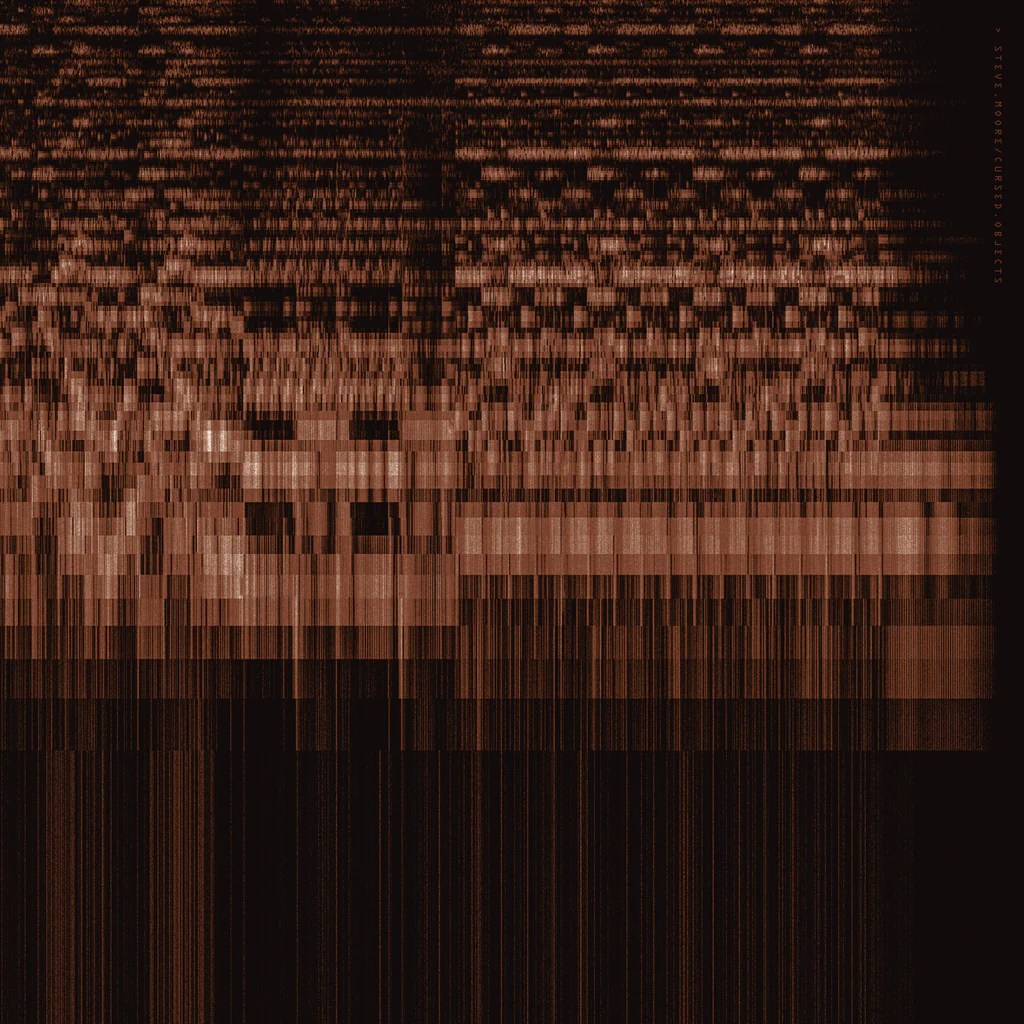
Steve Moore has been steadily carving out a career in movies. Soundtracking a string of cult “genre” features, from 2015’s The Guest, to most recently 2022’s Christmas Bloody Christmas. In 2021 he took time out to collaborate with legendary Library Music House KPM, producing an LP of classic “cues” called Analog Sensitivity. Steve now has a new album ready with KPM spin-out, Fold. Titled Cursed Objects it’s billed as another library project, but plays like one of his horror scores. However, that doesn’t mean it’s all obsidian and satanic.
Opener, The Uninvited One, for example, is full of gently fluttering keys and shimmering waves of romantic, new age-nuanced virtual strings. The title track is a big orchestral number, where the synths sound like woodwinds and trace enchanted themes. The rapid racing sequences of Evolutionary Steps are much more kosmische, but, again, accompanied by a swooning silicon chip symphony. Marching machines drive the similarly symphonic, The Icarus Feather, toward an unknown destination, and the piece has an epic air of impending adventure. A tone of “to be continued…” This track is later reprised, shaken by snares and now Tangerine Dream-esque. Tickled by trickling sound effects, Daily Affirmations is a slow, seductive waltz that summons `70s soft porn / slasher scenes of a female protagonist dressing / undressing in a mirror, admiring herself, while spied on by a stalker. Mesmer’s Bubble’s arrangement is icier. Introducing a touch of tragedy. Quiet Springs seems to pick up where the album’s first track left off, but harp-led it becomes a pause for reflection and thought. A respite, perhaps, prior to the third act’s final onslaught.
Festival Of Samhain, though, is a composition that definitely dwells in the dark. A dedication to the pagan celebration that marks the summer’s end and harvests, before winter starts, it seems to suggest storms gathering, danger approaching, uneven odds stacking up. The closing Shard Of Medusa is the set’s most melancholy moment. Highly strung, aching, a lonely piano crying as the credits roll. Timeless, cinematic stuff, it’s as suited to an introspective sunset smoke or a cocktail, as, say, Ryuichi Sakamoto’s Cafe del Mar favourite from Bertolucci’s The Sheltering Sky.
OCEAN MOON / CRYSTAL HARMONICS
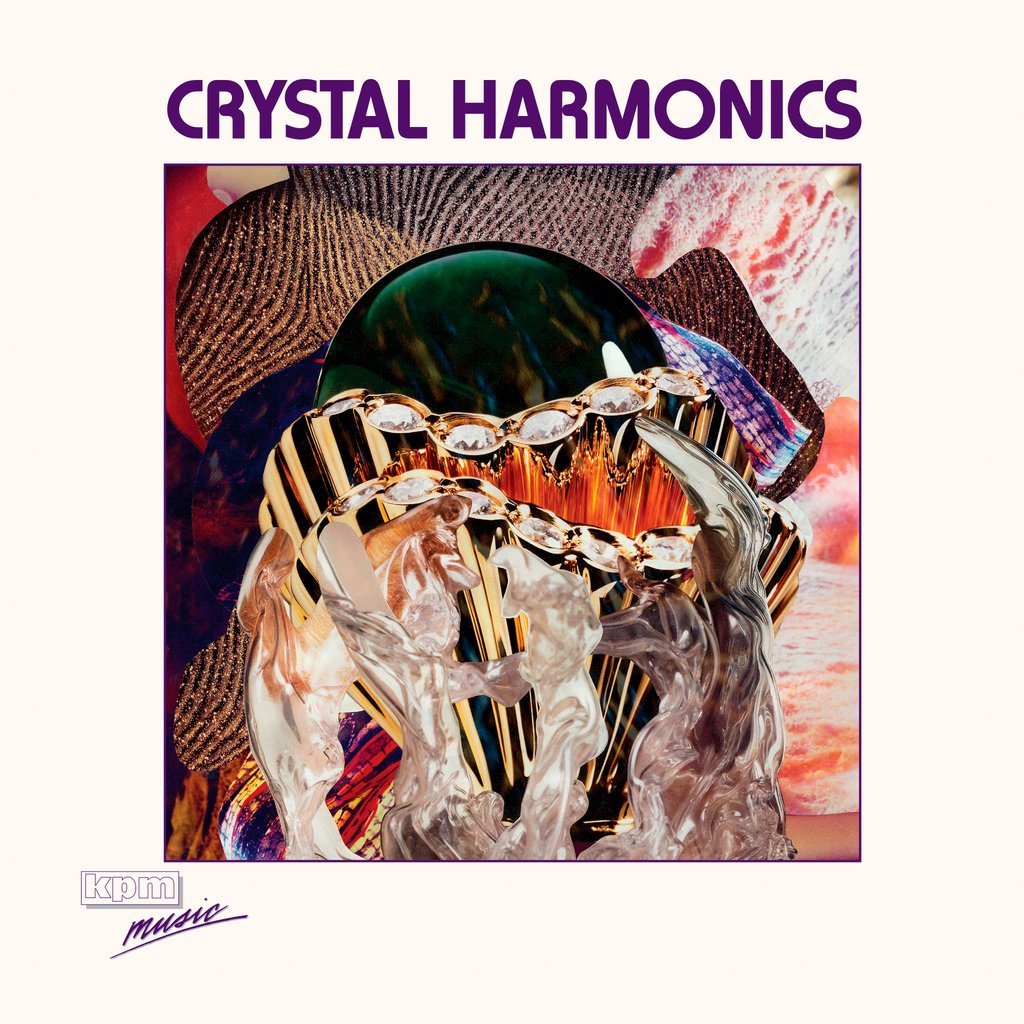
Jon Tye steps up to the plate, swinging solo as Ocean Moon for KPM. Solo isn’t strictly true, since he’s enlisted the assistance of a range of talented friends – Advisory Circle`s Jon Brooks, Steve Moore, The Grid`s Richard Norris, and Seaming To – to help to create Crystal Harmonics` sonics. Music inspired by the legendary Library Music label`s considerable canon – in particular the work of Adrian Wagner, Keith Mansfield, and the imprint`s mid-80s new age output.
To be honest I’m not familiar with any of the records the press release mentions – but as usual can offer a few points of reference of my own. From the bucolic kosmische pastorals of Cluster and Harmonia to the icy eulogies of Brian Eno and Daniel Lanios` Apollo Soundtracks. There are passing nods to Vangelis – his genius at its most understated – and Global Communications` ground-breaking beatless excursions. All of them perhaps camped out in Virgina Astley`s safe and secure back-yard. Synthesizing sequences of gentle, slow counterpoint that increase in complexity like time-lapse movies of flowers in bloom – unfurling in fluttering petal-like patterns as electronic arpeggios and bass pulses do polite battle with field-recorded birds, rivers, streams, temple bells, and monastic chant. Harps harmonizing with acoustic strum and big chiming guitar chords to the beat of butterfly wings – in pieces positioned halfway between lullaby and hymn.
The voices present are subliminal, ascending, celestial choirs – spirit guides whose rhythmic inhale and exhalation forge a path to the void between breaths. Operatic divas are lost to the ether as loops of archival applause disintegrate like the tape of a replayed and replayed and replayed last hurrah. Dominican drones that threaten to engulf everything, riding ceremonial rattle and jangle, rise in powerful waves, before disappearing like tides tamed by gravity’s pull. Throughout recurring melodic repeats peak and fall in hypnotic cycle, opening gateways, inner portals, initiating the listener`s drift into a musical space part Californian healing art and part Tokyo kankyo ongaku. Fashioning man-made aural utopias, artfully lit by the shining emissions of Jon`s collection of vintage silver boxes. Wordless songs that seem to whisper, “God is love, love is within.” Holy are you.
SEAHAWKS / ISLAND VISIONS
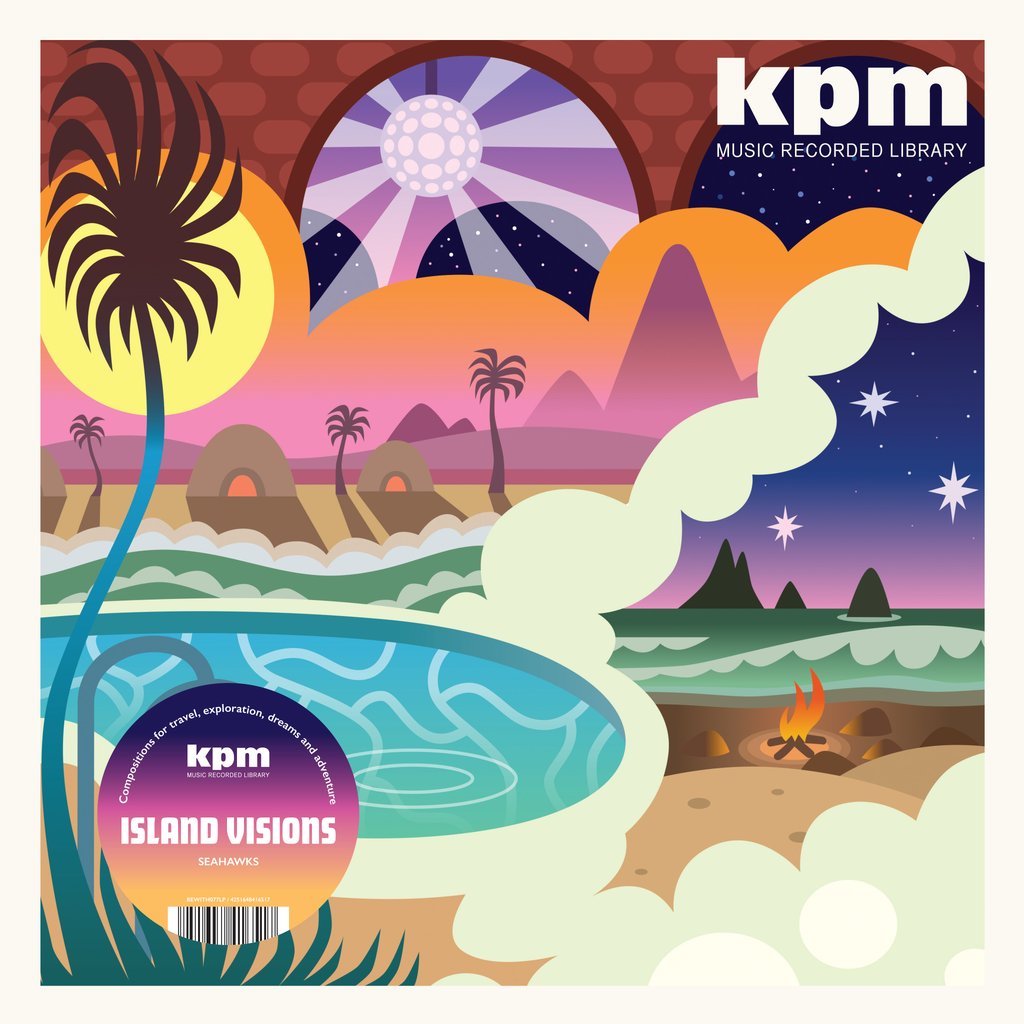
Pete Fowler and Jon Tye AKA Seahawks turn in a new, fun record for Be With`s on-going collaboration with legendary library music house, KPM. The two obviously know their stuff, be it vintage vinyl or antique analogue gear. However despite this serious knowledge I’ve always felt that there`s a strong sense of humour behind what they do. The references to past, and sometimes discarded genres, is knowing, done with a wink, but never arch or ironic. There`s a genuine love and affection for the samples and sources of inspiration, no matter how unhip. Born out in a lightness of touch, where an in-joke is never hammered home. They’re laughing, but it`s definitely with, not at. Branding their own output, “deck-shoegaze”, like Pete`s paintings and drawings, they’ve created a whimsical world of their own. A bit like a musical Vic & Bob.
Seahawks` addition to KPM`s canon, Island Visions, is a selection of shorts. Mini symphonies set to sleepy syncopation. Honed for the hammock. Constructed from computers, kalimbas. Oboes and Oberheims. Sexy saxes and sequences. Flutes in inner flight. Imagine if Screamadelica were simply stoned, instead of tripping. Pete`s artwork for the album presents you with a map of a landscape where virtual waves crash in crystalline coves. Froth and fizz into pixelated surf. Like Black Dog Productions on a beach holiday. Where loon birds announce trance supernovas of electric fusion-esque solos, and sultry sirens call from distant silicon shores.
Side A represents sunrise, while on Side B the sun sets, the cocktails are served and someone switches on the disco mirrorball, and the house four-to-the-floor. Starting a dance of gamelan gongs, and stroked steel pans. Those loons making one final circle, before dubbed-out thuds and forceful chugs fuel full-moon festivities. Tremolo`d strings, blue arcs, and thunder-thumbed bass bumping this music of modern machined exotica – the eddy of waterfalls, fresh water streams, with code for current. Sending the synthesized sounds, spiraling. All caught in gravity’s spin. Pulled towards a serene cicada serenade fade.
Be With Records’ 10th anniversary book and compilation can be preordered here.
Discover more from Ban Ban Ton Ton
Subscribe to get the latest posts sent to your email.
 Ban Ban Ton Ton