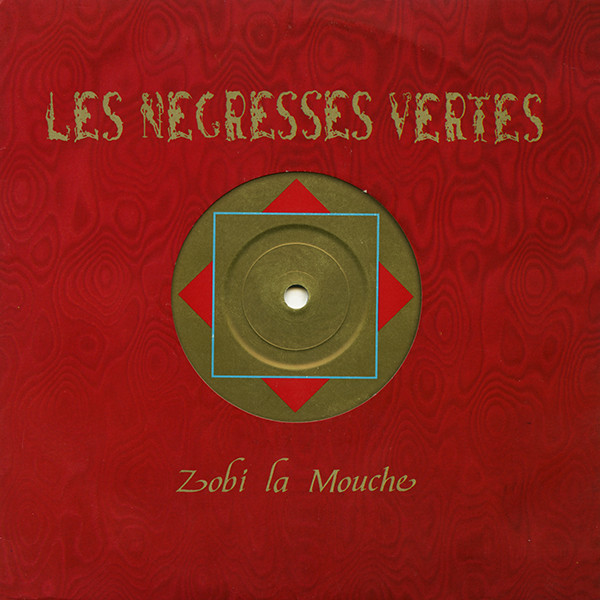
Wild shouts, barks, yelps and handclaps accompany a fierce acoustic strum. Machines strike up a big, banging mid-tempo march, and an insane, insistent accordion leads a deranged, drunken dance. Party whistles blow and it’s on. Less a boogie, and more a barely contained riot. Soundtracking a scene so exciting, it’s almost frightening. The music mad, bad and dangerous to know. The track itself sounds hammered, reeling, jumping, pogoing, and the crowd all clap and scream along. A den of dodgy South London geezers and girls, in unison, “on one”, sharing a secret. E (1).
The pop flamenco of The Gipsy Kings’ “Bamboleo” was an imaginary Mediterranean holiday for working class kids who’d never even been on a plane. Painting pictures of foreign beaches and foreign skies. Cementing an Ecstasy-induced sense of escape. A strange sense of nostalgia for something that hadn’t happened. A mix of joy and melancholy for something that, perhaps, might yet. But this, this was the crazed, out of control flip. The pretty guitar picking unable to compete with the gurgling acid bass. This was getting smashed in Barcelona. Knocking back shots in bar packed with colourful maniacs Scoring smack on the sleazy, shadowy streets of Las Ramblas (2). This was the “Remix Rosbif” of Les Negressess Vertes’ “Zobi La Mouche”, and its singular producer, William Orbit, sadly passed away on July 26th (3).

For most Orbit will be remembered for his massive pop hits: global chart toppers, such as All Saints’ “Pure Shores”, and especially his work with Madonna. However, in the early 1990s he co-founded the label, Guerrilla Records – named after his studio, which allowed young, aspiring artists, such as the duo Spooky, to pioneer and create the progressive house sound, and even before that his `80s productions and remixes helped shape the UK’s take on Ibiza’s “Balearic Beat” (4).
Thirty, 40 years later, tributes to Orbit’s distinctive techniques and mixing desk trickery still echoes in the aspirations of a new generation of music makers, names such as Vanity Project, Romain FX, Alex Pasternak, Jazxing, Hybrid Man, Good Block, Guy Contact, ddwy and a.s.o. A Love From Outer Space’s Sean Johnston cites Orbit as a huge influence (5).
It was Johnston’s close friend and ALFOS partner Andrew Weatherall who arguably played a large part in introducing Orbits’ tunes into the late `80s Amnesiac playlists of the clubs Shoom and Future. “Fire & Mercy”, for example, promo’d in `85, with its crazy cowbell, noisy rock riffing /backwards shredding, spectral theremin and very Thrashing Doves / “Jesus On The Payroll” groove was a staple of the late icon’s early sets (6).
“P2e”, a remix of the track “Prepare To Energize”, released in `84 and `83 respectively by Torch Song, a group consisting of Orbit, Laurie Mayer, Gilbert Graham and Rico Conning, was one of Weatherall’s infamous “cockney cover-ups” – records whose labels would be covered or removed to prevent nosey parkers from learning their identity (7). Proto-house synth pop with a chaotic climax of phaser and laser gun effects, this hits like a collision between Kraftwerk and Art Of Noise (8). Weatherall was also known to spin Orbit’s dub of Shakespear’s Sister’s “Run Silent”, and also mixes of Malcolm McLaren’s “Call A Wave” (9).
Orbit, together with Mark Moore of S’Express, worked on several singles lifted from McLaren’s 1989 album, “Waltz Darling”; “Something’s Jumpin’ In Your Shirt”, “Call A Wave” and “Deep In Vogue”. Their “Banjie Realness” mix of the latter is a 9-minute epic, based on MFSB’s “Love Is The Message”, coiffured, poised, striking a pose and peppered with samples from Jennie Livingston’s documentary, “Paris Is Burning” (10).
Their version of “Call A Wave” fixed fluttering, fragmented vocals and fractal frequencies to a replayed Barry White riff. Borrowing the refrain from Barry’s steamy “I’m Gonna Love You Just A Little Bit More Baby”, with the phat, funky keys pitched somewhere between a harpsichord and a clavinet, the mysterious Gina Cieis set swimming in a serene sonic sea, surrounded by singing whales and dolphins. Sent on a divine dive of dizzying strings and seductive, but gated, serrated sirens.
Orbit and Moore also remixed Prince, tackling a trio of tracks from The Purple One’s score for Tim Burton’s “Batman”: “Batdance” and “Electric Chair”, but “The Future” was the Balearic biggie. Racing, rumbling, with a pounding 4 / 4, pandering to rave, with its references to smiley faces and X, but, like a fiery follow up to “Sign O’The Times”, critical, a warning against flight from reality through chemicals and excess: “I’ve seen the future and, boy, it’s rough.” These records by McLaren and Prince soundtracked London clubs like The Limelight and The Milk Bar. Places where, following Ecstasy’s first rush, folks had ditched rave’s day-glo, kickers and dungarees and started dressing in designer gear again.
Around the same time Orbit also added his musical magic to Madonna’s saucily whispered “Justify My Love”. Replacing the James Brown via Public Enemy plagiarism with backspinning beats (11).
Back then most people knew little or nothing about Orbit’s “Strange Cargo” project, but Ibiza’s Jose Padilla had been rinsing tracks from these albums in his Cafe del Mar sunset sessions, and mixtapes, since their release. The initial volume contained the Spanish guitar-led strolls “Via Caliente” and “Riding To Rio”, which were both classics to devotees, diggers, aficionados who’d been paying close attention (12). “Secret Garden” was a gentle, gossamer lullaby, a Vangelis-esque float. The Klaus Schulze-like kosmische of “The Last Lagoon”, was a dark, atmospheric ambient highlight from “Strange Cargo 2”.
“Strange Cargo III” announced itself, in 1993, with “Water From A Vine Leaf”, a dizzy dynamic of sampled drums and chirruping circuitry, countered by a plaintive piano melody and an ethereal Beth Orton reciting psychedelic poetry. Like a downtempo DMT trip, this was destined to become a chillout room favourite, then Spooky and Underworld got their hands on it. Spooky’s “Xylem Flow” and “Acid Bath” mixes were prog house anthems, while Underworld’s 2 “Underwater” missions kept the BPMs low. Part 1 pumping things up for the dance floor, while the second delicately deconstructed and stripped the song back. Filtering and looping Beth, gradually bringing in the b-line, beneath pretty, hypnotic chiming and sighing, rising and falling strings. Rebuilding the beat from collaged grunts and shouts. Weaving in a fragile filigree of laidback, blues-y fretwork (13).
From the same album, Padilla licensed “The Story Of Light” to help launch his series of legendary Cafe del Mar compilations. A bewitching blend of Latin samba keys, exotic, sorta belly dancing vocals and dub bass, Orbit was clearly a reggae lover. Solo he’d versioned the rocksteady of Marcia Griffiths’ “Feel Like Jumping”, in a Colourbox doing U-Roy stylee, and as a member of Bassomatic he’d name-checked Lion Youth’s sufferers “Rat A Cut Bottle”. Orbit’s “Stereo Odyssey” remix of One Dove’s “Breakdown” is also set to a skank. Transforming Dot Allison’s strung out `60s girl group / Shangri-Las sensibilities into something like The Orb gone pop (14).
By all accounts, from all the love that has poured since his passing, Orbit was a bit of an eccentric. His methods mercurial and maverick. His personal process, though, created a sound that was totally unique. His fascinating rhythms, often a kind of electro go-go-not-go-go, all flickering, popping programming and swirling, synthetic strings. Busy, bustling, complex arrangements, mini electronic symphonies, riding wobbly, almost but not quite acid bass-lines (he didn’t need to resort to a TB-303) and chunky, chugging beefed up, break-derived beats. Further funk came from brief flashes of organ and wicked wah-wah guitar licks. The synergy synthesising something distinctive that fuelled thousands of Second Summer Of Love, and Balearic Network, memories. Something timeless, however, benchmarks even, that still inspire now.
NOTES
1. In 1989, I was back in London after 3 years at Leeds Uni, and it was my little sister, Lizzie, who introduced me to this “Balearic” thing. I was immediately immersed in a South London scene of robbers, blaggers and dealers, some of whom were old school friends, most though were strangers. When I said I’d been away, the majority assumed I meant inside.
“Zobi La Mouche” tested my O-Level French with its sexy samples of “c’est formidable”, and honestly, clueless, a “ted”, at first I thought everyone was shouting “sucky, sucky lemon!”
2. This was a side of Spain I would later witness, high on acid in Malaga, rather than Ibiza.
3. The music press had described Les Negressess Vertes as a “French Pogues”, but Orbit transformed them into something more like the Happy Mondays. When Paul Oakenfold and Steve Osbourne later remixed The Mondays’ “Wrote For Luck”, they took “Zobi La Mouche” as their template.
4. Guerrilla was co-founded with Rico Conning.
5. Johnston had Rico Conning remix his Summerisle Six single.
6. “Fire & Mercy” later appeared, officially, on the 1987 LP, “Strange Cargo”.
7. Weatherall later included “P2E” on his Nuphonic “Nine O’Clock Drop” comp. Another cover-up was Leslie Grantham’s “Winner & Losers”.
8. Cosmic Club’s Daniele Baldelli used to spin “Prepare To Energise” at not 45, but 33. Everything by Torch Song is worth a listen.
9. Orbit makes The Sisters – Marcy Levy and Siobhan Fahey – sound like Enya throwing shapes at Shoom. His remix also includes tons of echoed timbale rattle. Something that would become a staple of Weatherall’s own early productions and remixes.
10. This celebration of New York ballroom culture was at least a year before Madonna’s “Vogue”. “Paris Is Burning” itself wasn’t released until 1991. McLaren, Moore and Orbit had access to the film’s VHS rushes.
11. Personally, this flashes me back to the warm-up at Ophelia, at Covent Garden’s Gardening Club. Halving a pill with my partner and washing it down with swig from a bottle of Beck’s.
12. “Riding To Rio” later appeared on Harvey’s scene-shifting “Sarcastic Study Masters Volume 2″ mix. It was also undoubtedly the inspiration for Mark Barrott’s 2019 track, “Galileo”.
13. Curious completists should also check Spill’s “Don’t Wanna Know Bout Evil”, where Orbit and Orton cover John Martyn and then get done over by Danny Tenaglia. This was co-produced by frequent Orbit collaborator and former Psychic TV member, John “Sugar J” Gosling, who also worked with Coil.
14. The roots for this remix possibly lie in Orbit’s cover of Jack Nitzsche’s “Harry Flowers”. This gentle, string-soaked theme for the mob boss in Donald Cammell’s “Performance” (“I like that, Gordon, turn it up”), now rocked by a dub reggae B-line, is a ringer for a One Dove outtake.

Discover more from Ban Ban Ton Ton
Subscribe to get the latest posts sent to your email.


Great read Rob
LikeLike
Thanks Adam!
LikeLike